Home Arm Workout: Biceps Curls and Triceps Exercises
Build a manageable home arm workout with a curl and a suitable triceps exercise. Compare bands, dumbbells and cables, then use the printable cue and record sheet.
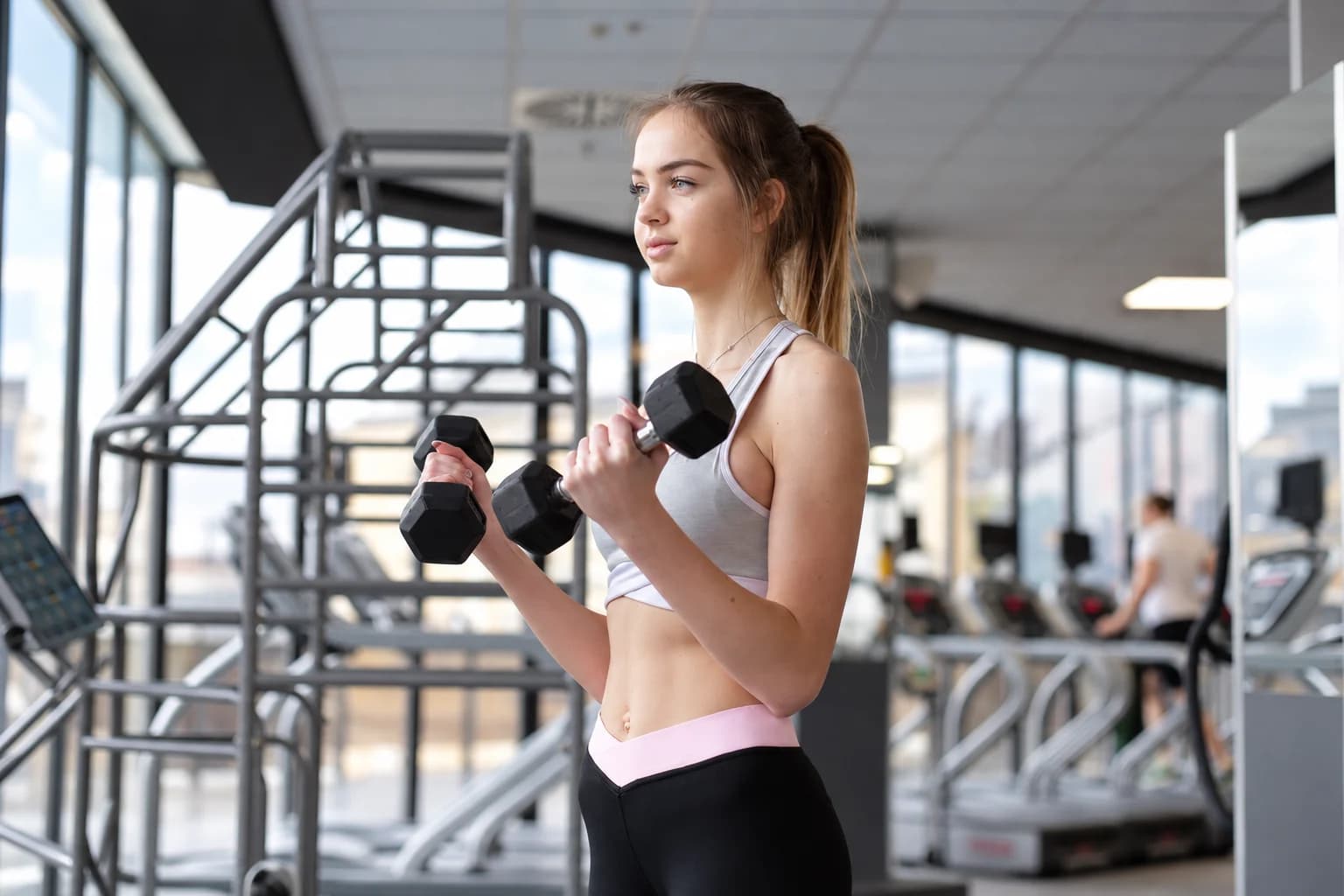
A home arm workout can start with two different actions: bending the elbows for a curl and straightening them for a triceps exercise. An arm workout using resistance bands needs the right working length and contact method for each action. Dumbbells and cable equipment provide other options, with different support and resistance.
Choose one curl and one suitable extension before adding more variations. A pressdown keeps the upper arms beside the torso; an overhead extension holds them raised. Those are separate setups, and neither becomes better simply because it looks more difficult. This guide explains the movements, a small adjustable practice example and a printable record sheet.
Keep the setup and the record together
Use the printable arm-workout cue and record sheet alongside the instructions below. Choose a complete arrangement before filling in the exercise line.
| Band option | Fixed point to confirm | Record before the set |
|---|---|---|
| Curl | Permitted foot contact for the actual band | Band identity, grip, working length and stance |
| Pressdown | Compatible high attachment | Actual anchor and connector; available start and return path |
| Overhead extension | The documented foot-held or self-held arrangement you chose | Which side, fixed point and usable overhead length |
| Date / movement | Exact equipment and fixed point | Planned / completed repetitions | First change in control / next adjustment |
|---|---|---|---|
| ____ | ____ | ____ / ____ | ____ |
Choose each band-and-anchor arrangement for the exercise you intend to practise. Match the open strip, detachable cable bar and any support through their model-specific connection and setup requirements, and record the arrangement separately in your log.
Choose one curl and one triceps exercise
| Movement | Main elbow action | Equipment requirement |
|---|---|---|
| Band curl | Bend the elbow while retaining the upper-arm position | Suitable tubing or band and its permitted foot/contact arrangement |
| Band pressdown | Straighten the elbow with upper arms beside the body | Suitable high attachment and a compatible grip |
| Overhead band extension | Straighten the elbow with the upper arm raised | Enough usable band length and comfortable overhead positioning |
| Dumbbell curl | Bend the elbow against a free weight | A suitable weight that you can also position and set down |
| Cable-rope pressdown | Straighten the elbow against a pulley system | A complete compatible cable station and intended attachment |
Resistance band triceps exercises do not all require the same anchor. A high-anchor pressdown, a rear-foot-held overhead extension and a self-held band extension have different fixed points. Follow one complete arrangement; do not combine a grip from one example with an attachment from another. The first-setup guide explains that equipment decision.
Resistance band biceps curls: bend the elbow without a body swing
Mayo Clinic’s tubing-curl transcript demonstrates a handled tube held beneath one foot, a palm-up grip, the elbow near the torso and slow movement in both directions. Its specific foot contact is an example for that demonstration, not a universal placement instruction for every band.
- Inspect the elastic and fittings, then establish the foot contact and grip the actual equipment permits. Arrange a manageable working length while unloaded.
- Start upright with the upper arms near your sides, wrists aligned and a secure palm-up grip. Rehearse with light resistance before beginning a working set.
- Bend the elbows to raise the hands without rocking the torso, shrugging or lifting the elbows forward to gain height. Stop at a comfortable endpoint; the handles need not touch the shoulders.
- Lower slowly through the same path. After the last return, remove tension before changing grip or stepping away from the band.
The useful endpoint is where the curl remains an elbow-bending task. If the wrists fold or the elbows move forward to lift the handles farther, reduce demand or stop slightly earlier. If one hand starts higher, unload and compare the working lengths rather than twisting to make the hands meet.
An elastic curl need not feel like a dumbbell curl at every point. Do not keep shortening the band to eliminate every trace of slack if the finish becomes unmanageable. Retain the equipment’s stretch limits and choose a more suitable band or permitted working length instead of swinging through the difficult part.
Resistance band triceps pressdown: keep the upper arms beside you
The FitKit triceps chart, page 2, illustrates a band pushdown using its high door attachment. Its example keeps the upper arms by the sides while the elbows straighten. It is a manufacturer-specific arrangement; a picture of a top-door anchor does not approve your door, frame, connector or band.
- Establish the compatible high attachment and inspect the complete path before loading. Clear the space and prevent interference with any approved door setup.
- Face the attachment in a stable stance with knees comfortable, elbows bent and upper arms near the sides. Stay balanced without relying on elastic tension to hold you upright.
- Straighten the elbows to move the hands downward. Finish without snapping the elbows, dropping the torso onto the grips or sweeping the shoulders behind the body.
- Bend the elbows to return under control, retaining the upper-arm position. Unload before changing distance, grip or connections.
Watch the point of the elbow from the side. If it travels backward as the hands descend, shoulder movement is helping finish the task. If the head and chest drop on every repetition, the torso is contributing too. Use a more manageable setup and repeat the intended elbow movement instead of treating a larger body motion as progress.
The return matters as much as the downward phase. End it before the band drags the upper arms away from their chosen position. A rubbing band, sharp contact, slipping grip or moving attachment is an equipment issue that ends the set; it is not something to fix while the system is loaded.
Overhead band triceps extension: raised arm, different fixed point
The ACE triceps guide describes a single-arm overhead extension with the band held under the same-side rear foot. The upper arm is raised, and elbow bending and straightening move the handle. That differs from both the high-anchor pressdown and a self-held band arrangement.
- First establish a comfortable unloaded overhead position and elbow bend. Do not force the hand deep behind the head or lean backward to create room.
- For a band that permits the demonstrated foot-held use, arrange the same-side rear-foot contact and grip while unloaded. Keep the path behind the arm clear of the neck.
- Bring the upper arm up in a comfortable position beside the head. Straighten the elbow smoothly while retaining that upper-arm position; avoid a shrug or repeated back bend.
- Bend the elbow again under control. Reduce tension and lower the arm deliberately after the last repetition, stepping out only once the band is unloaded.
An elbow near the ear is an orientation cue, not a reason to clamp the arm against the head or force it inward with the other hand. If the band cannot provide manageable resistance through the entry, movement and exit, use another suitable arrangement or select a different extension. More repetitions will not solve unsuitable length.
Free weights and cables: keep their setups separate
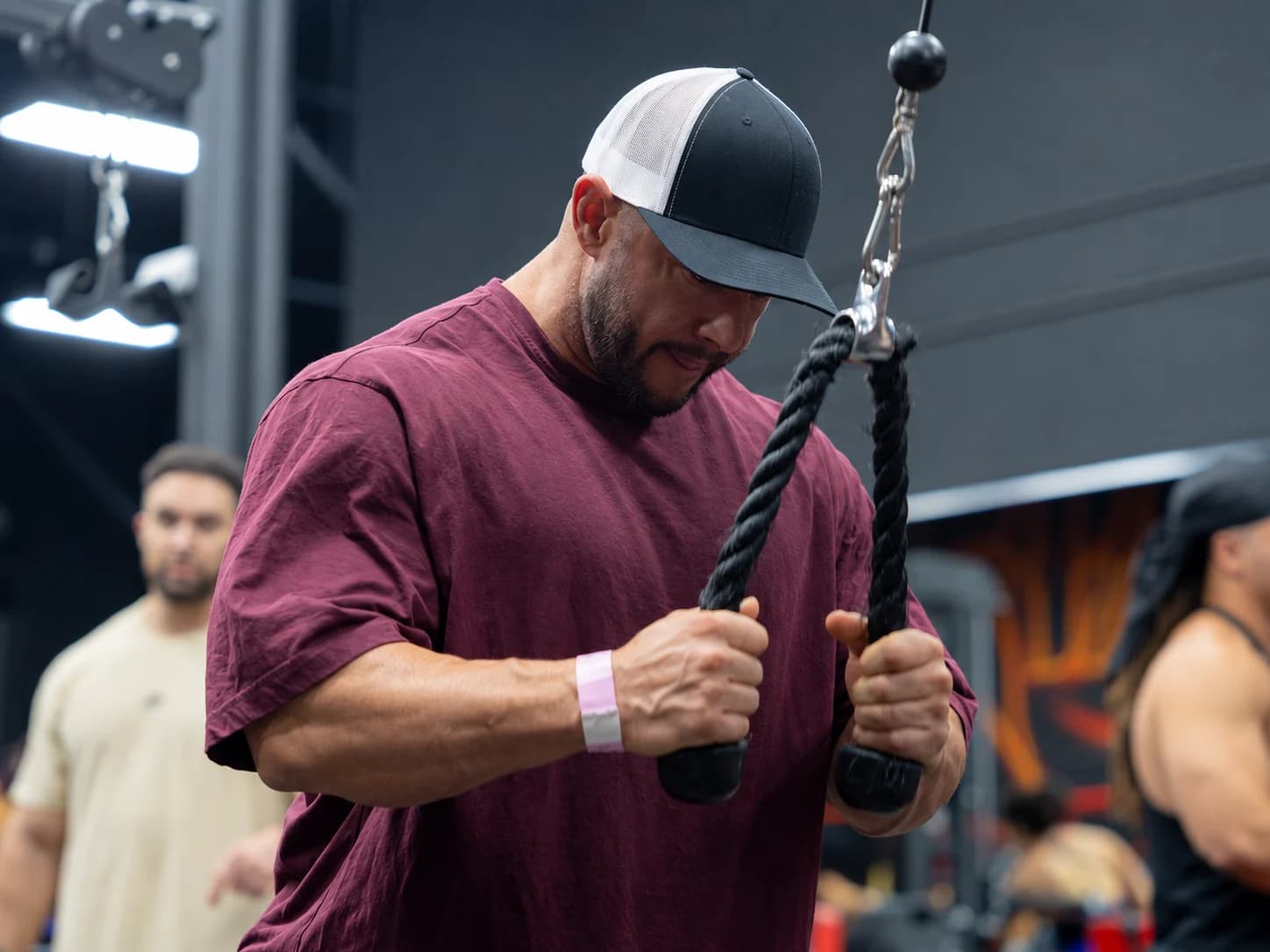
ACE’s cable pressdown uses a high pulley and rope attachment, with elbows close to the sides as they straighten and bend. The cable machine supplies the resistance system. That description is not a band-anchor installation guide, and a different bar attachment does not automatically share the rope’s grip or hand path.
For curls, Mayo Clinic’s dumbbell demonstration uses a palm-up grip, controlled elbow position and slow lifting and lowering, with standing or seated options. The known mass of a dumbbell differs from a band’s stretch-dependent resistance or a kit’s shipping mass. Choose a manageable actual weight for the task rather than inventing a one-number conversion.
A free-weight triceps exercise also needs its own instructions. Mayo Clinic’s dumbbell triceps extension is performed lying on the back on a floor or weight bench, with the upper arm directed toward the ceiling and the elbow moving under control. It is not a seated overhead extension, and it does not use the foot-held band path above.
Select the support, attachment and weight for the exact variation. A light rehearsal should include positioning the equipment and finishing safely. Do not improvise a grip on a clip, use an unstable furniture support or hang an attachment from an unverified household fixture because it resembles a photograph.
A small adjustable practice example
After an easy rehearsal, choose one curl and one extension whose complete setup you can control. The table below is an editorial starting example for practising the movements, not an individually prescribed or experimentally tested routine. Keep several clean repetitions available rather than using a first session to test maximum effort.
| Choice | Starting practice example | When to end or adjust |
|---|---|---|
| One band or dumbbell curl | One light set of 8–12 controlled repetitions | End before the elbow path, wrist or torso position changes |
| One appropriate pressdown or overhead extension | One light set of 8–12 controlled repetitions; for one-arm work, practise each side | End before the upper-arm position or return control changes |
| Optional repeat after recovery | Add a second set only if you can reproduce the same setup and control | Use fewer repetitions or less demand when the next set starts with compensation |
Account for the pressing and pulling already in your wider program. The home chest guide and back-exercise guide cover those separate tasks. Direct arm work does not need to expand every time you discover another curl or attachment.
Record the exact exercise, band or weight, working length, grip, stance, completed repetitions and where control changed. Later, change one meaningful variable while preserving the movement. A heavier-looking setup that requires a different body action is not a like-for-like comparison. Stop for pain, numbness, dizziness or unexpected loss of control.
What arm toning can and cannot mean
Arm toning is often used as a loose description of strengthening work or a desired appearance. It is not a separate mechanism that lets a curl choose where body fat is lost. ACE’s educational explanation of spot reduction distinguishes targeting muscles from expecting targeted fat removal.
Use curls and extensions to practise and progressively train their movements, without a guaranteed arm-size or appearance promise. This guide does not prescribe a weight-loss diet or a treatment for skin changes. Your starting point does not need a negative label to justify doing strength exercise.
Printable resistance band arm workout record
Download the arm-workout cue and record sheet to keep the three band movement distinctions, the adjustable practice example and space for your own setup notes. It also identifies the separate dumbbell and cable options and links to the original sources. The PDF is a reminder and log, not a personalized program or an equipment compatibility approval.
Two equipment formats from the PBGGAME catalog
The pink Pilates ball, ring and slider kit contains an open flat elastic strip among its other components. The numbered stretching strap is a separate item: its listed 115 cm length does not describe the elastic strip. The complete kit is the sale unit, with a listed 1,139 g packed mass. It has no listed high-door anchor, and its strip needs its own exercise, grip and stretch instructions.
The black detachable cable bar supplies three sections forming one source-listed 39.37-inch bar plus a carabiner. A suitable cable system and resistance are separate; its 1,260 g packed mass is not a machine load setting. Check machine fit and intended grip for that bar rather than copying the photographed rope arrangement or clipping it to the Pilates kit.
These are format comparisons, not a claim that either product was tested in this workout. The band buying guide helps separate elastic equipment from straps and attachments before you choose an exercise setup.