Yoga Block Exercises for Beginners: A Supported Starting Sequence
Try yoga block exercises for beginners with an easy supported seat and a half forward bend. Choose useful block heights and follow a short, gentle sequence.
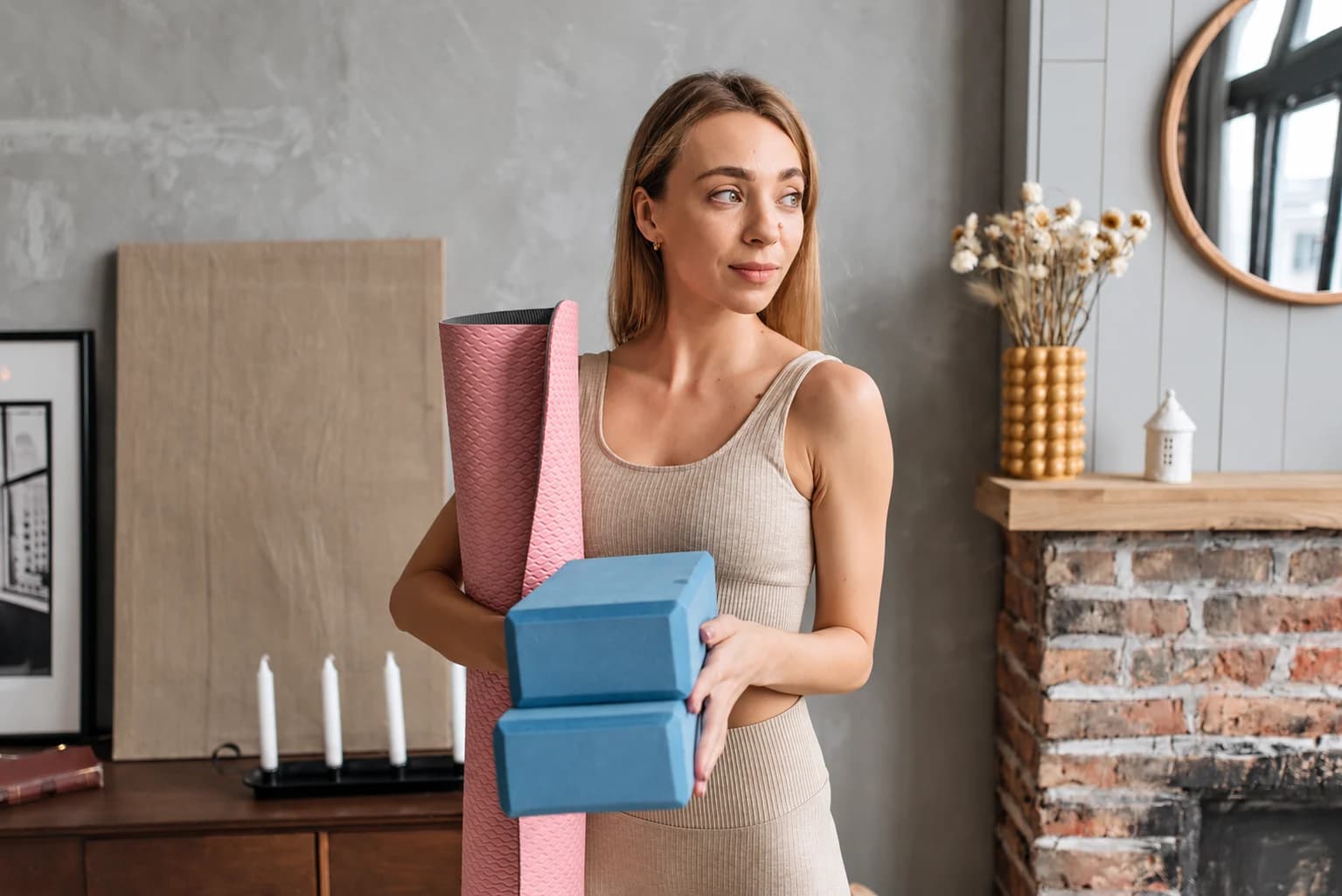
Yoga block exercises for beginners can start with two simple tasks: finding a comfortable supported seat and bringing hand support closer in a half forward bend. Choose a block orientation that suits the position you are practising. The aim is a setup where you can settle, breathe naturally and leave the position with control.
You will use one block beneath the seat and a matched pair for the standing position. The short sequence below brings those tasks together, with time to reset between them. Choose the version that feels manageable today, including a chair where that provides the support you need.
Set up the blocks and choose their orientation
The optional cork yoga-block pair contains two solid cork blocks measuring 9 × 6 × 4 inches, with bevelled edges. A blue D-ring strap is included, although the practice here uses the blocks. You can use an existing suitable mat; keep enough clear space to stand, sit and place the blocks within easy reach.
- Low: place the largest 9 × 6-inch face on the floor. The block is 4 inches high. Use this broad base beneath the seat.
- Medium: turn the block onto its 9 × 4-inch face. The height becomes 6 inches.
- Tall: stand the block on its 6 × 4-inch end. The height becomes 9 inches, with a smaller base than the lower orientations.
For hand support, put both blocks at the same height on a level, firm surface and check that they sit without rocking. Choose the orientation for the reach you need, rather than treating a lower block as the goal. If the tallest setting still leaves you reaching beyond a comfortable position, use the chair option described below instead of stacking blocks.
Keep the mat and block bases flat, with no folded fabric caught beneath an edge. Give yourself room to move a block between positions while you are out of the pose. If you are choosing a surface for travel, Foldable Yoga Mats for Travel: Thickness, Grip and Packing Trade-Offs discusses those practical choices.
Keep the block’s base and height together
| Orientation of a 9 × 6 × 4 inch block | Face on the floor | Height |
|---|---|---|
| Low | 9 × 6 inches | 4 inches |
| Medium | 9 × 4 inches | 6 inches |
| Tall | 6 × 4 inches | 9 inches |
If getting down to or up from the floor needs assistance, choose a teacher-led chair option instead of assuming the floor sequence fits. Resolve the transfer and support with that teacher; the block set does not supply a safe way to stand up.
Yoga block exercises for beginners: try a supported easy seat
The YogaEasy Easy Pose guide, formerly on EkhartYoga, offers a block or cushion under the hips as a beginner option. Begin with the block on its largest face. The seat should help you find a comfortable upright position, with both sitting bones supported.
- Sit towards the front of the broad top face. Cross your shins comfortably, with each foot beneath the opposite knee rather than pulling the feet tightly into place.
- Let the sitting bones settle and lengthen gently through the spine. Rest your hands in your lap or on your knees.
- Take two or three natural breaths as a short editorial practice example. Keep the shoulders comfortable and leave your knees where they settle; do not press them towards the floor.
- To finish, place your hands beside you as needed for support, uncross the legs and extend them comfortably. Pause before changing position.
If the crossed-leg position is uncomfortable for your knees, the guide suggests extending the legs or using a chair. A wall can provide back support. Choose a comfortable arrangement at the start rather than holding a shape you have to endure. On another attempt, you can change which shin is in front.
Yoga blocks for reach: practise a supported half forward bend
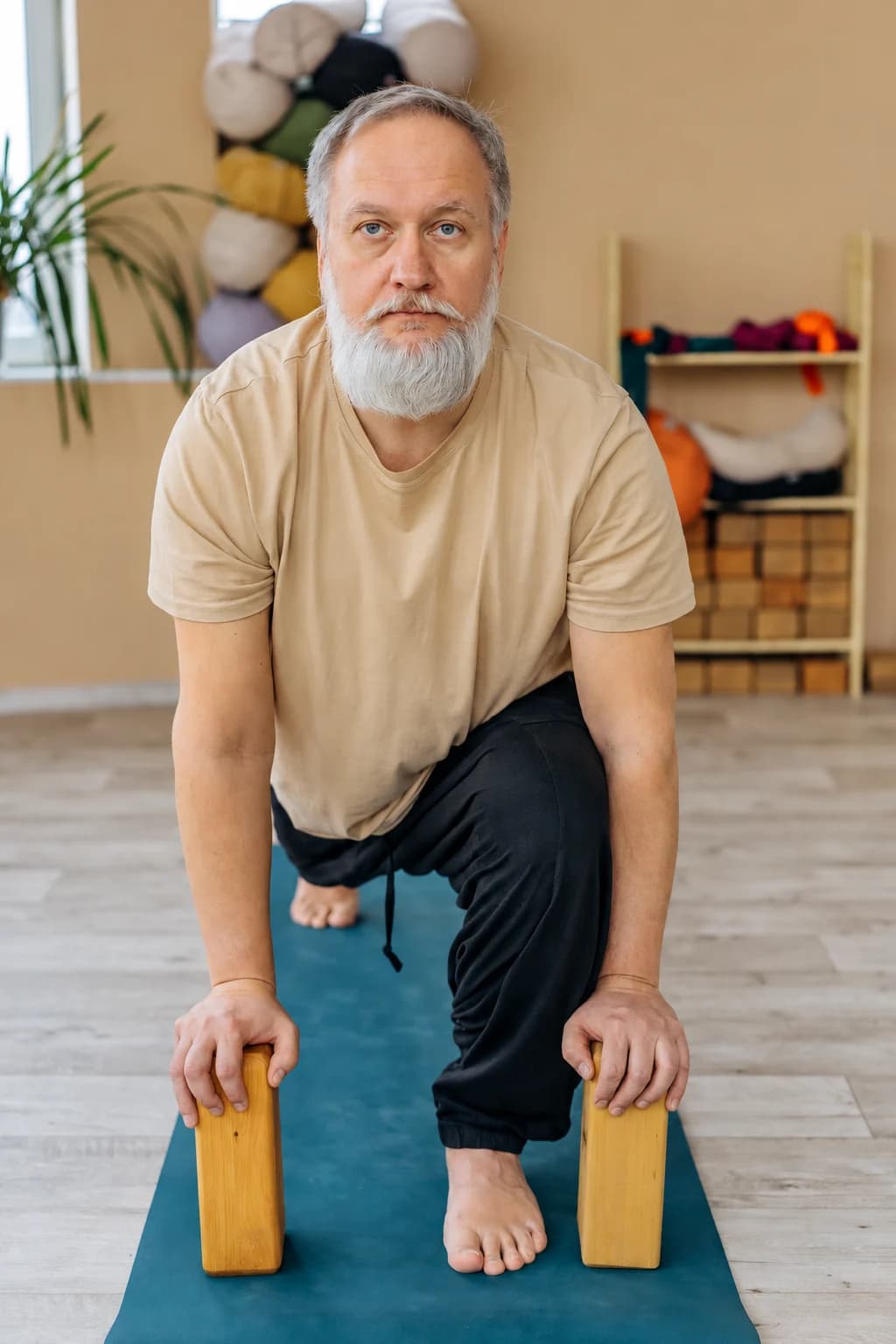
In Yoga Journal's Standing Half Forward Bend guide, blocks provide hand support while you lengthen the back. Place them beside or slightly in front of the feet, about shoulder-width apart. Select a matched height before entering the position.
- Stand with a comfortable foot spacing and soft knees. Hinge from the hips, bringing your hands onto the blocks without reaching for a deeper fold.
- Lengthen the back and draw the breastbone gently forwards. Keep the neck comfortably aligned, rather than lifting the chin to look far ahead.
- Stay for two or three natural breaths as our short practice example. Adjust the knee bend and block height so you can maintain a comfortable long back.
- For the transition back to standing, soften the knees, bring your hands to your thighs and rise slowly with control. Reset the blocks only after you are comfortably upright.
If blocks are not high enough for your comfortable reach, Yoga Journal offers a chair seat as an alternative hand support. A higher support can make the task more manageable. You do not need to move your hands closer to the floor to complete the practice; choose the height that lets you use the position clearly.
A beginner yoga block sequence you can repeat
This is an editorial order for the two supported positions. The two-to-three-breath pauses and transitions organise a short practice; they are not a requirement to stay longer or move farther. Keep the blocks nearby and take your time moving between the floor and standing, using a transition you already manage comfortably.
- Prepare the pair on a level surface. Place one on its largest face for the seat and leave the other clear of your feet.
- Try the comfortable easy-seat version for two or three breaths, then uncross and extend the legs. Use the chair option if that suits you better.
- Come to standing when ready. Put both blocks at the same chosen hand-support height and check their placement before hinging.
- Try the supported half forward bend for two or three breaths, then use the hands-to-thighs transition to stand.
- Finish upright and relaxed. If you want another pass, return to the seated setup unhurriedly and change the shin crossing if comfortable.
One pass is enough to learn where the blocks belong and how you enter and leave each position. Repeating the same manageable setup on another day can be more useful than changing heights during every attempt. Give yourself time to recognise which arrangement lets you breathe and move without rushing.
Two useful setup questions
Can you practise with one block? The seated task uses one. The standing version described here uses a matched pair, one beneath each hand, so plan for both before beginning. If you use the chair alternative, arrange that support before hinging rather than trying to find it while folded forwards.
Should you lower the blocks as soon as the pose feels familiar? Choose height according to the position you can use comfortably. You can keep the same support and become more familiar with the entry, breathing and exit. A lower height is an option only when it continues to serve that task; it is not a condition for making the sequence worthwhile.
Let a useful practice feel well organised: stable support, a comfortable shape and a calm exit. Those are clear things to look for each time you set the blocks down, whether you use the same height again or choose a different support.