Rolling Like a Ball in Pilates: Prerequisites and Controlled Practice
Learn a named beginner ankle-hold version of Rolling Like a Ball: rounded shape, controlled roll and return to balance, with task-specific teaching cues.
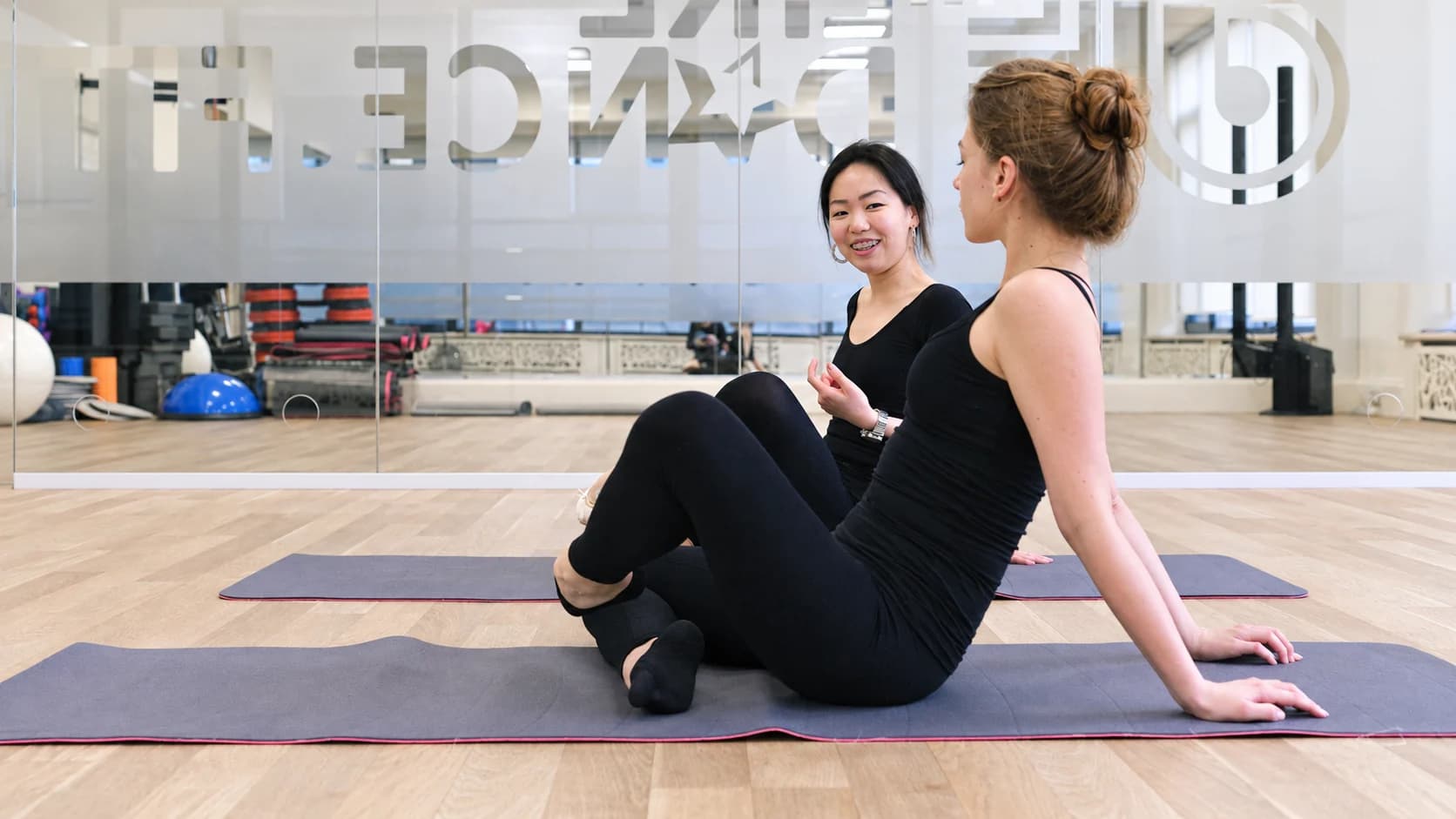
Rolling Like a Ball is a Pilates bodyweight mat exercise, rather than inflatable-ball practice. Here the method is certified teacher Lesley Logan's beginner ankle-hold version.
The teaching task is to maintain the chosen shape and control the movement. Getting backwards and forwards by any available means is not the same task. Keep the named version clear before following another demonstration or adding a different grip.
Confirm the version before practising
| Part of Logan’s ankle-hold lesson | What to identify | Question for the teacher |
|---|---|---|
| Version | Bodyweight mat exercise with one hand on each ankle | Is this the version your lesson teaches? |
| Start | Seated balance, heels together and knees apart | Can you help me establish the taught shape? |
| Backward endpoint | Towards the shoulder blades while keeping the shape | What is the limit for this version? |
| Return | The stated seated balance | How should I practise the return without adding momentum? |
The Pilates rolling ball exercise: one complete source version
Follow Logan's published lesson for the demonstration and its teaching context:
- Sit near the top of the mat, one hand on each ankle. Lift both feet, with heels together and knees apart.
- Look towards the heels or your centre without over-flexing the neck. Keep an active rounded shape.
- Press shins into hands and hands into shins; reach the thighs forward as the abdomen draws back.
- Maintaining that shape, roll backwards towards the shoulder blades, then forwards to the seated balance. Avoid collapsing or relying on momentum.
Logan gives three to five repeats for her lesson and asks whether you can make and maintain the shape. The cycle finishes at the stated seated balance.
Why the rounded shape and initiation matter
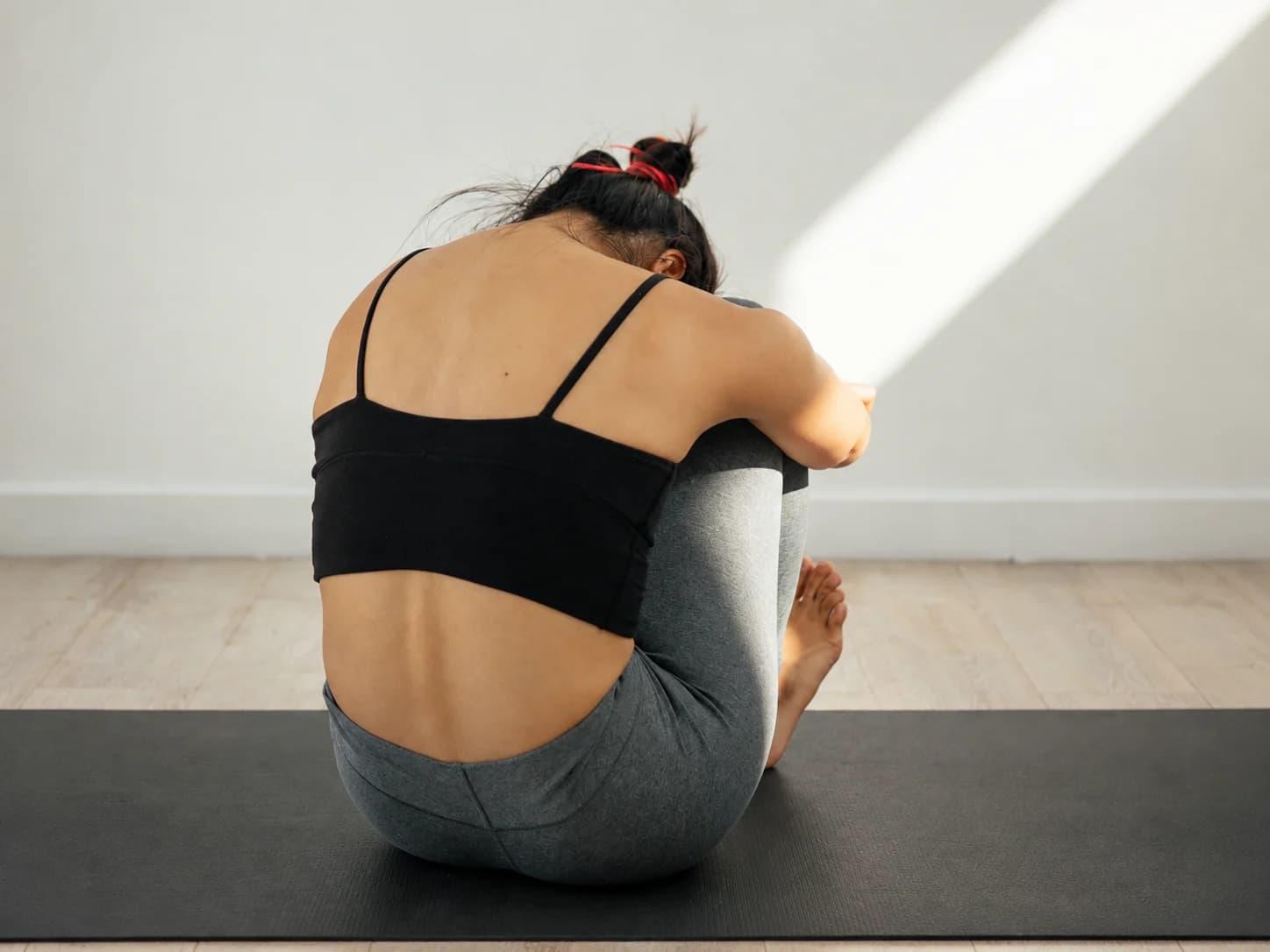
Monica Wilson's task-specific tutorial explains this particular exercise through its rounded form and initiation. Wilson is a Romana's Pilates certified teacher. Her tutorial uses a different preparation and grip, so the points below explain the task without replacing Logan's method above.
| Teaching point from Wilson | What it helps you distinguish |
|---|---|
| Keep the rounded form. | The shape is part of the exercise, rather than a position to abandon in order to complete a roll. |
| Initiate through abdominal and lower-back movement. | This differs from throwing the head or legs to manufacture the backwards-and-forwards action. |
| Spend time on preparation and balance when needed. | A full roll is not something to force simply because it appears next in a demonstration. |
These points make the mechanics of the task more specific than simply travelling backwards and forwards. Use them to understand the teacher's task instead of judging an attempt solely by whether you travelled far enough.
Rolling like a ball progression is specific to the lesson
Keep a preparation attached to the version that teaches it. Wilson's tutorial and Logan's ankle-hold lesson are related professional explanations, but they are not a menu of interchangeable hand positions and props. Combining the easiest-looking detail from each would create a third version that neither source has taught here.
If maintaining the chosen form or returning with control is unclear, identify that specific component with the teacher before adding a more demanding attempt. That is more useful than inventing a minimum hold, counting increasingly forceful rolls or using the repetition range as proof of readiness.
The distinction also matters when using another exercise as preparation. The seated Half Roll Back guide teaches a separate movement with its own start and return. Completing it does not automatically establish that Rolling Like a Ball is the appropriate next step for you.
Arrange the mat and space for the named exercise
The source lesson calls for a mat. Arrange the practice area before taking the starting position, with room for the taught movement and its return. Keep bags, folded equipment and other loose objects outside that area. Make adjustments after finishing the exercise rather than moving equipment during the roll.
The PBGGAME blue cross-fold exercise mat is a floor-mat format to compare with the requirements of the class. It contains one textured mat with lengthwise and crosswise fold lines, with a storage bag listed as included; TPE is the listed material. Those details describe the product format, rather than confirming that this particular mat is suitable for Rolling Like a Ball.
Choose a surface that meets the actual lesson requirements, then follow its model instructions for arrangement. Keep the teacher's movement path and return unchanged. Fold lines and storage features are not instructions to add a larger roll or improvise extra padding from folded sections.
Use the exercise name when seeking clarification
A useful question is specific to what you are learning: “I'm following the ankle-hold Rolling Like a Ball version, and I need help understanding the return.” That identifies the lesson and the component without asking for a new variation by accident.
Keep the same distinction when searching for equipment. A mini Pilates ball, stability ball or ball-supported exercise is a different subject. No ball product is needed for the source-defined bodyweight movement described here.