Standing Pilates Routine: Control Without Floor Transitions
Follow a genuine beginner class’s two-movement upright Pilates excerpt, with its standing start, change of stance, controlled actions and shake-out finish.
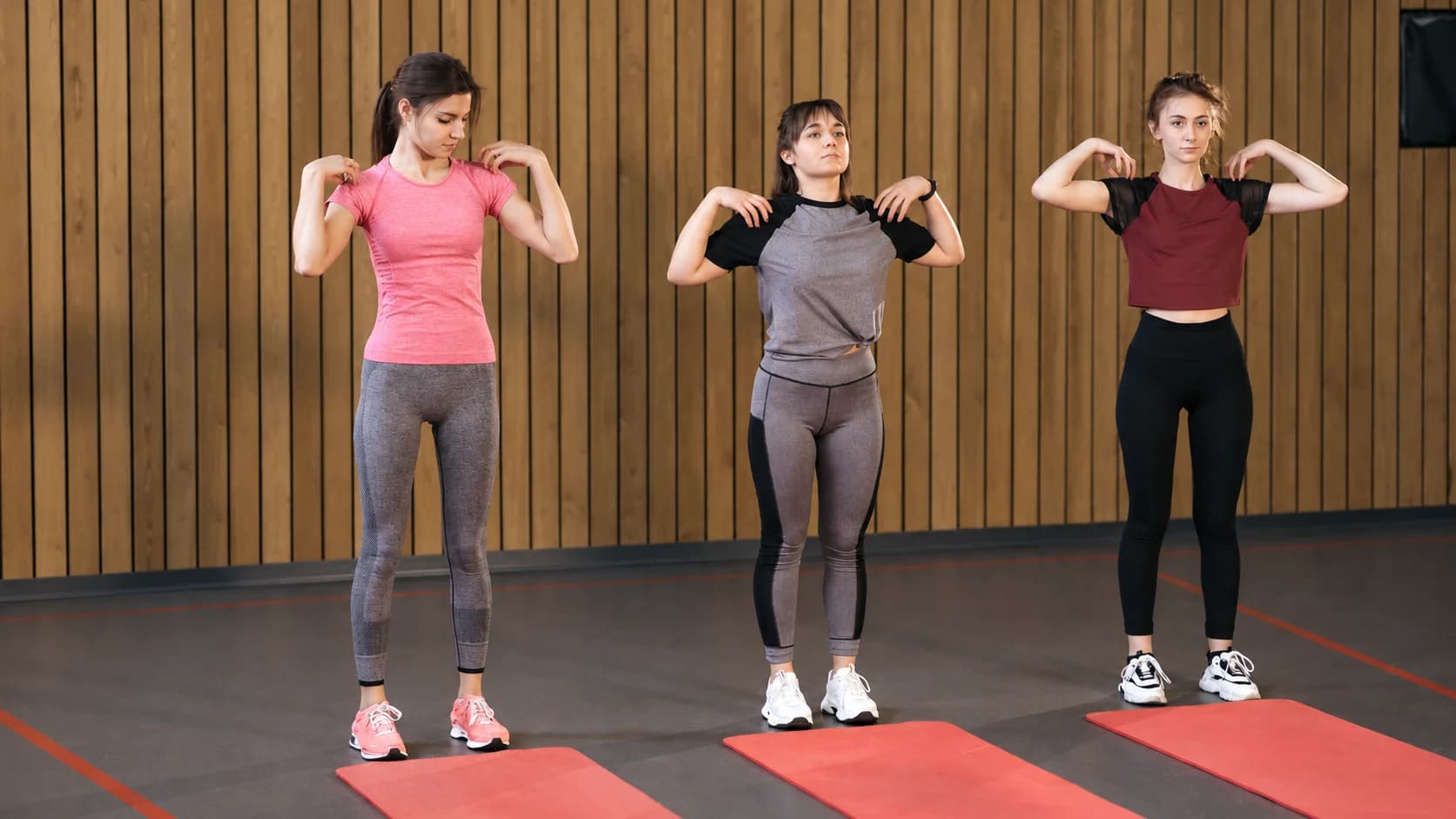
This standing Pilates routine takes two upright elements from Gia Calhoun's beginner class at Pilates Anytime. They stay standing; the full lesson later includes floor work.
Here the task is to follow a connected upright sequence with deliberate movement. You do not need to turn it into a standing yoga flow, a chair routine or a loaded leg exercise to give it a clear purpose.
Standing Pilates for beginners: what the format offers
Standing describes where the practice takes place; the teacher's method supplies its content. This excerpt keeps the start, change between movements and finish upright. That can suit someone choosing a lesson without getting down to the floor, while still leaving the lesson's actual level and suitability to be considered.
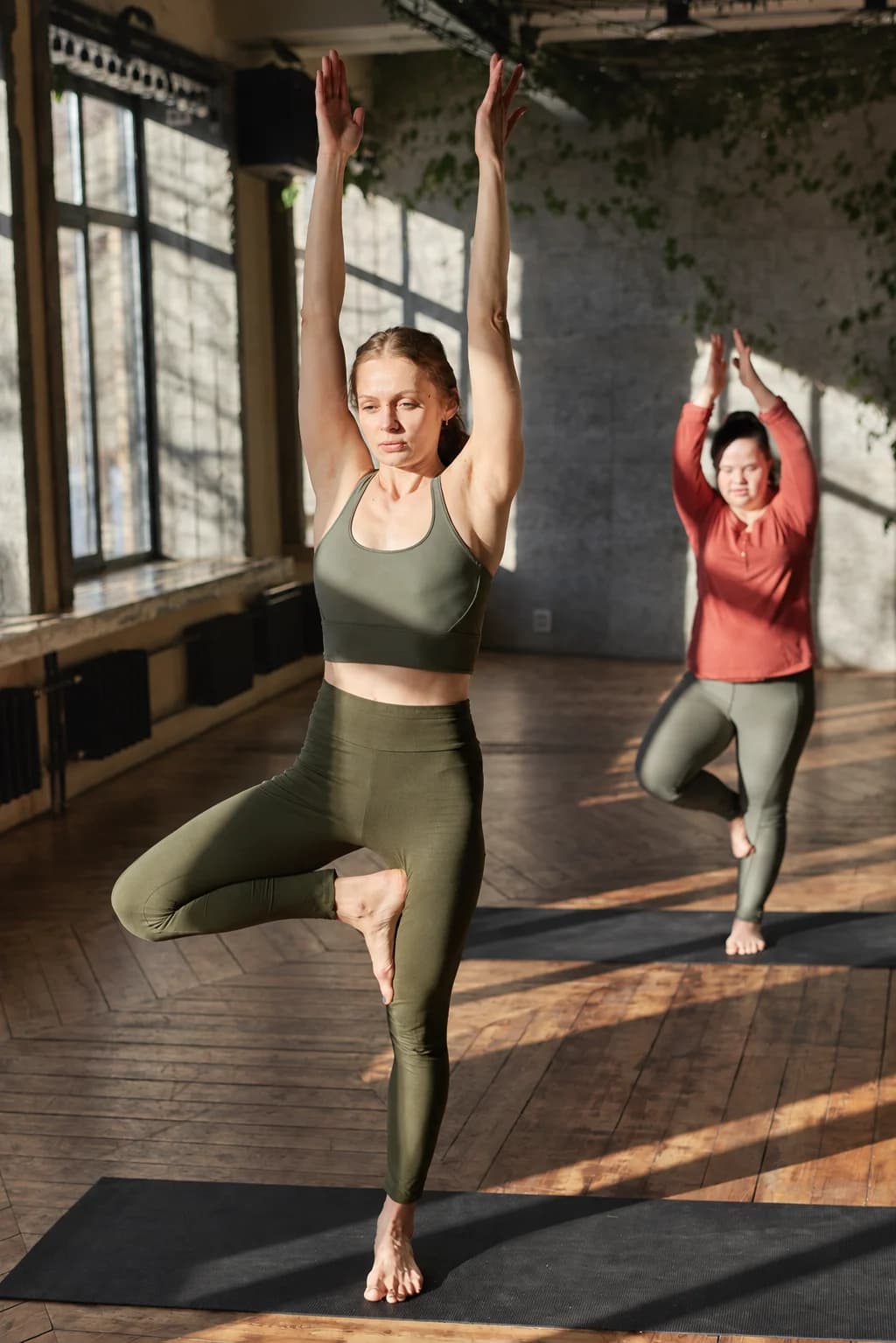
APPI founder Elisa Withers' beginner standing class describes slower, deliberate work with attention to control and pelvis and spine placement. That is a useful principle for understanding the format. Upright Pilates need not be judged by speed, extra equipment or how high a lifted leg travels.
The APPI description is a separate class, rather than the source of extra movements to insert here. Its roller work is not included in the Gia Calhoun excerpt below. Choose the named sequence you intend to follow and keep its teaching consistent.
Before opening the full class
This page selects an upright two-movement excerpt, not an entirely standing class. The complete Gia Calhoun class continues beyond that excerpt, including floor work. If remaining upright matters, resolve the full class order and a taught alternative before joining.
| Find in the linked class | Check before you follow it |
|---|---|
| Starting narrow-V and genie-arm arrangement | Ask for the stance or arm detail if unfamiliar |
| First and second named standing movements | Locate both in the complete demonstration; do not add height from a context photograph |
| End of the upright excerpt | Use the taught ending and decide separately about continuing to floor work |
Upright Pilates exercises: a connected two-part excerpt
Follow Calhoun's published class for the demonstration of the stance and arm position:
- Stand parallel with the feet hip-distance apart. Fold the arms in front in the teacher's “genie” position.
- Alternate lifting a knee towards the arms and lowering it. Keep the spine long; do not round forward or lower the arms to meet the leg. Continue breathing naturally.
- Bring the heels together and toes apart into a small V. Alternate lifting a knee towards the side and lowering, staying upright without leaning or dropping the arms. Allow only the weight shift the movement needs.
- Finish by shaking out the legs and arms, as the teacher does.
The two elements have an order and a shared standing setup. The finish belongs to the excerpt too; it is not necessary to add another drill to make the short sequence count as practice. Use the complete class for the instructor's pace and amount, rather than borrowing a repetition target from another routine.
Control is a movement task, not a height target
Think about the information a cue gives you. A starting position establishes the arrangement you are working from. A movement instruction describes the action. A finish tells you how that piece ends. Keeping those roles clear makes the sequence easier to follow without turning every instruction into a challenge to do more.
The slower, attentive approach described by APPI gives you time to notice the execution. Use that attention to understand the task you have been given. A photograph of a higher leg lift does not supply a new target for this lesson, and adding equipment introduces a choice the excerpt has not taught.
If the narrow-V stance or genie-arm position is unfamiliar, have the teacher explain that starting detail before using the sequence. That is a specific setup question. It is different from changing the exercise midway to resemble something you already know.
Choose the standing surface before the sequence
Calhoun explicitly allows moving from the mat to the floor when the mat's cushioning makes balance more difficult. A thicker or softer surface is therefore not automatically the choice for this upright excerpt. Follow the lesson's surface guidance and check the area before beginning.
If an ordinary mat suits the class setup, the PBGGAME Grey cross-fold TPE mat with storage bag is an optional class-surface choice. It includes one mat and one storage bag, with listed dimensions of 182.9 by 80.0 by 0.8 centimetres. The care instruction is hand wash only.
Unfold it completely and keep the practice area clear of its bag and other loose items. Its folding format concerns packing and storage; the mat is not a balance aid or a required purchase for the sequence. There is no reason to add a thick panel mat, blocks or a resistance prop simply because another Pilates lesson uses them.
Check the whole class when floor transitions matter
An upright excerpt and an entirely standing class are different booking choices. If remaining upright is important to you, check whether a full class changes position later and whether a clearly taught standing option is available. A class name alone may leave that question unanswered.
Ask about the actual order of the session and how options are introduced. That lets you choose a complete lesson whose format fits your needs, rather than discovering a floor section after you have begun. Keep any personal participation restrictions part of that conversation instead of assuming “beginner” describes every requirement.
For a broader choice between practice styles, the yoga versus Pilates guide explains that separate decision. The routine here remains a named upright Pilates excerpt with its own movements and finish.