Tennis Conditioning: Build Fitness Around Your Court Sessions
Plan tennis conditioning around practice and matches. Try a clear 23-minute session with a simple route, short work intervals and timed recovery.
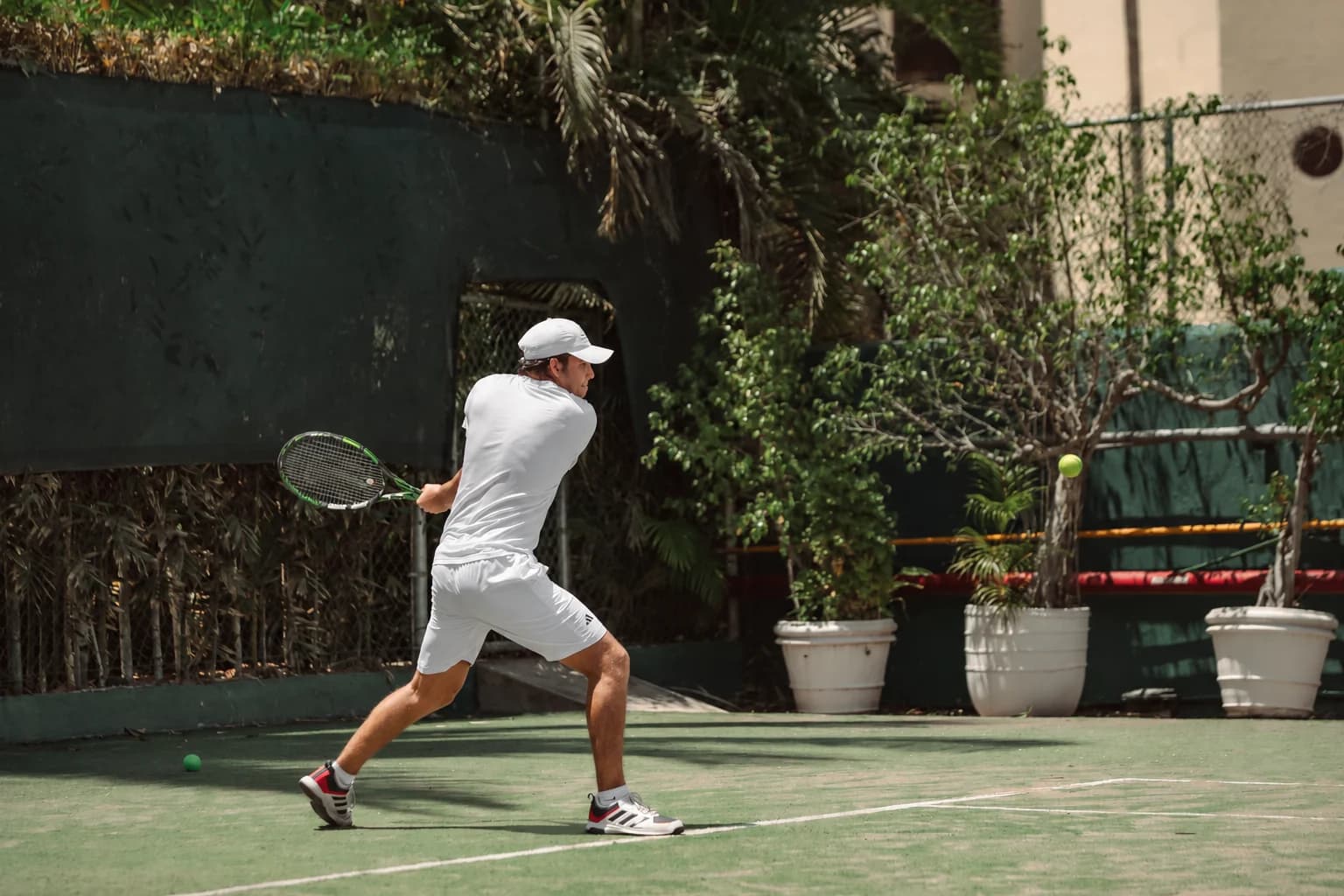
Plan tennis conditioning around your actual time on court. Start with the practices and matches already in your week, then decide whether a separate fitness session has a useful place. A clear route, a work timer and a recovery period are enough to organise a simple session without adding stroke instruction.
This guide uses tennis as a worked example of conditioning for court sports. The session below is an editorial starting arrangement for controlled movement. Its timings help you organise the work; they are not a prescribed programme for every player or every court sport.
Start with the tennis already in your week
Write down your next practice, lesson and match before choosing a conditioning slot. Note which outings are likely to involve sustained play and which have a lighter purpose. A long match and a demanding practice both belong in that picture, even if neither is labelled a fitness workout.
USTA's 2024 Training Block Recommendations discusses strength and conditioning within high-performance tennis schedules. Its planning guidance keeps actual on-court practice a priority and considers the overall workload with the tennis coach. The useful principle here is to plan the week together, rather than treating conditioning as an automatic extra.
Identify the court session you most want to approach with energy, then avoid squeezing an unfamiliar conditioning workout immediately before it. If you work with a coach, share the fitness session you intend to add.
Give today's session one clear job
Choose whether today is a standalone fitness session or a small addition to a lighter court outing. That decision determines how much of the example you need.
- Standalone conditioning: use the complete example below when the surrounding court schedule leaves room for it.
- After a lighter practice: keep the practice's purpose first, then use one short work block if it fits the day.
- Around demanding play: let the match or hard practice occupy that part of the schedule and choose another opportunity for additional work.
Keep a separate goal for a lesson. Learning or changing a stroke needs its own attention; a timer-based fitness block gives you a different task to follow.
Keep court-sport fitness drills simple
Choose a clear lane with two visible endpoints and enough room to slow and turn comfortably. Existing court lines may already give you everything you need. Check the route by walking it in both directions, including the space beyond each endpoint.
Use an out-and-back route with a planned turn. Choose brisk walking, or an easy jog if that is already familiar, and keep that choice consistent through the block. Follow the timer and repeat the same task.
If the line intersections are hard to identify, the optional 12-piece, nine-inch TPE floor-spot set can mark the endpoints. Place two spots beside the lane, where they are visible without requiring you to step on them. Check that they stay in place on your surface and put the unused spots outside the movement area.
Court-sport fitness drills are easier to repeat when you can remember the route without looking down at a complicated layout.
Try a 23-minute tennis conditioning session
WTA's sport-science guide to tennis energy systems describes different work-and-rest patterns for different training aims. Its speed-and-agility examples include 15–45 seconds of work, 30–90 seconds of recovery and repeated efforts. Those are tennis-specific examples, rather than one timing rule for all court activities.
The arrangement here selects 15 seconds of controlled movement and 45 seconds of walking or rest. The pace, route and complete 23-minute sequence are this guide's editorial adaptation, not the WTA's full programme. Set an interval timer for five rounds of that one-minute cycle. Include all 45 seconds of recovery after the fifth effort, so each block lasts five minutes.
| Stage | Time | What to do |
|---|---|---|
| Preparation | 6 minutes | Walk easily for 2 minutes, walk more briskly for 2 minutes, then rehearse the route at an easy pace for 2 minutes. |
| First work block | 5 minutes | Move for 15 seconds, then walk easily or rest for 45 seconds. Complete five full cycles. |
| Additional reset | 2 minutes | Walk, check the lane and decide whether another block suits the day. This is additional to the block's final recovery. |
| Second work block | 5 minutes | Repeat five full 15-second work and 45-second recovery cycles, using the same route and movement choice. |
| Easy finish | 5 minutes | Walk easily, gradually settling the pace. |
| Total | 23 minutes | Complete both blocks only when that version fits the day. |
For a shorter standalone option, omit the second block and the separate two-minute reset: preparation, one block and easy walking total 16 minutes. Choose the version before you begin, with room to shorten it if needed.
Print the five-cycle timer card
| Cycle in each block | Controlled work | Easy walking or rest | Cycle complete |
|---|---|---|---|
| 1 | 15 seconds | 45 seconds, including after cycle 5 | _____ |
| 2 | 15 seconds | 45 seconds, including after cycle 5 | _____ |
| 3 | 15 seconds | 45 seconds, including after cycle 5 | _____ |
| 4 | 15 seconds | 45 seconds, including after cycle 5 | _____ |
| 5 | 15 seconds | 45 seconds, including after cycle 5 | _____ |
The route is a clear out-and-back lane with room beyond both endpoints for controlled slowing and turning, not a prescribed distance. Use planned direction-change versus later-cue decisions to identify the task, and the agility warm-up guide for gradual preparation.
Make each work interval easy to follow
Start at one endpoint when the work timer sounds. Travel towards the other, slow for the planned turn and return along the lane. Continue on that route until the 15 seconds finish, then ease into the recovery period. Count the interval, rather than racing to squeeze in another length.
Keep the effort controlled enough to follow the same route throughout the block. If you begin rushing the turn or overshooting the endpoint, reduce the pace on the next effort. Moving the boundary farther away is another option when the available space allows a more gradual turn; walk the revised route before restarting.
Give the 45-second recovery its full place in the cycle. Walk slowly in the clear area or rest at the side, then return to the starting point before the next work signal. Keep other players' routes clear while you reset.

Fit tennis conditioning sessions beside practice
The full example is easiest to organise as its own short outing. When you combine it with court practice, decide the sequence around the purpose of that practice. If the lesson or planned tennis work takes priority, complete it first and reassess whether the short conditioning block still fits.
For example, a lighter practice day could finish with five rounds of 15 seconds of familiar movement and 45 seconds of recovery, followed by easy walking. Use the preparation already completed only if you are still ready to move; after a long pause, begin gradually again. This is an editorial scheduling option, rather than a rule that every practice should end with intervals.
When play becomes longer or more demanding than expected, adjust the plan to what actually happened. Record the conditioning block as omitted when it no longer fits. Tennis conditioning sessions should be part of the whole week's activity.
Change one part of the plan at a time
Repeat the same setup long enough to learn how it fits your week. If the single block is manageable and leaves room for the court work you planned, the second block is an available next step. Keep the route and timing unchanged when you make that adjustment.
Adding another block, moving faster and cutting recovery all change the task. Choose one adjustment so you can tell what you changed. Keep the other parts of the session familiar, and review the next court outing before deciding to add more work.
If the opening preparation needs more attention, Warm Up for Agility Practice offers a gradual sequence from easy steps to planned changes of direction. Use it to prepare for the route you choose here.
Keep a short note for next time
Record the date, nearby tennis sessions, movement choice and number of completed blocks. Add one useful observation, such as “kept the same route throughout” or “shortened the session after longer practice.” That gives the next session a concrete starting point without turning each outing into a test.