Speed vs Agility vs Change of Direction: Different Training Jobs
Distinguish linear running speed, planned direction changes and later-cue responses. Learn how to read a drill's task, observation and claims about quickness.
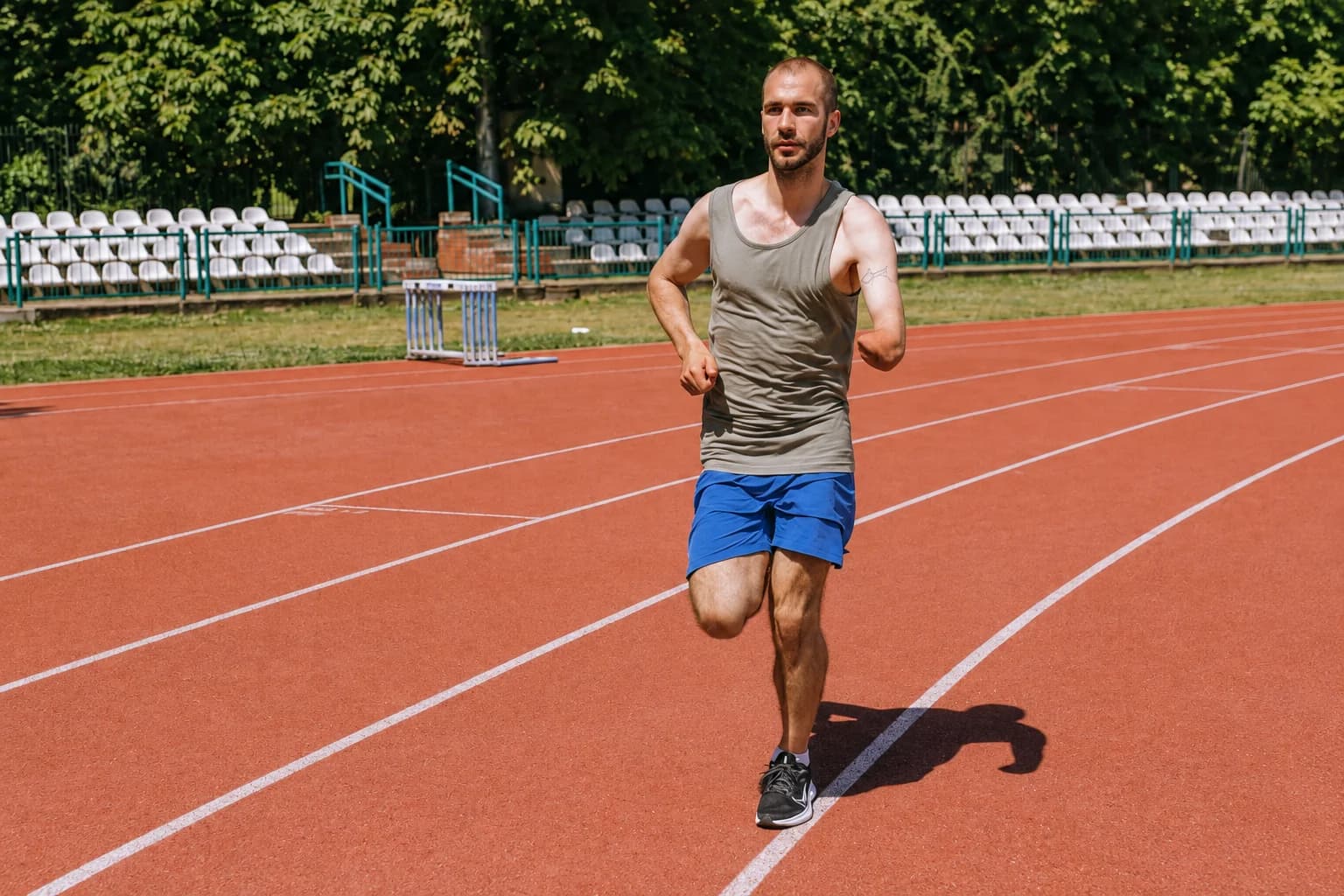
Speed, agility and change of direction describe different tasks. Before judging a drill, ask what movement is required, what the participant knows before starting and whether a later cue changes the action. A straight run, a memorised turning route and a colour-called catch can all look quick while asking different questions.
Use those questions to choose practice and to read claims about results. An exercise can be useful for a particular job without serving as a complete test of running speed, whole-body agility or every quality described as quickness. A single drill can include more than one demand, so name each part that matters.
Speed versus agility: identify the decision
In his official 49ers Fitness Corner column from 2005, coach Duane Carlisle describes speed in terms of how rapidly movement occurs between points. His examples include several directions. For clarity, the straight-travel example below is called linear running speed; speed itself is not limited to running straight ahead.
| Task illustration | What the task includes | What you can observe |
|---|---|---|
| Travel along a known straight path | Linear running movement under the stated starting and route conditions. | Travel between the defined points. |
| Complete a turning route known beforehand | Predetermined change of direction. | Execution of that known movement and route. |
| Choose a whole-body direction from a later cue | Reading the cue, choosing and moving in response. | The decision and movement within that particular task. |
| Select a called colour during a hand-catching task | A hand-specific response and contact task. | The selected contact or catch, rather than running travel. |
These are illustrations for reading tasks, not standardised tests or a maximal-sprint programme. A practice task only becomes a particular measurement when its procedure and recorded outcome are defined. A still photograph cannot establish elapsed time or when a cue occurred.
A route known now and a direction chosen later
| Reading example | Information known before movement | What a later signal changes | What the note describes |
|---|---|---|---|
| A: planned route | The route and turning direction are already specified | A start signal only starts the known task | Completion of that planned direction-change task |
| B: later direction cue | The available choices are understood, but the next direction is not yet given | The cue determines which direction to choose | The decision and movement under that stated cue rule |
Change of direction training can follow a known route
The NSCA change-of-direction adaptation guide distinguishes a predetermined direction change from choosing a direction in response to a later visual or auditory cue. Use that distinction to describe what the participant actually has to do.
If the route goes left and then right and everyone knows that before starting, the task asks for execution of a known route. It can still be worthwhile movement practice. Adding more changes of direction does not automatically add a new decision about where to go.
A start signal can also tell the participant when to begin while leaving the route entirely known. That adds a response at the start, but it does not by itself make the direction an unknown choice. Ask whether the cue determines the action or direction, rather than only the starting moment.
Agility versus quickness: define the action
Carlisle's older coaching column acknowledges that quickness is a vague term and groups ideas such as limb speed, acceleration and reactive ability under it. That makes “quickness improved” incomplete unless the action and observation are named.
Ask whether the claim concerns starting a movement, moving a particular limb, changing whole-body direction or selecting a response. Those descriptions give the word a usable context. They do not require inventing one score that represents every form of quickness.

For example, a colour-called catching task can involve choosing a hand contact after receiving information. Describe its result as a hand-specific task. It does not measure running pace or execution of a whole-body turning route, and success at catching alone does not demonstrate an improvement in those tasks.
Read what a drill actually challenges or measures
Start with the instructions before the equipment name or the fastest-looking moment in a video. The following questions make a drill description more useful without prescribing a new test.
- What is known before the attempt? Identify the route, movement pattern and available choices.
- Is there a later cue? State what it is, when it becomes available and whether it actually changes the action.
- Which part of the body performs the observed task? Distinguish hand contact from whole-body travelling movement.
- What is recorded? Completion, correct selection and elapsed travel time describe different outcomes.
- What defines the result? For a recorded time, identify the start and finish events; for a selection task, identify the required choice and how errors are treated.
A better time through an unchanged, known turning route is a better result for that procedure. If the task never included a later direction choice, the time cannot isolate an improvement in that choice. Likewise, more correct hand contacts remain observations about the hand task unless another performance task is actually assessed.
When comparing attempts, keep the relevant procedure identifiable. A changed route, cue timing or recording rule changes the question. You can use the result to discuss that practice without turning it into a population ranking or a promise of better match performance.
Choose the practice job before adding difficulty
NSCA places movement familiarity and control before added complexity. Start with the learned movement appropriate to your goal. If the job is executing a known direction change, make that task clear. If the job includes a response choice, use an appropriate taught cue-based task once the movement is manageable.
Keep the observation aligned with the purpose. Notice movement execution in the known task, and both the choice and movement when a later cue is part of it. Several jobs can sit within a broader training plan, but each remains worth naming separately.
Once the task is clear, the ladder-versus-cone comparison explains equipment roles. For hand tasks, the hand-eye coordination guide provides existing practice context. Equipment choice follows the task description.
Two tools for different practice tasks
The PBGGAME three-arm rounded-end catch-trainer pair supplies two catch tools and a strap carry bag. Its coloured arms can serve an already taught, appropriate colour-called hand-catching task. Keep the observation specific to that task and follow its use instructions.
The PBGGAME twelve flat training markers with holder can organise route or direction references for a separately learned movement task. They supply spatial information; a later cue and its rules still need to be part of the actual instructions when response practice is intended.
Neither item is a running-speed instrument or a general agility score. Choose a tool when its role in the selected practice is clear. The pair count, marker count and colours describe the supplied equipment, not a measured training result.