Resistance Bands vs Weights: Choose for Your Training Goal
Compare bands and weights by training goal, space, movement fit and progression. Use a practical decision matrix to choose equipment for the job you need.

Choose training equipment by the task you need it to perform. A compact travel session, a small home space and a goal tied to a particular lift create different requirements. Bands and weights can both be useful, and you can choose a different tool for each exercise.
A choice record you can copy
| Decision field | Fictional example | Your entry |
|---|---|---|
| Task already taught | A familiar exercise in an existing plan | _____ |
| Equipment actually available | The prescribed weight is available; the band setup is not documented | _____ |
| Setup and range | Keep the taught weight exercise; ask the plan author before substituting a band | _____ |
| Reason for the choice | Available instructions and usable load, rather than a claim that weights are always better | _____ |
Begin with three questions: can it provide a suitable challenge, can you arrange the movement reliably, and can you repeat or progress it? Those answers tell you more than declaring one category the winner.
Are resistance bands as good as weights?
For general strength training, bands can be a workable option. The 2019 review by Lopes and colleagues compared eight studies and found no clear superiority for the pooled strength outcomes. Different populations and protocols were involved, so that finding does not establish identical results for every exercise, person or muscle-growth goal.
ACSM's 2026 guidance also recognizes home, band and bodyweight approaches. Regular, suitable training matters. If your goal is a specific barbell or dumbbell lift, practice with that implement remains part of the task. General strength and skill in a tested lift are related, but different targets.
Compare the training job before the equipment
| Your priority | Where bands can fit | Where weights can fit |
|---|---|---|
| Compact home storage | Several elastic options can take little storage space. | A limited selection may work if its loads fit your exercises. |
| Travel consistency | Familiar approved underfoot or body-contact setups may travel well. | Useful when suitable equipment is reliably available at the destination. |
| Specific lift performance | Supplementary exercises that address a clear task. | Direct practice with the implement used in that lift. |
| Small, identifiable load changes | Carefully repeat band identity, contact, grip, stance and range. | Known implement masses or suitable plate increments can simplify the load record. |
| A demanding lower-body task | Useful when permitted tension, grip and setup suit the movement. | A suitable range of weights may offer more loading options. |
| A particular direction of pull | A compatible approved arrangement can create a chosen line of pull. | A free weight pulls downward; body position or another exercise changes the task. |
Pick the row that describes your actual limitation. If storage is the problem, buying more weights may not solve it. If the available band is too easy within its permitted use, another suitable implement or movement may be more useful than more stretch.
A band label and a dumbbell mass describe different things
A dumbbell's mass stays the same as it moves. The muscular demand can still change with body position and the distance between the load and a joint. Known mass is useful for recording, but it does not mean constant effort through the whole repetition.
Elastic force changes with stretch. THERABAND's manufacturer explanation describes this behavior for its own products, including how use can affect their pull force. Its color system and force chart do not calibrate another brand's loops.
A printed pound range therefore cannot simply replace a fixed dumbbell mass. Compare the actual movement: does useful resistance occur across your intended range, and can you retain a workable grip and position? Keep adjustments within the product's permissions.
Notice what makes an option difficult to use
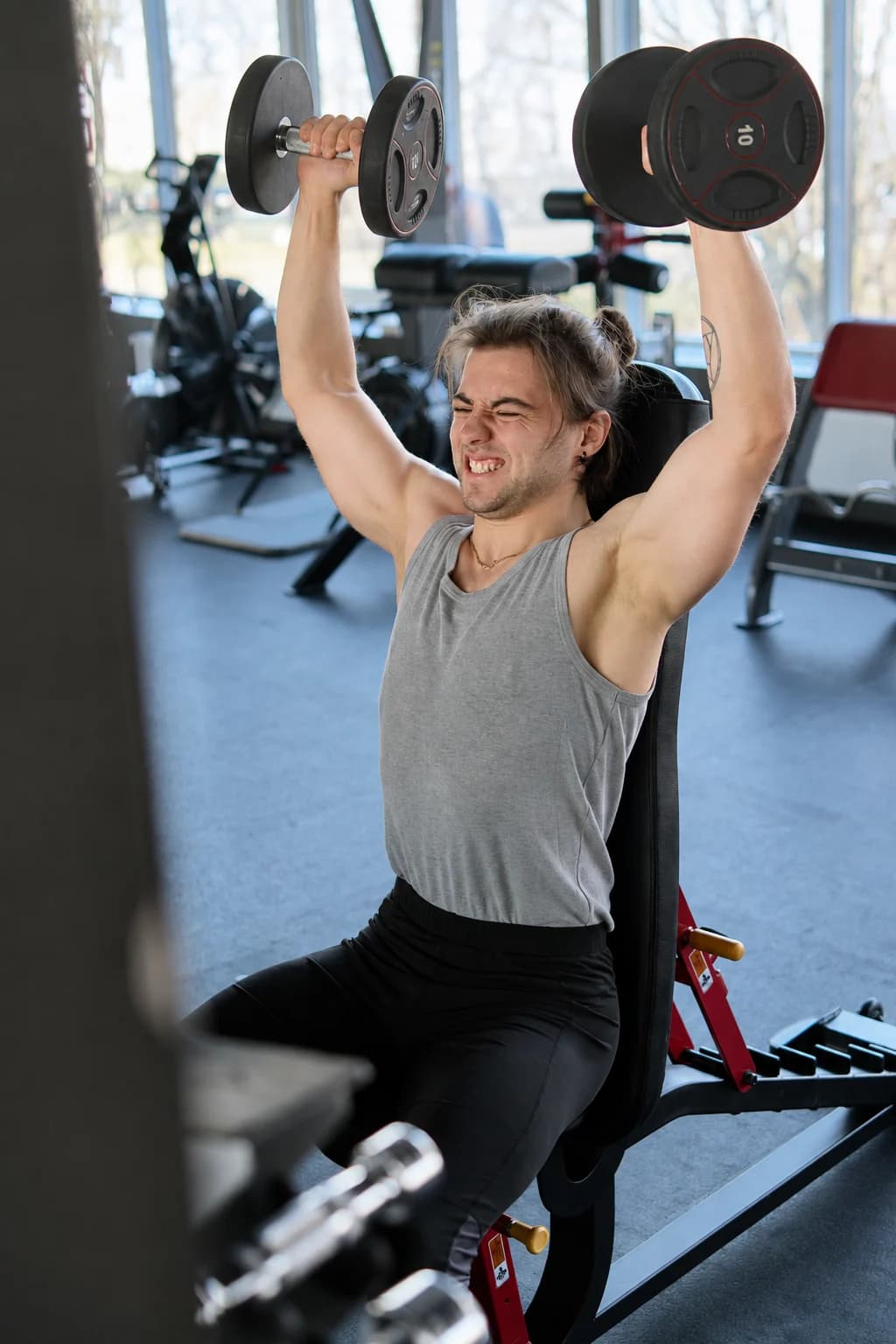
A clear label does not rescue an unsuitable exercise. A weight may be awkward to lift into position or too light for the task. A band may pull the hands out of position or demand an attachment you cannot provide. Grip, balance and setup time deserve attention alongside muscular effort.
- Choose a movement you can enter, control and finish without improvising the setup.
- Observe the whole comfortable range, including the return and the way you put the equipment down.
- Keep the intended task clear: a short hip loop and an underfoot long-loop hinge create different resistance arrangements.
- Stop for pain, slipping or damaged equipment. Neither category has a universal joint-safety advantage.
Make a practical comparison you can repeat
Compare familiar versions of the same broad movement pattern, such as suitable hinges, rather than forcing two exercises to look identical. Use manageable effort, similar rest and a repeatable comfortable range. Note setup, grip, balance and control separately from the repetition count.
Try each usable option again on another suitable day. One unfamiliar set is a poor basis for replacing all your equipment. This is a personal exercise-fit check, not an experiment proving which tool grows more muscle. For programming and a fuller log, use the home muscle-building and progression guide.
Two different formats to consider
The PBGGAME five-long-loop set represents elastic resistance: identify the individual loop and permitted setup when comparing work. The PBGGAME fixed dumbbell pair is source-listed at 1 kg per dumbbell, a light fixed load whose usefulness depends on the chosen exercise and your current ability.
Select the format that solves a real limitation. If either option cannot provide a suitable challenge, choose another appropriate load or exercise. The band-format guide helps distinguish long loops from short loops, straps and accessories.
Use both when each has a clear role
A mixed plan can allocate different jobs to bands, weights and bodyweight. Keep the setup for each exercise straightforward; attaching elastic to a loaded implement creates a separate system that needs its own guidance. You can gain variety simply by choosing separate exercises that fit the available equipment.
For a practical movement framework, see the full-body home workout. Make the equipment decision once you know the job, then give the useful option enough consistent practice to assess it.