Seated Half Roll Back: Learn the Pilates Roll Down Version
Follow the seated Half Roll Back from a named Pilates lesson: feet-down start, stated backward limit and rounded return. This is a partial seated movement, not a standing roll down.
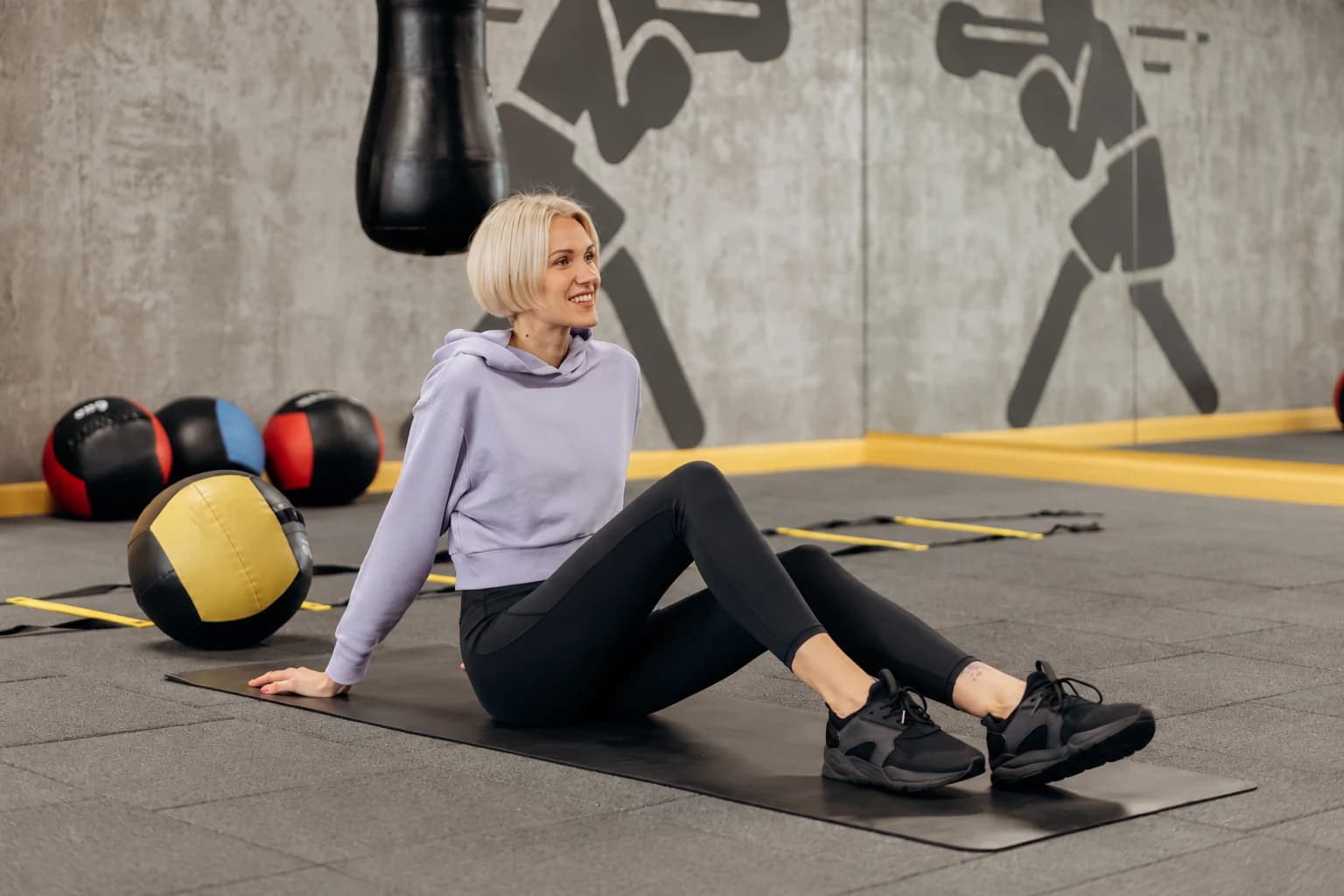
For a Pilates roll down lesson, this guide uses the beginner seated Half Roll Back from Lesley Logan at Online Pilates Classes, a certified Pilates teacher. This is a partial seated exercise, rather than a standing forward fold or a full descent to the mat.
Use the named version to understand the start, the movement's limit and the return. Reaching farther is not the task to add on top of those instructions. A useful first lesson is one you can follow as a complete movement, including its finish.
Keep the named seated version together
| Stage in the linked lesson | What identifies this version |
|---|---|
| Seated start | Knees bent, legs together, feet down and hands behind the thighs |
| Backward limit | Round back as the arms lengthen; use the lesson’s stated endpoint while keeping feet down |
| Return | Round forward with the long rounded shape retained, rather than haul with the arms or add an upright reset |
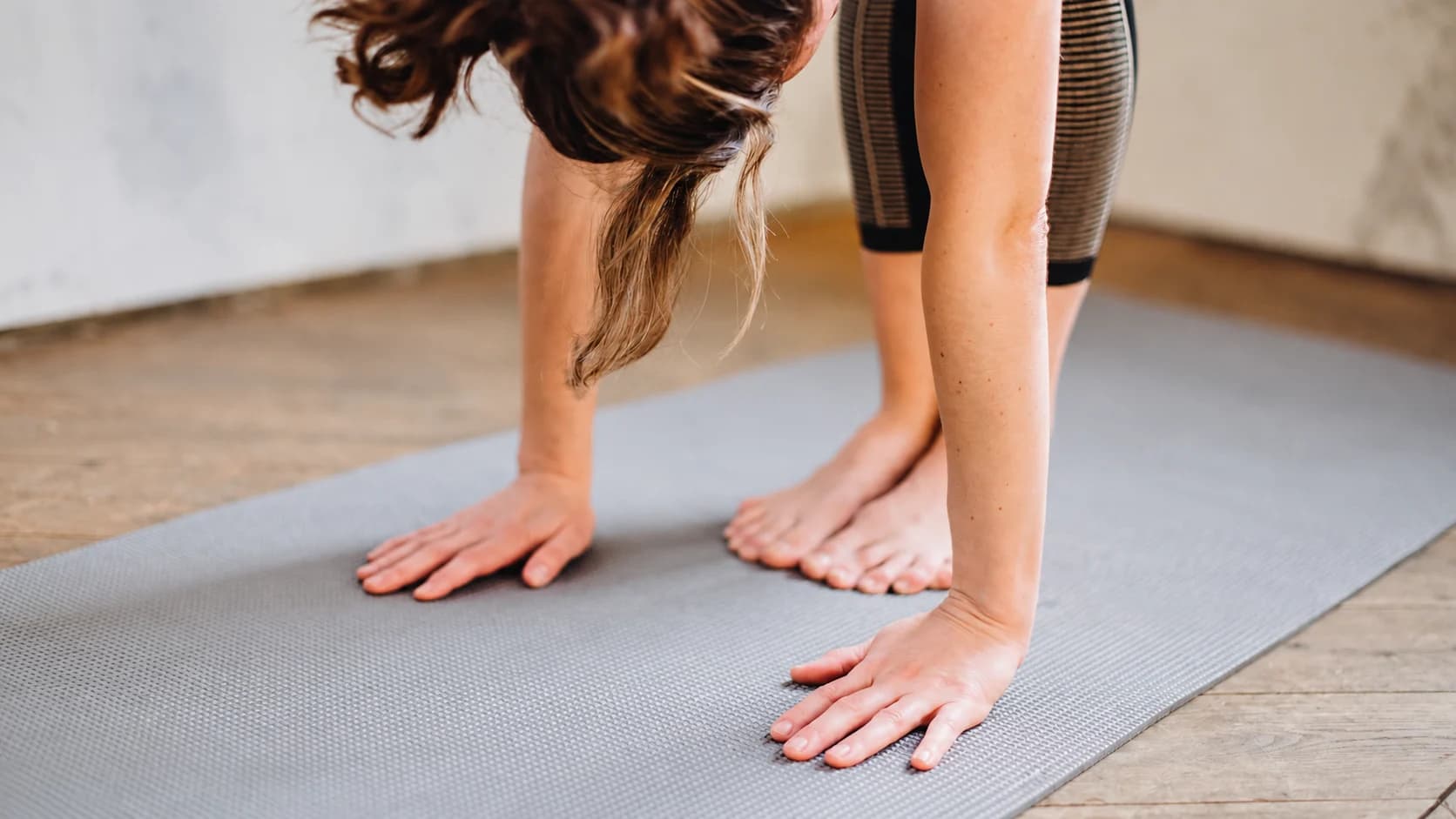
Use Lesley Logan’s actual seated Half Roll Back demonstration for the complete lesson. The standing forward-fold context photograph below does not demonstrate this seated sequence.
Pilates roll down for beginners: identify the lesson first
Check the teacher's starting position before following a demonstration. A standing lesson and a seated lesson arrange the body differently; instructions from one should not be inserted into the other. Here, use the Half Roll Back name when opening the linked lesson or discussing it with a teacher.
Read or watch the whole lesson before beginning. Note the equipment, the action being taught and any suitability information, rather than copying the middle of a video. Logan's page notes that this exercise may not be suitable for some back issues. Resolve any relevant restriction before choosing the movement.
Give yourself a clear view of the instructions without having to turn your head to read a screen during the movement. Keep the sequence available to review after finishing. That lets you separate learning the order from trying to remember several new cues at once.
Learn the seated Half Roll Back
Follow Logan's published Half Roll Back sequence:
- Sit with knees bent and legs together. If the knees are at 90 degrees, move the feet farther away. Press feet into the mat, hands behind thighs and shoulders on the back.
- Find a tall rounded shape; round backward as the arms lengthen, keeping feet down.
- Stop at straight arms or the lower back meeting the mat, with feet staying down.
- Pull the abdomen in, connect the front ribs and round forward. Keep the long rounded shape instead of sitting upright between cycles, and avoid hauling up with the arms.
Use the full source lesson for its demonstration and teaching context. Read the return as carefully as the backward movement: an exercise description is incomplete if you only notice its lowest position. Do not add a new endpoint simply because a different video shows a deeper version.
Pilates spinal articulation: interpret a cue about control
Kristin Loeer's discussion of control and precision at The Body Matters places attention on how movement is carried out. Loeer is a Pilates teacher and specialist biomechanic coach. Use that principle to direct your attention to the quality of a taught movement rather than treating its final shape as the only result that matters.
An articulation cue gives you something to attend to while following the lesson. It is not a request to prove that every part of the spine has moved by an identical amount. You do not need a photograph that looks more extreme to make the lesson worthwhile.
Keep separate instructions separate. A cue about the shape of the back, one about the feet and one about the arms may be given together, but they describe different parts of the task. Identify which detail you are trying to understand before changing another. If the words remain unclear, ask the teacher to explain that cue in the named exercise.
For terminology that comes up in other lessons, the neutral spine and imprint guide explains those separate cues. Do not treat every Pilates instruction about the spine as a direction to make the same shape.
A controlled roll down includes an understood return
After reviewing an attempt, describe what you noticed in ordinary language. Was the order clear? Did a cue become confusing? Were you trying to follow the instruction, watch the screen and increase the movement all at once? These observations give you something specific to clarify without turning depth into a score.
Choose one learning question for the next review of the lesson. You might need to locate the stated endpoint, understand a word the teacher uses or watch the return again. Keep the question attached to the published version. Adding a different arm position, support or starting posture would create another variation to learn.
Breathing cues deserve the same care. The Pilates breathing guide addresses coordinating effort without holding the breath. Use the actual lesson's instructions rather than borrowing a phase-by-phase breath pattern from a standing roll-down video.
Keep the seated practice area simple
Arrange an ordinary class surface with room for the taught movement and its return. Unfold a mat fully and remove objects that would interrupt the practice area. Position the lesson screen before sitting down, then make any equipment changes after finishing the movement.
For a portable class surface, the PBGGAME Grey cross-fold TPE mat with storage bag includes one mat and one bag. Its listed dimensions are 182.9 by 80.0 by 0.8 centimetres, and its care instruction is hand wash only. The foldable format is a packing choice; it does not choose the appropriate movement range for you.
Check the mat against the surface requirements of your lesson. Its thickness and foldable construction describe the equipment; the movement's instructions still determine the setup you are learning.