Calisthenics vs Weight Training: Choose a Useful Starting Point
Compare bodyweight and free-weight training by progression, learning, space and equipment. Choose a manageable starting task, with fair evidence and clear product roles.
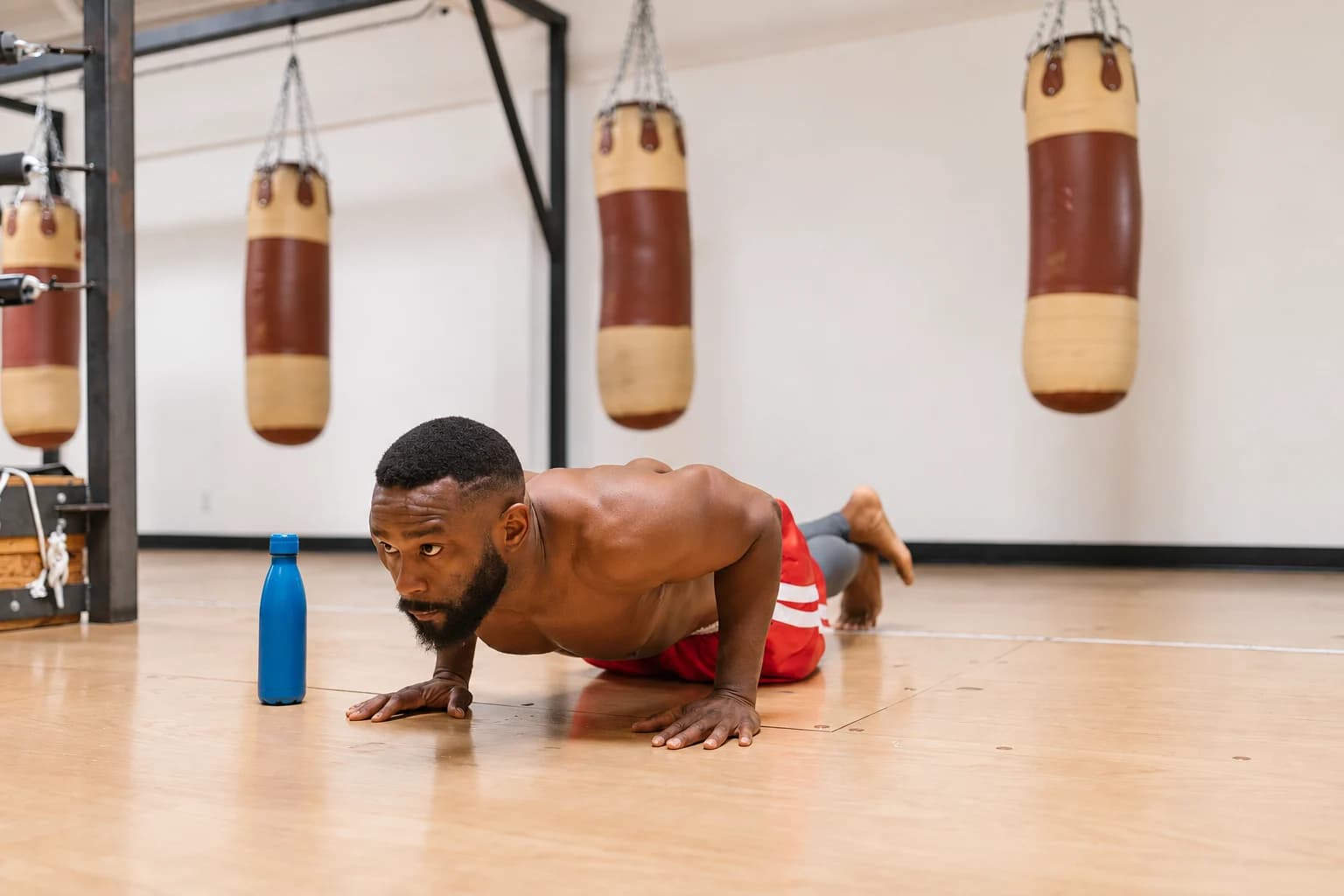
Calisthenics vs weight training is a choice about exercises, progression and access. Calisthenics uses bodyweight as the main resistance; free-weight training uses external implements such as dumbbells. Both still require a movement you can learn, a manageable challenge and a reason to keep practising.
Start with the task you want to train and the space and equipment you can use regularly. A bodyweight exercise can be too demanding in its standard version, while a particular dumbbell can be too light for your goal. The useful comparison is between workable exercise choices, rather than the labels alone.
Bodyweight vs free weights: compare the practical choices
| Same general goal: compare two taught pushing tasks | Bodyweight candidate | Free-weight candidate |
|---|---|---|
| Name the actual task | Familiar push-up variation: ____ | Familiar dumbbell pressing task: ____ |
| What makes this version manageable? | Support, leverage and repeatable range: ____ | Actual available load, support and handling: ____ |
| What will I record? | Contacts, range and controlled repetitions: ____ | Implement mass per hand, range and controlled repetitions: ____ |
| What could change next? | One documented variation or workload setting: ____ | One available load or workload setting: ____ |
| Where are the movement instructions? | Push-up contact and range guide | Home movement choices |
| Decision | Bodyweight approach | Free-weight approach |
|---|---|---|
| How difficulty changes | Support, leverage, range and the exercise variation can change the task. | The implement's mass is a clear variable, alongside the exercise and range. |
| What you need to learn | The chosen body position, contacts, movement and return. | Those same movement decisions, plus handling and controlling the selected implement. |
| Space and access | Some tasks need only clear floor space; others require suitable supports or equipment. | You need room for the movement, controlled handling and storage of the weights. |
| What to compare next time | The actual variation, support and range you practised. | The actual exercise, weight and range you practised. |
| What to buy | Only equipment needed by the chosen task; bodyweight does not always mean equipment-free. | A suitable load and implement, rather than any pair labelled for beginners. |
The ACSM resistance-training update recognises useful bodyweight and home-based approaches and emphasises training that fits individual goals and can be sustained. It does not require every person to use complex methods or take every set to failure.
Make the next progression understandable
With bodyweight work, name the variation rather than simply write “push-ups.” A knee-supported floor version and another learned version can have different support and leverage. Changing the position may also change what you need to coordinate. Choose a version you can control, and learn its details before treating it as the next progression.
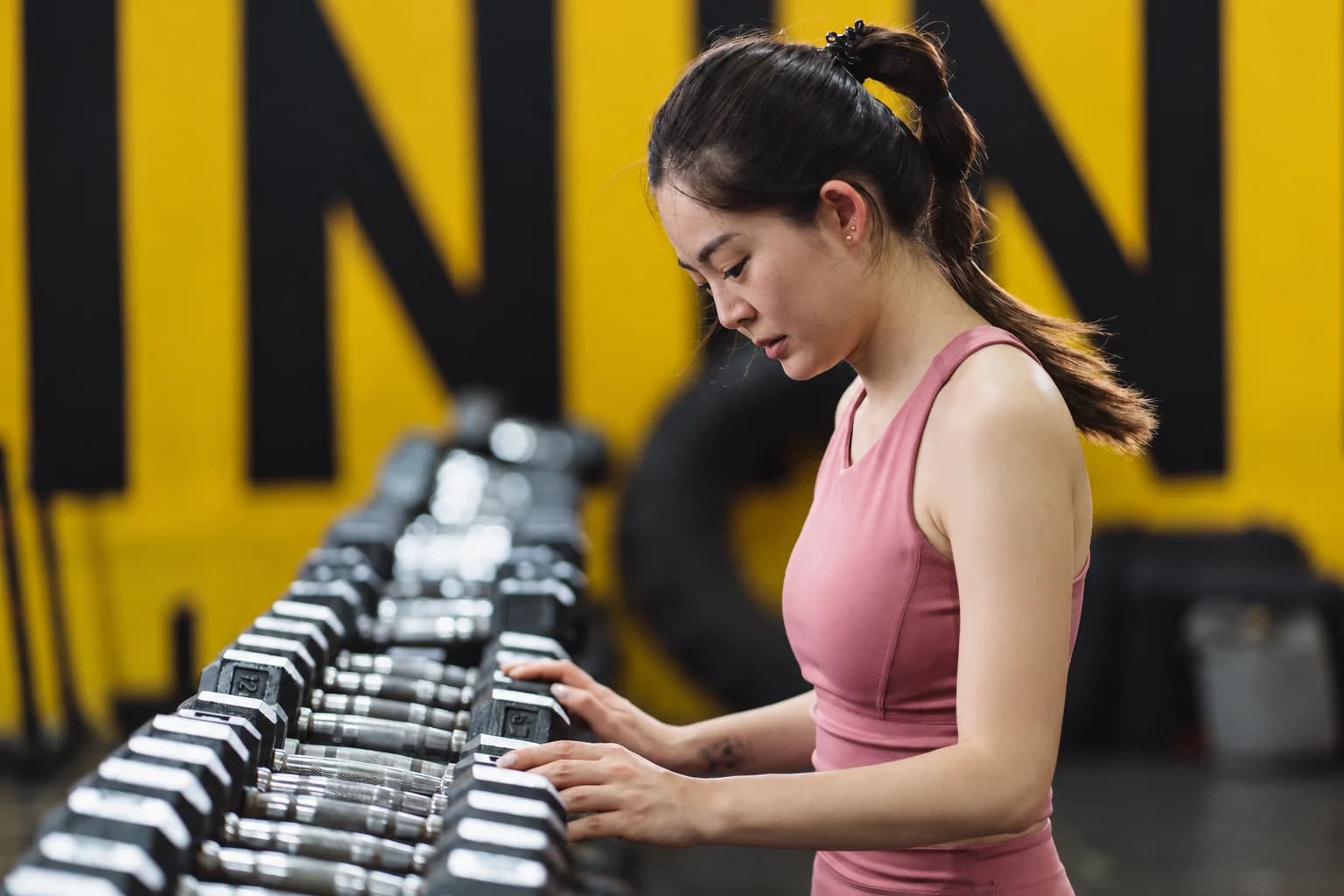
With free weights, a stated mass makes one change easy to identify. It does not settle whether you can handle that load through the intended movement and return. If a fixed pair is no longer an appropriate challenge, the next decision may involve access to another load; doing the same exercise faster is a different change.
For either approach, keep enough of the task consistent to understand your practice. Notice the exercise version, usable range and controlled return before changing several features together. More repetitions, a different leverage and a heavier implement are different decisions, even when all can make a session feel harder.
This also explains why buying equipment is only part of progression. Push-up supports change the hand contact and elevation; they do not automatically make a push-up easier or require a deeper repetition. The handles-versus-floor comparison explains those choices. A dumbbell gives a known external mass, but the person and exercise determine whether that mass is useful.
What a direct pushing comparison can tell you
A 2017 study by Kikuchi and Nakazato compared adjusted push-ups with low-load bench presses in 18 young men over eight weeks. Both groups improved chest and triceps muscle thickness and bench-press one-repetition maximum.
That is useful evidence for a specific pushing comparison. It does not establish that every calisthenics exercise and every weight exercise produce identical results, or that either approach wins across all goals. The researchers' loading and failure-based sets were study procedures, not a starting prescription to copy from this article.
Choose calisthenics for strength through a manageable task
You do not need an advanced skill to make a deliberate bodyweight choice. Begin with an exercise variation you understand and a clear purpose. If the standard version is beyond your current control, learn an appropriate supported or otherwise adjusted version instead of forcing it for the sake of the category.
The same reasoning applies to free weights. Choose a manageable exercise and load before considering how impressive the implement looks. An unloaded rehearsal may help you learn a movement; an available light pair may suit one task while providing little challenge for another. Neither format removes the learning step.
Choose a starting point you can actually repeat
- If your reliable space is a clear floor area, begin with suitable learned bodyweight tasks. Check what support each selected exercise actually needs before assuming the whole approach requires no equipment.
- If you have access to several appropriate weight options, choose familiar free-weight tasks whose loads you can handle and adjust. Include handling and storage in that decision.
- If you want a mixed approach, give each task its own reason for being there. A bodyweight exercise and a separately learned dumbbell exercise can coexist without becoming a special hybrid method.
- If neither available version is manageable, change the starting exercise or obtain instruction. Buying a harder implement or attempting an advanced bodyweight position does not resolve that mismatch.
Keep the initial selection small enough to learn and repeat. The building-muscle-at-home guide provides broader training context when you are ready to organise the exercises. This comparison helps you choose the format; it is not a complete full-body routine.
Two distinct equipment roles
Explore the PBGGAME wooden push-up bar pair for two low fixed wooden supports with wrapped grips and base pads. Match the hand-contact format to an appropriate learned exercise, follow the setup and surface instructions, and choose a controlled range that suits your current practice.
The PBGGAME 1 kg dumbbell pair supplies two fixed weights at 1 kg each, or 2 kg together. That is a limited external-load option, which may serve handling practice or a suitable light task. It is not a universal strength challenge or a complete progression of weights. Neither offer reproduces the study's equipment or programme.