Battle Rope Workouts for Beginners: Waves, Rest and a Manageable Session
Practise smooth alternating battle-rope waves, learn the station's finish and organise recovery before adding more work. Choose a manageable session around one clear pattern.
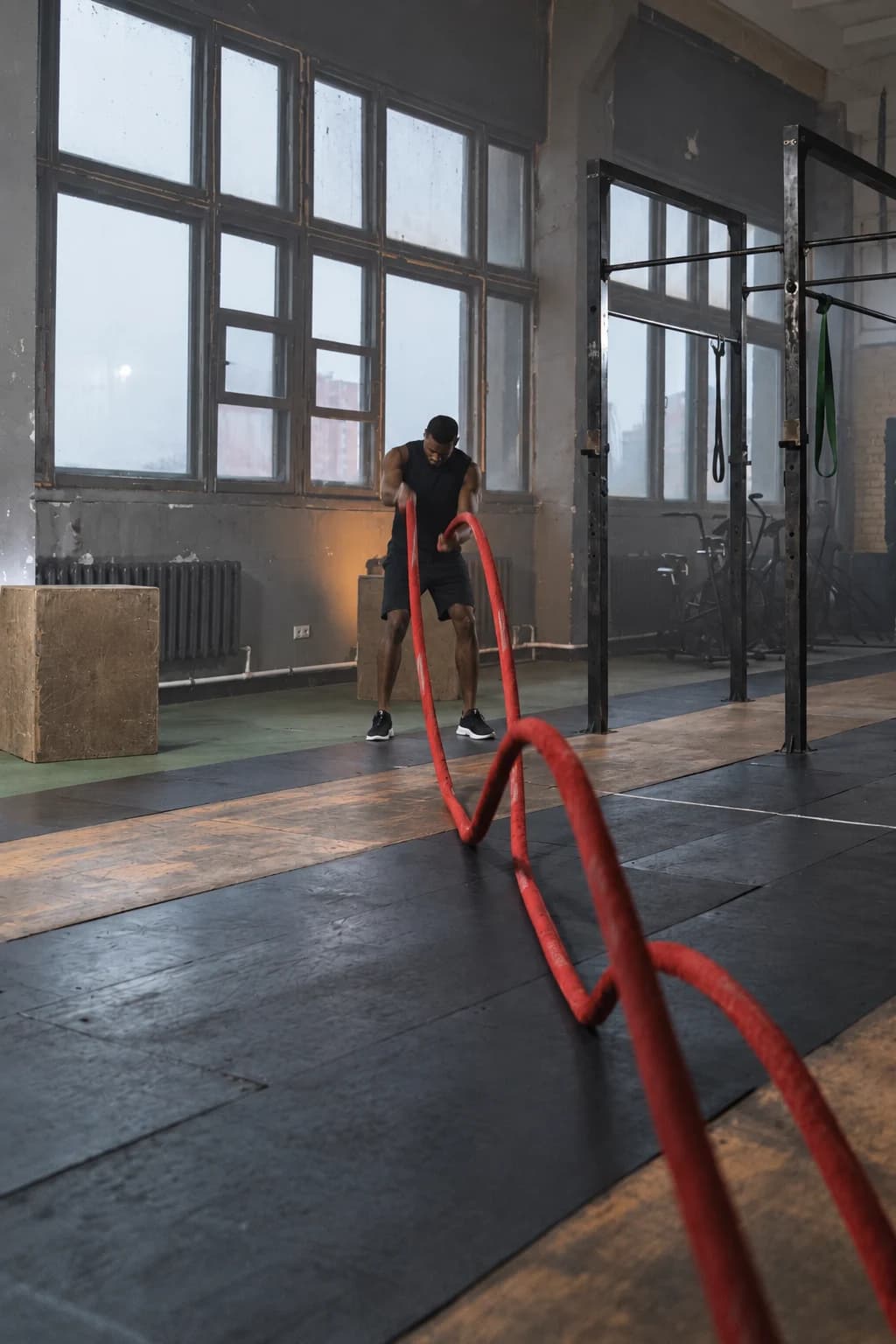
Begin battle-rope practice with waves you can repeat smoothly, then recover before deciding whether to do more. The first useful session is one in which you can organise the rope, maintain the intended movement and finish deliberately. Learn a repeatable pattern before increasing wave size, pace or work time.
This guide uses a long rope with two working ends and an installed anchor. Alternating waves send movement along the strands while one hand rises and the other falls. Short spring trainers are a different equipment format, discussed separately below.
Set up a battle rope workout for beginners
Use a properly installed station with its exact-model setup already checked and explained. Before beginning, have the onsite coach or equipment instructions establish the working position, usable rope slack and how to return the ends when you finish. Keep the area used by the rope clear of other people and equipment.
Learn the finish before adding timed work. You should know where the ends belong and how to return them under control at this particular station. A photograph showing rope curves does not establish its anchor or installation requirements.
In ACE's equipment-coaching guide, Ingrid Marcum describes holding one end in each hand, creating usable slack and keeping the hands' distance from the anchor consistent. Moving the ends toward your body changes that relationship, so make the up-and-down action clear before trying to work faster.
Learn one alternating-wave pattern
- Take one rope end in each hand in the working position taught for the station. Establish usable slack before driving the waves.
- Raise the right arm while the left arm moves down, then reverse their roles.
- Continue the alternating action without drawing the ends back toward your body. Keep the hands at a consistent distance from the anchor.
- Seek smooth, repeatable waves at a movement size and pace you can manage. Keep practising this single pattern before adding another exercise.
- For a practical finish, stop driving the waves and retain your grip while the rope settles. Then return the ends by the exact-model or onsite-coach method already demonstrated.
The alternating-wave cues come from the ACE coaching example. The final stop-and-settle arrangement is a practical adaptation. Use the return method demonstrated for your station to complete the attempt.
Watch the wave pattern while retaining the position you were taught. If you begin pulling the ends toward yourself or lose the intended rhythm, end the attempt and reset. A shorter repeatable effort gives you a clearer practice task than continuing after the movement has changed.
A battle rope interval workout includes recovery
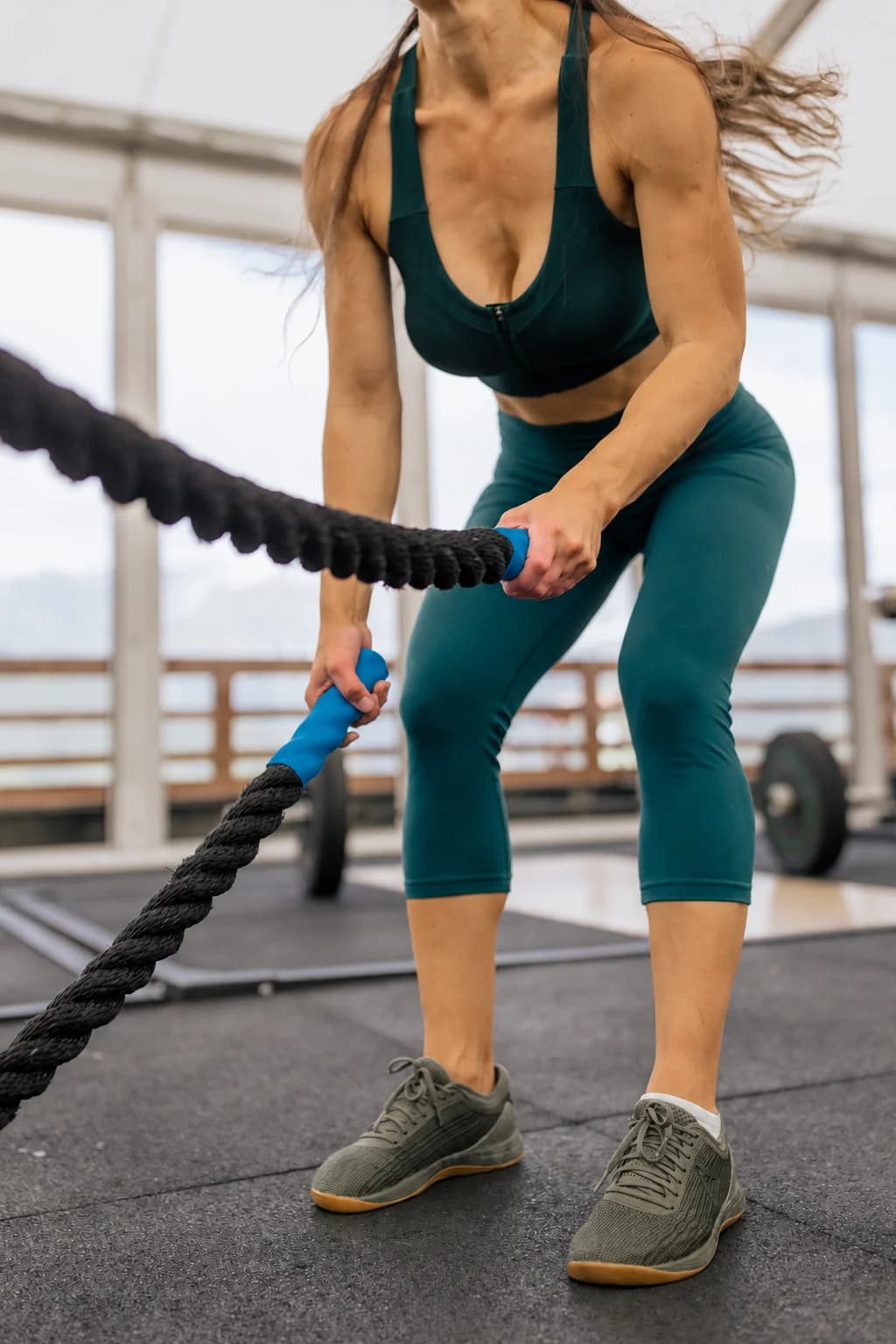
An interval separates a work period from a recovery period. The useful question is whether the recovery prepares you for another manageable attempt. A timer can organise that choice, but it cannot tell you whether your wave pattern or position has stayed consistent.
ACE's 2023 battle-rope guide describes demand changing with the rope, wave speed and amplitude, and the work/recovery arrangement. It also includes lower-intensity movement during recovery. Use an easy recovery activity you already know, or take the recovery you need before resetting the station.
| During work | During recovery |
|---|---|
| Retain the intended alternating action and hand-to-anchor relationship. | Let the previous effort end fully before setting up another attempt. |
| Use a wave size and pace you can repeat with control. | Decide whether you can resume the same movement or should simplify it. |
| Finish deliberately when the intended movement is no longer manageable. | Allow more recovery or end the session instead of racing the next signal. |
Work and recovery do not have to be equal. Avoid treating a copied ratio as a requirement for every beginner. Start with the movement and a manageable effort, then choose timing around what you can repeat.
Build a battle rope beginner routine around one pattern
A simple practice arrangement is rehearsal, recovery and a decision about another attempt. Rehearse the alternating wave at a manageable pace, use the known finish, and recover. Before restarting, check that you can establish the same working position and smooth pattern again.
You can end there or make another manageable attempt. This arrangement is a practice choice, not a prescribed number of rounds or a conditioning test. Early sessions can remain focused on learning the equipment instead of adding slams, jumps or multiple rope patterns.
If the next effort is less controlled, adjust one feature: use a more manageable wave size or pace, shorten the work, or allow more recovery. If the rope itself is unsuitable, choose an appropriate station with the onsite coach rather than compensate by forcing the movement.
Keep the session purpose clear. Repeating muscular work is different from judging maximal strength; the muscular endurance versus strength guide explains that goal choice. Neither a large wave nor a longer timer is a complete measure of progress.
Choose the next step for anchored waves
For this lesson, the practical next step is to use an existing properly installed long-rope station and obtain its setup and finish instructions from the venue. Use the battle-rope versus skipping comparison if you are deciding which task fits your space. No purchase is needed to ask that question.
The short spring-trainer link later in this guide is a separate-format comparison. It does not supply the anchored rope, rope run or station used in this wave lesson. Obtain its own operating instructions before considering that different activity.
Spring trainers are a separate format
The two-piece spring-trainer option contains two short coil-spring trainers with sliding rings, wrist loops and rounded caps, plus a storage bag. It does not include a long rope or an anchor.
Consider it only as a different equipment choice with its own instructions. It is not the equipment used in the anchored-wave lesson or a demonstrated equivalent replacement. The hand-to-anchor cues above and any long-rope session timing do not become a spring-trainer operating guide.