Battle Ropes vs Jump Ropes: Different Demands Behind the Name
Compare anchored battle-rope waves with the around-body path and timed jumping of skipping. Choose by movement skill, space, equipment access and manageable practice.
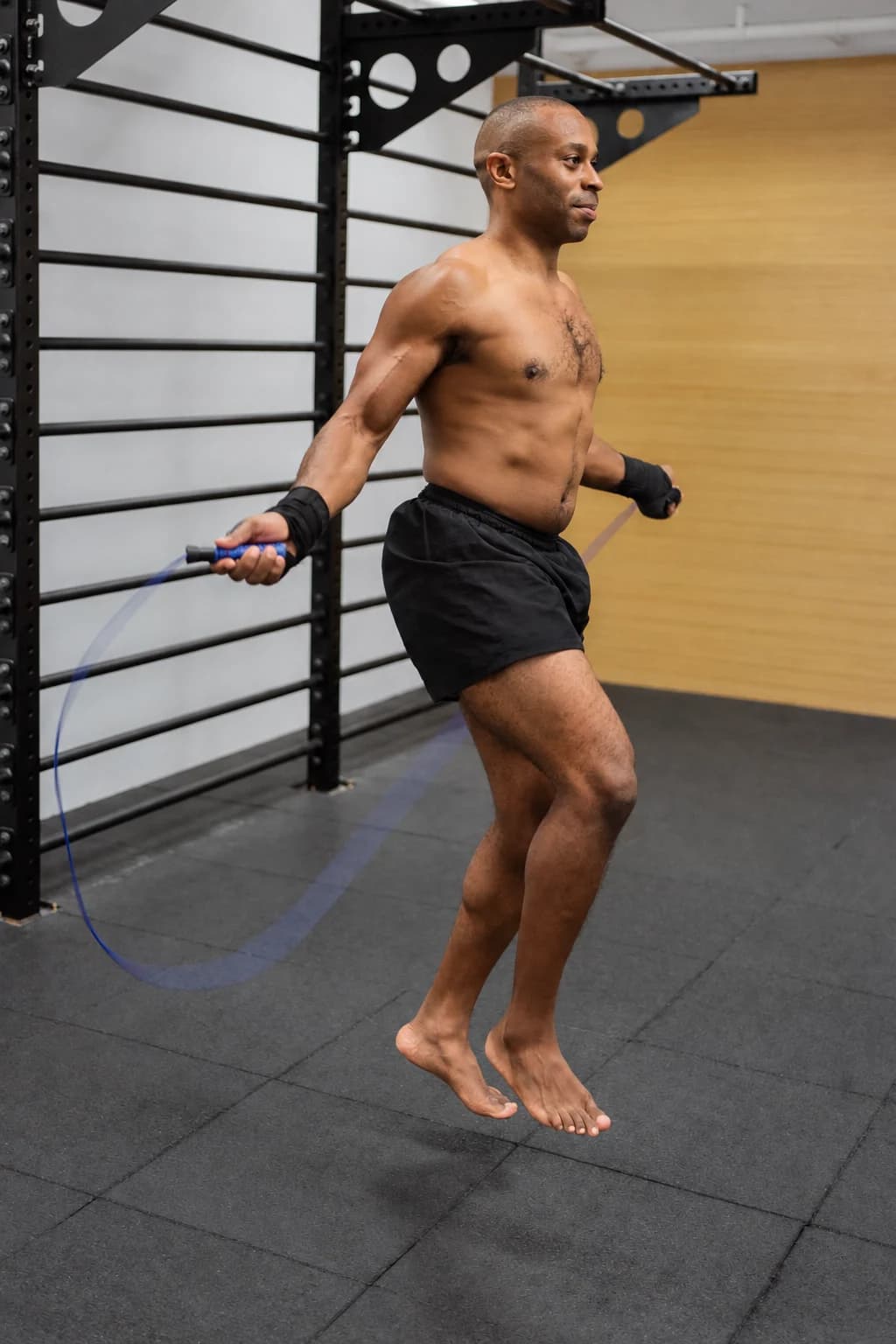
Battle ropes send waves along strands toward an anchor. A skipping rope travels around your body, and you time your jump as it passes underneath.
Choose between those tasks by the skill you want to practise, the equipment available and the space you can actually use. A familiar name or a matching work timer does not make them interchangeable.
Battle ropes vs jump rope: two different rope paths
| What changes? | Anchored battle-rope waves | Ordinary rope skipping |
|---|---|---|
| Where the rope moves | Waves travel along strands toward an anchor. | The rope turns around the body and passes under the feet. |
| What the hands organise | In the alternating-wave example, one arm rises as the other lowers. | The hands coordinate rotation, with turning led mainly by the wrists. |
| What the feet organise | Body position and any leg movement included in the chosen pattern. | The takeoff and landing timed to the turning rope. |
| What the space must accommodate | An installed station, rope run and the actual wave path. | The full rope arc around, above and underneath the person. |
| What to learn first | The station setup, a manageable wave pattern and its finish. | Rope control, a manageable jump rhythm and a deliberate stop. |
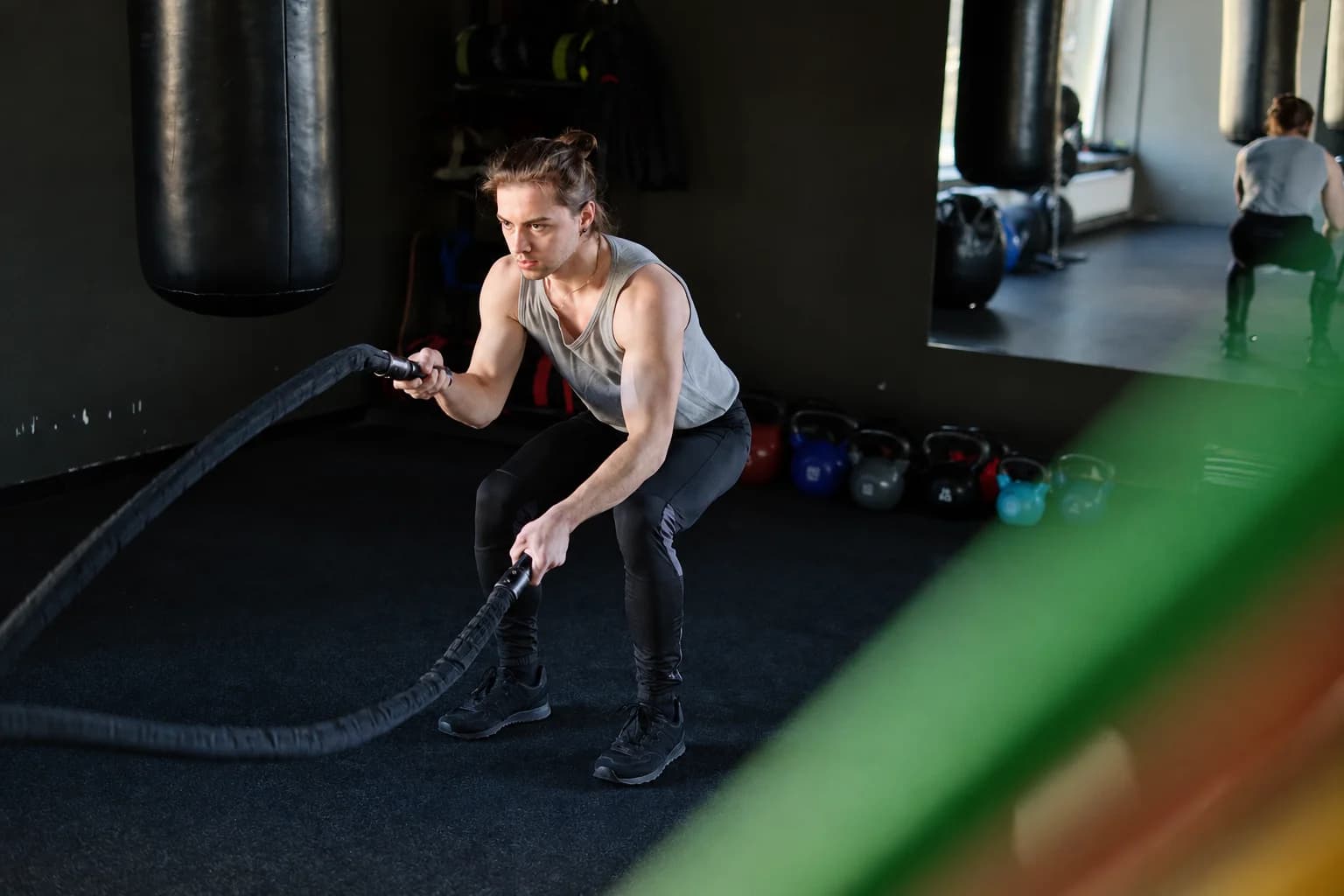
ACE's battle-rope coaching example describes one end in each hand, usable slack and smooth alternating waves. It also includes marching. Battle-rope activity therefore should not be reduced to a claim that the feet never move or the lower body has no coordination task.
Crossrope's beginner guide describes rope turning coordinated with jumping, using symmetrical hand positioning and wrist-led rotation. Those are different timing demands from sending a wave away from the hands.
Battle rope versus skipping: notice the contact task
Ordinary skipping includes repeated takeoffs and landings as the rope clears the feet. Its beginner cues include a low jump, a soft landing and a slight knee bend while learning rhythm.
A simplified battle-rope wave can be practised without adding a jump, while other patterns include steps or additional leg movement. Identify the actual pattern you intend to do.
This matters when deciding what to learn. If rotating a rope and clearing it with a timed jump is the skill you want, skipping addresses that task directly. If you want to practise a wave travelling along an anchored rope, learn that station's movement instead. One task does not automatically teach the other.
Check the complete movement space
| Whole-path sketch | Space to check | Choice when it does not fit |
|---|---|---|
| Hands ⇄ travelling waves → installed anchor | The entire rope run, moving wave area and station’s finish | Use an appropriate installed station elsewhere |
| Hands → overhead arc → under feet → return | The complete moving rope arc, including sides, front, overhead and floor | Change location or choose another familiar activity |
| Selection prompt | My answer |
|---|---|
| Which task do I already know? | ____ |
| What do I want to practise today? | ____ |
| Can the entire rope path and finish remain clear? | ____ |
| What is the instructed controlled stop? | ____ |
| If the location fails the check, what is my alternative? | ____ |
An anchored battle rope needs an appropriate installed station and room for its rope run and waves. Use an anchor arrangement approved for the exact rope and venue. Keep others clear of the moving strands.
A skipping rope may be easier to carry between locations, but its small stored size does not describe its working space. Check the complete arc, including overhead, side, front and floor clearance. A clear standing spot alone is not enough to establish that the turning rope will fit.
These are practical space checks, not universal clearance measurements. Rope length, your movement and the setting all matter. Follow the model's instructions and choose an appropriate venue before beginning. The photographs illustrate real activities; they do not approve every surface or nearby object shown.
Choose the task that fits the session
- You have access to a properly installed battle-rope station and want to learn waves: use a manageable pattern and learn its return method before timed work.
- You want to practise skipping rhythm and have suitable full-arc space: choose an appropriate complete jump rope and a manageable version of the jumping task.
- The available space does not accommodate the equipment's movement: change the location or choose another familiar activity for that session.
- You are comparing two activities you already know: compare your ability to repeat the intended movement, including recovery, rather than assume equal minutes mean equal work.
The beginner battle-rope guide covers alternating waves and recovery. Use that for the anchored-rope lesson rather than copying skipping intervals onto an unfamiliar station.
Make the conditioning-rope comparison specific
Write down what you want to repeat: a smooth wave pattern, a consistent skipping rhythm or a manageable period of the activity you already know. Equipment, movement speed, work duration and recovery can all change the demand. You do not need to make both activities feel identical.
A skipped revolution, tangled rope or loss of the chosen wave pattern can make a clocked session less continuous than it appears. Account for resets and recovery when describing what you completed. Choose a more manageable version when it lets you retain the intended task.
Choose an activity you enjoy, can access regularly and want to practise. A suitable station or appropriate skipping space, together with a skill you value, can help you organise consistent practice.
A complete skipping rope is one equipment option
The black PVC skipping-rope option supplies one complete rope with two attached contoured molded handles. The selected option is nominally ten feet long. Check the actual model's fit and use information for your needs; that length is not automatically suitable for every person.
Confirm any adjustment instructions before changing a rope. This is a skipping-rope format, not an anchored battle rope. If you prefer the battle-rope task, an appropriate existing gym station may be the relevant choice without buying a skipping rope at all.