Yoga Wheel Stretches for Beginners: Start with a Supported Reach
Begin yoga wheel stretches with a small, hand-controlled kneeling reach. Learn the setup, comfortable range and return before trying a short practice.
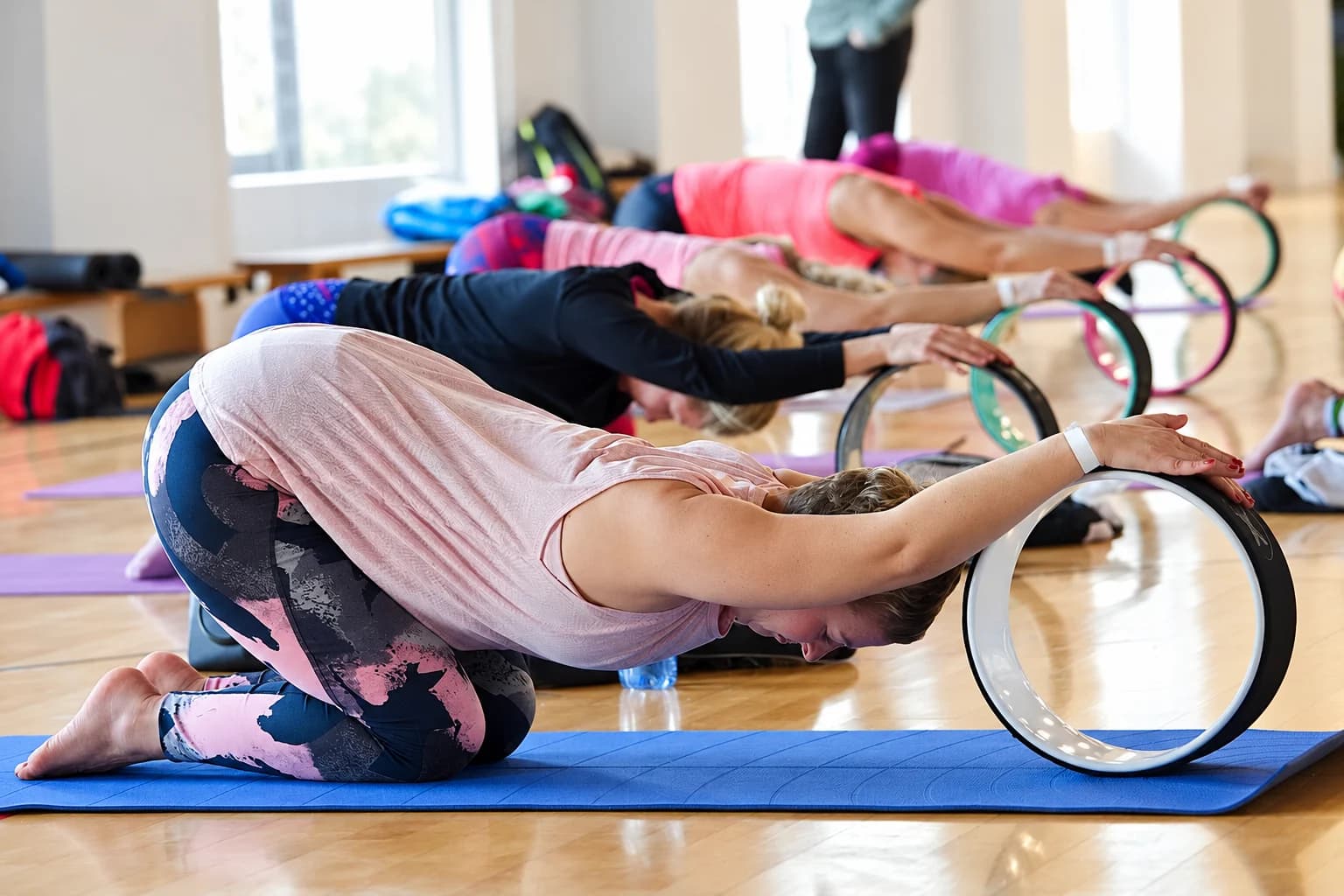
Yoga wheel stretches for beginners can begin with a small kneeling reach, keeping both hands on the wheel with the knees supported on the mat. The useful first task is to control the wheel's forward and backward movement. Choose a comfortable range in which you can breathe naturally and bring the wheel back towards you.
This practice uses one simple position rather than a collection of demanding shapes. Start with a clear setup, try a brief reach and return, then decide whether another short pass is useful. A qualified yoga teacher can help you check the arrangement if kneeling or controlling the rolling prop is unfamiliar.
Yoga wheel support: understand what moves
A wheel rests on a curved edge and can roll; a block provides a fixed surface. In her YouAligned yoga-props tutorial, teacher Ashton August explains the wheel's instability and the need to move slowly and mindfully. Choose a practice in which you can keep control of that movement, rather than expecting the wheel to stay in place by itself.
The optional Black yoga wheel kit includes an EVA-cushioned open-ring wheel and two separate foam blocks, alongside other accessories. Its listed wheel dimensions are 33 centimetres in outer diameter and 13.5 centimetres in width. The kneeling reach below uses the wheel; keep the other pieces out of your practice area while you work.
Set up on a level surface with your own suitable mat lying flat and enough clear space in front of you. Check that the wheel can move without catching on an edge or meeting furniture. If you would prefer a fixed-prop starting point, Yoga Block Exercises for Beginners: A Supported Starting Sequence explains supported seated and standing tasks. Choose the support that makes today's practice manageable.
Keep both hands and a reversible range in the same record
| Part of this small kneeling reach | What to retain from the instructions |
|---|---|
| Before moving | A clear rolling path and both palms on the upper rim |
| Short forward reach | The stated supported knees and a range you can reverse |
| Return | Both hands stay in contact as the wheel comes back |
| Finish | Hold the wheel still before leaving the taught kneeling arrangement |
Yoga wheel stretches for beginners: a kneeling reach
Yoga teacher Yogi Ashish's Fitsri wheel guide includes a child-pose variation with the palms on the wheel and a slow forward roll. The version here keeps the reach small and the hands in control. The brief breath count and return-to-upright transition are editorial arrangements for a first practice.
- Kneel comfortably on the mat with the wheel upright in front of you. Settle your hips back towards your heels only as far as comfortable; there is no requirement to close the gap.
- Place both palms on the upper rim. Keep the knees supported on the mat and establish a steady grip before moving the wheel.
- Slowly roll the wheel a short distance forwards as the arms extend. Let the torso lengthen within a comfortable range, keeping the hips back rather than pushing the chest down to chase a deeper shape.
- Pause where you can still control the wheel and begin the return easily. Take two or three natural breaths as a short practice example, or return sooner if you prefer.
- Draw the wheel slowly back towards you, bending the arms and bringing the torso towards upright. Keep both hands in contact throughout the return.
- Finish in a comfortable upright kneeling position. Hold the wheel steady before setting it aside, then leave kneeling using a transition you already manage comfortably.
Your first reach can be very small. The useful endpoint is one from which you can reverse the movement without a lurch or a hurried grab. If the wheel travels farther than you intended, shorten the next attempt or return to a fixed support while you get help with the rolling setup.
A yoga wheel beginner practice with short passes
Use the following editorial format to organise the task. It is a short introduction to the movement, with pauses to reset. Fitsri's article gives a longer hold; the two-to-three-breath example here is our deliberately brief starting arrangement, not a hold you must complete.
- Before the reach, sit or kneel comfortably and place the wheel within easy hand contact. Check the clear space and decide on a small initial rolling range.
- Complete one slow reach-and-return using the instructions above. Stay for up to two or three natural breaths only while the position remains manageable.
- Pause upright with the wheel held still. If the setup and return felt controlled, choose one more short pass; otherwise finish there and arrange help or a simpler support for next time.
Let the pause be long enough to start the next attempt attentively. There is no need to join the passes into continuous rolling. The reset gives you time to place the wheel, organise the hands and begin from the same comfortable kneeling position again.
Questions about range and prop choice
How far should the wheel move? Begin with the distance you can control in both directions. Keep breathing comfortable and leave enough control to bring the wheel back. A farther roll is useful only if it continues to serve the task; distance is not a score for the practice.
Does a larger wheel automatically give better support? Check the actual dimensions and how the wheel meets your hands in the intended setup. The listed size describes the prop, while your comfortable kneeling position and reach determine whether that arrangement works for you. Ask a qualified teacher to help assess it if you are unsure.
What if kneeling is uncomfortable? Choose a different starting task rather than trying to hold the kneeling shape. The linked block-supported practice includes a seated option and chair choices. You can use a fixed prop today and return to the wheel when you have a comfortable, well-understood setup.
Keep the next practice familiar
Return to the same clear area and comfortable starting position when you next practise. Focus on a smooth outward movement, an unhurried return and a calm pause with the wheel held still. Those actions give you a useful first practice even when the range stays small.
As the setup becomes familiar, a teacher can help you decide whether to explore another task. For now, one well-organised kneeling reach is enough to learn how this rolling prop behaves under your hands.