Swimming Dryland Workout for Beginners: A Simple Starting Plan
Start a swimming dryland workout with a short bodyweight routine and optional band pulling. Learn how to fit land sessions around beginner pool practice.
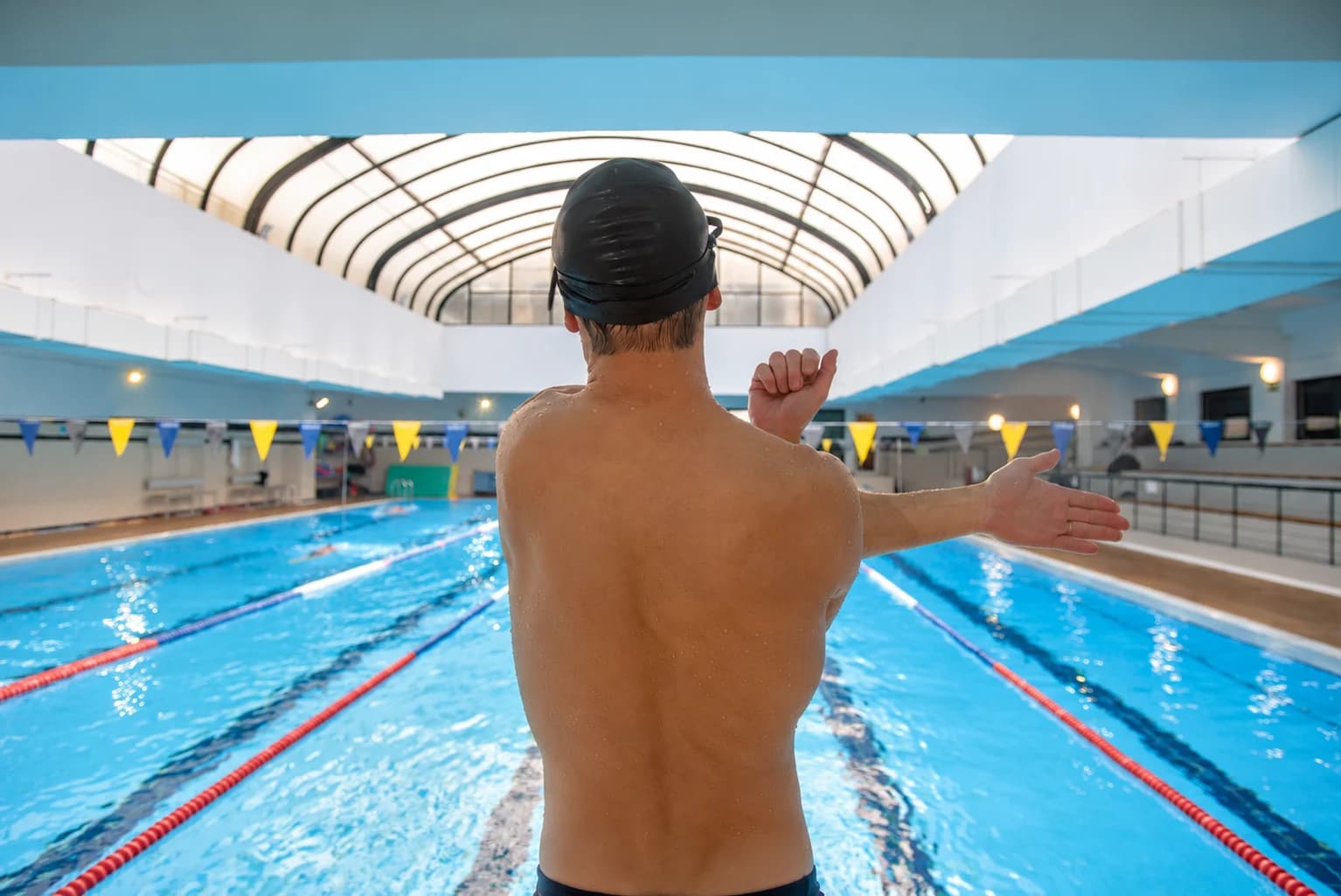
A swimming dryland workout gives you time to practise basic strength and movement alongside pool sessions. Start with a short routine you can organise comfortably. Learning to breathe, balance and move through water still belongs in the pool, with instruction suited to your swimming level.
This plan uses a squat, a hip hinge and a dead-bug variation, with an optional band exercise. Use the brief preparation before a swim or give strength practice its own slot. The counts are editorial starting examples; choose comfortable ranges and effort.
Fit a swimming dryland workout around your pool practice
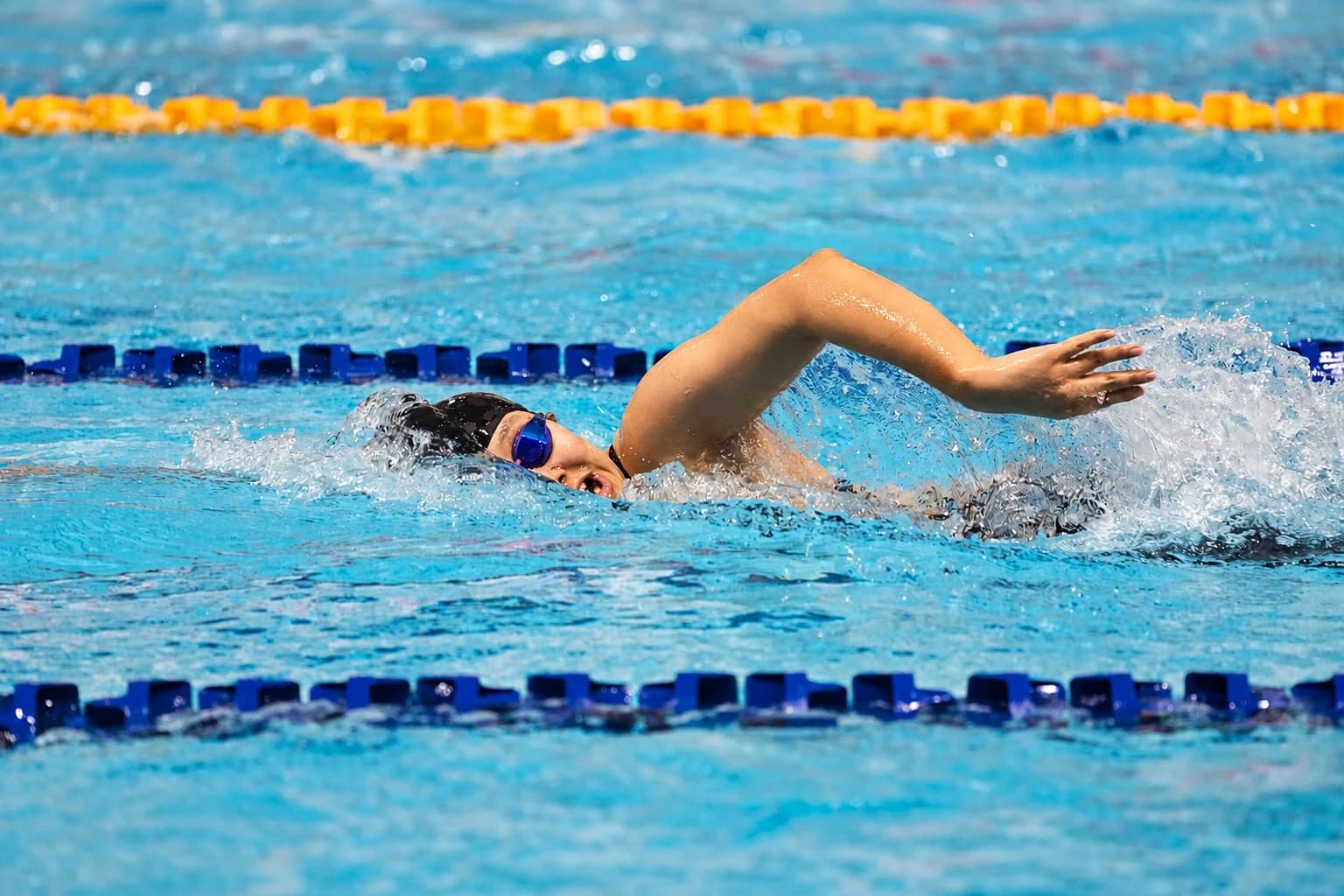
Before a lesson, land work can be a gentle transition into moving: get warm, rehearse comfortable movements and arrive ready to listen. Keep that preparation easy enough to begin the pool session attentively. A separate strength slot gives you time to learn the land exercises, set up a band and rest between movements.
For your first attempt, choose one slot. Before a swim, use the short preparation below and leave the optional band work for another day. For a separate session, complete that preparation, try one bodyweight round, then decide whether the band setup is appropriate. A brief first session is enough to learn the arrangement.
Keep your pool plan in view. If you are learning to put your face in the water or swim a relaxed length, those lessons remain the place to practise those tasks. Land exercises provide strength and movement practice, while pool sessions let you experience the water's support, breathing timing and the feel of a stroke against the water.
Dryland training for swimming beginners starts with easy preparation
In U.S. Masters Swimming's dryland warm-up guide, strength coach Bo Hickey describes warming the body and preparing for the demands ahead. His examples include dead bugs, squats and hinge movements. The short sequence here is an editorial way to begin; it is separate from the guide's longer demonstration routine.
- Walk around your available space or march gently on the spot for about two minutes. Let your arms move comfortably, without turning this into a hard cardio interval.
- Rehearse three easy squats and three hip hinges using the instructions below. Take time between repetitions to find a comfortable starting position.
- Try two dead-bug repetitions on each side. Keep the movement small while you check whether you can return to the starting position smoothly.
Before a swim, that may be enough land preparation. Continue with the pool warm-up your instructor or session plan calls for. In a separate land session, move on to one circuit after you have rehearsed the exercises. Leave out a movement that is painful or unfamiliar until you have appropriate help learning it.
Build swimming strength on land with a simple circuit
Use the three movements below for a short bodyweight session. Hickey's warm-up guide includes these movement families; the simplified cues, counts and rests here are editorial choices. Use comfortable ranges, take about 30–60 seconds between exercises, and begin with one round. This gives you a manageable set of actions to learn.
| Movement | How to practise it | First-round count |
|---|---|---|
| Bodyweight squat | Stand with a comfortable foot spacing. Bend your knees and hips to lower as far as you can control, keeping your feet planted. Stand back up and reset before the next repetition. | 6 controlled repetitions. |
| Bodyweight hip hinge | Stand with soft knees. Move your hips backwards while tipping your torso forwards and keeping your back comfortably aligned. Stop within a controlled range, then bring your hips forwards to stand. | 6 controlled repetitions. |
| Small-range dead bug | Lie on your back with arms reaching upwards and legs raised, hips and knees bent. Slowly lower one heel towards the floor while the opposite arm reaches back within a comfortable range. Return both, then change sides. | 4 repetitions on each side, alternating sides. |
For the dead bug, choose a range in which you can keep your trunk steady and breathe normally. Shorten the arm reach or heel movement if you lose that position. In all three exercises, finish each repetition before starting another; the count is a guide for organising practice, not a target to reach by rushing.
After the round, take a minute to review the movements. Repeat the short session on another occasion before extending it. Once it is familiar and fits comfortably around swimming, a second round is one possible next step.
Choose the complete bodyweight route when the band setup is missing
| Before optional pulldowns | If the answer is missing |
|---|---|
| Exact band and attachment are permitted for the high fixing shown | Stay with the existing squat, hinge and dead-bug round |
| Complete model instructions explain connection, movement and unloading | Do not improvise a door handle or furniture fixing |
| The original USMS demonstration is understood | Review the named pulldown with qualified instruction before choosing it |
Swim cord exercises: start with a controlled band pulldown
Swim cord exercises need an exercise-specific setup. A general long resistance loop can be used for an appropriate dryland strength exercise; it is different from specialised swim cords with hand attachments. Hickey's USMS dryland exercise demonstration describes a straight-arm band pulldown. Learn it as a land strength task, with the following setup and arm path.
- Use a suitable long loop and a secure high attachment, following the band and anchor instructions. If you cannot make that instructed setup, leave this exercise out.
- Face the band with feet about hip-width apart and knees softly bent. Keep your back straight and your head aligned with it. Place your hands about shoulder-width apart inside the loop.
- With arms straight, pull the band down until your hands reach your hips. Keep your torso still instead of rocking backwards to complete the pull.
- Slowly return to the starting position. Reset your stance and repeat only while you can control the same movement.
The USMS demonstration uses 12 repetitions. For an easy first practice in a separate land session, try one set of 4–6 controlled repetitions with suitable light resistance, then stop and review the setup. That smaller count is our editorial example. Keep the exercise out of a pre-lesson warm-up until you know how much effort it takes, and ask a qualified coach if you need help choosing the resistance or attachment.
Choose equipment for the session you will actually do
The optional Combination Set of long-loop resistance bands contains five long closed loops, five short loops, detachable foam grips, a door anchor, a bag and a guide. For the pulldown, choose a suitable long loop and follow the supplied setup instructions. The short loops and grips are not required for the described hand position.
Choose resistance you can control through the pull and slow return. A colour or broad resistance range does not tell you the force at every stretch. Inspect the loop and attachment and allow room to move. For more setup guidance, see How to Use Resistance Bands: First Setup & Beginner Practice.
Keep pool equipment separate in your plan. A swimming waist tether is intended for an in-water setup, and a swim parachute creates resistance in the water. Neither supplies the high-anchored dryland loop arrangement described here. A pull buoy is also a pool aid: it supports the legs during suitable swimming drills. Use such aids within pool instruction rather than adding them to this land circuit.
Take one clear aim back to the pool
Give each session a clear job. The land slot is where you learn the bodyweight exercises and, if appropriate, band setup. Your swim lesson is where you practise skills in the water. Tell your instructor what land work you are doing when discussing your training.
- Before the pool: use the easy preparation and follow the planned in-water warm-up.
- In a separate land slot: rehearse the movements, complete one bodyweight round and add the optional pulldown only with a suitable setup.
- At the next lesson: bring a swimming question, such as how to become more comfortable with breathing, and practise it with your instructor's guidance.
Give yourself time to become familiar with the land exercises, and keep returning to the water for practice that serves your current swimming goal.