Strength Training for Cyclists: Add Work Without Losing Ride Quality
Choose useful off-bike strength patterns and fit them around key rides, recovery periods and unexpected group-ride effort, with clear equipment and workload choices.

Strength training for cyclists is an exercise decision and a workload decision. Choose strength tasks you can learn and repeat, then give them a place among the rides that matter. A plan with a long ride, intervals, commuting and a hard group ride may already contain more work than the calendar's neat boxes suggest.
The useful question is what you want the next strength session to contribute, and what riding you need to preserve around it. Start with familiar movements and a manageable amount of work. You can build a consistent strength practice without making every gym session an exhausting test.
Give off-bike strength training a clear job
The TrainerRoad guide to timing strength and cycling includes bilateral squat and hinge patterns, unilateral leg work and core training. That gives you a useful selection framework: choose the physical task first, then the variation and resistance you can actually control.
| Pattern | Examples in the coaching menu | Your selection decision |
|---|---|---|
| Bilateral lower-body work | Squat and hinge patterns. | Choose a familiar version with two legs sharing the task; keep its movement and return deliberate. |
| Unilateral lower-body work | Lunges, split squats and single-leg deadlifts. | Learn the chosen position and balance demands before adding resistance; one learned option is enough to begin. |
| Core work | A separately selected trunk-strength or control task. | Know whether the exercise calls for movement or a steady position, and choose a manageable version. |
This is a menu, not a requirement to perform every example. A new lifter may need little or no external load while learning. An experienced lifter may already have familiar choices that fit the intended strength work. Neither rider needs to copy another person's weight or make a gym exercise resemble pedalling to give it a clear purpose.
For movement instructions, use the leg and glute workout guide or the resistance-band core guide. Learn the relevant exercise before building a session around it. Keep the selected version identifiable so you can review how it fits with riding.
Set up the strength slot before adding more work
Begin with a small selection of learned tasks. For example, you might retain one familiar lower-body movement and one familiar core task while you establish a workable training arrangement. This is a practice-planning example, not a validated minimum programme or a fixed exercise pairing.
- State the session's purpose and the exact exercise variations you intend to use.
- Choose resistance and range that allow deliberate repetitions and a controlled return; learning the movement can be the main job.
- Allow setup time and rest, instead of turning the strength slot into an unplanned race.
- Decide which upcoming ride is important enough that the strength work should be arranged around it.
Keep the first arrangement simple enough to assess. Adding several new movements, more resistance and another hard ride together makes it difficult to tell what needs adjusting. A demanding feeling in the gym is not, by itself, the purpose of a useful cycling strength plan.
A fictional week after the group ride changed
| Calendar entry | Original purpose | What actually happened | Planning decision |
|---|---|---|---|
| Priority ride: _____ | Keep the important riding task clear | _____ | Retain / replace / ask coach: _____ |
| Familiar strength slot: _____ | The already-taught task | _____ | _____ |
| Group ride: fictional Thursday | Expected manageable ride | Ride became harder than planned | Review optional work with the coach rather than add it automatically |
| Next important ride: _____ | Keep a place to observe ride quality | _____ | _____ |
Build a cycling strength schedule around the actual riding
TrainerRoad's timing advice considers the riding load, the rider's strength experience and recovery, with important rides protected. Its phase and timing examples are coaching options within that context. They do not establish one mandatory number of hours between lifting and riding for everyone.
Use the following situations to make a concrete calendar choice. Keep the main ride's purpose visible, whether it is a planned interval session, a longer endurance ride or another outing you want to complete well. Include the riding you really do, rather than only the formal workouts.
When an important ride is the priority
Place familiar strength work where you can recover sufficiently for the intended ride. If your current arrangement repeatedly leaves that ride compromised, change the strength session's amount, placement or novelty. You can retain the same familiar movements with less optional work instead of searching for a completely new exercise list.
If both sessions must fit into one day, establish the day's priority before deciding the order. Follow the logic of the plan you are using, rather than combine one programme's workout order with another programme's full workload. Reconsider the arrangement when your riding commitments change.
When the riding week is deliberately easier
TrainerRoad also reduces gym work during recovery periods. Treat the easier period as a chance to account for the combined workload, rather than fill every freed riding slot with missed strength work. Review what you can retain comfortably and what can wait.
A quieter period can also make room to learn an unfamiliar exercise, but instruction is a separate task from a hard strength session. Keep learning manageable. You do not need to turn a new movement into a demanding workout immediately because the bike schedule looks lighter.
When the group ride becomes harder than planned
Wahoo's Training Plan FAQs gives a useful example within its SYSTM framework: a harder group ride replaces scheduled harder riding, rather than simply adding another demanding session. It also allows easier subsequent work after an unusually hard group ride.
Apply that accounting question to the rest of your calendar: what work did the ride replace, and what is still appropriate afterward? If a supposedly social outing becomes a hard effort, update the plan to reflect what happened. A full strength session does not become necessary merely because it was written down before the ride changed.
Review one arrangement before progressing it
After a few familiar sessions, look at whether the strength work remained controlled and the intended rides stayed manageable. Also notice whether rest and easier work actually happened. These are practical observations for adjusting the plan, not a readiness score or a promised power increase.
If the arrangement works, you can discuss a deliberate next change appropriate to your goal. If it keeps colliding with riding, resolve that conflict before adding more. Stop for pain or unexpected loss of control rather than use harder lifting to work through it.
A four-loop option for familiar resistance work
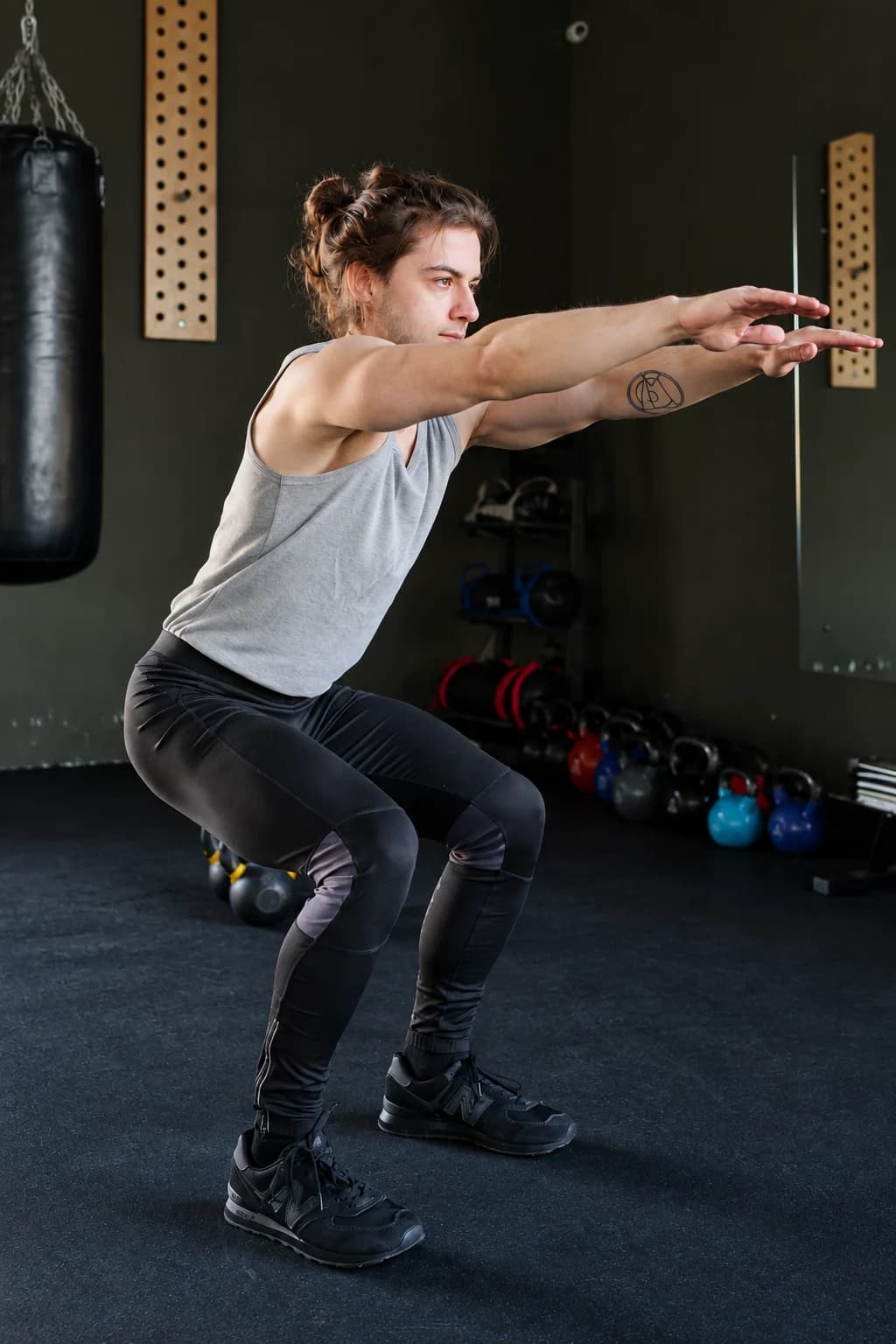
The PBGGAME four long-loop resistance bands supply four continuous loops; select the Maroon option for this set. Choose this format only for an already learned, suitable long-loop strength task and follow its setup instructions. The squat photograph is an unloaded context, not a demonstration of this set.
A band is optional equipment, not a substitute for selecting a movement and a workable calendar. Choose the resistance for the actual task; labels do not convert directly into dumbbell kilograms or establish permission for a particular anchor. The strength session should earn its place through its purpose and fit with your riding.