Static vs Dynamic Balance: Choose a Practice Task You Can Control
Understand holding a position versus controlling movement. Choose a supported standing hold or slow side-step, with a clear entry, manageable practice and controlled finish.
A balance task can ask you to maintain a chosen position or to control yourself while movement happens. Decide which you mean to practise before choosing how long to continue or how far to travel. A manageable hold and a slow step can both give you something useful to observe.
You can explore both kinds of task on ordinary fixed ground. Start with a position or movement you understand, keep the support you need and make the finish part of the plan.
Static vs dynamic balance: holding and moving
Jonathan Ross's ACE guide describes static balance as holding a position while trying to remain still. Dynamic balance involves controlling balance while other parts move, including the holds or stops that occur within movement. These terms describe what the task asks you to do.
For a standing hold, the part you intend to maintain is static even though you must move into it and out again. During a slow walking or stepping task, you organise balance as the body changes position. Speed is not the definition: a slow movement still involves movement.
A demanding held pose is not automatically a starting exercise. Choose the version of the task you can control, including its support and finish, rather than use the label static as a difficulty rating.
Separate the hold from its transitions
| Text sequence | Support or endpoint to retain | What the phase represents |
|---|---|---|
| Face the wall → gently lift a foot | Keep the stated fingertip support | Transition into the hold |
| Maintain the chosen one-leg position | Support stays available; no eyes-closed target | Static part |
| Gently replace the foot | Finish with both feet down | Transition out |
| Slow side step → following foot joins | Complete the step before choosing the next | Dynamic step-and-join task |
A supported one-leg hold has a clear return
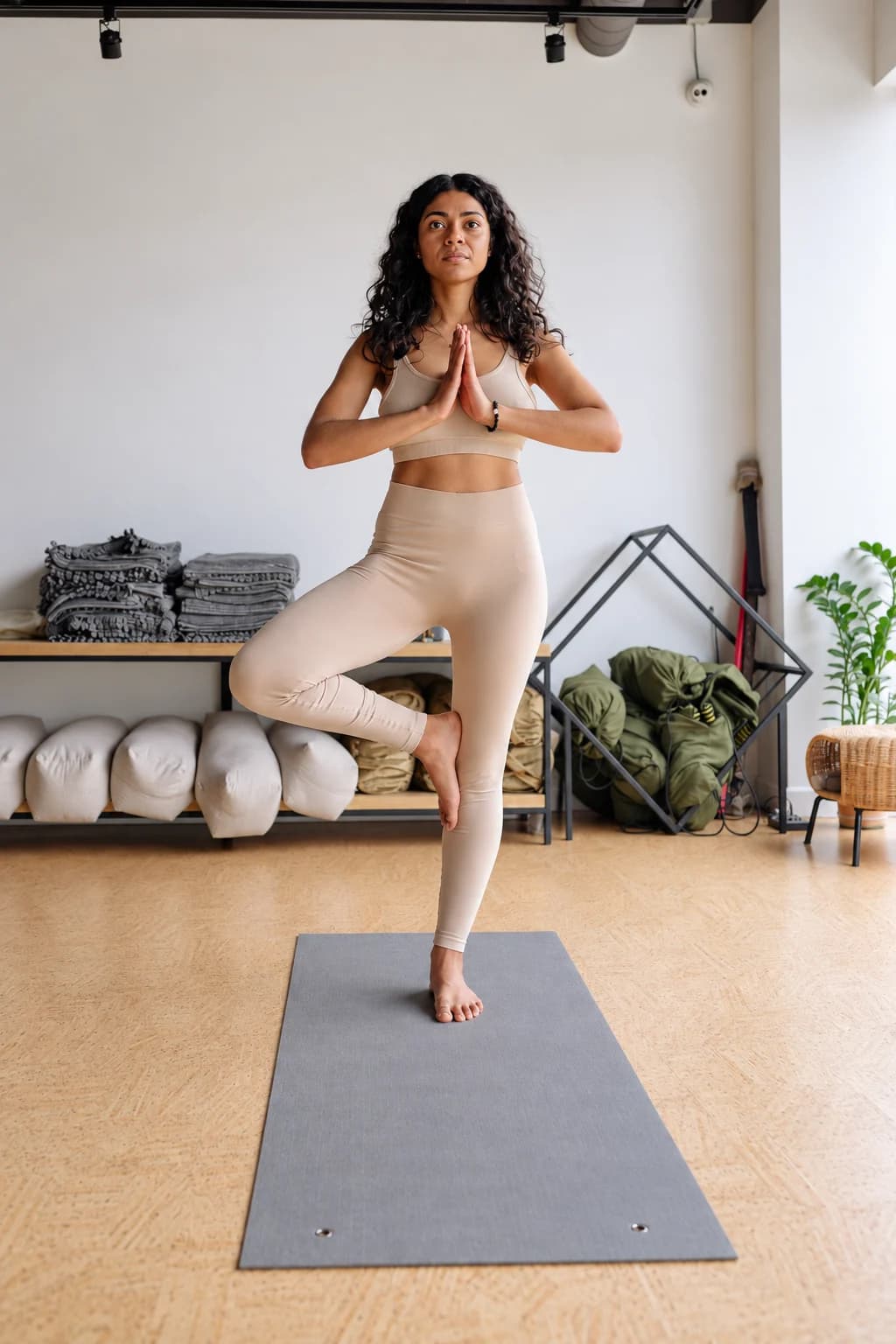
The NHS balance-exercise guide provides a simple wall-supported example. Its aim here is to practise a chosen standing position with support available. The yoga pose in the cover photograph is a separate held-position context, not the wall-supported setup below.
- Face a wall and place your fingertips against it for support.
- Lift the left foot, keeping the hips level and a slight bend in the supporting knee.
- Maintain the chosen position for a manageable practice, retaining the fingertip support you need.
- Gently put the raised foot back on the floor to finish.
The hold is the static part. Lifting and replacing the foot are transitions, so give those actions the same attention as the position between them. You can finish the attempt without waiting for an uncontrolled step to end it.
Use the support to make the intended practice manageable. This example does not require a hands-free attempt, closed eyes or a competition over hold time. If the position is not manageable, keep both feet down and choose a simpler task you already know.
Dynamic balance training can start with a slow side-step
The NHS also describes gentle sideways walking. This is a step-and-join task: the following foot comes to meet the first. It has a different foot-placement aim from a sports shuffle that preserves a gap between the feet. Keep this particular movement clear before adding pace or another action.
- Begin with the feet together and the knees slightly bent.
- Step slowly sideways with one foot.
- Bring the other foot to join it, without dropping the hips.
- Complete the step with the feet together before deciding on the next movement.
For a short practice layout, choose a clear route you can manage slowly. Settle before reversing or resetting. That short-route arrangement is a practical adaptation of the NHS movement, rather than a timed or distance-based test.
Notice the transfer into the side-step and the following foot joining. If you rush the second part to catch up, reduce the pace or the amount of travelling. The purpose is to control the movement you selected, including the point where it ends.
Identify types of balance exercise by the task
Ask what is meant to stay in place and what is meant to move. A one-leg hold asks you to retain a position. Sideways walking asks you to manage a changing position as the feet step and join. A pause within a moving sequence can still be part of that dynamic task.
Keep equipment and task labels separate. Dynamic does not mean a moving board is required. If you are choosing a surface or board rather than choosing a hold or step, the balance-board versus stable-floor guide addresses that different decision.
Choose a version you can repeat with control
For the hold, decide the position and support you intend to retain. For the side-step, decide the movement, clear route and finish. These choices make your observations more useful than simply trying to continue for longer. You can keep practising the same manageable version.
Change one feature deliberately when you need a different task. Removing hand contact, changing foot arrangement and travelling farther at the same time makes it difficult to know which change affected control. More movement is not automatically the right next choice after a hold.
Finish when you choose to finish, using the gentle foot return or settled step endpoint. If you cannot maintain the intended position or movement, use a more manageable version instead of trying to rescue a longer attempt. There is no prescribed hold time, route length or repetition target in this practice choice.
Optional markers can organise a route
An existing suitable landmark may be enough. If visible start and end references are useful, the ten-piece numbered floor-spot set supplies ten flat numbered spots and a tote. A short route does not need all ten pieces.
Position references beside the clear foot path, following the actual product's surface instructions. They indicate where the practice begins or ends; they are not stepping targets, a hand support or proof of traction. Neither the supported hold nor the slow side-step requires a purchase.