How Often Should Beginners Do Yoga? A Practical Weekly Plan
Choose a manageable yoga starting frequency, follow an example week and use a shorter plan when time is tight or a session is missed.
A workable starting plan is two or three yoga sessions a week, including a beginner lesson and one or two short practices using material you already know. Choose two appointments if that is what your week can hold. Put them in the calendar with a clear starting time and a manageable length, then see whether you can repeat that arrangement.
Below is a flexible three-session example, followed by a smaller busy-week version. Use the suggested days, durations and two-week review point to organize a repeatable practice, then adjust them around your experience, schedule and instructions.
How often should beginners do yoga?
In her yoga FAQ for beginners, Esther Ekhart suggests practising two or three times a week when possible, while also making room for short practices of ten or twenty minutes. She connects the choice to what realistically fits your schedule. Peloton yoga instructor Mariana Fernandez suggests about three weekly sessions for beginners becoming familiar with the language and poses.
Those are teaching suggestions. Use them to choose a feasible starting arrangement, then adjust the actual sessions to the instruction available and how you respond. A booked class plus a short, familiar home practice gives you a specific two-session week. Add a third appointment when you have both the time and suitable material to use.
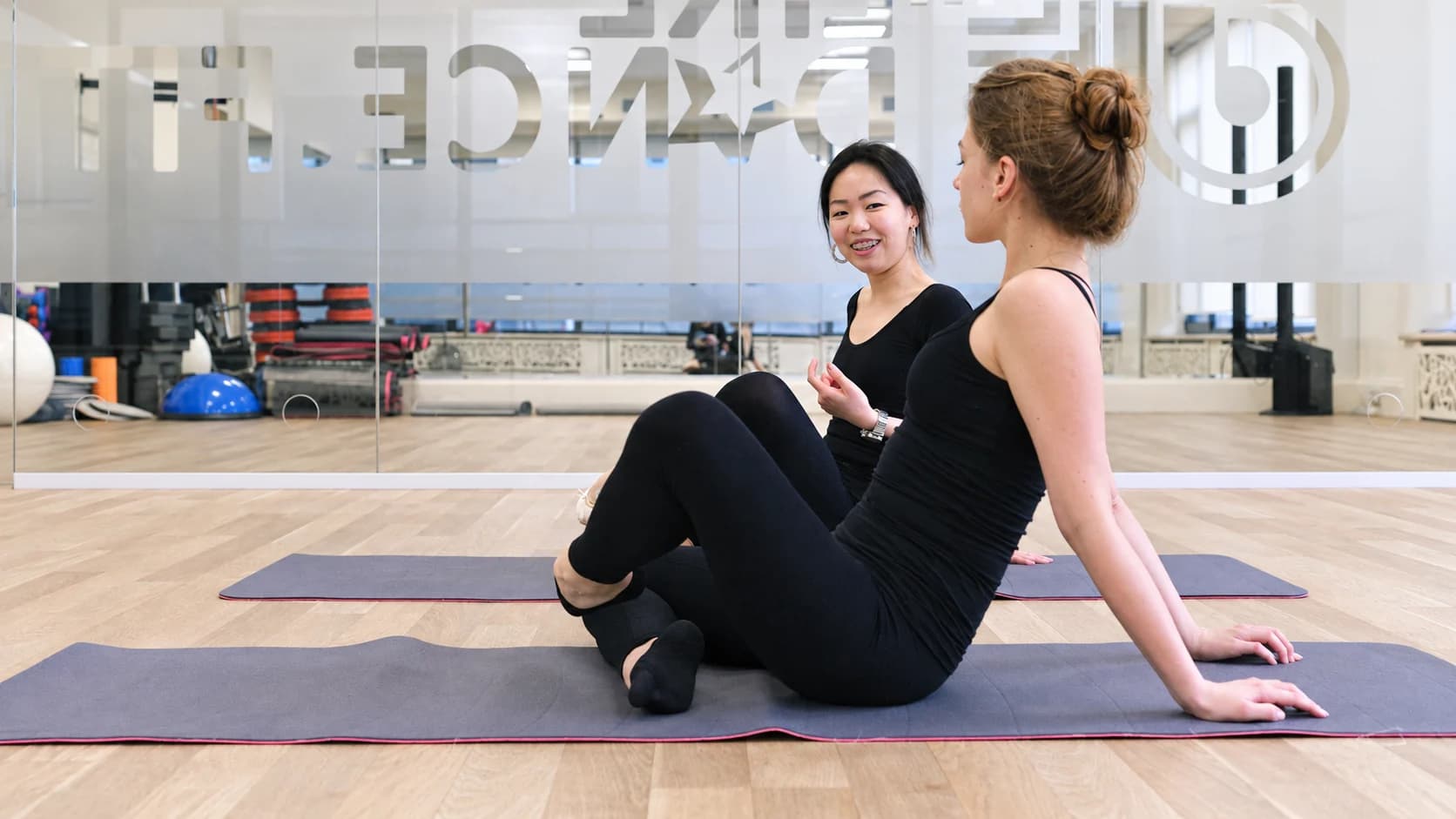
Give the taught session a clear purpose: learn the setup, hear the instructions and ask what you can repeat independently. Ekhart recommends classes that explain the basics and offer variations. A style name alone is a limited guide to difficulty, so ask whether a particular lesson welcomes beginners, how quickly it moves and whether there is time to ask questions.
A beginner yoga practice schedule you can repeat
This sample week has three practice appointments. The Tuesday class uses its actual booked length; the two home slots are deliberately shorter. Before leaving the class, ask the teacher for a small section you can repeat and how to begin and finish it. Alternatively, use a complete short beginner lesson you have already followed comfortably.
| Day | Time to reserve | What to do |
|---|---|---|
| Monday | 2 minutes of planning | Confirm the class booking and set out what you need. No yoga session is scheduled. |
| Tuesday | Your booked class length | Attend a beginner lesson. Identify a familiar section or suitable short lesson for the home appointments. |
| Wednesday | No planned yoga | Leave the day open. Check whether anything from class needs clarification before repeating it. |
| Thursday | 10 minutes | Repeat the agreed familiar section, following the start and finish you learned. |
| Friday | No planned yoga | Keep the next appointment in its usual place; extra practice is optional. |
| Saturday | 15–20 minutes | Follow the same suitable beginner lesson or a familiar sequence that fits this slot. |
| Sunday | 2 minutes of planning | Check the following week's appointments and make any necessary calendar changes. |
For each home appointment, decide what you will follow before starting the timer. Have the lesson or notes ready, clear the space and complete the familiar beginning. If the material takes longer than the available slot, choose a shorter complete lesson or ask the teacher for a shorter section. Avoid rushing through transitions just to fit more poses into the time.
You can repeat this same week for a second week without adding minutes. If you prefer two appointments, keep Tuesday and Thursday and leave Saturday open. That gives you a complete plan to follow without needing to invent a different session every time.
Find the calendar change in one place
| Situation | Keep or change | Next specific appointment |
|---|---|---|
| Normal week | Use the existing taught class and familiar home slots | Copy your booked times: _____ |
| Busy week | Select the smaller already-described option before the week starts | _____ |
| One missed session | Keep the next manageable familiar slot; do not double by default | _____ |
| Several missed sessions | Resolve the obstacle and book a manageable return | _____ |
A busy-week version with fewer decisions
When time is tight, keep one taught lesson if you can attend it and one five-to-ten-minute review of familiar material. For example, attend Tuesday's class, move the short review to Saturday morning and leave the other days open. Put the shorter appointment at a time you can actually protect.
If getting to class is the part that will not fit, choose one ten-minute familiar home lesson for that week and book the next available beginner class. Use material you can follow and leave unfamiliar poses for a taught session. You can return to the fuller calendar when the class and home slots become available again.
Choose the smaller version before the busy days arrive. Write down which appointment remains and what you will follow, so the decision is already made when that time comes. A short session still needs a clear beginning and ending; finish the chosen material and put it away rather than leaving the practice open-ended.
Missed a session? Resume at the next open slot
If Tuesday's class is cancelled or you miss it, check the remaining week. Keep Thursday's familiar ten-minute practice if it still fits, and book another beginner class. Saturday can stay as planned. You do not need to double the length of the next home session to account for the missed appointment.
If you miss Thursday as well, use the next available short slot to follow the familiar lesson. Then return to the usual calendar. Avoid turning the restart into a large session that requires more preparation than you currently have time for.
The reason for the missed slot can suggest a useful calendar change. If Thursday evenings repeatedly run late, move the appointment to a weekend morning. If finding the lesson takes most of the slot, save it in advance. Change that practical obstacle first, then try the revised arrangement.
Build a consistent yoga practice around a clear start
Choose a simple starting cue, such as the end of breakfast on Saturday or arriving home before dinner on Thursday. Keep the lesson, space and equipment ready for that appointment. These are editorial ways to make the scheduled action clear; you can use a different cue that fits your household.
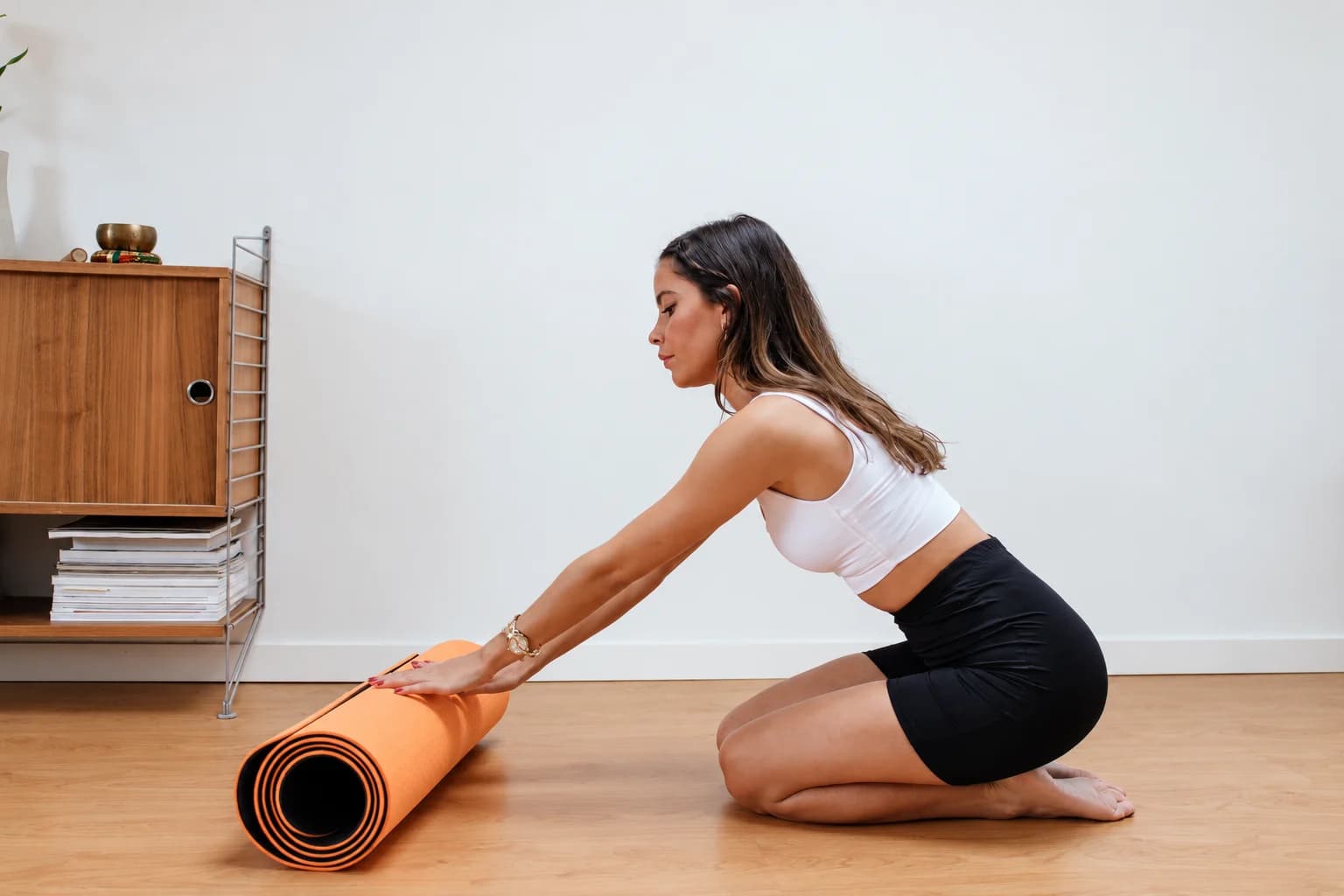
Ask a studio what it provides before buying equipment for class. For an optional home surface, the Grey cross-fold TPE mat with storage bag is listed as 182.9 by 80 centimetres and 0.8 centimetres thick. It comes with one storage bag and has a hand-wash-only care instruction. Its folding format gives you a specific way to put the setup away after the session.
Unfold the mat fully and check that it lies flat and stays in place on your chosen surface. Leave enough clear space for the lesson you intend to follow. After practice, store the mat and keep the next lesson easy to find. A repeatable setup is useful whether your week contains one short home appointment or several.
Once the schedule is established, you can use a familiar focused practice for one home slot. The supported standing yoga balance sequence gives clear entries and exits for that particular task. Choose it only when the movements and support arrangement suit the instruction you are following.
Review the plan after two weeks
Use the editorial two-week check to look at the calendar: which appointments happened, which were difficult to reach and which lessons were clear enough to repeat? Keep the slots that worked. Shorten or move a slot that repeatedly failed to fit, and ask for instruction where the home material remained confusing.
Also consider how you felt after the actual sessions. Fernandez advises allowing rest when practice becomes too much. If you need a quieter week, use the smaller version and leave the next increase undecided. Keep the next appointment clear and manageable, then build the following week around what you learned.