Stair-Climbing Workout for Beginners: Pace, Landings and Recovery
Plan a stair-climbing workout for beginners with a clear flight, comfortable walking pace, controlled landing turns and recovery on flat ground.
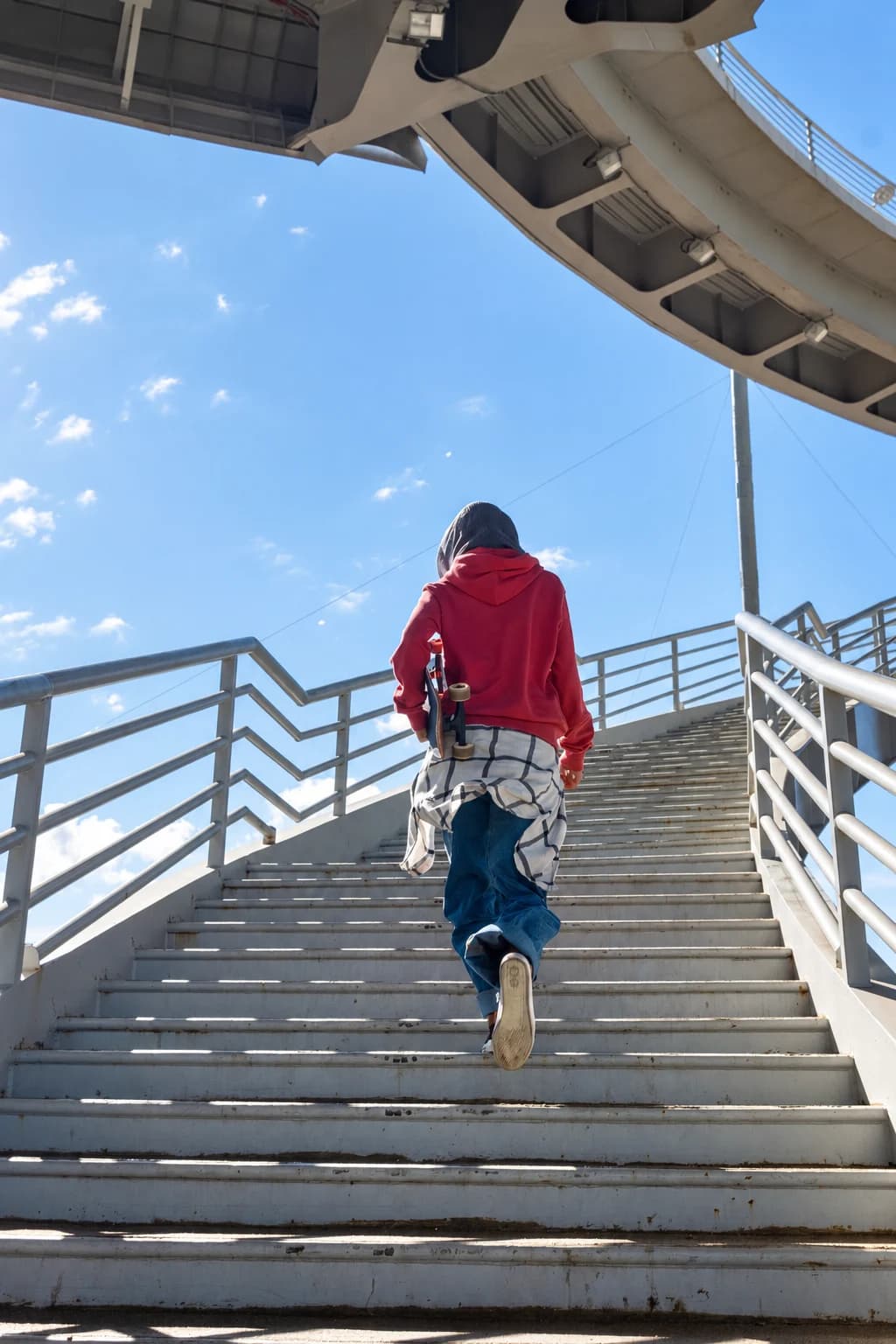
Plan a stair-climbing workout for beginners around the whole trip: up the flight, onto the landing, a controlled turn, down the stairs and recovery on flat ground. Choose a comfortable walking pace and a route with a usable handrail. The descent still needs your attention, so give yourself somewhere level to recover afterwards.
Start with one short flight that you can inspect from bottom to top. Learn that route before deciding how many trips to make. A few clearly organised cycles are easier to follow than chasing a step count while also trying to find your footing.
Read the complete stair route before optional kit
| Stage | What belongs in the route |
|---|---|
| Check | Inspect treads, rail, both landings and other users’ access |
| Up | Use the controlled walking ascent described below |
| Landing | Step fully onto level ground, pause and turn there |
| Down | Keep the rail available and place each foot deliberately |
| Flat recovery | Leave the bottom stair and recover in the clear flat area |
| First trial | Use the small adjustable example below, ending after one cycle if that is enough |
Plan a stair-climbing workout for beginners
University of New Mexico Employee Wellness advises checking for dry, nonslip stairs, enough tread space for the whole foot and a handrail. Although its guide discusses stair running, its starting advice includes walking, warming up for 5–10 minutes and allowing extra rest between sets. Use that walking entry here.
Check the route before the first climb:
- The treads are dry, visible and free of loose items, with enough usable depth to place your whole foot.
- The handrail is within reach along the flight and gives you something steady to hold.
- The top landing has enough clear level space to step fully off the stairs, pause and turn.
- The bottom has a clear exit from the last step to a flat walking area.
- The flight, landings and access routes can remain clear for other people throughout the session.
Choose another location if the only recovery space would block the stairs or an exit. A busy shared stairwell may work poorly for repeated trips even when the steps themselves are usable. Low-Impact Home Cardio Options Beyond Jumping offers alternatives when a flat-space session fits your setting better.
Set up a flat rest area
Choose a place beside the flat walking area for belongings and water, outside the stair, landing and exit routes. Keep your hands available for the rail while moving on the stairs. Set any timer before starting a trip and check it again after you have returned to flat ground.
If you use a headband, settle its fit before the warm-up. The optional Teal terry-cloth sweatband set contains one headband and two matching wristbands. Use the headband if it suits your comfort, and pause on flat ground before making an adjustment during the session.
Water can stay with your belongings until a flat-ground break. The optional locking flip-cap jug in the matte Purity 100-ounce variant includes its original cap and drinking straw, with a folding handle. Leave the jug at the rest area and take a drink there when you stop.
Complete the whole stair cycle
Rehearse this cycle at a comfortable walk. The landing and return are part of the task, rather than a rushed transition between climbs.
- Walk up the chosen flight, one step at a time. Place the whole foot on each tread, keep the next steps in view and use the handrail for support.
- Step fully onto the top landing with both feet on level ground. Pause, check the space and any other stair users, then turn using ordinary small steps on the landing.
- Approach the top step ready for the descent. Walk down one step at a time with the rail available, placing each foot deliberately. Keep the descent controlled instead of trying to get back quickly.
- Step fully off the bottom stair and continue into the flat walking area. Recover there with an easy walk, clear of the stair entrance, before deciding whether to repeat.
If you need to reorganise yourself at the top, use the clear landing before approaching the downward flight. If someone enters the route, wait in a place that leaves their passage clear. Restart only when you can follow the complete route again.
Build a short stair cardio routine
For a first session, try the small arrangement below on your chosen short flight. The two-cycle count, flat walking periods and recovery window are this guide's editorial example; the length and layout of your actual staircase still determine what each cycle involves.
Begin with 5 minutes of easy flat walking, letting the pace become a little more purposeful as you get comfortable. Keep the stairs out of this opening period so you can begin the first trip without hurrying.
Complete one full cycle using the sequence above, then spend 60–90 seconds walking easily on flat ground. Take longer if you are not ready to repeat the same controlled trip. If the route and pace remain manageable, complete one more cycle, followed by another flat recovery period.
Finish with about 3 minutes of easy flat walking. If one cycle was enough, finish there and note that for next time. The session is complete when you have returned to flat ground and settled the walking pace; there is no need to add trips to reach a particular step total.
Pace the descent as carefully as the climb
Harvard Health's stair-walking example uses a comfortable pace up and down a flight, a handrail for balance as needed and rest at the bottom. That distinction is useful: coming down is still stair movement, while the bottom provides the opportunity to recover.
Keep each ascent comfortable enough that you can place your feet deliberately and reach the landing without rushing the turn. On the return, choose the pace needed to see and use the steps clearly. You do not have to make the downward trip as fast as the upward trip.
Use flat recovery to decide what comes next. If the first climb leaves the descent hurried or the foot placements less deliberate, shorten the session rather than setting a faster timer. Next time, choose a shorter flight if one is available, or repeat the single-cycle version with more time on flat ground.
Repeat the route before adding more
Record the flight you used, completed cycles and whether the return stayed controlled. Add the flat recovery you actually needed. “Two cycles with longer walking between them” tells you more about the session than a stair total without its route or recovery.
Repeat that arrangement until it is familiar. When you decide to add work, change one part: an extra cycle on the same flight is easier to compare with the previous session than a taller staircase combined with a faster pace and shorter recovery.
Keep the route check each time, even when you use the same stairs. Weather, lighting, stored items and other users can change the setting. Choose the session that fits the usable flight and the space available that day.