Low-Impact Home Cardio: Options Beyond Jumping
Try cardio without jumping using marching, side taps and a simple V-step. Use the talk test to choose effort and build a short, adjustable home session.
Cardio without jumping can start with marching, side taps and a simple V-step. If you are choosing a low impact cardio workout at home for beginners, keep the movements on the floor and choose a pace you can manage. Build a short session around steps you can repeat comfortably, using only a clear patch of floor.
Low impact cardio for beginners is easier to plan when you separate the movement from its effort. Removing jumping removes the airborne jump-and-land part of a routine. It does not tell you how hard the remaining activity feels. A steady march may feel easy at one pace and more demanding at another.
Read the feet, then read the clock
| Pattern | Beat 1 | Beat 2 | Beat 3 | Beat 4 |
|---|---|---|---|---|
| V-step | Right diagonally forward and out | Left diagonally forward and out | Right returns | Left returns to the start |
| Side tap | Step right | Left taps beside right | Step left toward the start | Right taps beside left |
| Example clock | Activity | Subtotal |
|---|---|---|
| 0:00–2:00 | Easy march | 2 minutes |
| 2:00–5:00 | March 1 min → side tap 1 min → V-step 1 min | 3 minutes |
| 5:00–8:00 | Repeat that sequence, or substitute familiar marching | 3 minutes |
| 8:00–10:00 | Lighter, slower march | 2 minutes |
Two 3-minute middle rounds plus 2 minutes at each end total 10 minutes. Pauses can make the elapsed visit longer. Use marching as the reset when the four-step order is unclear.
Cardio without jumping can still feel like work
The CDC explains intensity as how hard you are working, with effort depending on your fitness. On its zero-to-ten scale, moderate effort is around five or six. At that level, you can talk but cannot sing; vigorous effort allows only a few words before taking a breath.
Use that distinction while you move. Begin easily enough to learn the steps and notice your breathing. If you want more effort, try a slightly quicker rhythm or comfortable arm movement while keeping the foot pattern clear. If conversation becomes harder than you intend, slow down, make the steps smaller or pause.
You do not have to reach moderate effort during the first practice. Learning where your feet go is a useful starting task. Keep the jump-free pattern as you change pace, rather than allowing a fast march to turn into springing from foot to foot.
Make a clear patch of floor your starting point
Choose enough uncluttered space for a small step to either side and a short step forward and back. Move loose objects out of those paths. Wear clothing that lets you move freely and use a floor and footwear combination that feels secure for stepping and changing direction.
First rehearse each movement slowly, without a timer or music. Make the steps as small as needed to stay within your space. If following several patterns takes too much attention, choose marching alone or alternate marching and side taps. A useful home session can stay simple.
Learn three complete floor movements
The following movements follow the British Heart Foundation’s home aerobic exercise guide. Its page includes several exercise options; these three give you a small set of stepping patterns to use without jumping.
- March: begin with feet about hip-width apart. Take comfortable alternating steps on the spot, returning each foot to the floor before changing feet. Let your arms move with the rhythm.
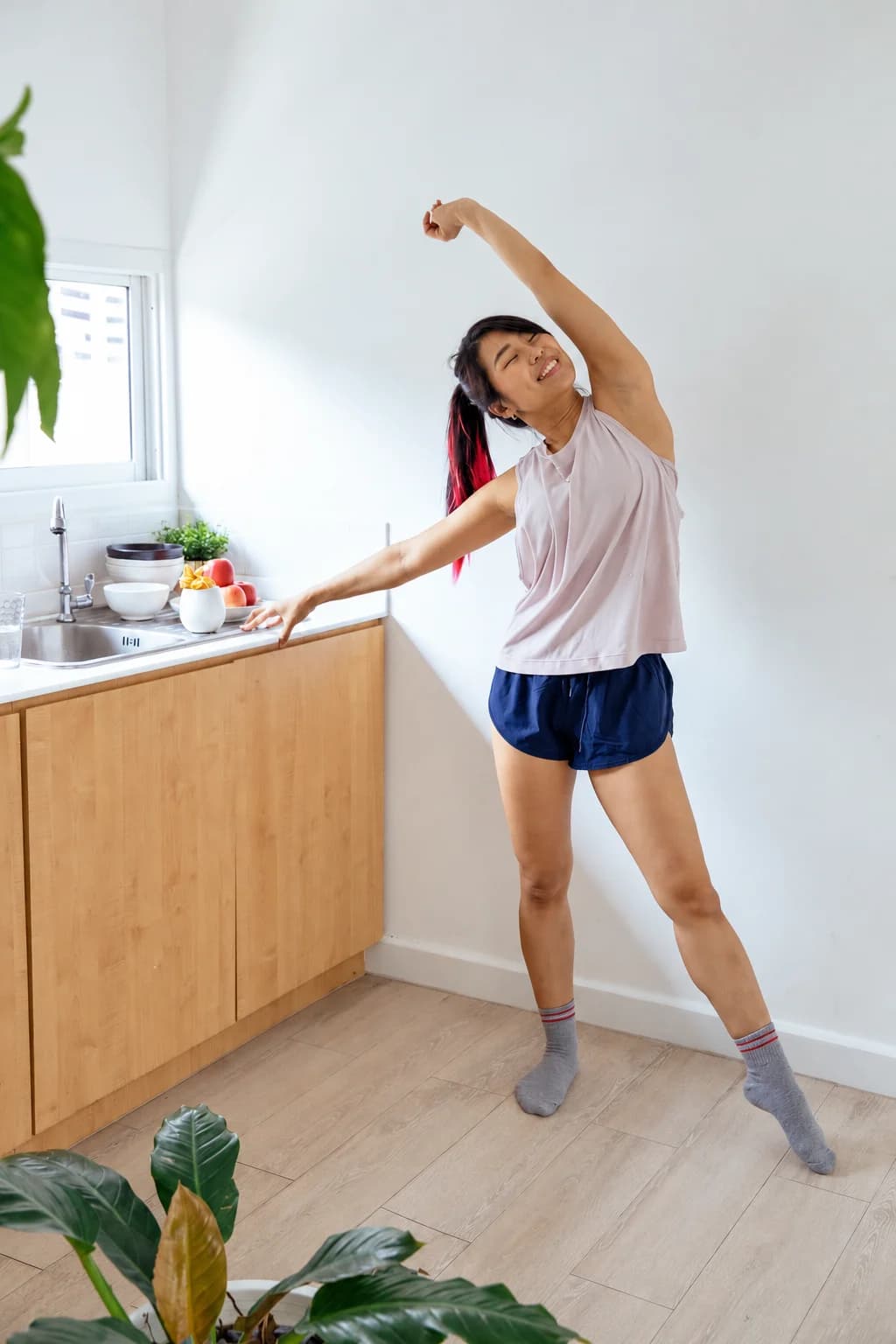
- Side tap: step right, bring your left foot in to tap beside it, then step left towards your starting point and tap your right foot beside it. Alternate sides. If comfortable, raise your arms on the outward movement and lower them returning.
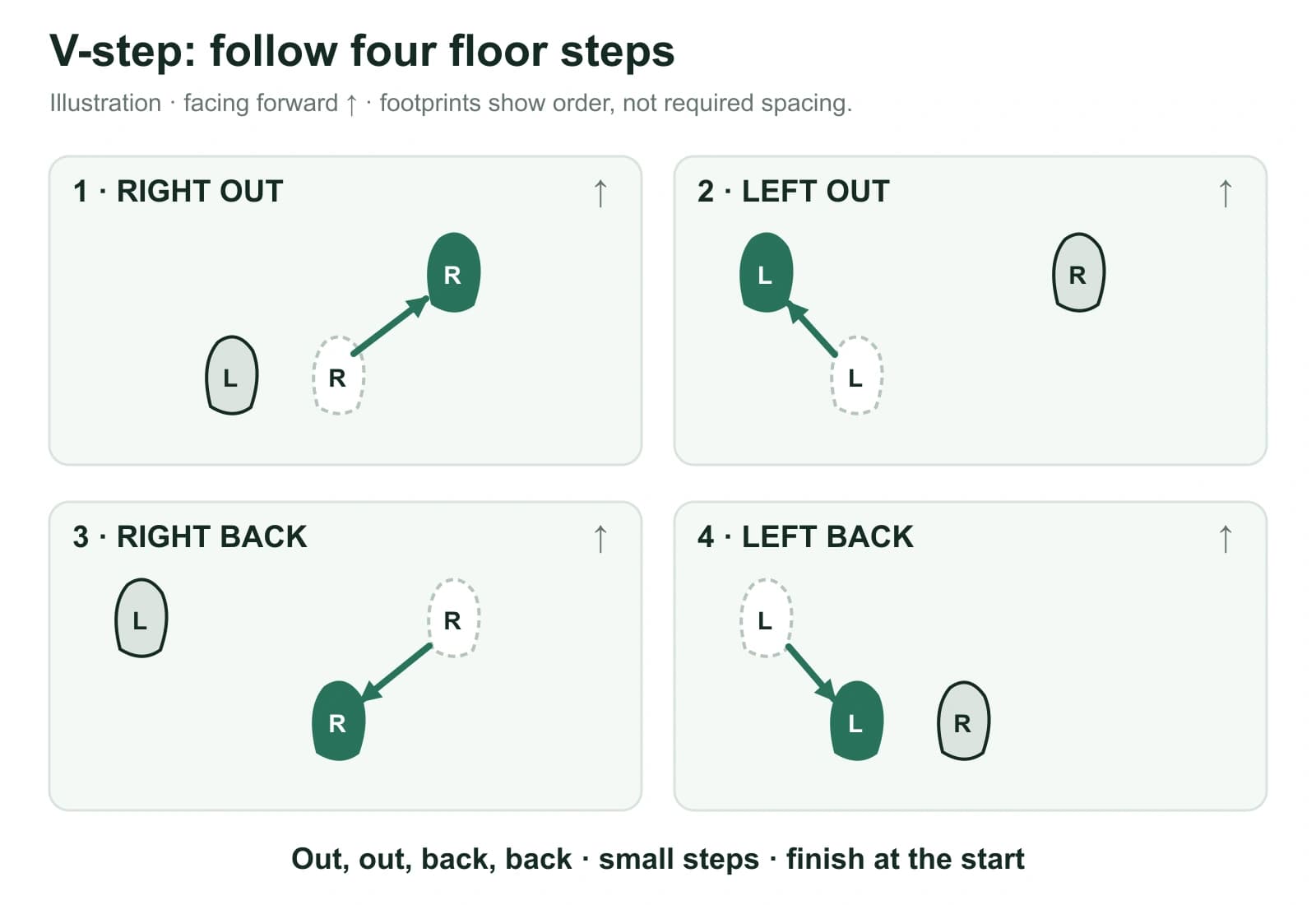
- V-step: step your right foot diagonally forward and out, then your left foot diagonally forward and out. Step the right foot back, then the left foot back, finishing where you began. Repeat the four steps slowly.
Keep the side tap narrow until the return feels familiar. For the V-step, think “out, out, back, back” and finish the full sequence before starting another. The forward steps can be small. Use marching as a reset whenever you lose the order.
Choose an attainable first session
For low impact conditioning at home, pick the amount of practice after you have tried the movements. One option is simply a short march, a few side taps and an easy march to finish. If that is enough for today, you have a clear stopping point.
For a longer try, this optional ten-minute practice gives the steps a simple order. The times are a practical example for this guide, rather than a requirement to keep moving through fatigue. Take a breathing break whenever you need one; the practice can take longer than ten minutes with pauses.
- Begin with two minutes of easy marching. Keep the first steps small, then settle into a comfortable rhythm.
- Spend one minute marching, one minute on side taps and one minute on the V-step. Repeat that three-minute sequence once. Substitute marching for any pattern you have not learned yet.
- Finish with two minutes of lighter, slower marching, easing the movement down gradually.
During the middle section, use the talk test to decide whether the pace suits your intended effort. Keep the rhythm easy if learning the feet is still taking attention. If you want moderate effort, aim for the CDC’s talk-but-not-sing description while keeping the steps controlled. A timer gives the session an order; your breathing and foot placement help you decide whether to continue or adjust.
Choose one change for a later session. You might practise for a little longer, take fewer or shorter breaks, or use a slightly brisker rhythm. The BHF guide recommends building duration and reducing rest gradually. You can also repeat the same session while the movements become familiar.
Choose optional aids for the way you want to move
A clear floor is enough for the standing practice above. If visible endpoints help you keep side steps small, the 12-piece plain floor-spot set gives you coloured markers to arrange. Use them only where they lie flat and stay in place on your floor. Leave them out if they interrupt your footing or the return step.
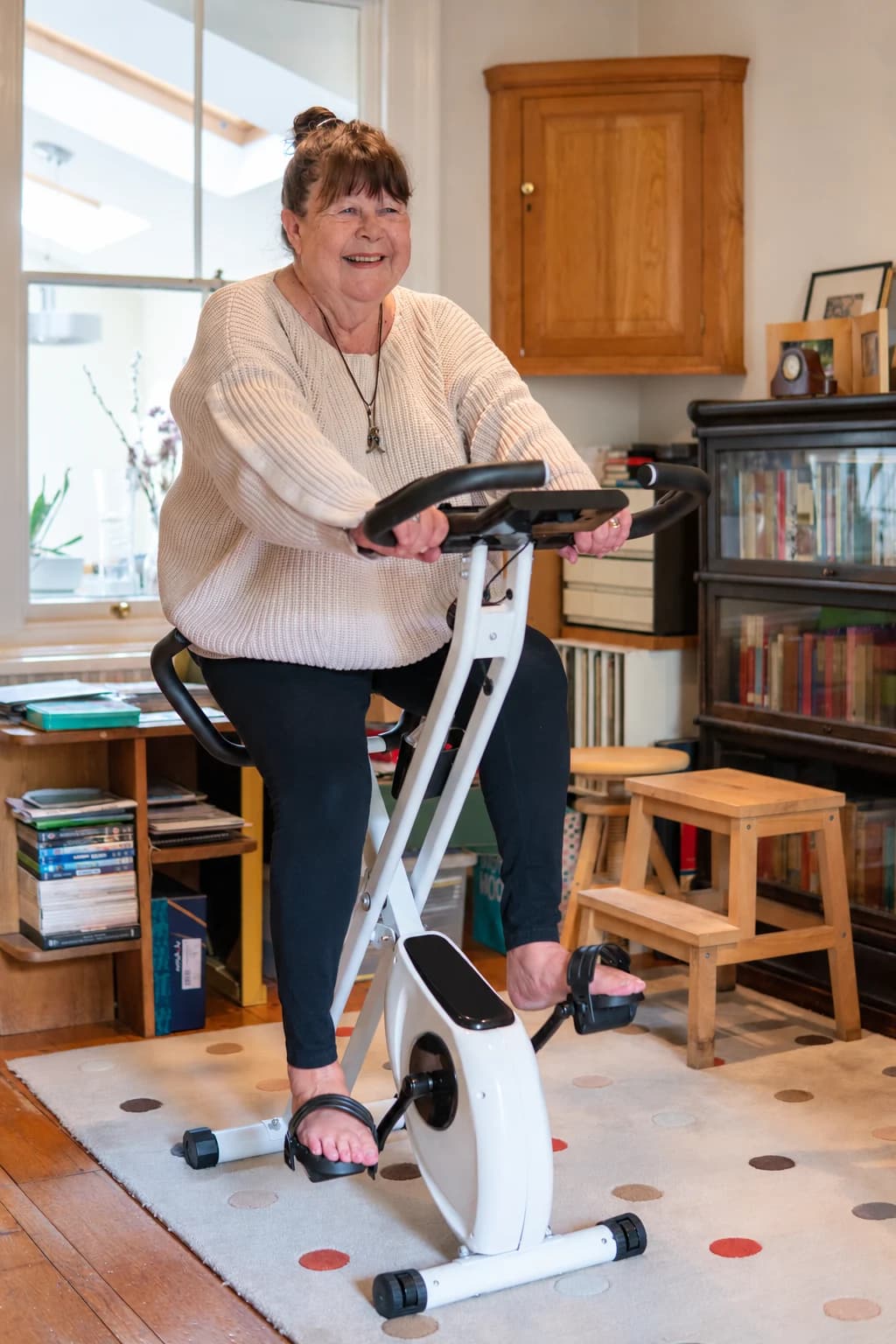
For a separate seated movement choice, the black fixed-frame manual pedal exerciser has strapped pedals and a tension knob. This model is intended for gentle use and is not for strenuous exercise. Choose it if gentle seated pedalling is what you want; keep that purpose separate from the more active standing section above. Follow its setup instructions before use.
Finish with a useful choice for next time
End by easing down with light marching rather than stopping in the middle of a quick pattern. Then decide what helped: a smaller side step, more time to learn the V-step, or a simpler march-and-tap session. Those observations make the next practice easier to choose.
Once you want a different structure, Combine Cardio and Strength: A Home Circuit with Real Recovery offers a related way to organise activity and breaks. For this session, the key decisions remain small: which stepping pattern, what effort and how much practice fits today.