Small Pilates Ball vs Stability Ball: Different Tools and Space Needs
Distinguish a small Pilates cueing ball from a large stability-ball support, then match the lesson, floor space, storage and actual pack quantity.
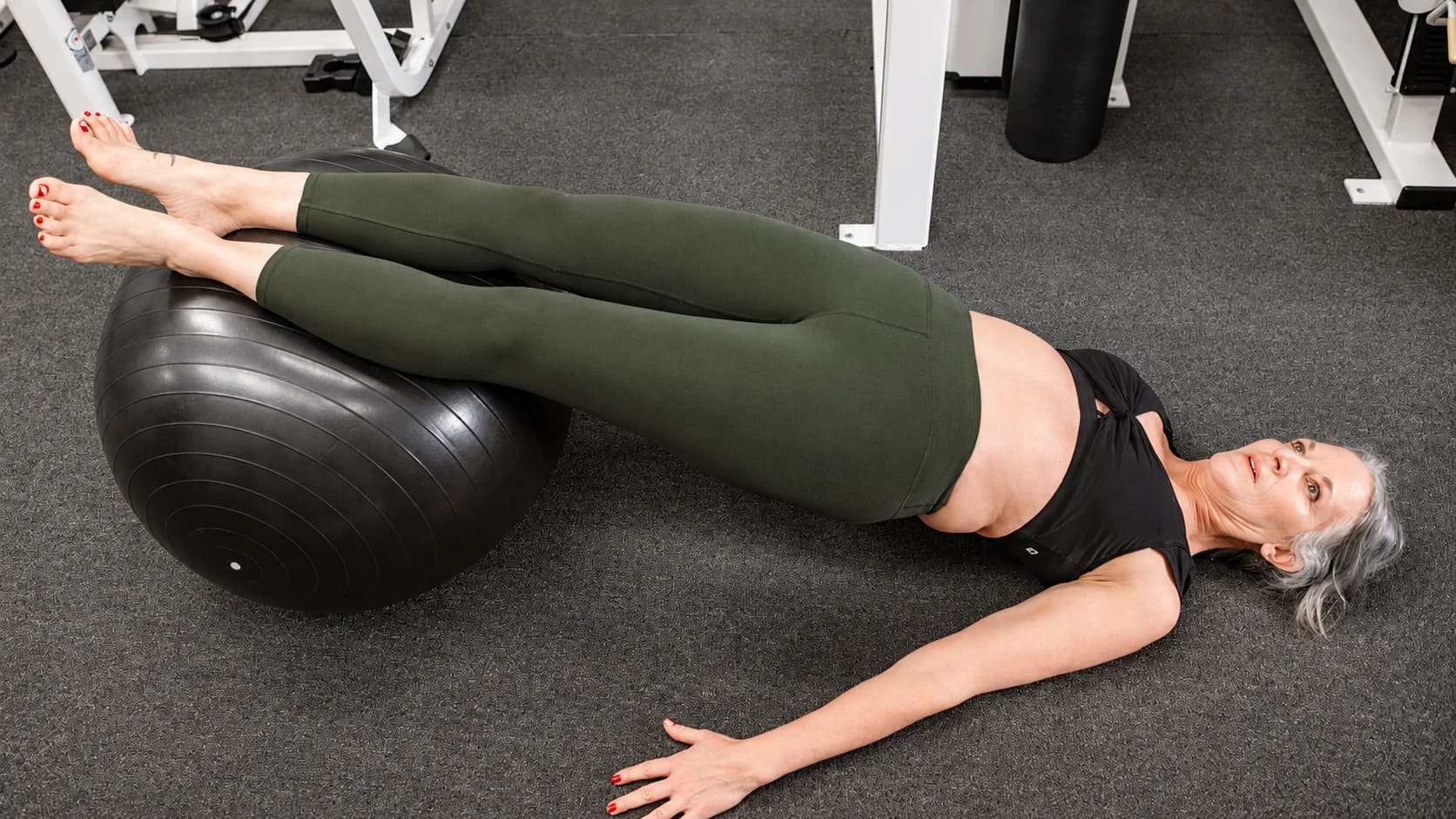
A small Pilates ball and a large stability ball belong to different equipment classes. Before following a lesson, identify which ball the teacher means and what role it has in the setup. A small cueing prop does not become a large body-support surface because both are round and inflatable.
That choice also changes the space you need. Consider the room during the whole taught task, the route into and out of the setup, and where the ball will live afterwards.
Pilates ball vs stability ball: identify the intended prop
Look at the lesson's equipment list before studying a photograph. Check the stated ball class, dimensions and model guidance. Words such as “exercise ball” can be broad, so ask for clarification when the equipment description does not make the format clear.
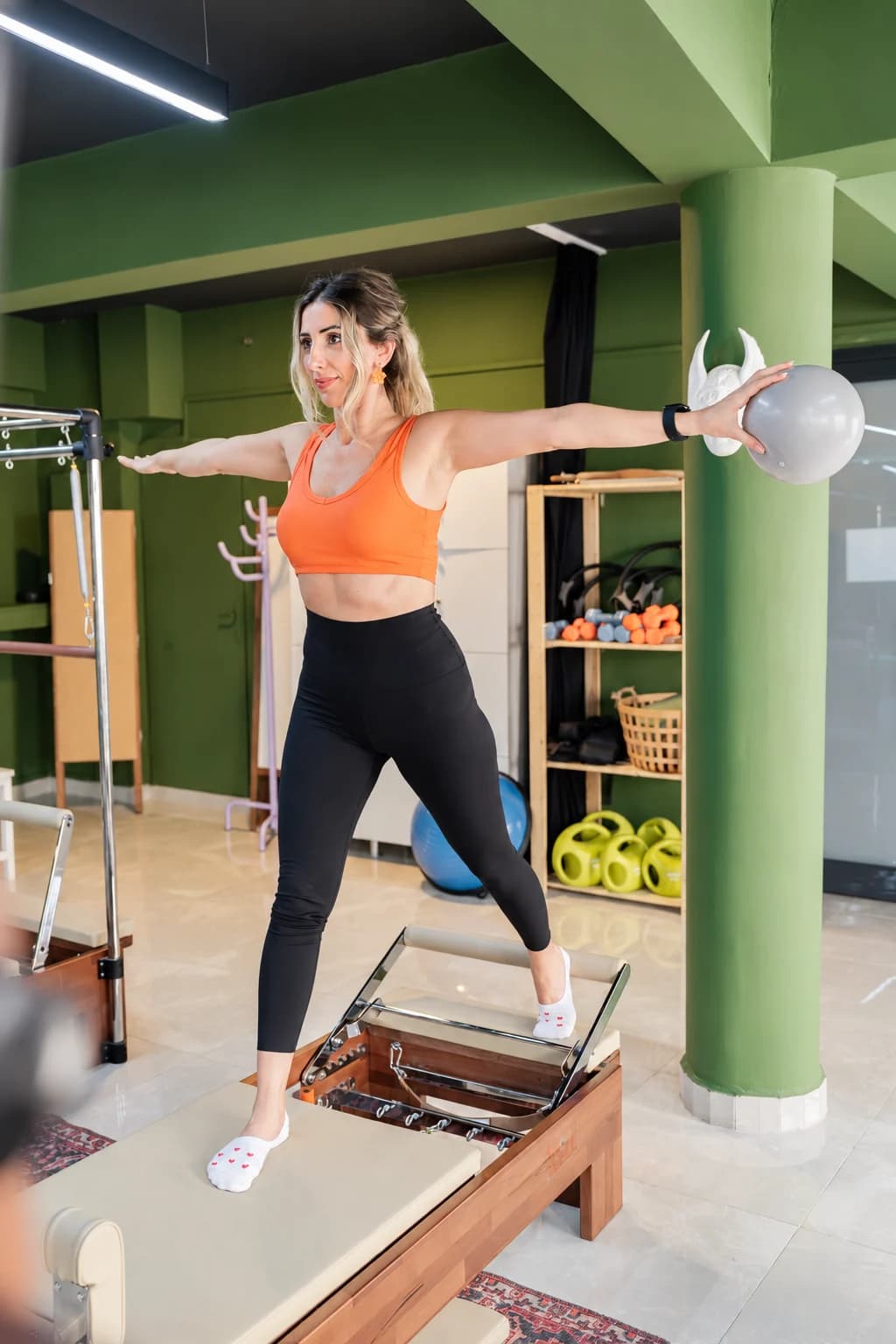
As a small-prop example, OPTP's Soft Gym Overball is a soft inflatable ball described as providing a body-position or contact cue. That explains a useful role for a small ball: it gives the lesson a particular object to contact or notice. Use that contact cue alongside the teacher's full positioning instructions.
Gaiam's stability-ball FAQ describes stability, balance, exercise and Swiss balls as large inflatable balls used as body-support surfaces. Its own models illustrate the larger class. A lesson built around that support has a different equipment requirement from one using a hand-sized prop.
Use the instructions to identify the role; use photographs as context. A ball shown beneath someone in an image does not establish that your ball is suitable for the same placement or that the photographed position is the one your lesson teaches.
Pilates ball types at a glance
Compare the construction and intended role before choosing a colour or pack. Product names can overlap, while the difference in the actual object is substantial.
| Ball class | Role to identify in the lesson | Details to confirm |
|---|---|---|
| Small inflatable Pilates ball | A compact contact or cueing prop in the specified setup. | The lesson's required size and the exact model's instructions. |
| Large round stability ball | A larger rolling support used for the taught body contact. | The specified ball, its intended support use and the whole floor area needed. |
| Another ball shape or construction | A separate tool whose role must be explained by its own lesson. | Whether the class actually calls for it; a shared “fitness ball” label is insufficient. |
A small ball, a large round ball and a differently shaped support are separate choices. Choose the item named by the lesson rather than assuming a ball already in the cupboard is an acceptable substitute. If the teacher offers an alternative, ask how that changes the setup before following it.
Compare the actual products, not just the ball category
| Field | PBGGAME Pink small-ball studio pack | A full-size stability ball you are considering |
|---|---|---|
| Exact model or selected option | PBG-941564; linked selected Pink 20-ball pack | _____ |
| Nominal size and quantity | 9-inch small balls; 20 balls | Copy the actual manufacturer’s size and unit count: _____ |
| Intended role | Small prop only when the lesson and its instructions match | Confirm the exact model’s intended body-support use: _____ |
| Included accessories | 2 pumps, 25 straws and 25 plugs, as listed | _____ |
| Model instructions and date checked | Obtain supplied use/inflation guidance; no load rating established here | _____ |
Mini ball vs exercise ball: a substitution changes the task
Changing the ball can change where the body contacts it, how far the support reaches and how much of the setup can move. Those are practical differences to resolve with the instructor, rather than details to discover halfway through a demonstration.
If a lesson calls for a small ball, ask what the prop is meant to help you notice. If it calls for a large ball, establish which contact it is intended to support and how the taught setup begins and ends. You do not need to invent a new version of the movement to make a different ball fit.
Size alone also does not establish suitability for body loading. Read the exact model's instructions for the intended use, and do not transfer a rating from another maker's ball. A product photograph or an “anti-burst” phrase is not a substitute for those instructions.
When the required ball is unavailable, pause the lesson and ask for an appropriate alternative. Matching the teacher's equipment and setup is a clearer decision than choosing the nearest round object and hoping the instructions still apply.
Plan the room for the lesson and the ball
A larger ball needs room to move during the lesson and a place to stay afterwards. The amount of room depends on the actual task, furniture and ball, so a universal floor-area number would leave out important details. Walk through the space requirements before placing the prop in the practice area.
In a shared living room
Check the complete area the lesson uses, including the space needed to approach and leave the setup. Move furniture or loose items that occupy that area. A ball fitting into the gap beside a sofa does not mean the whole taught task fits there. If the room cannot accommodate the required setup, choose a lesson designed for the space you have.
In a dedicated practice area
Plan storage as well as practice. Decide where an inflated ball can remain without occupying a doorway or the next activity's floor area. Check the model's storage instructions before choosing a corner, shelf or container. Keep the practice space available for the lesson instead of relying on rearranging the room while already using the ball.
For a studio or group
Consider the number of balls, not only the diameter of one. A bulk pack needs a storage plan, a way to keep the relevant instructions available and enough equipment for the booked group. Confirm what the studio provides before buying personal equipment or a class-sized set.
A small-ball studio pack from PBGGAME
The PBGGAME nominal 9-inch Pilates balls, Pink 20-ball studio pack contains twenty small PVC balls, two pumps, twenty-five straws and twenty-five plugs. This is a studio or group quantity, rather than a listing for one ball. Stands, storage bags and other scene equipment are not included.
Choose it when a small-ball format and a twenty-ball quantity suit the planned lessons. It supplies the small-prop class discussed here; it is not a full-size round stability ball. If your lesson requires a large body-support ball, this pack does not fill that equipment requirement.
The listing directs owners to keep the balls away from woodwork, wooden furniture and painted walls. Include that instruction in the storage decision. Check the supplied product guidance for use and care rather than assigning another brand's instructions or load claims to these balls.
When the lesson calls for a small ball
Once you know the lesson needs a small ball, the small-ball setup notes in Pilates at Home cover the separate questions of placement, sizing and model-specific inflation. Use those notes alongside the exact product instructions instead of importing a large stability ball's guidance.
If a lesson lists a ball without making its role or size clear, send the teacher the equipment description before buying. Include the model name or listing and ask whether it is the intended prop. That gives you a specific equipment question to resolve before arranging the practice area.