Shared-Home Workout Storage: Keep Access Clear Without Taking Over the Room
Organise portable workout items around the people who share the room, with clear access, defined storage and a repeatable reset.
Plan small home gym storage around how the room is shared. The useful question is not just where the equipment fits, but whether you can take it out, finish your session and leave the room ready for its next use.
Workout storage in a shared home works more smoothly when the people using the room agree on the space and the reset routine. A living room can host a short session without permanently becoming an equipment display.
Agree on the room before choosing storage
IKEA’s sports-equipment storage ideas show ways to use a defined area, divide small items and organise equipment by household member. The useful principle is a consistent place for belongings; you do not need to copy a particular cabinet or installation.
For your shared workout space, agree on three practical points:
Measure two candidate storage spaces
| Item and actual folded size | Candidate location | Space needed to open and remove it | Access or reset check |
|---|---|---|---|
| _____ × _____ × _____ | A: _____ | _____ | _____ |
| Same item | B: _____ | _____ | _____ |
| After use | Chosen location: _____ | Route still clear? _____ | Returned and stable? _____ |
- Where equipment goes when nobody is exercising.
- When and where the activity can be set up.
- What needs to be put back before the next person uses the room.
Include ordinary uses of the space in that decision. A corner that works during a workout may also be needed for access to a cupboard, a seat or a door afterward. Choose a routine the household can actually repeat.
Keep access separate from storage capacity
A container can fit in a gap while still making that gap inconvenient to use. Check doors, drawers and the routes people take through the room with the equipment in its stored position. Also consider what happens when you open the container to get something out.
Keep emergency access clear as well. The New York Fire Department’s fire-escape guidance says that fire escapes and access to them should remain clear of stored items. Where your home has that arrangement, do not use it as overflow storage. This is fire-escape guidance, not a universal room-dimension rule or a reason to assume a particular layout meets local requirements.
Group small accessories by person or purpose
Small space gym organization is easier to maintain when each group has a clear purpose: one person’s accessories, one activity’s small items or the things you regularly use together. Avoid creating a collection of indistinguishable containers that you must empty to find one item.
The PBGGAME black mesh storage-bag set is one lightweight grouping option. The selected variant contains six separate black mesh bags, each with a drawstring and sliding cord lock. The listed flat size is approximately 13 × 15.5 inches per bag; that does not describe its closed internal volume.
Check an item’s fit and the closure with the bag actually filled. These are soft mesh bags, not rigid boxes or locked storage. No load rating is provided here, so do not treat the drawstring as a rated hanging point for weights. The selected set does not include the equipment you put inside it.
Give the room a simple reset
At the end of the session, return the equipment to its agreed place, close the storage you opened and check that the ordinary route through the room is usable again. Check the next person’s needs as well as whether your own equipment looks tidy.
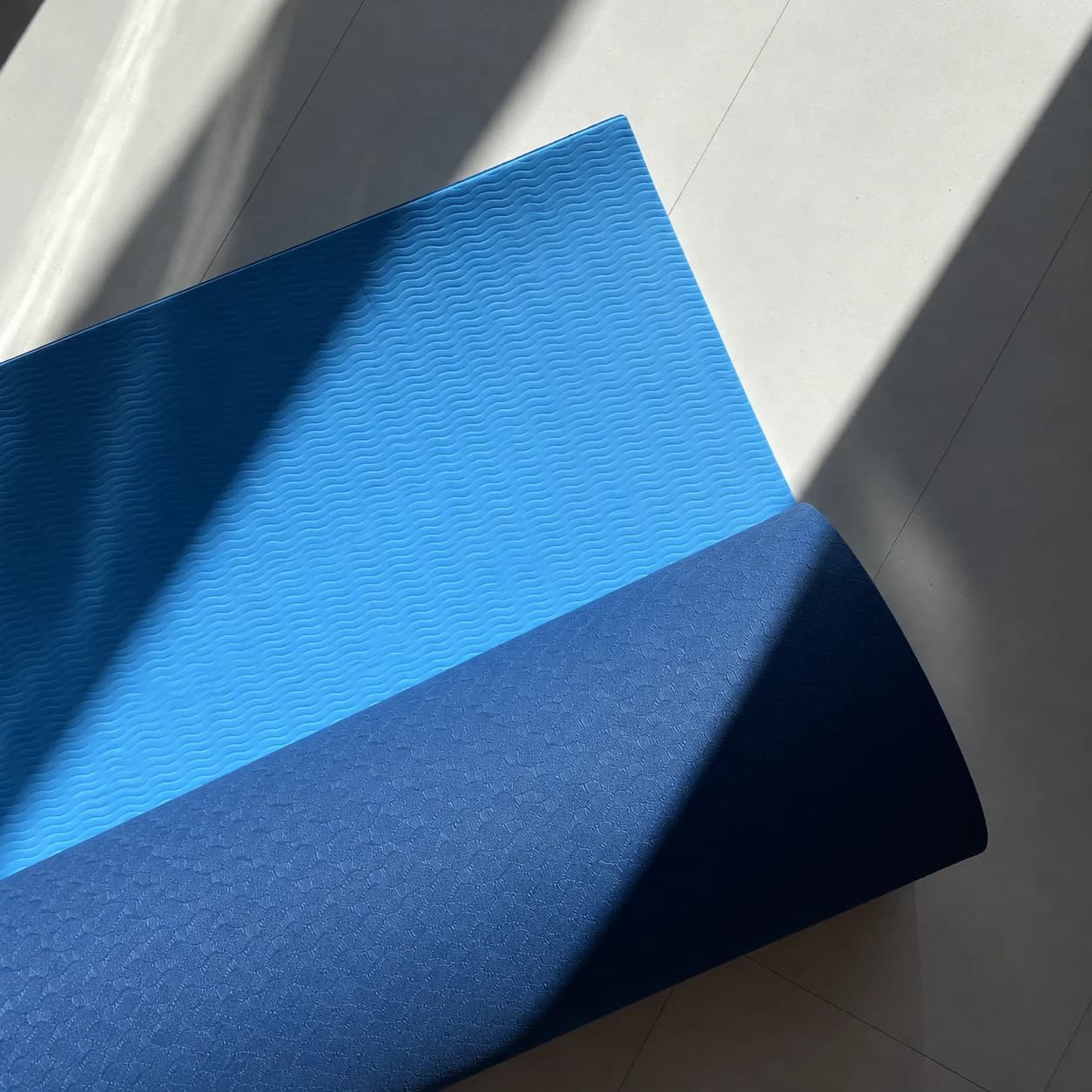
Measure an item in the form you intend to store. An unfolded mat dimension, a bag’s flat size and a photograph of a packed arrangement answer different questions. Use actual stored dimensions when deciding whether something fits on your shelf or in a cupboard.
If you also need to carry equipment away from home, our gym-bag selection guide covers carrying configurations and openings. Keep that travel decision separate from choosing a home for the items.