Choosing a Gym Bag: Carry Style, Capacity and Everyday Access
Choose a gym bag by its carrying arrangement, openings and actual storage needs, with two different PBGGAME configurations to compare.
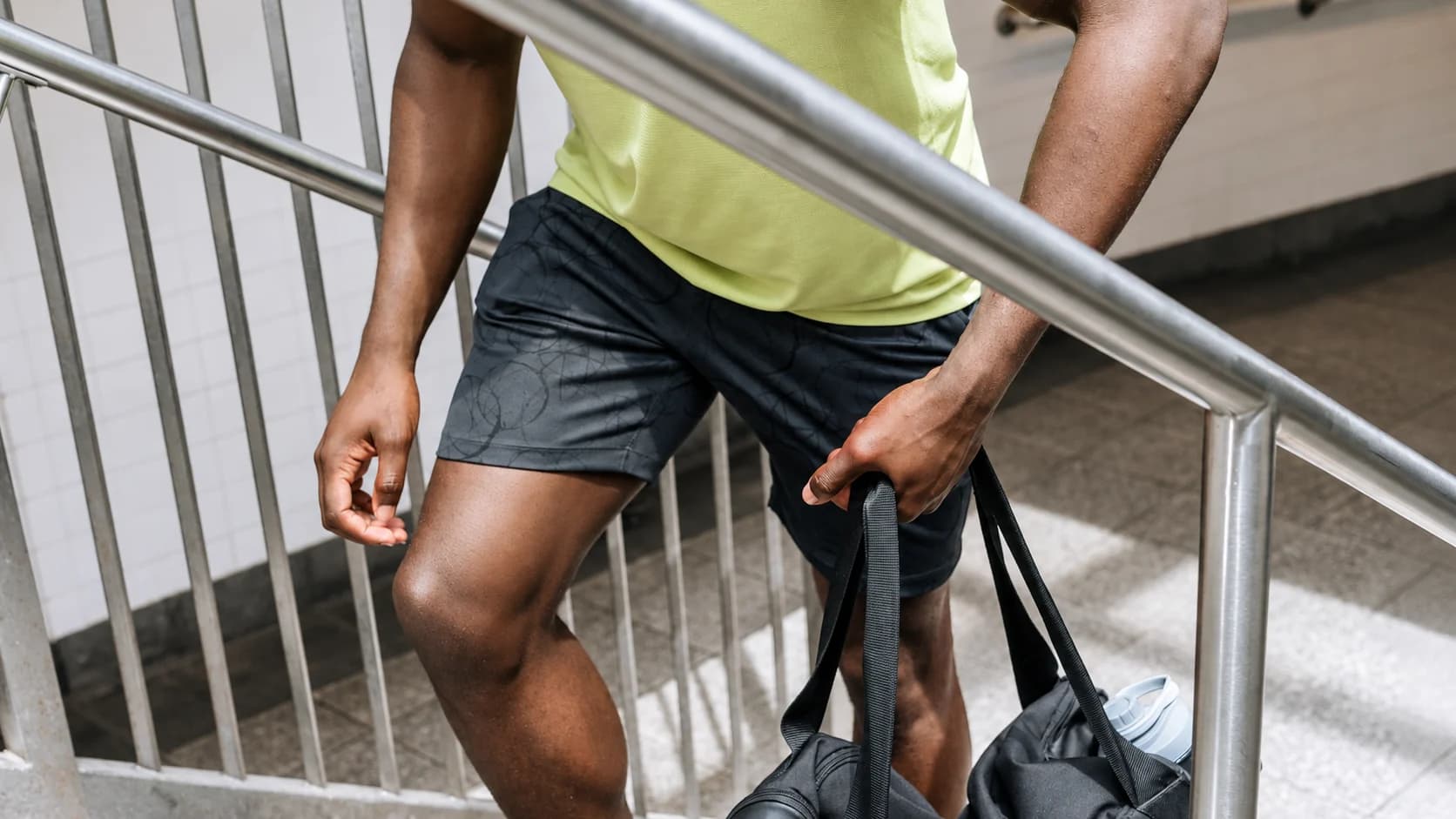
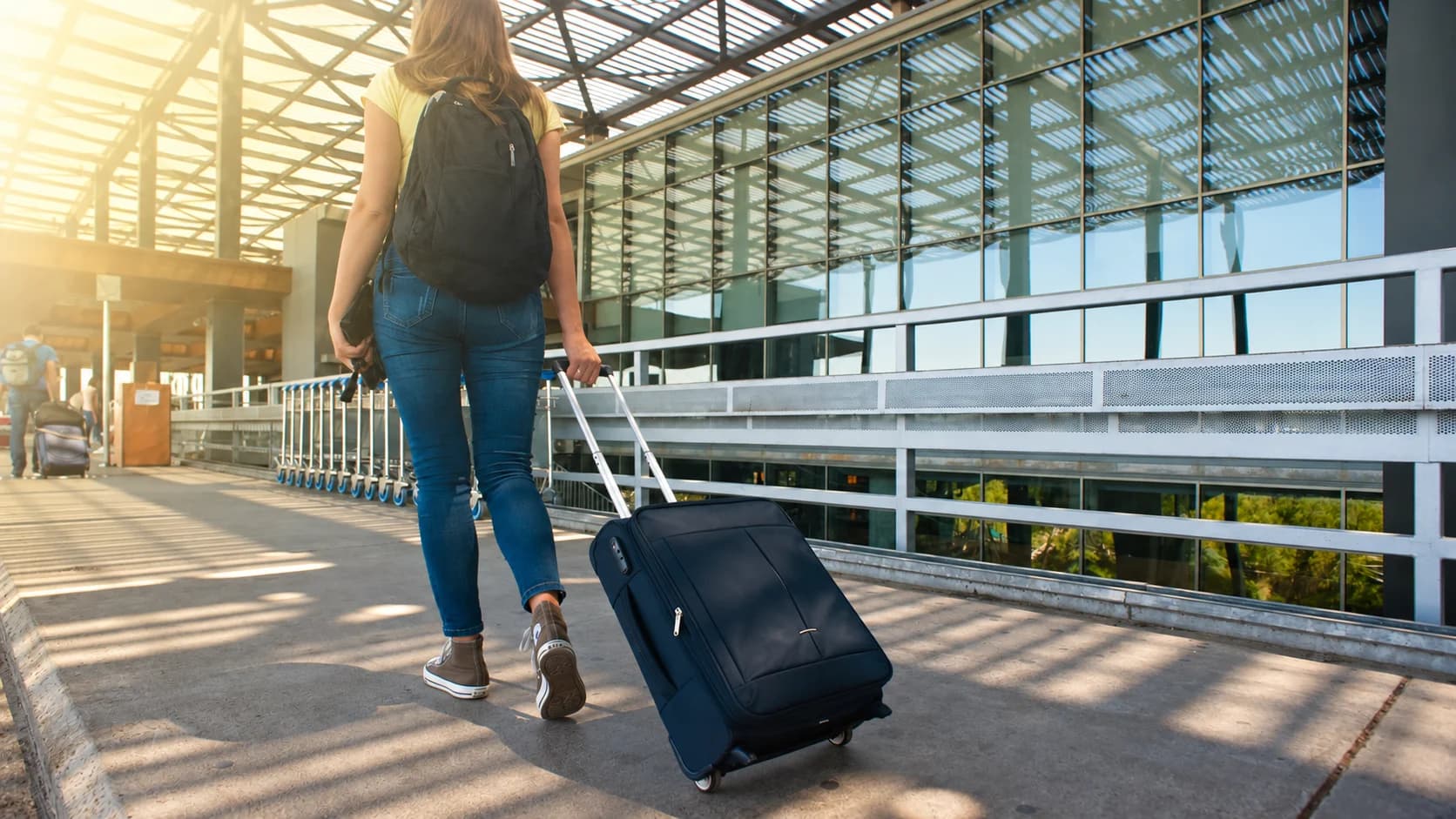
Learning how to choose a gym bag starts with the journey it needs to make. Carrying a change of clothes from a car to a locker is different from taking the same bag on a walk and a train before work. Choose the carrying arrangement and access you need before choosing the largest advertised capacity.
Choose a carry style for the journey
The buying-advice section of REI’s duffel guide distinguishes carrying configurations and the practical differences between bag designs. “Duffel” does not automatically mean the bag has backpack straps.
When comparing a duffel vs a backpack for the gym, identify what the particular model provides:
- **Carry handles:** check their position and whether you can use them with the bag loaded.
- **A shoulder strap:** check the attachment points and adjustment.
- **Backpack straps:** look for an actual pair of straps, rather than assuming a single long strap provides the same arrangement.
- **Convertible carrying:** check how unused straps are stored and what must be changed between modes.
Choose according to your route and the configuration you will actually use. The name of a carry style does not establish comfort for your body.
A gym bag size guide starts with dimensions
Under Armour’s gym-bag buying guide puts the bag choice in the context of the journey, equipment and storage you need. Use your own routine to narrow the size.
Listed litres are a useful starting description, not a guarantee that a particular object fits through the opening or into an internal pocket. Compare the bag’s dimensions and compartment information with the items you already carry. Keep any gym-locker, venue or transport size limits separate: check the actual provider’s rules instead of relying on a general “gym bag” or “travel-friendly” label.
Try the openings with your expected load
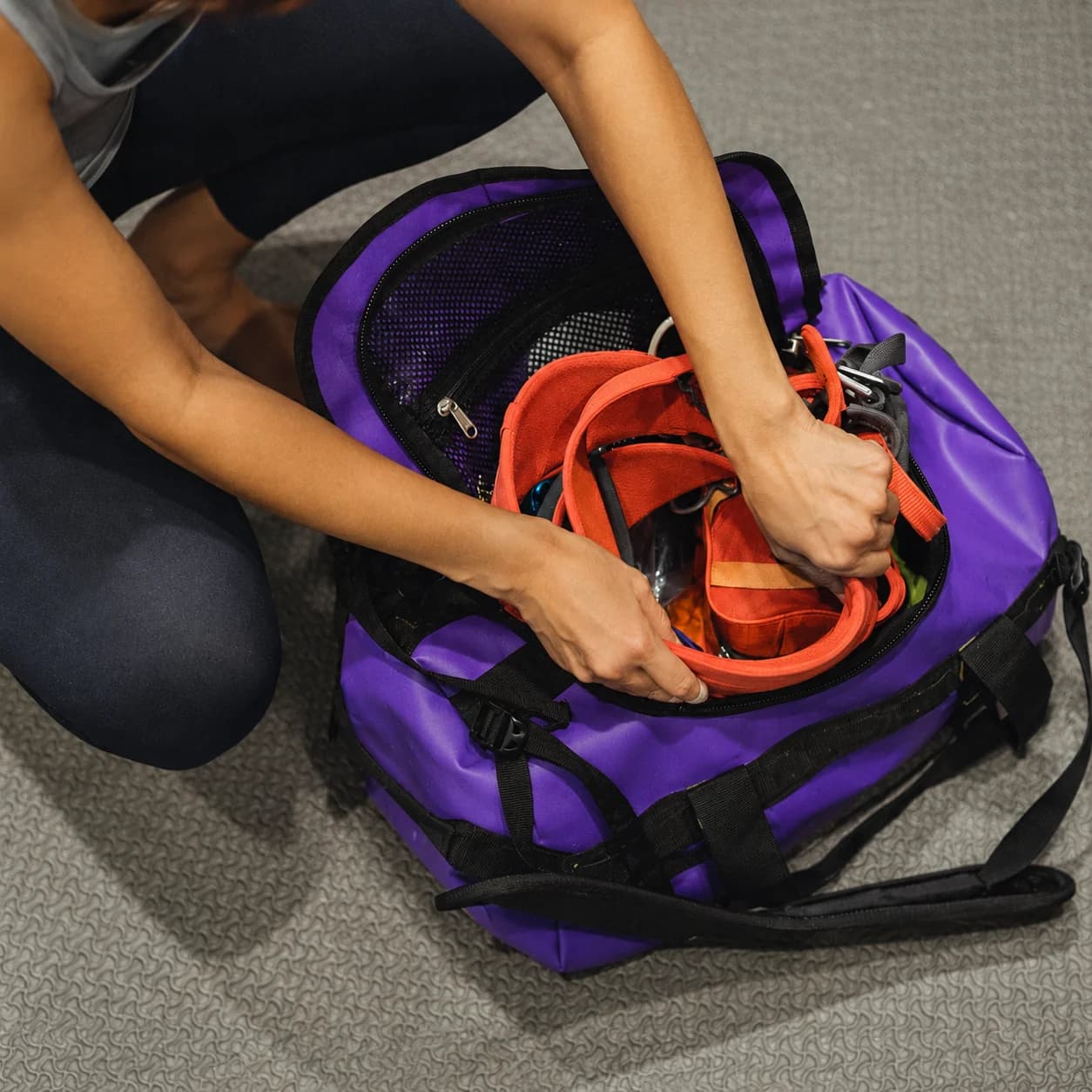
Start with the things you normally bring, rather than filling the bag with items just because space remains. Check whether the main opening accepts the largest item without forcing it past the zipper. Then close the bag with the rest of your belongings in place. If you must strain the closure, reconsider the arrangement or size rather than assuming the bag will stretch into shape.
Look at what happens when you reach for something you use frequently. Can you open that pocket while the bag is in the position you normally carry or store it? Do you have to remove other contents to find a key? An exterior pocket may be useful for access, but its presence alone does not establish that it fits your phone and case.
Next, check the intended separation. A shoe sleeve, a small zipped pocket and an open bottle space solve different storage problems. Confirm what the particular bag includes. A compartment is not automatically waterproof, sealed against odours or a substitute for the contents’ care instructions.
Finally, try the selected carrying arrangement with a representative load. Adjust the available straps and check access again. If the bag will go into a locker or under a desk, compare its loaded shape with that space as well as its listed dimensions. Avoid choosing on an empty-bag photograph alone.
Two actual configurations to compare
| Capacity and practical fit checks | Navy-and-white duffle | Clear convertible bag |
|---|---|---|
| Published capacity label | 37 L capacity label | 32.5 L capacity label |
| Overall dimensions already listed | 18.5 × 8.7 × 14.2 in | 17.1 × 11.2 × 10.6 in |
| Usable main opening | Ask PBGGAME for this measurement and compare it with your intended contents | Ask PBGGAME for this measurement and compare it with your intended contents |
| Internal compartment / shoe-sleeve dimensions | Ask PBGGAME for this measurement and compare it with your intended contents | Ask PBGGAME for this measurement and compare it with your intended contents |
| Actual representative load and closure check | Check your intended contents with the opening and closure fully usable | Check your intended contents with the opening and closure fully usable |
Ask PBGGAME contact how each capacity was obtained and for internal/opening measurements. For your own check, record largest item ____; opening ____; contents ____; closed loaded shape ____; actual carried mass ____. Keep unknown measurements blank. A clear bag still needs approval from the actual venue.
The PBGGAME navy-and-white duffle has carry handles, a detachable shoulder strap, a zipped top opening and exterior zipped storage. It is listed at 37 litres with approximate overall dimensions of 18.5 × 8.7 × 14.2 inches. The overall size does not tell you the usable dimensions of each pocket. The selected option is one striped bag; this is not the shoe-sleeve configuration described next.
The PBGGAME clear convertible bag offers handles, a shoulder strap, concealed backpack straps and a shoe sleeve. It is listed at 32.5 litres and approximately 17.1 × 11.2 × 10.6 inches overall. The multiple carrying views show one bag. Shoes, clothing and personal items pictured with it are props, not included products.
Compare the two bags by their construction, carrying options and usable openings as well as the capacity labels. Check venue and transport requirements for a transparent bag before your visit.
Make access part of the decision
If frequent phone access is the reason you want an outside pocket, use the actual phone and case for that check. Our phone-carrying guide covers that narrower decision.
Once you have a suitable bag, follow its own care instructions. Pocket count, material names and capacity labels do not replace model-specific information about cleaning or what may go inside.