Self-Massage Tools Guide: Balls, Surfaces and Controlled Pressure
Compare massage balls, peanut shapes, textures and sports-ball alternatives, then learn supported foot and wall contact with realistic expectations.
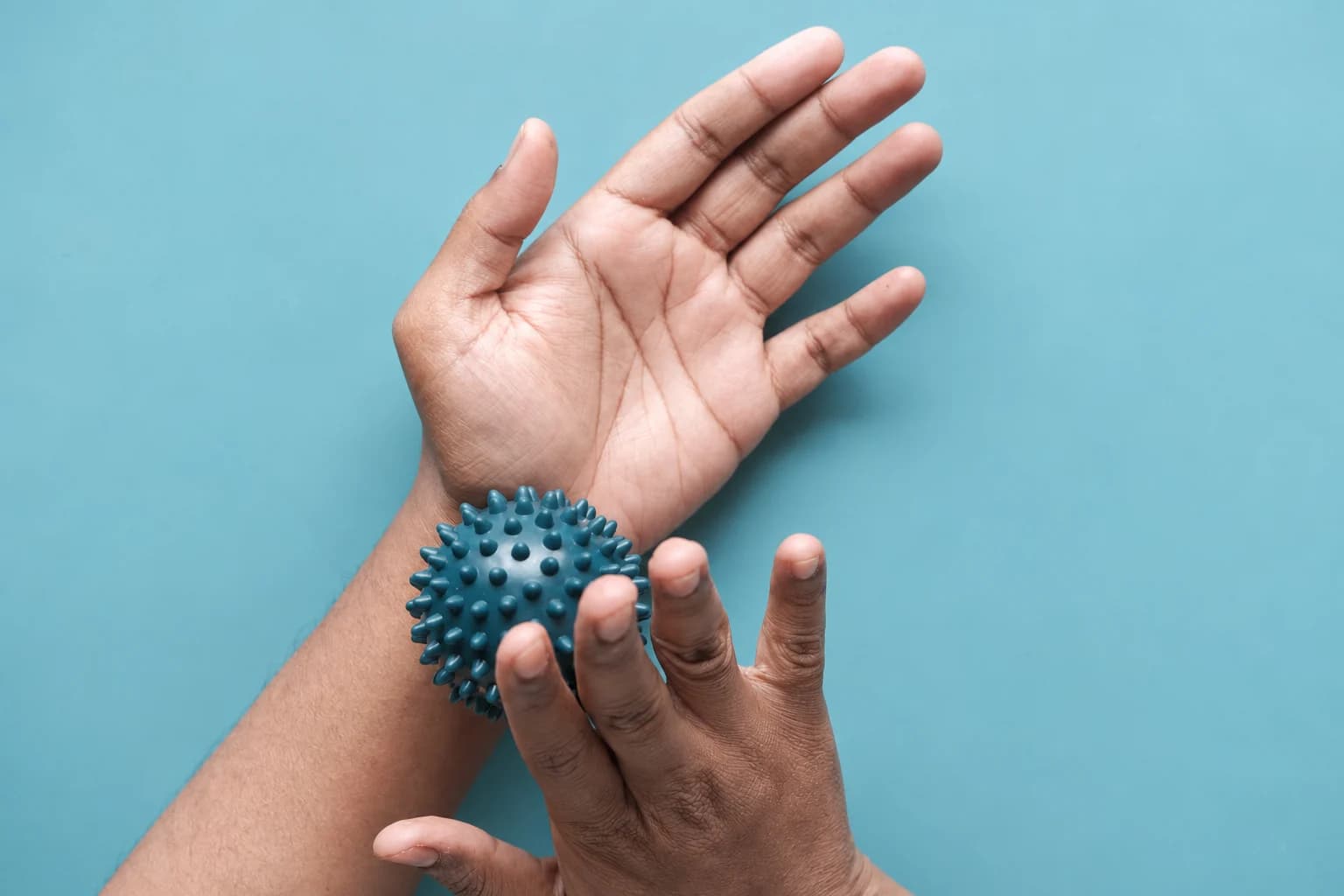
Choose self-massage tools by where you want contact and how easily you can remove it. A ball you can place accurately, move a little and unload comfortably is more useful than a harder tool you have to endure. Start with a supported position and a short light trial.
Find the body area and its unloading instructions
Read the stop and unload instructions in this guide before the first contact. The area descriptions are controlled-pressure examples, not treatment claims or permission to work through pain. Do not increase pressure to diagnose or solve unexplained symptoms.
This guide covers ball shapes and surfaces, sports-ball alternatives, seated foot contact and separate wall setups for the upper back, buttock and back of the shoulder. Self-massage is optional. A tender spot, a deep-tissue label or a strong sensation does not establish a diagnosis or a reason to apply more pressure.
Choose the best massage ball for your actual setup
Name the position first. A seated foot task lets the chair support most of your weight. A wall lets you adjust contact by leaning less. Lying on a small ball can make loading and unloading harder, so it need not be your starting point. A softer ball cannot compensate for a position you struggle to leave.
Read the actual diameter, construction and care instructions. A small ball may fit a narrower space but feel more concentrated; a larger one can change both contact and reach. Neither size is universally better. Hollow, solid, foam and inflatable constructions also differ. A gentle hand squeeze is a practical feel check, not a standardised hardness measurement.
The Gaiam stretch and massage guide illustrates named soft-tissue placements and distinguishes them from prominent bone. Use the directions for the tool you own rather than assuming a photograph or material name clears every placement.
Peanut massage ball vs round: one contact or linked lobes
A round ball offers one movable curved contact. A peanut joins two lobes with a narrower channel. The second shape changes orientation and alignment; it does not automatically make contact gentler or safer. Large inflatable peanut exercise balls are another equipment category.
| Design question | Round ball | Peanut ball |
|---|---|---|
| Where does it contact? | One selected soft area. | Both linked lobes need suitable contact. |
| How does it move? | Can change direction readily and can roll away. | The linked shape changes its preferred path and orientation. |
| What geometry matters? | Diameter and the actual contact surface. | Overall width, lobe spacing and the middle channel. |
| What should you check first? | Accurate placement and immediate unloading. | Both contacts, clear channel and immediate unloading. |
A groove pictured beside the spine does not guarantee that your body fits the tool. If either lobe meets a bony edge or the groove shifts, unload rather than rolling through it. Shape alone cannot tell you how force is shared between the contacts. The UC Riverside self-massage handout shows single- and double-ball examples; it is a placement reference, not a comparison proving one shape superior.
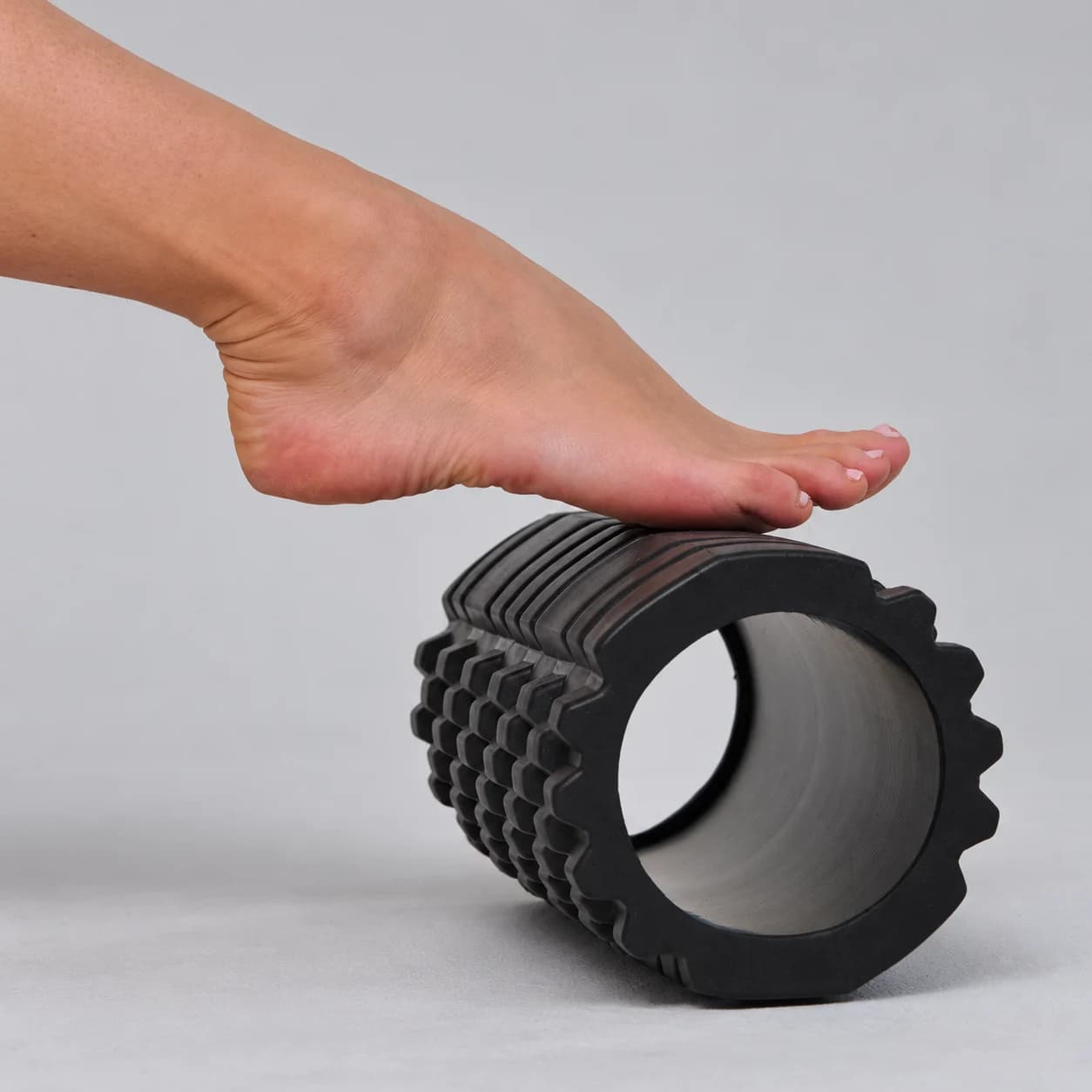
A foam roller is another geometry: an elongated cylinder rather than a round ball or linked lobes. Its contact and supporting body position differ. Do not assume a ball placement or a roller research result transfers unchanged between tools.
Smooth vs spiky massage ball: separate surface from firmness
A smooth ball has a continuous outer curve. A spiky or nubbed ball adds raised contacts that change the skin sensation and how it moves against clothing. Those projections do not establish deeper tissue contact, better circulation or stronger results. A smooth rigid ball can feel more intense than a yielding textured one.
Touch the surface before loading it. Check moulding seams, damaged projections, sticky deterioration, loose material and unexpected sharp edges. Keep textured contact off irritated, broken or blistered skin. If the surface scratches or distracts you, choose another surface or skip the tool instead of trying to tolerate it.
Spiky foot massage balls can vary from broad soft nubs to narrow firm projections. Compare the actual object, not its colour or the number of spikes. Light clothing can change the feel at a wall, but it cannot make an uncomfortable pressure level appropriate.
Tennis ball massage vs lacrosse and purpose-made balls
A typical tennis ball has a cloth covering and a yielding core; a standard solid lacrosse game ball usually feels firmer with a smooth exterior. These are broad construction tendencies, not measured therapeutic rankings. Practice balls, materials, wear and surface condition can change the comparison.
The ITF ball-manufacturing guide explains tennis-ball cores and coverings. USA Lacrosse's discussion of ageing balls describes how some game-ball surfaces change. Sports specifications explain the object, rather than approve it for self-massage or show that it produces the same outcome as a purpose-made tool.
For a tennis ball foot massage or tennis ball back massage comparison, use the same easy supported position on separate brief trials. Change the ball while keeping contact light. Notice whether it feels comfortable, moves predictably and can be unloaded immediately. Do not switch to a harder lacrosse ball while also increasing your lean and time.
Inspect felt for grit, split coverings and unstable shape, and inspect a smooth ball for cuts or deterioration. An outdoor ball should not go straight against skin or a clean wall. Felt can retain debris; smooth material still does not imply permission to soak, disinfect or heat it.
How to make a peanut massage ball: consider the join
A homemade version usually means joining two sports balls. The important question is whether that connection remains predictable: tape can loosen, the gap can change and exposed adhesive can contact skin or clothing. A picture of two joined balls is not a construction or load standard.
If you need linked lobes, a purpose-made tool with clear handling instructions avoids depending on an improvised join. Do not cut balls open, insert a hard connector or assume a homemade pair behaves like a commercial peanut. A single intact ball in a supported position may already meet your goal; you do not need both shapes.
Two equipment formats to compare
Compare the shapes in the PBGGAME four-piece cork massage-ball set: two round balls and two peanut-shaped tools, with two storage bags. Choose the shape and dimensions that suit the contact described in your instructions, and follow the care and use guidance for the cork construction.
The PBGGAME black 36-inch foam roller is a smooth full-cylinder format. It differs from the hollow ridged roller in the photograph. Follow its own setup instructions; the ball-at-wall examples below are not a floor-rolling tutorial or proof that this model reproduces research outcomes.
How to use a massage ball: learn the unload first
Inspect the tool and clear the area. Use a stable chair or a clear wall with a dry floor and room to move away. Before rolling, establish light contact on a clearly identified soft area, then practise removing it. If unloading needs a struggle, change the position.
- Begin with very little weight on the tool and breathe normally.
- Make one small slow movement, staying in the selected area.
- Reduce contact completely and pause before deciding whether to repeat.
- Change pressure before changing time, range, ball size or firmness.
A few short passes, or about fifteen to thirty seconds, is an optional editorial first-trial example. It is not a treatment dose or a minimum to finish. A comfortable spot does not need to become progressively more intense. Redness, bruising, numbness and the amount of force endured are not success measures.
Keep pressure away from prominent bones, joints, the spine, throat, front or sides of the neck, groin and irritated skin. Stop for sharp pain, burning, tingling, numbness, dizziness or a sensation travelling along a limb. Do not reposition repeatedly to reproduce it. If pain, reduced sensation, fragile skin, bleeding risk or a medical restriction affects your choice, ask an appropriate clinician about suitability.
Foot massage ball: let the chair carry your weight
Sit on a stable chair without wheels, with the other foot planted. Place the ball in front of the working foot so you do not perch or slide forward to reach it. Begin with light contact under a comfortable soft part of the sole, keeping clear of the bony heel and ankle.
- Rest the foot lightly with the toes relaxed.
- Move a small distance forward and back, letting the ball roll without dragging the skin.
- Keep the knee and foot comfortably aligned. Avoid rolling onto an uncomfortable outer edge.
- Lift the foot off completely and pause before another pass.
Do not stand over the ball, put the other foot on top or lean your torso over the knee to add pressure. If it shoots away, lift the foot and retrieve it while seated. If the toes grip, shorten the path and reset contact rather than curling harder. A spiky massage ball for feet still needs that same control; surface texture does not turn this into treatment for heel pain or another foot condition.
Massage ball for back: an upper-back wall setup
Choose a clear wall and a comfortable soft area beside the shoulder blade, below the neck and away from the spine and blade edges. Know the location before leaning. A wall can make release simpler than lying on a small ball, provided your stance stays stable.
- Position the ball by hand against the chosen area and bring your back gently toward the wall.
- Keep both feet planted and the knees comfortable. Remove the positioning hand only after light contact holds the ball.
- Move the trunk a tiny distance, staying in the same soft area.
- Ease away and catch the ball. Reposition by hand while unloaded if needed.
The UC Riverside handout illustrates posterior shoulder and back wall placements with gentle pressure and avoidance of bone. A ball falling repeatedly calls for less movement and a contact check, rather than a harder lean. Skip large squats, sweeping rolls and awkward raised-arm positions while learning.
Tennis ball massage for the lower back is a different request from this upper-back setup. This guide does not teach direct lumbar-spine pressure or lying with body weight over a ball there. Lower-back pain and unexplained symptoms need suitable individual advice, not a stronger version of the wall instructions.
Glute massage ball at a wall: different from hip flexors
Choose a comfortable fleshy buttock area, away from the tailbone, hip bone and joint. Remove keys, a phone or a wallet from the back pocket. Keep both feet planted rather than crossing a leg or turning the task into a balance exercise.
Use a hand to position the ball, lean slightly to hold it, try one small movement and stand away to unload. Keep the movement local; reposition by hand instead of sweeping across the whole buttock or pelvis. If the legs tire or the body braces, stand more upright or finish.
A massage ball for hip flexors concerns the front of the hip, not the buttock. Do not transfer this glute setup into the front hip crease, abdomen or groin, or press there with your body weight to hunt for a tight spot. This is not a technique for hip-flexor treatment, sciatica or piriformis symptoms. A travelling leg sensation calls for release and stopping.
Massage ball for traps: the back of the shoulder, not the neck
For this setup, select a clearly identified soft area at the back of the upper shoulder, below and outside the neck, clear of the spine and shoulder-blade edges. The UC Riverside handout depicts this posterior upper-trap wall arrangement. Do not use a ball as a headrest or wedge it under the skull.
With both feet planted, hold the ball lightly at the wall, keep the head natural and the arms relaxed, make a tiny movement and step away. If keeping contact requires shrugging, twisting the head or leaning heavily, simplify or skip it. Do not trap the ball beneath a ledge or wrap a cord around the neck to hold it in place.
A ball sold as a neck massager does not establish appropriate neck placement. The front and sides of the neck, throat and direct cervical-spine pressure are outside this guide. Skip adding a head tilt or pulling the head away while the ball presses the shoulder. Those combinations change the task and make pressure harder to judge.
What does a massage ball do, and do massage balls work?
A ball supplies a curved contact surface; your hand or supported body position creates local pressure, and movement changes the contact. Some people find a brief comfortable session relaxing. That experience is narrower than proving faster muscle repair, a lasting movement change or treatment for pain.
Deep-tissue massage balls, massage balls for knots, trigger points and myofascial release are common product descriptions. A tender sensation does not identify a tissue problem, and a sensation changing under pressure does not show that a knot, scar or adhesion broke apart. There is no need to keep pressing until an area becomes numb or a supposed release occurs.
A meta-analysis of foam rolling by Wiewelhove and colleagues studied rollers and roller massage bars or sticks, reporting generally small effects across its outcomes. Those tools and protocols differ from a small home massage ball. They do not show that roller balls, spiky balls, tennis balls and every pressure level have equivalent benefits.
The National Center for Complementary and Integrative Health reviews massage therapy broadly and notes varied evidence and risks in some circumstances. Therapist-led massage is another intervention, not proof of a consumer ball's effect. Use the equipment if the manageable experience appeals to you, without substituting it for sleep, suitable training load or advice for persistent symptoms.
Keep the contact surface clean and intact
Read the exact material and care label. The Gaiam Pinpoint care sheet identifies natural rubber/latex for that model and gives a damp-cloth and air-dry method. Another ball may differ; rubber-like appearance does not establish latex exclusion or cleaning compatibility.
Check around raised nubs as well as broad surfaces. Retire a tool with deep cuts, splits, loose material or a changed unstable shape rather than covering damage with tape. Let it dry before closing a pouch, keep it separate from shoes and sharp objects, and store it where it cannot roll underfoot.
If you keep a note, record the ball, position, light contact and whether release stayed easy. “Comfortable afterward” describes an experience; “fascia released” invents an outcome you did not measure. Repeating the same pleasant setup is enough without progressing to a harder tool.