Lower-Body Mobility Routine: Gentle Strap and Bodyweight Options
Choose controlled hamstring, calf, quad and hip stretches, with clear entries, releases, bodyweight alternatives and an adjustable short routine.
A lower-body mobility routine works best when each position has a clear job and a controlled exit. Use a strap to bridge reach, choose a mild stretch and release before changing the setup. You do not need every position, a perfectly straight knee or a larger range on each session.
The four options here change different parts of the position: a raised-leg hamstring stretch, a seated calf stretch, a prone front-thigh stretch and a small cross-body hip movement. They are general flexibility choices, rather than a test for an injury or a requirement to stretch every area that feels different.
Four optional tasks, each with its own release
| Choose a task | Read its entry | Release before changing | Alternative already discussed |
|---|---|---|---|
| Hamstring | Raise, then lengthen | Soften the knee, lower the leg and support the foot | Familiar supported seated version |
| Calf | Move at the ankle | Ease the ankle by moving the hands forward | Supported wall version |
| Front thigh | Keep the pelvis settled | Reduce tension, open the knee and support the foot | Familiar supported standing version |
| Cross-body hip | Small supported cross-body movement | Return to centre, then bend and lower | Comfortable seated figure-four |
Choose from these four; the separate Thomas-style discussion is a scope note, not a required fifth exercise or a self-test. Keep the existing reset order with the movements you select.
Prepare the strap and the route on and off the floor
Use a nonelastic stretching strap intended for the position, with intact webbing, stitching and fittings. Choose enough working length for relaxed shoulders and a usable grip. Read the stretching equipment guide for tool choice, D-ring threading and release checks; elastic resistance bands have a different task.
Clear space to lower either leg, roll and sit up without meeting furniture. Keep any buckle away from body contact and loose tail clear of your neck and feet. The Gaiam strap care sheet emphasises secure contact and controlled movement for its model. Follow the equivalent directions for yours, including any permitted foot-loop placement.
Warm up with easy walking or another comfortable movement first. Mayo Clinic's stretching guidance distinguishes stretching from a warm-up and advises smooth movement without bouncing or stretching into pain. Keep breathing; a longer hold is not useful if the setup becomes harder to control.
| Position | Main adjustment | Keep separate |
|---|---|---|
| Supine hamstring | Raise the thigh, then gently lengthen the knee. | A strong toe pull or a forced straight knee. |
| Seated calf | Bring the forefoot slightly toward the shin. | Folding the whole trunk toward the foot. |
| Prone quad | Bend the knee while the pelvis stays settled. | Lifting the hip or arching to gain heel travel. |
| Cross-body hip | Guide a raised leg a little toward the opposite side. | Twisting the knee or rolling the whole trunk. |
Hamstring stretch with a strap: raise, then lengthen
For a supine hamstring stretch with a strap, the floor supports the trunk while the strap provides reach. The UCSF lower-body stretching sheet includes this towel-or-strap format. A softly bent working knee and a bent supported opposite leg are comfort adaptations here, rather than targets copied from the illustration.
- Start seated where you can see the strap. Place it broadly around the forefoot as its instructions allow, keeping the webbing flat and hardware clear.
- Lie back with the working knee bent and hold both sides evenly. Keep the other foot supported with its knee bent if comfortable.
- Raise the working thigh slowly without lifting the head, shoulders or pelvis to meet it.
- Keep that manageable thigh position and gently lengthen the knee until there is mild back-of-thigh tension. Leave some knee bend if needed.
- To release, soften the knee, let the hands move toward the foot and lower the leg. Remove the strap only with the foot supported.
Leave the ankle comfortable while learning this hamstring strap stretch. Pulling the toes strongly toward your face changes the task. If the main sensation moves into the calf, lower the leg, soften the knee and reduce the ankle pull instead of increasing it.
If your arms tire, choose a longer handhold and a lower leg position. If the strap digs in, lower the foot before flattening it. A no-strap alternative from the UCSF sheet uses a stable chair, one leg comfortably extended with its heel supported and a modest hip hinge. Keep the knee comfortable and the trunk long; do not make reaching the foot a test.
Calf stretch with a strap: move at the ankle
Sit with the working heel supported in front of you and the trunk comfortable. A softly straight knee can remain unlocked. If this seat makes you round forward or struggle to stay upright, use a suitable stable support or choose the wall alternative below. The strap supplies reach; your chest does not need to move toward the knee.
The Gaiam multi-grip exercise guide includes a seated calf position. Use that arrangement without copying its added effort cycles or workload:
- Lay the strap broadly across the forefoot, clear of individual toe tips. Hold both sides evenly with relaxed shoulders.
- Take up slack and guide the forefoot a little toward the shin, keeping the heel supported.
- Stop at a mild calf stretch without toe gripping, a lifted heel or a forced ankle angle.
- Move the hands forward to ease the ankle back before removing or adjusting the strap.
A gastroc stretch with a strap is often shown with a straighter knee; changing knee bend changes the position. It does not require finding a precise muscle from sensation or pulling harder to locate it. If you mainly feel the back of the thigh, sit more comfortably upright, soften the knee and use a smaller ankle movement.
For a bodyweight alternative, UCSF shows standing calf stretches at a wall. Use a stable wall, keep the rear heel down and make the position mild. Its straight- and bent-knee examples are separate options. Pick the version you can control rather than combining several strong stretches because the first feels gentle.
Prone quad stretch with a strap: keep the pelvis settled
The prone quadriceps stretch with a strap bends the knee while you lie on your front. First check that resting there and bending one knee a little are comfortable. If breathing, the neck or the lower back already feels awkward, choose another version rather than using the strap to pull into the position.
The Gaiam exercise guide illustrates a prone foot-loop front-thigh stretch. Arrange the permitted loop where you can see it before lying down, leave enough working length for a comfortable handhold and keep webbing away from the throat and face. Do not twist the shoulder to find a short grip or place hardware beneath the body.
- Lie on your front with the head supported comfortably and both hips facing the mat.
- Bend the working knee while keeping the thigh settled. Take up the strap slack gradually.
- Guide the heel a little closer toward the buttock and stop at mild front-thigh tension.
- Keep the knee generally in line with the hip; avoid a sideways foot pull, lifted hip or stronger back arch.
- Release tension, gradually open the knee and return the foot to support. Rearrange the loop where you can see it before changing sides.
The heel does not need to touch the buttock. If the pelvis starts turning or the back arches, let the heel move away and reduce the bend. More strap length may help a strained shoulder only if it also allows a clear release. Joint pressure is a reason to stop, rather than a front-thigh target to tolerate.
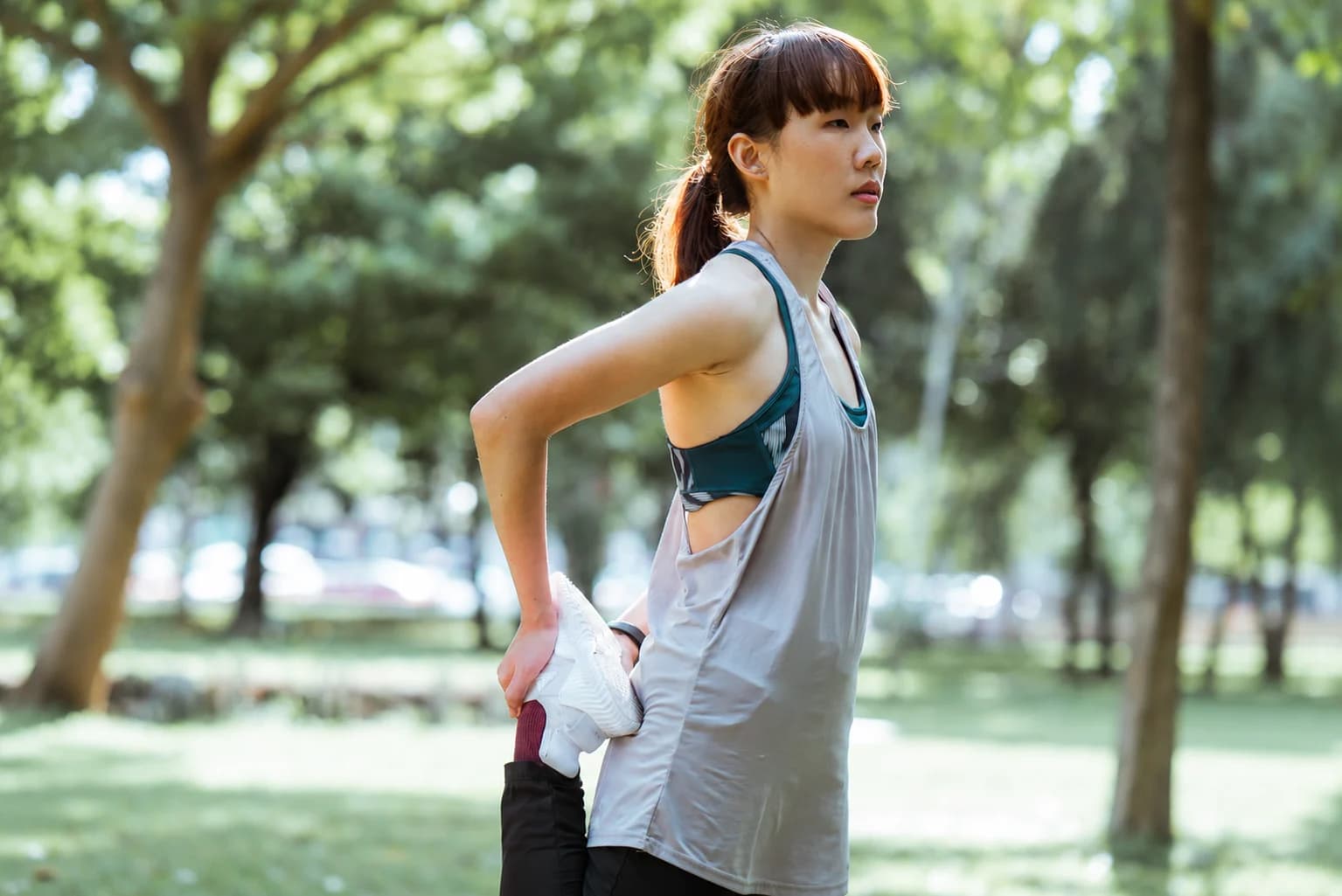
The AAOS standing quadriceps example uses another position and cautions against arching or twisting the back. A familiar standing hand-to-ankle stretch with reliable balance support may be an alternative. Standing adds its own balance task; the cover photograph shows that different bodyweight context, not the prone strap sequence.
The “IT band stretch with a strap” is a cross-body hip position
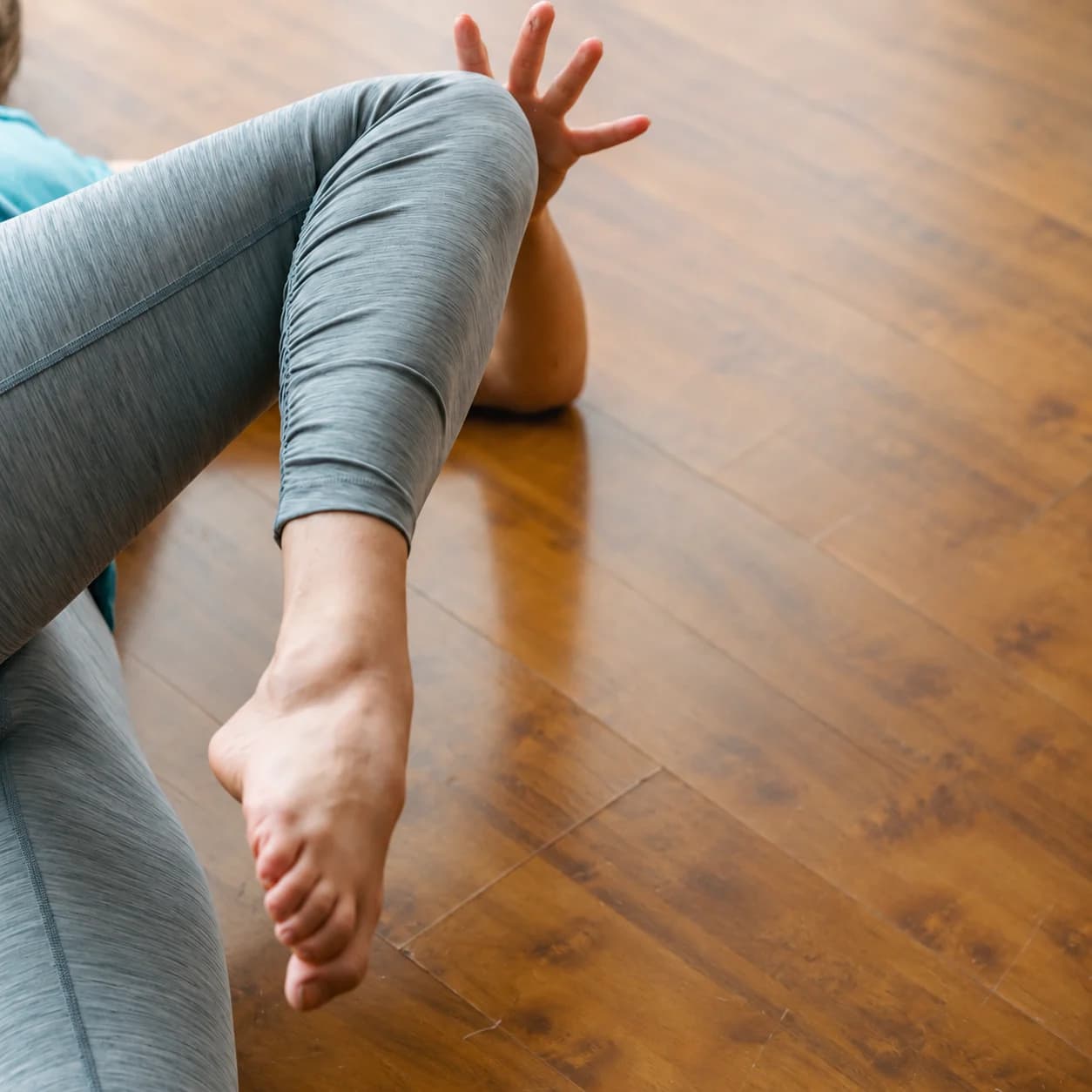
The name does not establish that the iliotibial band itself becomes longer. For this guide, treat the movement as a small cross-body hip stretch while the trunk stays supported. A stronger pull at the outer knee is not the goal.
- Begin with a comfortable supported raised-leg position, secure strap contact and a softly bent knee.
- Guide the right leg a small distance toward the left, or the left toward the right.
- Keep the pelvis facing upward and let the foot and kneecap travel together. Stop before the hip rolls off the floor.
- Keep the ankle relaxed, then return the leg to the middle before bending and lowering it.
If raising the leg already creates a strong stretch, leave out the cross-body step. The foot does not need to approach the opposite floor. Reduce the movement if the chest turns or the knee feels a sideways tug. A comfortable seated figure-four from the UCSF sheet is an alternative when the strap is awkward. Use a stable seat and supported foot, without pushing the crossed knee or forcing a forward fold.
A small acute study by Pepper and colleagues examined stretching or foam rolling in thirty adults and did not find a short-term change in measured IT-band stiffness. It did not test this strap routine or measure IT-band length. Those limits support avoiding promises of releasing, lengthening or treating the band through one session.
Thomas stretch with a strap: a different hip-flexor setup
A Thomas-style position is a different table-edge hip-flexor setup, illustrated in OrthoIndy’s handout. It is outside this four-option floor routine. Follow any individually taught version’s actual support and exit; the name, a strap or a hanging leg does not diagnose a limitation.
Build a short routine with deliberate resets
Choose two to four suitable positions after warming up. For a first handling sample, one mild hold of about ten to twenty seconds per side is an optional editorial example, with an even shorter first cross-body attempt if useful. Stop sooner whenever the position changes; the timer is not a range or endurance test.
| Order | Choose | Reset before the next position |
|---|---|---|
| 1 | Supported hamstring, or a familiar no-strap alternative. | Bend and lower the leg before moving the webbing. |
| 2 | Seated strap calf or a supported wall calf stretch. | Release the ankle and restore a normal stance or seat. |
| 3, optional | Prone quad or a familiar supported standing version. | Lower the foot before changing side or rolling. |
| 4, optional | Small cross-body hip or a familiar gluteal stretch. | Return to centre and lower before sitting up. |
Rest as long as needed to organise the next entry. You can finish after one pass, leave out any unsuitable position or split the choices between occasions. On later sessions, repeat the same comfortable handhold and range before changing one feature. A calmer setup and release can be useful progress even when leg height does not change.
Use the first loss of control as your adjustment cue
- Head or shoulders lift: lower the leg or lengthen the handhold.
- Pelvis rolls or the back arches: reduce travel and reset the starting support.
- Strap twists or slips: support the foot and inspect contact and fittings unloaded.
- Breathing stops or the grip becomes a tug-of-war: release, rest and use a milder version.
Stop for sharp pain, burning, tingling, numbness or symptoms travelling down the leg. Do not keep changing angles to investigate them. A current injury, postoperative restriction or persistent discomfort needs individual guidance; this routine does not diagnose or treat IT-band syndrome, nerve symptoms or joint pain.
An optional strap kit: check the actual contents
The PBGGAME cork blocks with D-ring yoga strap is an actual set of two blocks and one strap. The blocks are not needed for this floor routine. Consider the kit if you want those props as well, and confirm the strap's usable reach and own instructions for your chosen position. An existing suitable strap or a comfortable bodyweight alternative may already serve the task.