Reactive Agility Drills: Add a Decision to Your Footwork
Add a clear direction choice to familiar footwork with two partner-cued drills: numbered targets and a simple visual follow. Learn the route, cue and reset.
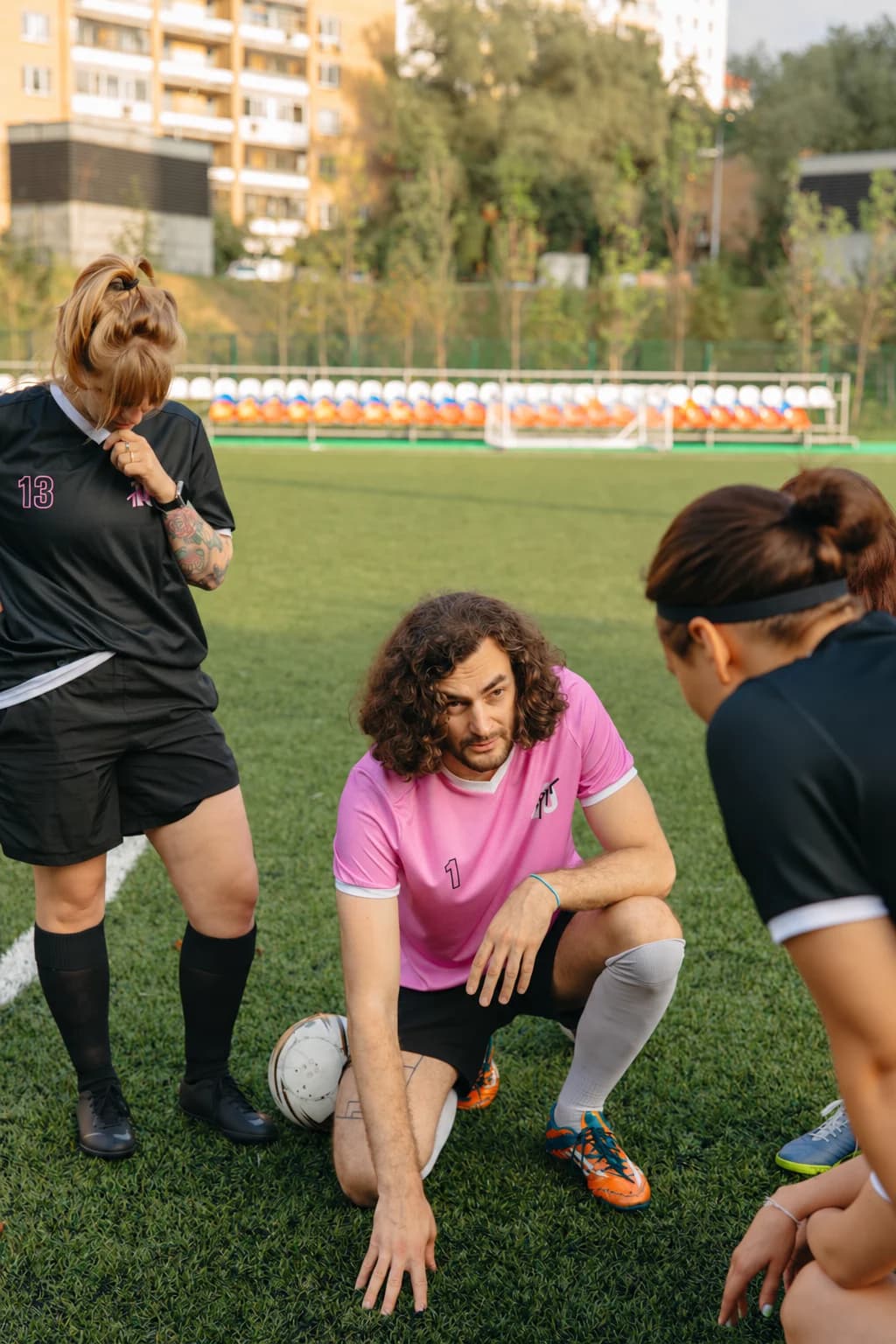
Reactive agility drills give your partner a choice that you must respond to with your whole body. Learn the movement route first, then let a spoken target or the partner's movement determine which direction you take. Keep the first version small enough to follow the cue, travel to the chosen boundary and finish with control.
The two drills below use a number call and a visual movement cue. Their short sets, spacing and progression are practical examples for this guide, with a walking rehearsal before you add pace.
Read the two layouts separately
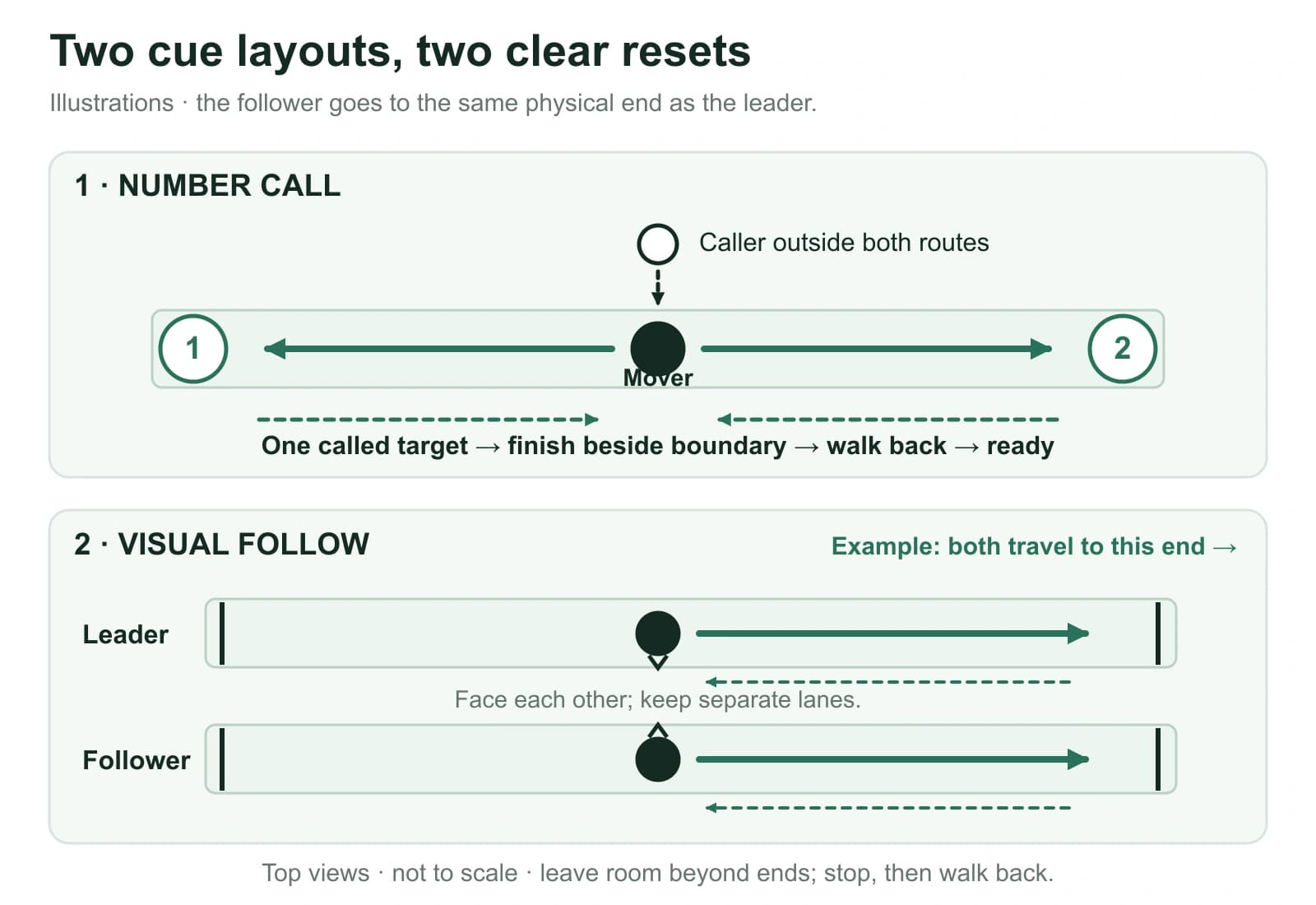
| View from above | Start and targets | Who moves where | Reset |
|---|---|---|---|
| Number-call layout | Mover at centre; target 1 and 2 on opposite sides; caller outside both routes | One called target per attempt; finish beside its boundary | Mover walks back; caller waits for ready |
| Visual-follow layout | Two separate parallel lanes with matching ends; each person at their own centre | Facing partners move toward the same physical end, not each person’s own left | Both stop inside their boundaries and walk back before the next choice |
Keep the lanes separate and leave room beyond their ends. The ladder photograph is context, not either layout. These labels specify relationships rather than a required distance standard.
Planned vs reactive agility: what changes?
In the original review by Sheppard and Young, agility involves a whole-body change in speed or direction in response to a stimulus. For the drills here, the useful distinction is whether you know the destination before starting or must select it from your partner's cue.
| Part of the task | Planned route | Partner-cued route |
|---|---|---|
| Destination | You know the target before the attempt. | Your partner chooses the target after you are ready. |
| Movement | You follow a familiar route to that target. | You use a familiar movement to reach the chosen target. |
| What to check | Did you follow the route and settle at its end? | Did you read the cue, choose its target and settle at the end? |
A “go” word can change when a known route begins. In these examples, the cue also determines where you go. Keep the layout familiar so the new task is responding to the choice, rather than remembering a complicated course.
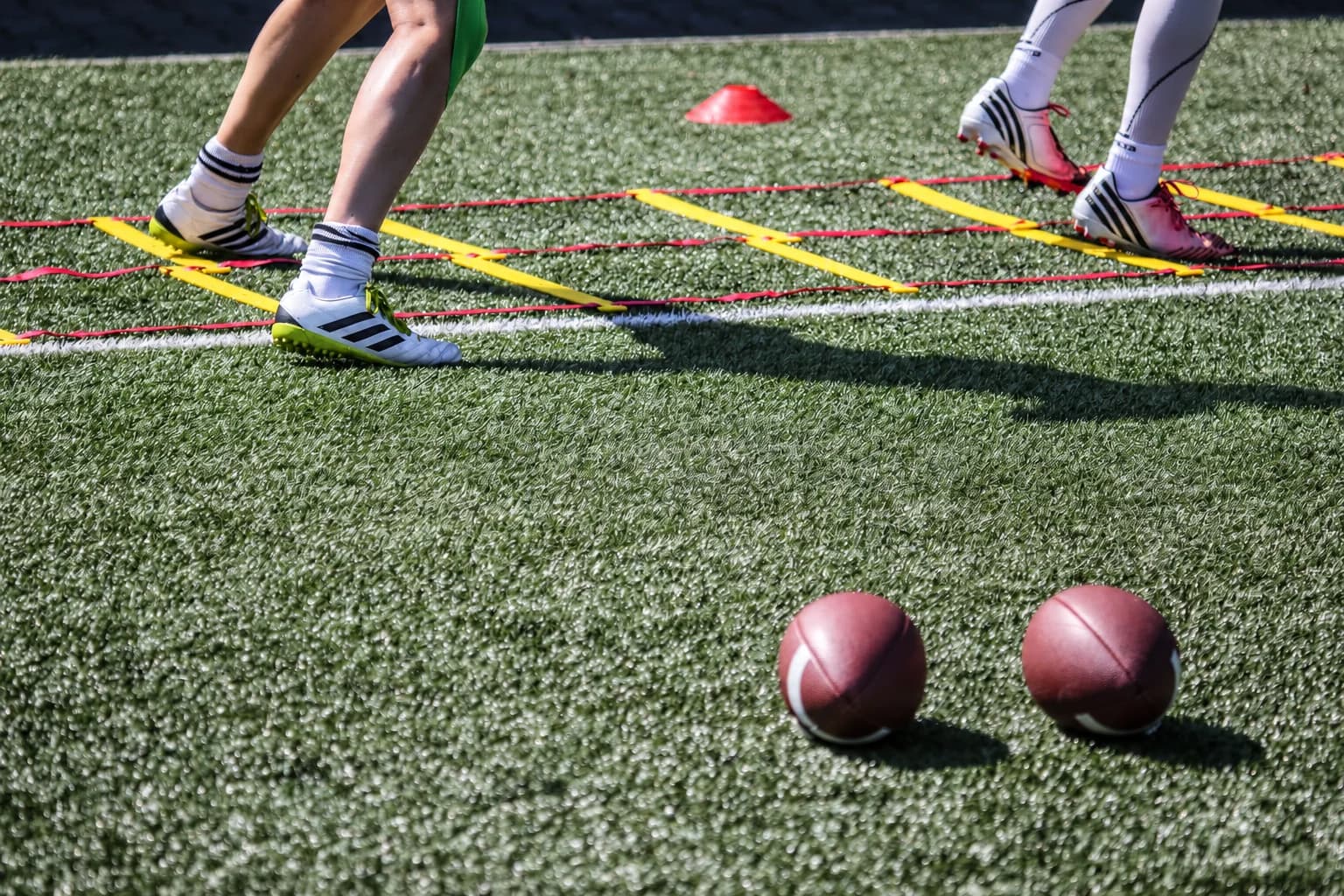
Set up reactive agility drills with two clear choices
Choose an open, level area where both routes have space beyond their endpoints. Mark a central start and two targets, one on either side. A few comfortable walking steps from the start to each target is enough for this first arrangement; leave room to slow beside the target.
Your partner should face you from outside both movement routes. Walk to each target and return before adding a cue. Agree which target is “one” and which is “two,” then check that both people can see and hear each other from the starting positions.
If numbered targets help, the optional 10-piece numbered, nine-inch TPR floor-spot set provides spots numbered 1–10 and a carry bag. Use just 1 and 2 for this layout, with the rest put away. Place the spots beside the intended finishing points, check that they stay flat and in place, and finish beside them rather than making a step onto a disc part of the task.
Drill 1: number calls for decision-making footwork
Start with one cue and one trip away from the centre per attempt. This keeps the choice and the return separate, so both partners know when the next attempt begins.
- Stand at the central start, facing your partner. Rehearse a trip to target 1 and back, then to target 2 and back, at walking pace.
- Return to the centre and say “ready.” Stay there until your partner calls one target number clearly.
- Move towards the called target. Slow before its boundary, finish beside it and pause so you can identify where the attempt ended.
- Walk back to the centre and reset. Your partner waits until you are ready again before giving another number.
- Try four separate calls, then swap roles. The caller chooses the order without announcing it, allows the same number to repeat and avoids settling into an alternating pattern.
Begin the cued attempts at walking pace too. Add a little pace only when the cue, route and finish are familiar. These four-call sets are an editorial starting arrangement, rather than a prescribed agility test.
Drill 2: follow your partner's first movement
Use a visual cue next if the number-call arrangement is clear. This version asks you to respond to the direction a person actually moves, while each person stays in a separate lane.
- Set two short parallel lanes with matching left and right boundaries. Stand facing each other at their centres, leaving clear space between the lanes and beyond both ends.
- Choose a leader and a follower. Rehearse both directions slowly: the follower travels towards the same end of the area as the leader. Because you face each other, this is like a reflection, rather than both people choosing their own left.
- Reset at the centres. The leader chooses an end and takes one or two controlled sideways steps towards it. The follower waits to see that movement, then moves towards the matching end of their own lane.
- Pause within the boundaries. Both partners walk back to the centres before the leader chooses another direction. Keep each attempt separate, with no dashes or feints.
- Complete four choices, then exchange roles. Keep the same lane arrangement while you learn the visual cue.
The NSCA's Developing Agility and Quickness excerpt describes progressing from familiar closed movements towards open tasks, with cues including voice commands and another person's movement. Its context is ice hockey; the small land-based examples here use that cue-and-choice principle, with their own editorial setup and repetitions.
Make the cue clear before making it faster
Agree on one cue language for each set. In the first drill, use the target numbers consistently. In the second, use the leader's actual travel towards an end. Avoid adding a shout, a pointing gesture and a colour call together while the basic choice still needs attention.
If a cue is unclear, call “hold” and reset. The partner should give the next choice from the agreed starting arrangement, with room to complete the movement. Issuing a late correction while the mover approaches a boundary creates a different task from the one you set up.
Watch for an early start as well as a wrong target. If the mover leaves before the number or leader's movement, pause and repeat the starting procedure. The aim of that attempt is to respond to the external choice.
Change one part of the drill at a time
Keep the same targets and pace when switching from a voice call to a clear pointing gesture. Check the meaning of each gesture in a walking rehearsal before beginning the set. That changes the cue while leaving the route familiar.
Alternatively, keep the number call and change the movement pace slightly. Do not increase pace, add targets and delay the call in the same set. With only one change, you can see whether the new part is understood and keep enough room to finish each trip.
If the movement itself needs more preparation, Warm Up for Agility Practice builds gradually from easy steps to planned direction changes. Rehearse that familiar movement before asking a partner to choose its destination.
Record the choice and the finish
Keep a simple note of the cue used, completed attempts and whether you reached the correct target with a settled finish. Note any cue that needed clarification before the next set. A phone stopwatch for the entire trip combines the cue, movement and finish; it does not isolate decision time.
For the next outing, choose the clearest version and repeat it. Keep the caller and mover roles in the plan so each partner practises both giving an understandable cue and responding to one.