Mat Pilates vs Reformer Pilates: What Carries Over?
Understand which mat-practice habits may feel familiar and which reformer settings need instruction during your first apparatus lesson.
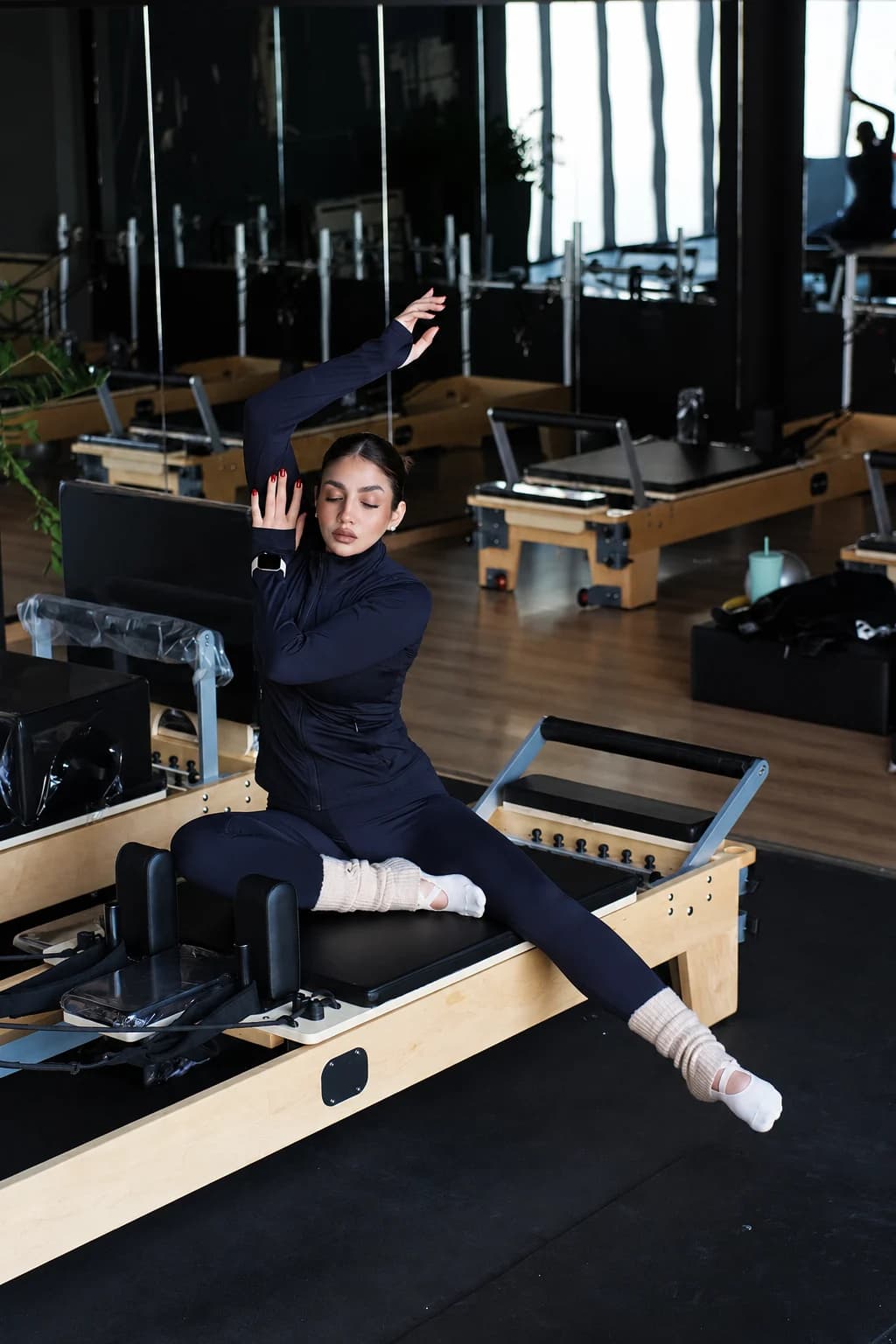
If you already practise mat Pilates, your first reformer lesson can build on familiar attention to movement and instruction. The new work is learning the machine: which surface moves, where you make contact and how the teacher sets it up for each task. Experience on the mat gives you a starting point for learning, while the reformer still deserves its own introduction.
In a mat Pilates vs reformer Pilates comparison, look at both the shared method and the changed conditions. A familiar body position can have a different demand on a moving carriage. Treat the first lesson as an opportunity to understand those conditions before trying to reproduce a familiar sequence.
Name the fixed and moving parts during orientation
| Part name | Relationship to movement | Question for the instructor on this machine |
|---|---|---|
| Frame | The fixed apparatus structure | Where are the permitted approach and exit routes? |
| Carriage | The platform that moves relative to the frame | Where does it start and finish for this exercise? |
| Springs | The connection changes the task and can assist or resist | Who sets the actual configuration? |
| Footbar / ropes / straps / handles / headrest | Task-specific contacts or supports | Which parts are used and secured for the taught movement? |
This is a component map in words, not a drawing of a particular reformer. Spring colours and footbar positions are model-dependent settings to learn from the teacher. A mat, ball or ring does not supply a moving carriage.
Mat Pilates vs reformer Pilates: what can feel familiar
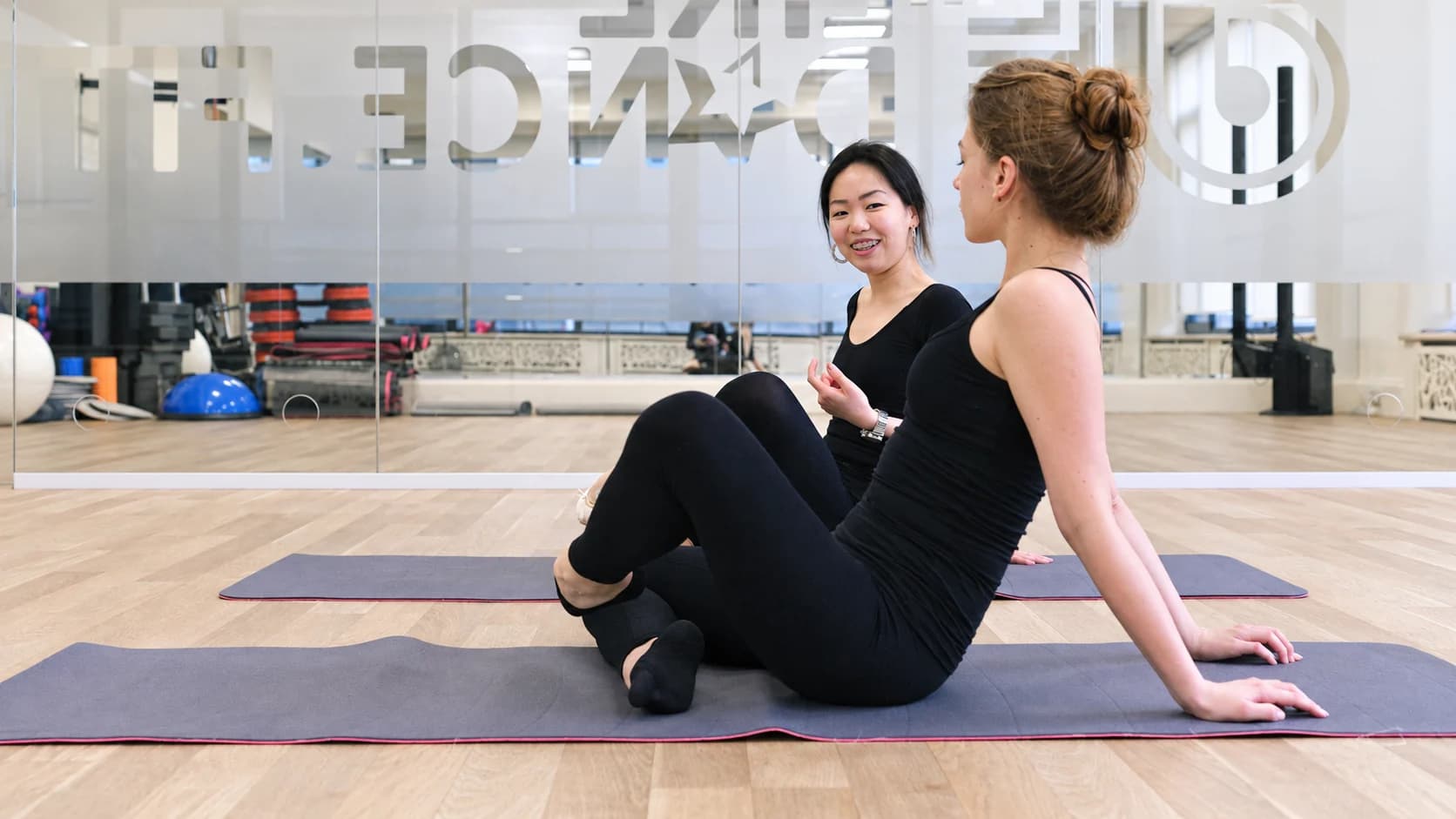
In A Pilates Primer: Mat vs. Reformer, the American Council on Exercise describes controlled movement and mindful breathing as shared foundations. If those are already part of your mat practice, the invitation to pay attention to how you move may feel familiar. That shared attention can give you a familiar way to approach the teacher's new instructions.
You may also recognise the process of listening to a cue, organising a position and repeating a taught movement with attention. Bring that approach with you. Give the instructor time to explain unfamiliar contacts and let them know which mat exercises you know. Familiar words can help the conversation, but ask what they mean in the exercise being taught rather than assuming the whole setup is unchanged.
The biggest practical distinction is the support beneath you. On the mat, the floor stays still while your body moves against gravity. On a reformer, the carriage can move relative to the frame, and springs may assist or resist a task. Something that looks familiar from the outside can therefore require a new explanation of movement, support and return.
Pilates equipment differences: learn the reformer in front of you
Balanced Body's reformer introduction describes the main parts and the orientation a new user should receive. Use the following names to follow that conversation with your instructor:
- The carriage is the moving platform. Learn where it starts and finishes for the exercise, which surfaces are intended for contact and what should remain clear while it moves.
- Springs connect the moving system and change the task. Depending on the exercise, they can provide assistance or resistance. Ask the teacher to explain the chosen configuration and who should change it; a spring choice is not simply a score for how advanced you are.
- The footbar provides a contact point in relevant exercises. Its position and secure setup matter to the actual task. Have the teacher show you the arrangement before using it, rather than moving it to a position that merely looks familiar.
- Ropes, straps and handles create other points of contact. Learn how they are arranged for the movement and how to take or release them as instructed. The headrest and other supports also belong to the setup the teacher should explain.
Revisit the orientation when you encounter a different machine or exercise. Follow the configuration for that reformer and lesson. Copying a spring colour or strap position seen in a video does not tell you whether the whole arrangement matches the one in front of you.
Follow one first-lesson transition
This editorial example shows how to organise the learning process. Your instructor chooses the actual movements, settings and sequence; this is a description of a first-lesson conversation rather than a reformer exercise routine.
- Before getting on, explain your mat background and ask for the machine introduction. Let the teacher show you how to get on and off, the intended footbar and headrest positions, and the spring configuration for the first task. Ask which adjustments you should leave to them.
- Suppose the lesson includes a movement while you lie on the carriage. You may recognise the broad position from mat practice. Learn the new contacts, where the carriage should travel and how the exercise begins and ends before focusing on the repetition count. Another first lesson may use a different starting movement.
- During the taught movement, use your familiar attention to control while learning the carriage's response. If you lose track of the return or do not understand a cue, pause and ask for the explanation again. Give yourself time to understand that task with the current settings.
- Follow the teacher's procedure for finishing the exercise and changing position. Before leaving, ask which part of the setup you should remember for next time and which details they will set again. Finish with a clear understanding of the movement and the route off the equipment.
Balanced Body notes that first classes can include both familiar and new movements, and that coordinating breathing with carriage movement takes practice. You can recognise part of the lesson while still needing instruction. Judge the first session by how clearly you understand the setup and can follow the teaching, then use that information to choose the next lesson.
Pilates mat or reformer: give each session a clear role
Mat practice remains useful as its own format. ACE describes body weight as its primary resistance, with optional small props. You can return to movements you have already been taught and work within that familiar floor-based arrangement. Adding a ball or ring changes a mat task; it does not supply the moving carriage and adjusted spring system of a reformer.
A reformer lesson gives you a place to learn those apparatus-specific tasks with instruction. Let the teacher decide how the machine should support or challenge the movement. If a setup feels unfamiliar, describe which part you do not understand: the starting position, the carriage travel, the contact or the return. That is more useful feedback than trying to translate the entire task into a mat exercise.
You can use both formats when they suit your access and interests. Keep the instructions attached to the task you learned. Confidence with one mat sequence can coexist with being a first-time user of a particular reformer arrangement.
Keep home equipment tied to mat practice
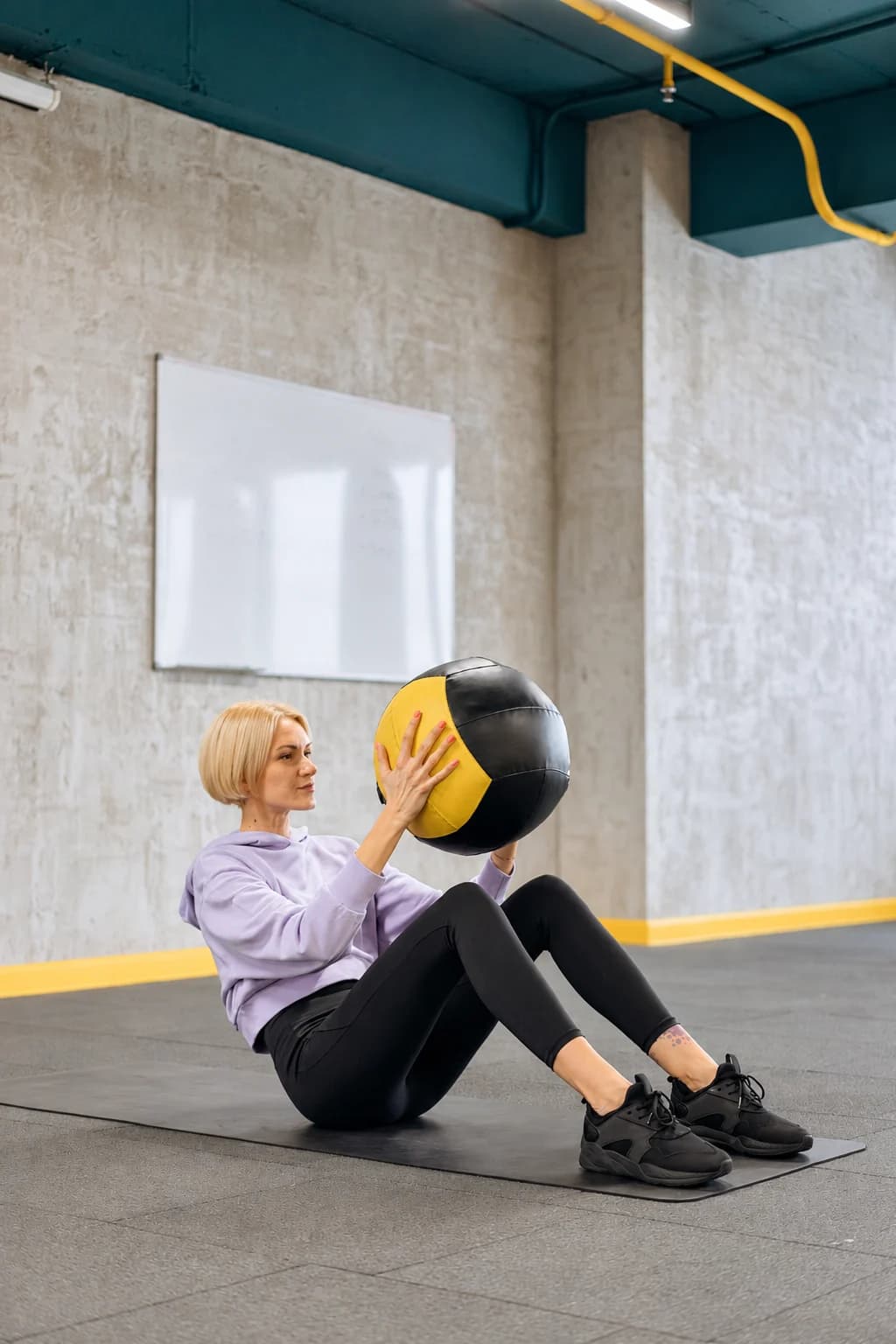
For floor practice, the optional Blue cross-fold TPE mat with storage bag has listed dimensions of 182.9 by 80 centimetres and is 0.8 centimetres thick. Check that it lies flat on your chosen surface and leaves room for the mat movements you intend to practise. It provides a floor-practice surface, rather than the moving support of a reformer.
Choose a small prop when the mat instruction you are following calls for it. If you want a separate ball-based practice, the existing Pilates at-home core session covers that format. Keep reformer settings and apparatus movements with the lesson in which you learn them, and use your home setup for the floor practice it actually supports.