Outdoor Hills vs Flat Walking: Compare Effort and the Return
Compare a gentle outdoor hill with a familiar flat route. Inspect the turnaround and descent, keep effort manageable and record the complete outward-and-return trial.
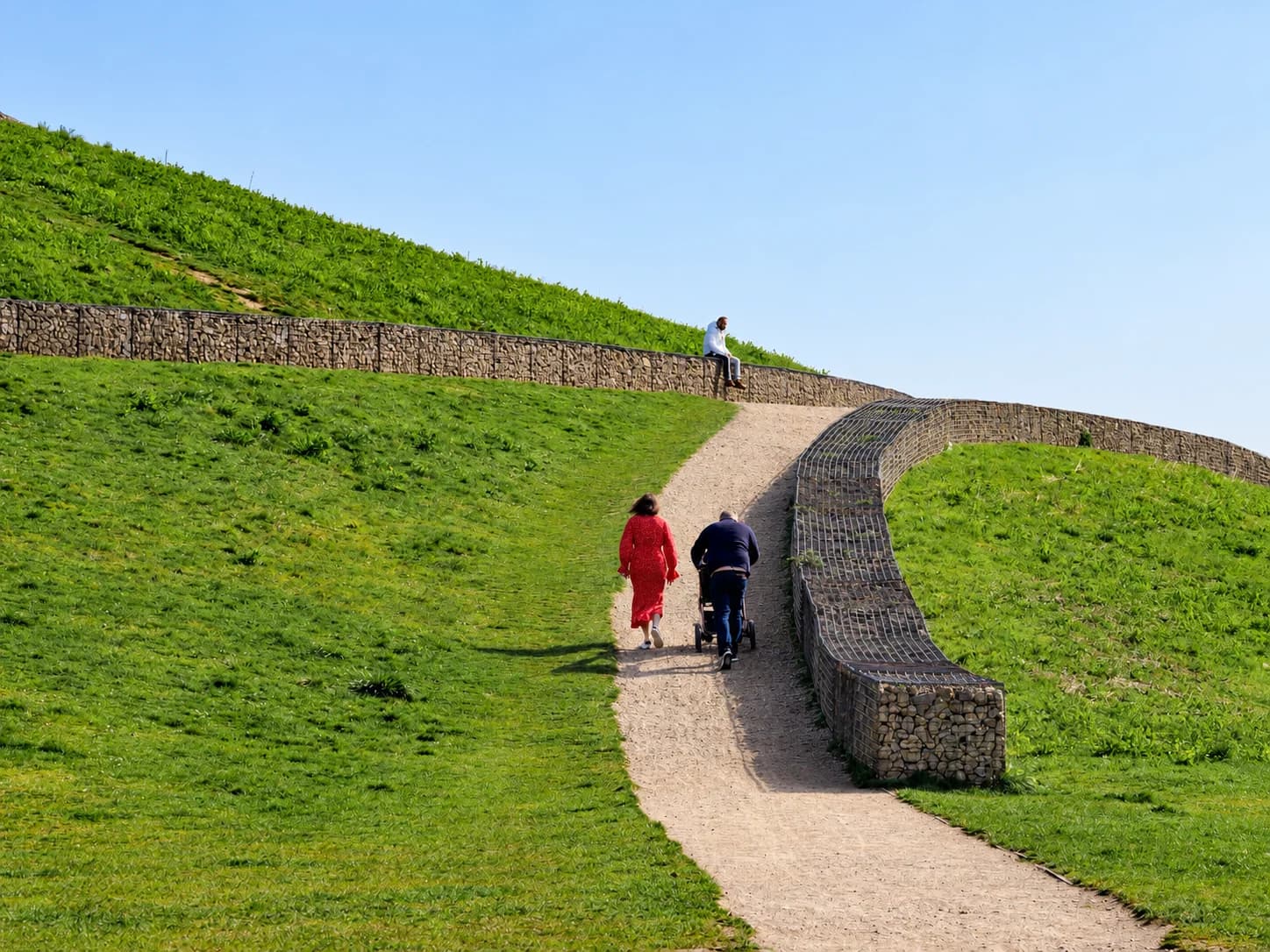
Incline walking vs flat walking is a comparison of terrain as well as pace. A gentle uphill section can change how hard a familiar walk feels, while its return introduces a downward slope to manage. Choose what you want to keep familiar before adding the hill: your walking pace, your effort or the length of the outing.
For a first outdoor comparison, keep the effort conversational and let the uphill pace slow if needed. Use a short, visible section with a manageable return. That gives you a clear task without trying to match a flat-route speed on different ground.
Scope: this is an outdoor gentle-hill trial, including the turning point and downward return. It is not a treadmill incline program and does not prescribe a machine grade, speed or optimal slope.
Incline walking vs flat walking: what changes?
Think about the whole route, including where you will turn and how you will get back. A hill that looks straightforward from below may have a different surface or a less convenient turnaround farther up.
| What you are choosing | Mostly flat walking | A gentle uphill section |
|---|---|---|
| Familiar effort | You can establish how your usual comfortable pace feels. | You may need a slower pace to keep a similar conversational effort. |
| Route to inspect | Check the surface, crossings and space to slow or stop. | Check those details plus the climb, turning point and downward return. |
| What to note afterwards | Record the route, time and how the walk felt. | Also note whether the return stayed controlled and how the legs felt. |
Choose a mostly flat route when you want to repeat a familiar outing with fewer terrain changes. Choose the gentle hill when you have a clear return and want to explore how that change affects your effort. The route still needs to fit the walking you can manage that day.
How the incline changes walking intensity
An original treadmill study by Hagiwara and Yamamoto examined walking with different slopes, speeds and carried loads. In this controlled treadmill study, uphill physiological demand rose with steeper, faster or more heavily loaded conditions. Its downhill findings also distinguish breathing demand from the fatigue felt in the legs.
For your outdoor trial, avoid changing all those features together. Use a familiar carrying setup and a short route, then allow the pace to adjust to the terrain. The study provides a reason to consider slope and load; it does not supply a fixed outdoor grade or a required speed for this example.
If you instead try to preserve your usual flat pace uphill, you are allowing effort to change. Notice that choice rather than treating equal speed as equal work. Ease the pace when the climb no longer fits the conversational effort you intended.
Choose a hill with a manageable return
The National Park Service's Hike Smart guidance covers walks as well as hikes. It advises matching the route to your experience, considering the outward and return journey, watching your footing and choosing a pace that allows conversation.
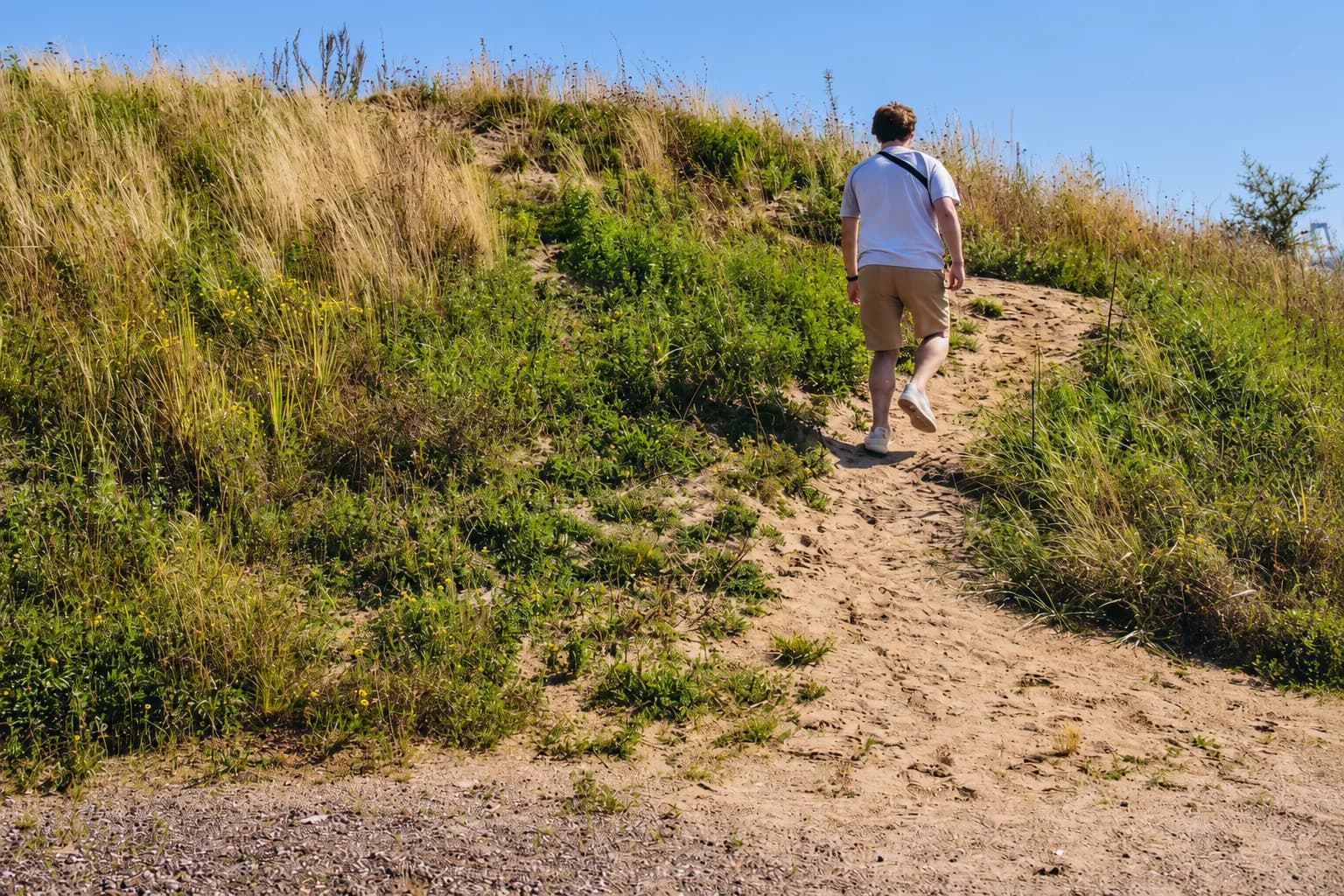
Inspect a short gentle section before using it for the trial. Look for a dry, firm path, a visible turning point with room to pause and turn, and a return you can follow under control. A clear flat area near the bottom gives you somewhere to walk easily afterwards.
Check the route in both directions. If the surface is loose, the turn is awkward or other users would be blocked, choose another section. The hill's usable path matters more than giving it a particular grade number.
Try a short hill walking workout
Use the sequence below as an editorial terrain trial within a walk you already find manageable. Start with one ascent and its complete return. Keep the approach and the walking afterwards flat and easy, with enough room in the outing to finish comfortably.
- Walk along the flat approach at an easy pace, then settle into your usual comfortable rhythm. Notice your breathing, ability to speak and how the legs feel before reaching the hill.
- At the bottom, identify the turning point you checked. Begin walking uphill towards it at a comfortable pace, allowing yourself to slow so conversation remains possible.
- Reach the chosen firm turning area and pause. Check the return path and other users, then turn in the available space before starting down.
- Walk back down at the pace your footing needs. Keep the return controlled, slowing further where necessary rather than trying to match the time taken uphill.
- Continue into the flat area and walk easily. Let the breathing settle and check how the legs feel before deciding whether another ascent fits. One complete trial is enough to make a useful note.
If you repeat the trial, use the same section and carrying setup. Take the flat recovery you need first. If the return becomes hurried or less controlled, finish with easy flat walking instead of adding another climb.
Include the downward trip in your decision
Easier breathing on the way down does not tell you everything about how the legs are working. The treadmill study's downhill findings are a reason to notice leg fatigue as well as breathing. Outdoors, you must also judge the surface and the space available for each step.
Keep the downward route in your plan rather than counting only the climb. A short ascent still requires a return unless the route has another suitable way back. Include that return and any pauses when deciding how much walking time you have available.
At the flat recovery area, record whether the downward trip stayed comfortable and controlled. If that was the difficult part, choose a gentler section next time or keep the next outing flat. Increasing the climb is not the only possible next step.
Keep your carrying setup familiar
The National Park Service also advises choosing a comfortable carrying weight. Use what fits the outing and keep it consistent across the flat and hill sections, so changing the terrain is the main difference you are noticing.
If you already take bottles on longer gentle walks, the optional Black two-bottle sling carrier offers two bottle compartments and a detachable shoulder strap. The listing supplies the carrier and strap; the bottles and other pictured contents are your own additions.
Check that your bottles fit securely and the loaded bag sits comfortably before using it on the hill. Make adjustments while stopped in a clear place. Use the carrying arrangement you are comfortable with rather than adding extra contents for this comparison.
Choose one change for the next walk
Keep a short note of the route, turning point, conversational effort and return. For example, “slower uphill pace, comfortable conversation, controlled descent” describes what happened without needing a calculated grade or a calorie estimate.
Repeat the familiar trial before changing it. Later, choose one adjustment: a slightly longer uphill section, a different gentle hill or another ascent on the same route. Keep the other parts modest and familiar so you can recognise what you changed.
If comfortable flat walking is still the part you want to develop, Walking Workout for Beginners: Find Your Pace and Build Gradually offers a starting walk and small pace-or-time adjustments. Choose the terrain that fits the purpose of your next outing.