Grip Socks for Pilates: Fit, Traction and Studio Rules
Check your Pilates studio’s sock rule, choose the actual format, assess heel fit and bunching, and follow the care instructions for your exact pair.
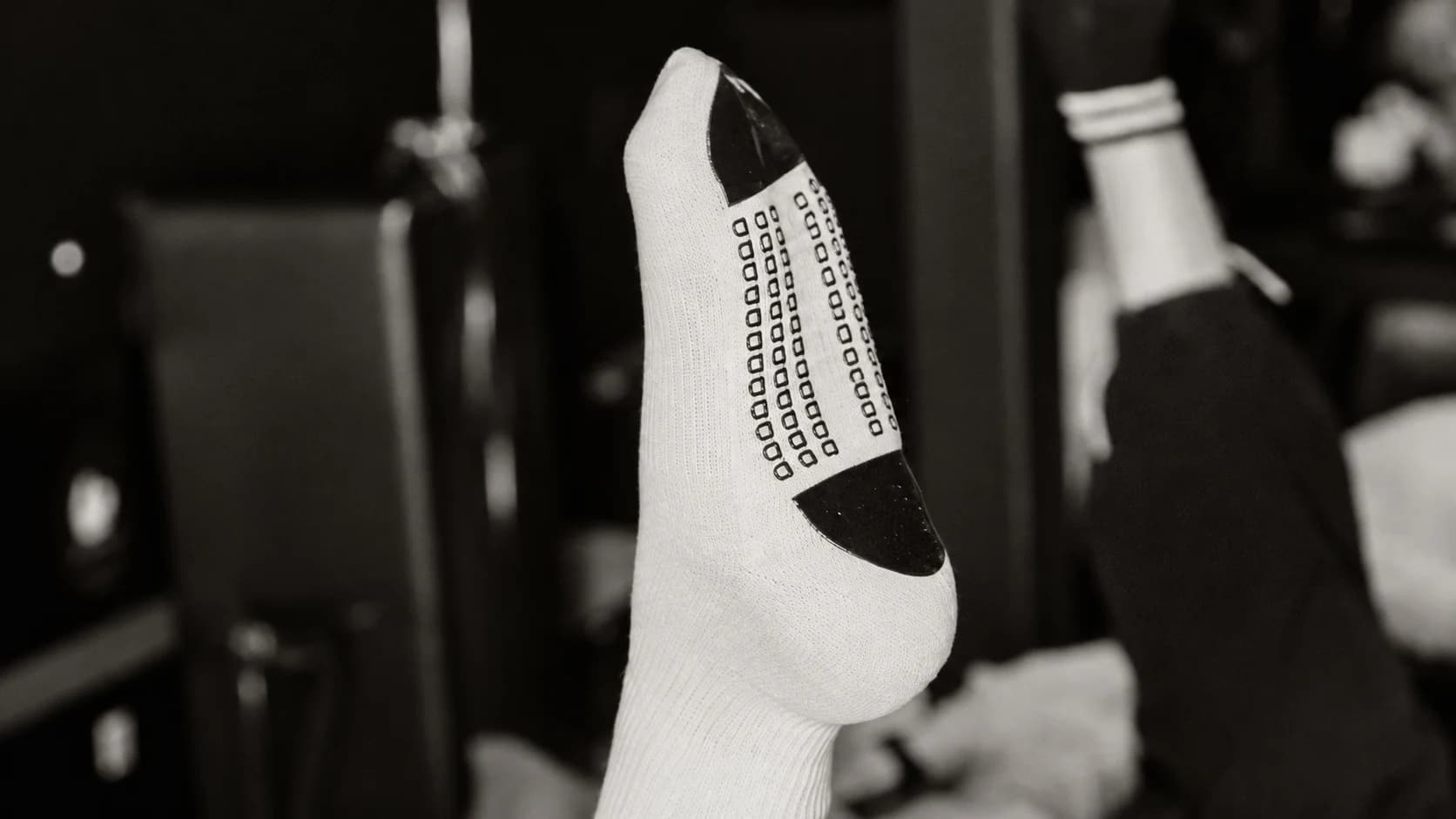
Choosing grip socks for Pilates starts with two questions: what does your studio require, and does the actual pair fit your feet? A gripping pattern on the sole does not answer either question. Check the class instructions before buying, then look at the sock's shape, sizing information and care label.
This guide is for arriving with suitable foot coverings. It helps you separate a studio rule from a shopping choice, notice a heel that moves or fabric that bunches, and decide what to ask when a listing leaves something unclear.
Resolve the sock question before the storage question
| Booking and actual-pair checklist | My answer |
|---|---|
| Studio / branch / class and date | ____ |
| Exact sock rule and where it is written | ____ |
| Own pair accepted? Required toe/cuff format? | ____ |
| Exact sock model, numeric size range and fit check | ____ |
| Model care label available? | ____ |
| If a detail is missing, who will answer before class? | ____ |
| Two interfaces | Observe separately |
|---|---|
| Foot ↔ sock | Heel seating, toe fabric and underfoot bunching |
| Sock ↔ studio floor/equipment | Actual surface contact; pause and ask the instructor when uncertain |
Pilates studio sock rules: ask your exact studio
Read the booking confirmation or the studio's own class information. Check the location and class type as well as the business name; do not assume a rule from a different studio applies to your booking. If the wording only says “socks,” ask whether ordinary socks are accepted or a grip sole is required.
For a specific example, Coastline Pilates' FAQs require grip socks for its Mat and Reformer classes, reject regular socks and allow clients to bring their own grip socks. That is Coastline's policy. Your studio is the source for the rule at your class.
Ask the studio about toe coverage, permitted sock styles and its arrangements if you arrive without suitable socks. Check those requirements when choosing your PBGGAME pair, and keep the answer with your booking so you can pack appropriately.
Choose the sock format you want to wear
Look at photographs of the whole sock, including its toe, cuff and underside. “Pilates socks” is not a complete description of the cut. Check whether the toes are covered, how high the cuff sits and whether there are straps or individual toe openings. Those details affect how you put the sock on and how it feels beneath your usual class clothing.
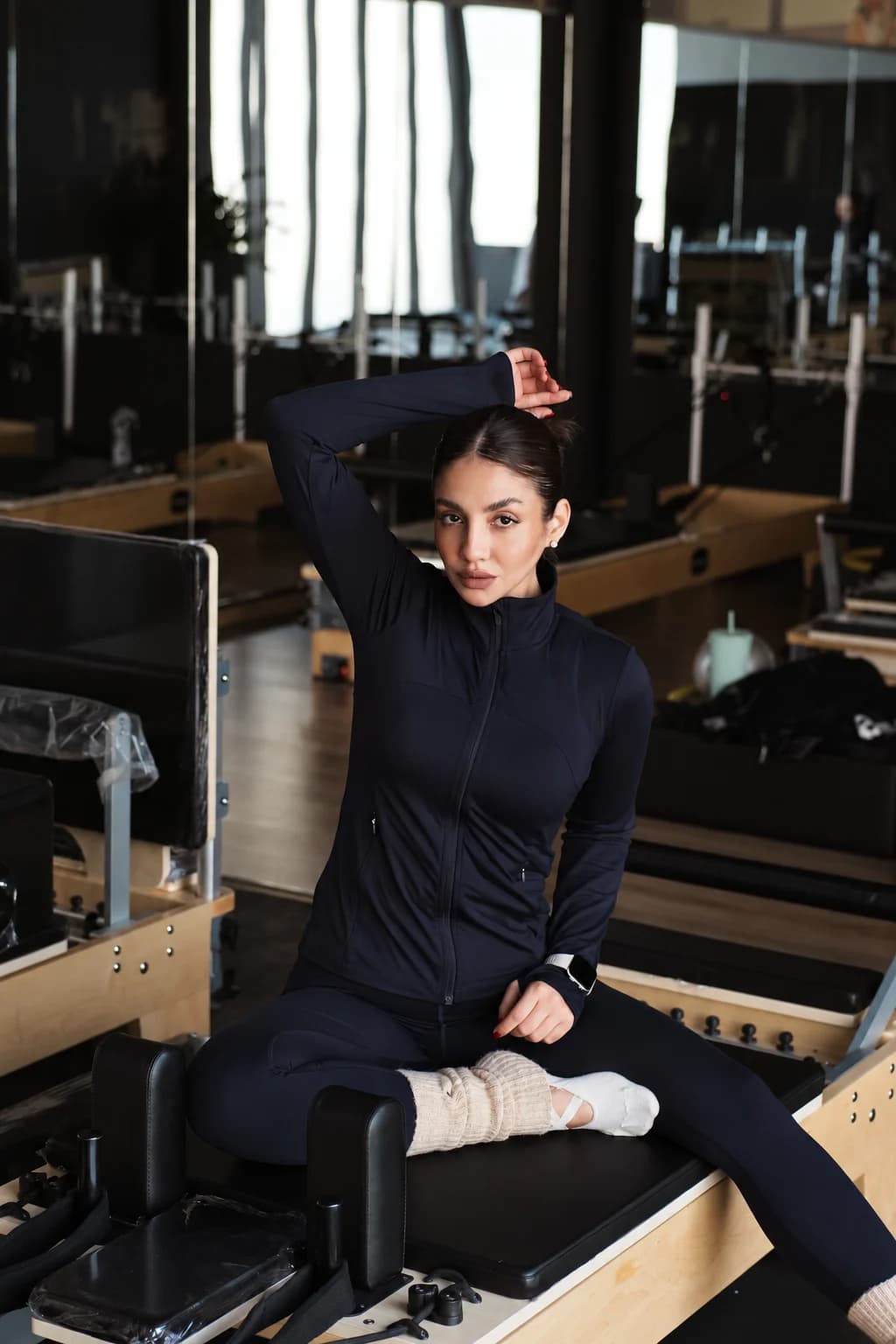
Choose a format you are comfortable wearing and that meets the studio's requirements. If you prefer a covered toe and a crew cuff, look for those exact features rather than choosing from the sole pattern alone. A photograph of a person wearing socks in a studio provides class context; it does not establish the sizing, sole construction or performance of a product you are considering.
Check Pilates sock fit before leaving home
Use the size information for the exact sock, with its stated units and measurement method. A familiar shoe-size label is useful only when the sock's own chart explains how it relates to that product. If a listing has no numeric size range, ask for it before ordering instead of inferring a fit from the model's feet or a “women's” label.
ToeSox's FAQ is one maker-specific example: it directs customers to the chart for the product and advises sizing up at the boundary between sizes. That advice belongs to ToeSox; it does not determine the correct size or fit of another sock.
When trying on your pair, take a moment to arrange it before deciding whether it fits:
- Seat the heel in the heel area and smooth the fabric along the foot. Check that the toe area is comfortable rather than stretched hard or folded underneath.
- Look for fabric collecting beneath the arch, forefoot or heel. Rearranging a twisted sock is different from repeatedly pulling an oversized pair back into place.
- Stand and take a few ordinary steps on a suitable clear surface. Notice whether the heel stays seated, the cuff feels comfortable and your foot moves around inside the sock.
- If it keeps shifting or bunching, reassess the size or cut. Tightening a cuff or pulling the sock higher does not resolve every fit problem.
This is a simple clothing check before class. It cannot predict contact on a different studio floor or piece of equipment, so leave time to raise any concern with the instructor when you arrive.
Tell sock movement from surface contact
There are two places to notice movement: your foot inside the sock, and the sock against the surface. A sole can stay in place while the foot moves within loose fabric. Equally, a neatly fitted sock may meet a surface that needs attention. Identify which contact is changing before deciding what to adjust.
| What you notice | What to check next |
|---|---|
| The heel lifts out of its place or fabric gathers underfoot. | Re-seat the sock, then reconsider its size or cut if the problem returns. |
| The foot moves inside while the sole appears to stay still. | Check the fit around the foot; a visible sole pattern cannot correct loose fabric. |
| The whole sock moves against the floor or equipment. | Pause and ask the instructor to check the intended contact, surface condition and studio requirements. |
| The sock, floor or equipment is damp or dirty. | Tell the studio and follow its preparation and drying instructions before continuing. |
Check the actual surface you will use. Do not treat dot size, dot count or a photograph as a measured traction result. If contact feels uncertain during class, pause and ask for help instead of making a larger or faster movement to test it.
An optional shoe-storage accessory
The PBGGAME black window-panel shoe bag set is an optional packing accessory for shoes or other suitable items. The selected pack contains 20 black drawstring pouches with transparent viewing panels. The bags are empty; shoes shown in the product photograph are props and are not included. Compare the listed bag dimensions of 12.6 by 17.3 inches with the items you intend to carry.
The pouches are ordinary storage accessories; choose the socks you wear separately using the studio and fit checks above. Follow the bag's own instructions for use and care. No socks or other footwear are included in this set.
Keep care instructions with the pair
Read the exact pair's label, packaging or maker instructions before washing. Keep that information somewhere you can find it again. Check the permitted wash method, drying method and any restrictions on cleaning products, rather than choosing a cycle from the sock's appearance.
As an attributed example, ToeSox's grip-sock care instructions call for an inside-out gentle wash, line drying or low dryer heat, and no bleach or ironing. Those instructions describe ToeSox products. Use the care directions for the actual pair you buy rather than extending this maker's method to every sock with a grip sole.
Before the next class, look at both the fabric and the underside. If the sock is damaged, the gripping material is coming away or you are unsure how to clean it, ask the maker or seller what to do. Bring a clean, dry pair and follow the studio's instructions for preparing its surfaces.
Pack for the booking you actually have
Use this short check before leaving:
- Confirm the class's sock rule and any format requirements.
- Pack the pair whose fit you have already checked, plus any spare you choose to bring.
- Keep the exact pair's size and care information, or resolve missing details with the seller.
- Arrive with time to ask about the surface and any contact that feels uncertain.
If you are also choosing a class, the Mat Pilates versus Reformer Pilates guide explains that separate decision. Once booked, return to that studio's instructions for what to wear and bring.