How to Do Double Unders: Prerequisites, Timing and Common Errors
Build toward one controlled double under: check your singles, rehearse two taps, try a higher single and coordinate two passes before landing. Includes troubleshooting.
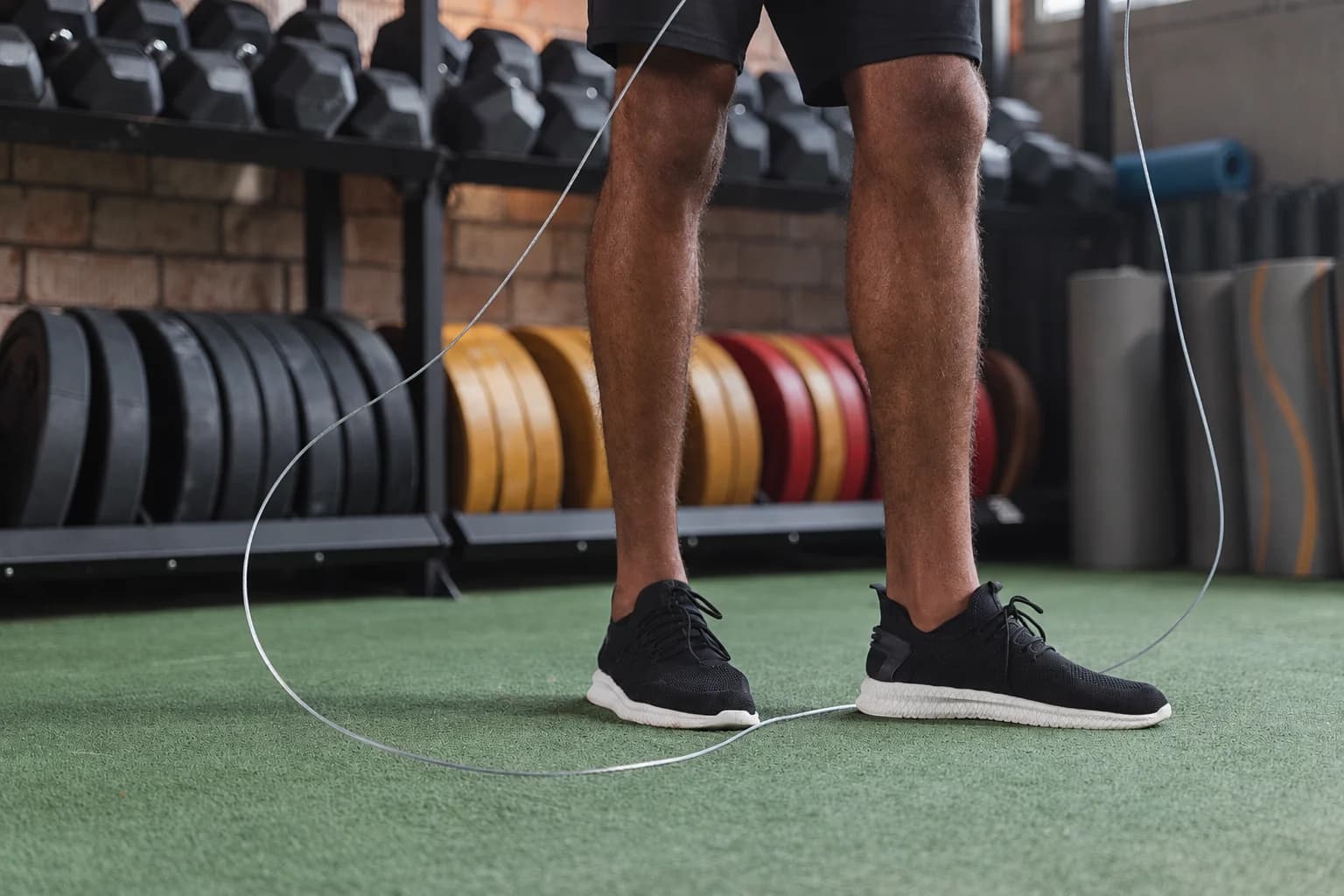
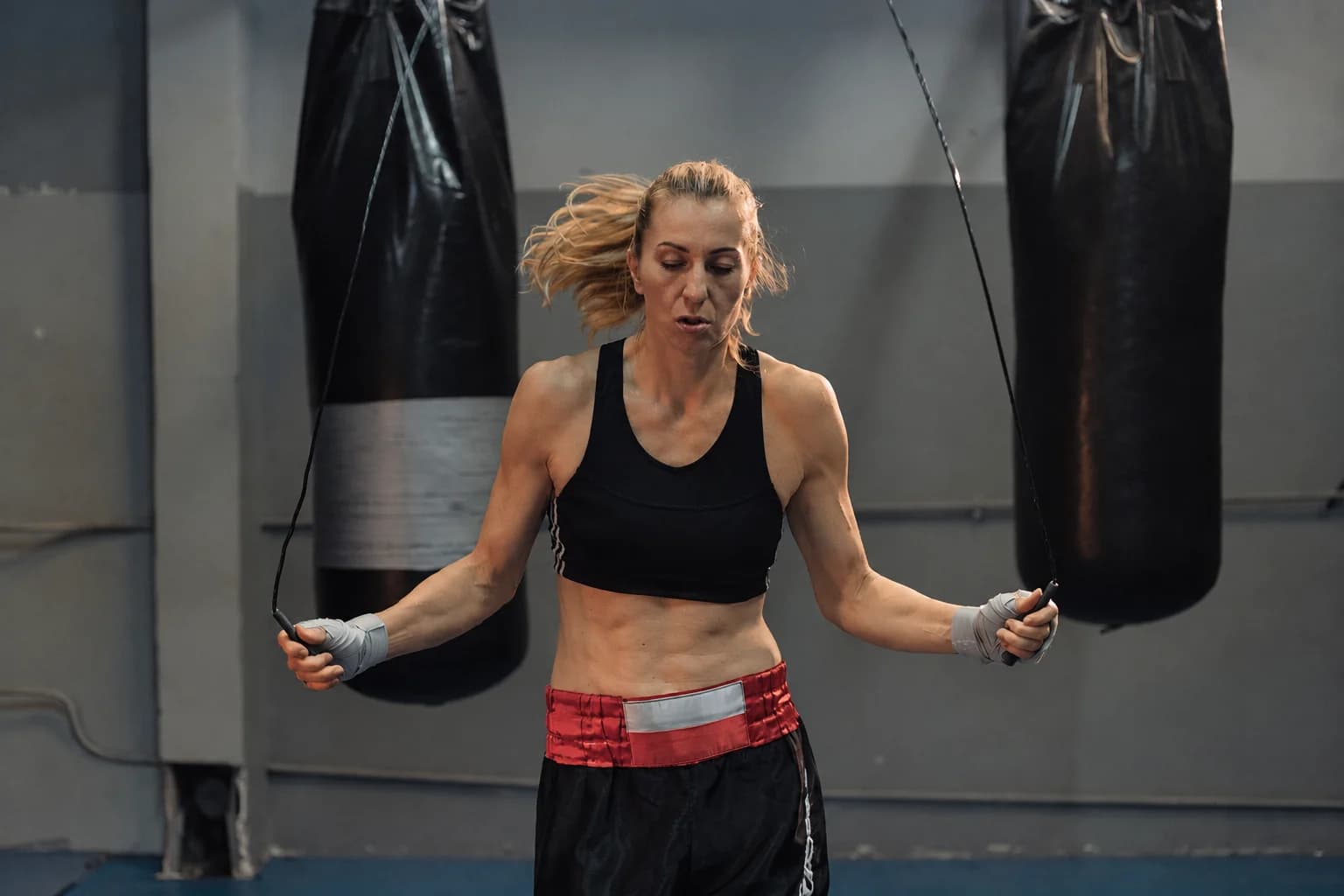
A double under puts two rope passes beneath your feet during one jump. The IJRU counting rule counts two forward rope passes followed by a simultaneous two-foot landing. Learn it by combining a controlled vertical bounce with a quicker pair of turns, then landing deliberately. Pulling the knees up or kicking the heels backward is not a substitute for coordinating the jump and rope.
Begin from ordinary single unders that you can start and stop by choice. The first target is one recognizable double and a controlled finish. Connecting several doubles is a separate task; you do not need a long streak to make the first attempt useful.
How to do double unders: identify the timing task
| One controlled airborne interval | Higher single | Double under |
|---|---|---|
| Before takeoff | Familiar setup and deliberate chosen jump | Familiar setup and deliberate chosen jump |
| While airborne | Pass 1 beneath feet | Pass 1 → pass 2 beneath feet |
| Before landing | One pass has cleared | Both passes have cleared |
| Landing and finish | Land, then deliberate stop/reset | Land after pass 2, then deliberate stop/reset |
For a recording check, keep the camera and observer outside the full rope arc. Review one attempt for the first passage, second passage and landing. If those events are not visible, label the clip inconclusive rather than count an airborne photograph as a completed double.
| Pattern | Rope passage | What the feet do |
|---|---|---|
| Single under | One pass during the jump | Land after that pass |
| Double under | Two passes during the same jump | Land after both passes |
| Double bounce | One revolution with an extra hop between clearances | Make two bounces within that rope-turn cycle |
The useful distinction is the relationship between the rope and the feet, not how fast the attempt looks. An airborne photograph cannot establish the number of passes. A short recording can help later, but first make the movement simple enough to observe.
Check the single you are building from
Make a comfortable sequence of ordinary singles and finish deliberately. Notice whether the handles stay near a familiar position, the loop remains reasonably even and the landings stay balanced. Frequent rescue hops are a reason to revisit the basic-bounce lesson before adding another pass.
There is no universal readiness count. A more useful check is whether you can change the height of one jump without throwing your body forward, spreading the hands or losing the landing. Use equipment you already control, inspect connections and keep people and obstacles outside the full rope path.
Resolve a fit concern during familiar singles using the rope-length guide. Changing the length and learning a new turn at the same time makes a miss harder to interpret. Keep the surface and footwear familiar too, so the timing task has fewer changing parts.
Rehearse airtime and two taps without the rope
Set the rope aside. Make one slightly higher vertical jump than your ordinary bounce, land with relaxed knees and settle. Keep your gaze ahead and let the legs remain beneath you instead of tucking the knees or flicking the heels behind. The jump should be one you can land under control.
Now make two gentle hand taps against the sides of your thighs while airborne. Both taps belong before the landing. This gives you a simple two-beat rehearsal within one jump; it does not reproduce the rope's full travel or certify that a double will clear. Tap lightly rather than striking harder to make the rhythm audible.
If the second tap comes after landing, check when you began the taps before simply jumping harder. If completing them requires a knee tuck or a forward fold, remove the taps and recover the upright jump. Use only the height you can control, and stop if landing becomes painful or unstable.
Make one higher single before adding the second pass
Return to comfortable singles. On a chosen turn, make one slightly higher jump while still completing just one rope pass, then finish or return to your ordinary single rhythm. This separates a change in the jump from a change in turning speed.
Keep the hands near their familiar height and spacing. A higher single should not require a large arm circle, a backward heel kick or a landing far from the starting spot. If those appear, return to the rope-free jump or a normal single rather than adding the faster turn immediately.
Observe the whole attempt, including its finish. More airtime is useful only if you can organize the landing afterward. There is no need to chase a maximum jump or match another person's jump height.
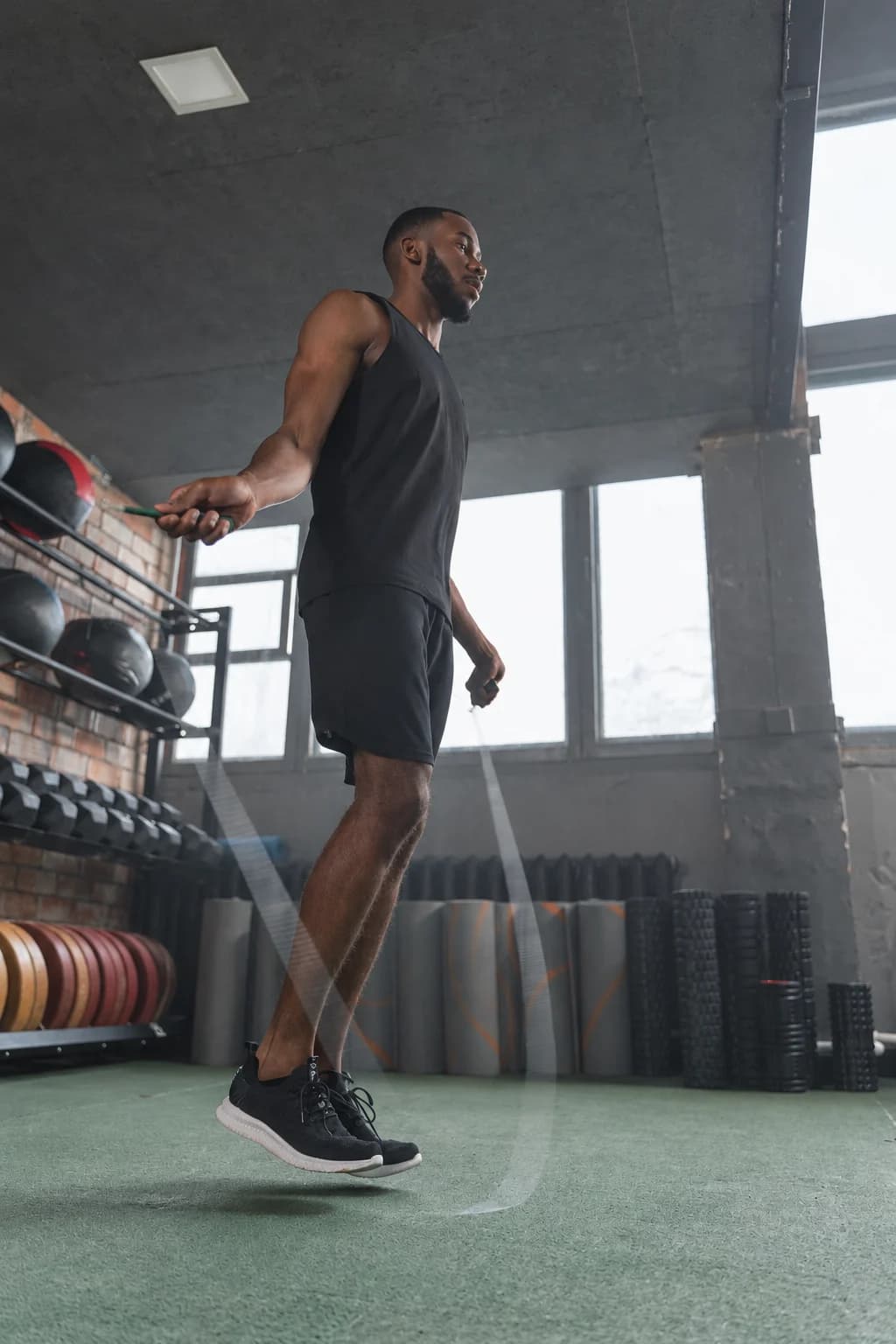
Try one double, then stop
- Establish a familiar single-under rhythm without rushing the setup turns.
- Choose the jump on which you will allow more airtime, keeping the torso upright and feet beneath you.
- Coordinate the quicker pair of turns with that jump, using a compact hand-and-wrist action rather than widening the arms.
- After both passes, land and stop turning. Let the rope settle before stepping clear or untangling it.
Avoid accelerating the rope while still waiting to leave the floor. Equally, waiting until the jump is nearly over to start the quicker turning can leave too little time. Think of one coordinated jump-and-turn task rather than a maximal leap followed by a last-second scramble.
If it catches, reset. Do not pull a moving cord hard against a foot or keep jumping through a tangle. If both passes clear but the landing is rushed, keep the next goal at one double and a calm finish.
Use the first breakdown to choose one correction
| Observation | Possible check | Simpler retry |
|---|---|---|
| The rope reaches the toes before takeoff | The quicker turn may have started too soon | Return to a predictable single, then coordinate one chosen attempt |
| First pass clears; second catches | Available airtime, late turning or changing hand position | Rehearse two taps, then compare one higher single |
| Hands spread or rise | The loop changes as effort increases | Keep familiar handle positions during one higher single |
| Feet tuck, kick back or reach forward | Leg shape is replacing a controlled vertical jump | Remove the rope and restore a balanced jump and landing |
| Double clears; next turn fails | The return was not planned | Finish after one double before learning a continued sequence |
Film a short attempt from the side if you cannot distinguish the two passes from the landing. A front view can reveal uneven hands. Keep the camera and any observer outside the entire moving rope path. Look at one attempt rather than repeating a long failed string for the camera.
Record one result: second pass caught, both passes cleared, or landing lost balance. Choose one adjustment and compare it with the previous attempt. Changing jump height, grip, rope length and speed together removes that useful comparison.
Keep equipment separate from the timing lesson
A rope you can control is more useful here than a new speed label or extra weight. A heavier cord does not automatically teach two-pass timing, and a fast cable does not provide it for you. Check the exact model's fitting, surface and care instructions before use.
If you need a separate practice surface, the PBGGAME oval mat is one option to assess for footprint and floor compatibility. Check where the rope actually contacts it and whether the setup stays flat and stable. A mat does not supply airtime, correct hand drift or certify that a landing is suitable. See the space and surface guide for that decision.
Choose the next task after one controlled double
Repeat the isolated double with the same deliberate stop before adding a new exit. Later, a return to singles can help you learn to reduce the turning rate while maintaining control. Consecutive doubles demand another repeatable jump and two-pass turn, not simply more speed on the first one.
End practice when you cannot recover a balanced landing or recognize the rope path. A short, understandable attempt is enough to identify the next task. Readiness to add repetitions depends on that control, not a fixed calendar, streak target or promised learning time.