Dynamic vs Static Stretching: Choose by the Next Training Task
Compare moving and held stretching, separate method from assistance, and interpret timing findings by the next task and the research conditions.
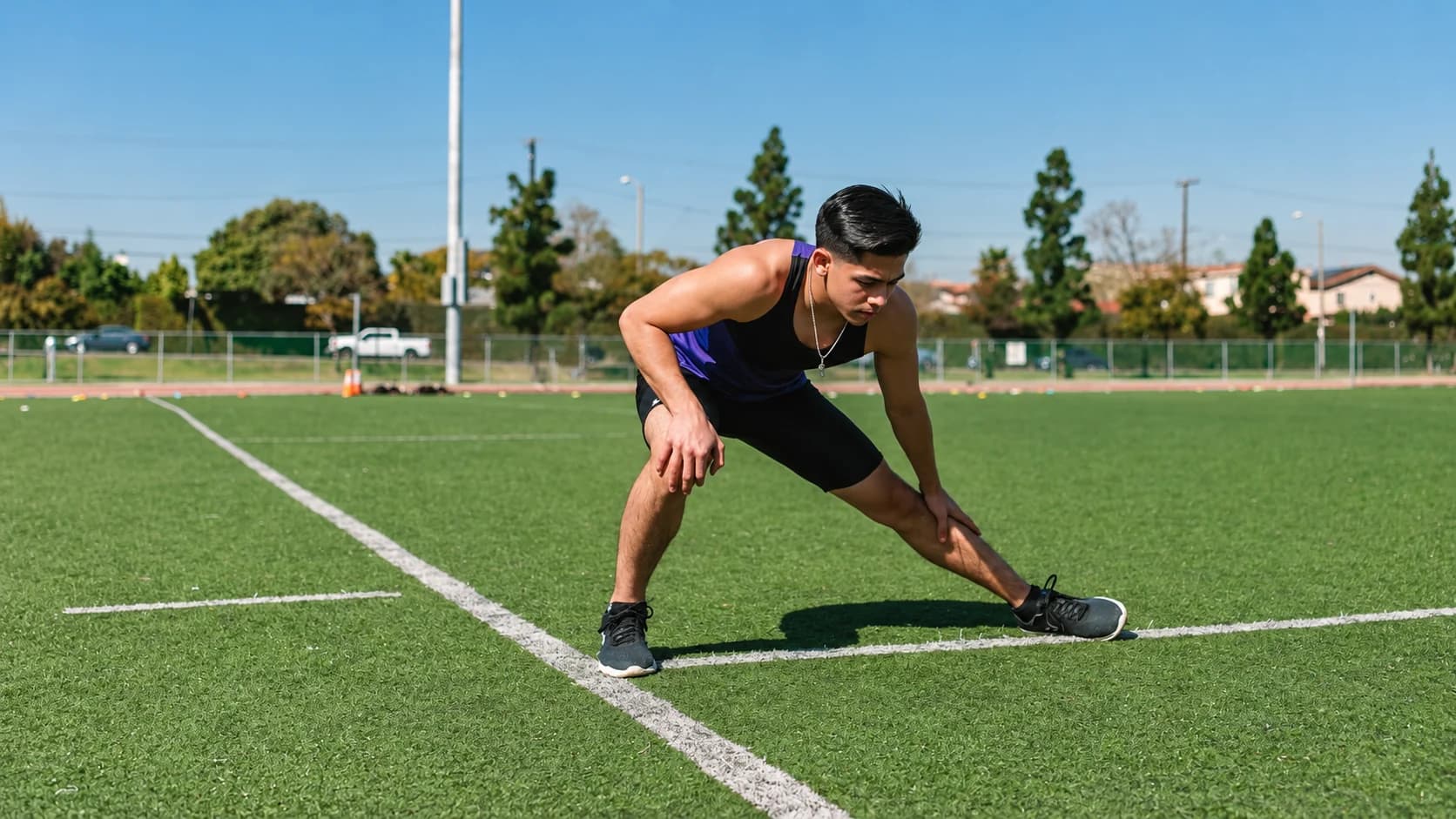
Dynamic and static stretching describe different actions. The choice depends on the task you are preparing for or practising, rather than one method being the winner in every setting. Begin by identifying whether the stretch moves or holds, then consider its duration and what you will do next.
This comparison covers two methods and their timing. It does not provide a new stretching routine or replace the instructions for a particular stretch.
What is the difference between static and dynamic stretching?
The 2025 international expert consensus on stretching distinguishes the methods this way:
| Method | Defining action | What to identify in an instruction |
|---|---|---|
| Static stretching | Holding a joint position. | The position being held and the stated duration. |
| Dynamic stretching | Cyclic, unloaded movement without a static phase. | The repeated movement and how the task is controlled. |
Read those definitions as descriptions of the action. A pose's appearance, the presence of a strap or the material of a band does not tell you the whole method. Find out what the person is actually doing instead of classifying the exercise from a still photograph.
Types of stretching: method and assistance are different questions
| Two independent questions | Voluntary muscular contribution described | External assistance described |
|---|---|---|
| Moving method | A cyclic moving task can involve voluntary effort | Assistance may be present if the actual lesson specifies it |
| Held method | A held position can still require voluntary effort | An externally assisted hold is a different specified arrangement |
For who produces the target-joint movement, use the active versus passive range-of-motion guide. This page compares moving and held methods around the next training task. The research groupings around 60 seconds and the presence or absence of later dynamic activity remain study context, not personal stopwatch rules.
Static stretching may be self-performed or externally assisted. The consensus treats active/passive and assisted/unassisted as separate from moving/held. PNF is another category, so this comparison is not a complete taxonomy.
This matters when reading a lesson. “Use assistance” does not automatically mean “hold longer,” and an elastic object is not the definition of dynamic stretching. Keep the method, assistance and intended task as separate pieces of information.
If a programme uses unfamiliar labels, establish what action its author means before comparing it with another programme. Similar-looking equipment can appear in different tasks, while two instructions can share the same method without using the same prop.
Dynamic vs static stretching before a workout
The 2025 consensus advises against prolonged static stretching—more than sixty seconds per muscle—before maximal or explosive isolated-muscle contractions. It does not report the same average impairment for a short static stretch included within a dynamic warm-up. These are task-specific findings.
Use the context when interpreting a recommendation. A maximal effort, a dynamic preparation containing a brief hold and a dedicated flexibility session are different situations. A statement about the first should not become a blanket ban covering the other two.
This also avoids the opposite shortcut: assuming that a moving stretch is always the best choice because the next activity is called a workout. Choose according to the planned task and the actual instruction, without turning the method name into a performance promise.
Static stretch timing for a flexibility task
Sustained flexibility work can be a task in its own right. Decide where that work belongs in your plan rather than judging the entire session by a study of an immediate maximal effort. Follow the selected lesson's position, duration and use of assistance; this article does not add a hold length or a new stretch.
Read the finding with its test conditions
Behm and colleagues' 2016 systematic review examined healthy, active people and their performance soon after stretching. Longer static holds were associated with larger mean performance deficits than shorter holds. Most tests took place three to five minutes later, and most studies did not include subsequent dynamic activity. Studies that did include that activity showed no clear performance effect.
That context changes how a headline should be read. An average result from a specific sequence is not a prediction for every person's next session. “Immediately before which task?” and “What happened between stretching and the test?” are useful questions when comparing apparently conflicting advice.
Duration matters, but a research grouping should not become a personal stopwatch rule. Neither review findings nor a method label establishes that a particular stretch is suitable for you, that performance will improve or that injury will be prevented.
A strap is equipment for an already-taught task
The PBGGAME 6-foot D-ring yoga straps, Classic 24-strap pack is a studio multipack containing twenty-four separate straps. Each is nominally 6 feet by 1.5 inches, with woven non-elastic fabric and paired metal D-rings. These are separate belts, not a strap with twenty-four sewn loops.
Consider the pack when that quantity suits a class or studio using already-taught assisted held stretches. The equipment does not decide the method or supply a reason to add leverage. Use the position and assistance your lesson actually teaches, rather than creating a new stretch from the buckle or fabric.
Keep the comparison attached to the next task
When choosing between instructions, identify four details: moving or held, self-performed or assisted, the stated duration and the next planned activity. That gives you a practical way to compare the actual tasks without asking which label is universally better.
For the broader distinction between preparation and flexibility work, the place stretching within a warm-up addresses that separate question. For named applied movements, the lower-body mobility guide has its own instructions.