Beginner Jump Rope Workout: Time, Recovery and a Repeatable Plan
Build a manageable jump-rope routine with short intervals, honest work-time totals, recovery choices and a flexible weekly plan. Includes strength and return-to-practice guidance.
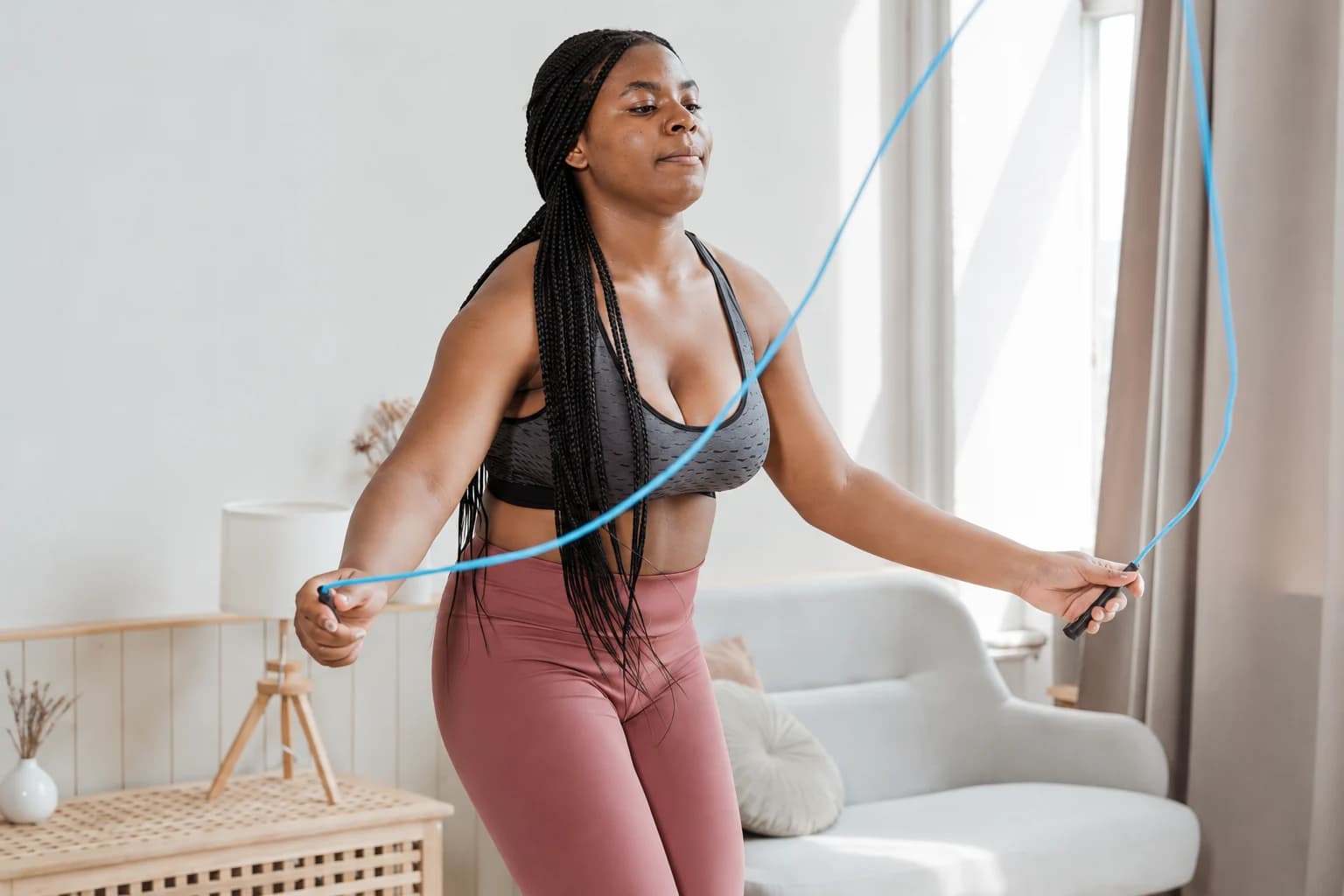
A beginner jump rope workout can be brief bouts of controlled jumping separated by generous recovery. Build a session you can understand, finish and repeat before chasing continuous minutes. Count the time actually spent jumping, consider the rest of your training week and leave room to prepare and cool down.
This guide is for adults who can already make comfortable basic jumps and want a workable routine. If every turn ends immediately, use the first-bounce lesson for short skill practice first. A timer should not turn learning into frantic attempts. A return after injury or illness needs advice specific to that situation.
Start with the task you need today
| Your next task | Use this route |
|---|---|
| First controlled turn, before following a timer | First-bounce lesson |
| A repeatable beginner session | Use the adjustable session immediately below; stop or reduce it when needed |
| Day-by-day month planning | 30-day rope calendar |
| An isolated two-turn skill attempt | First double under |
| Separate rope and strength stations | Circuit with real recovery |
A beginner jump rope workout you can adjust
Try up to eight rounds of 15 seconds of comfortable jumping followed by 45 seconds of walking or standing recovery. That makes an eight-minute interval block containing two minutes of planned jumping. This is a flexible example, not a minimum dose or a requirement to finish eight rounds.
| Part | Example time budget | What to do |
|---|---|---|
| Gradual preparation | 5 minutes | Begin with easy movement, then rehearse a few familiar turns |
| Work and recovery | 8 × 1 minute = 8 minutes | Up to 15 seconds jumping and 45 seconds recovery each round |
| Gradual finish | 5 minutes | Walk easily and let the effort settle |
| Whole visit | 18 minutes | Includes 2 minutes planned jumping and 6 minutes interval recovery |
Use fewer rounds or shorter efforts if that is more manageable. Four rounds give one minute of planned jumping; eight efforts of 10 seconds give 80 seconds. Keep extra recovery whenever you need it. Finishing earlier is an adjustment to the session, not a failed workout.
Set the timer where you can hear it without looking down mid-turn. Check the rope, handles, footwear and full surrounding clearance before starting. Use a stable surface permitted for your equipment. Keep furnishings and loose items outside the complete rope path; if you cannot clear it, choose another location.
At the halfway point, decide whether to finish, repeat the same pattern or shorten the jumping. If the rope catches, stop and reset calmly. Do not restart the whole round after every miss: repeated restarts quietly add work. Record an interrupted effort honestly instead of calling it continuous jumping.
Jump rope warm-up and cool-down
The American Heart Association gives roughly five to ten minutes as a general warm-up and cool-down range. Begin with easy walking or marching, gradually increase the pace, then explore comfortable ankle, knee, hip and arm movement. Add a few very brief familiar rope attempts with recovery between them.
Use preparation to assess today's movement and breathing. It should not exhaust you before the main block. If a new rope, unfamiliar skill or heavier load makes the rehearsal demanding, simplify it. Stretching alone is not the whole warm-up, and forcing range is unnecessary.
After the final effort, move into easy walking and reduce the pace gradually. If you choose to stretch afterward, keep it comfortable and breathe normally. A cool-down does not erase excessive workload or guarantee that you will avoid soreness; its practical role is a gradual finish.

How long should you jump rope? Separate the clocks
Actual jumping time, interval-block time and total-session time answer different questions. Ten rounds of 12 seconds jumping and 48 seconds recovery make a 10-minute block with two active jumping minutes. Ten rounds of 30 seconds on and 30 seconds off also take ten minutes, but contain five jumping minutes: two and a half times the work.
A 10-minute jump rope workout therefore needs a clear label. Does ten minutes mean the main interval block, or all available time including preparation and finishing? With five minutes reserved at each end, a 10-minute block becomes a 20-minute visit. If your entire window is only ten minutes, choose less work or a suitable walking break rather than hiding the preparation outside the schedule.
Work time also changes when you trip. A 15-second interval interrupted by untangling is not 15 seconds of continuous jumping. You do not need perfect second-by-second data: note completed rounds, shortened efforts and interruptions consistently. A useful log describes what happened, not what the timer intended.
Jump rope cardio: use breathing to judge effort
Jumping rope can become demanding even when the bounce looks small. The CDC intensity guide lists it among vigorous activities and distinguishes activity categories from relative effort. During moderate effort you can generally talk but not sing; during vigorous effort only a few words may be manageable before a breath.
Use a brief ordinary sentence when safe, and consider breathing during the work rather than only after a long recovery. If the session is meant to be easy but every rope period leaves you struggling, shorten the periods, walk more or choose another activity. Small jumps and a short duration do not automatically make an easy day.
An effort note can be as simple as comfortable early, demanding later, or unable to recover before the next signal. A watch's heart-rate zone is another observation, not a verdict: settings, measurement and the zone model matter. Neither the activity name nor a generic pace establishes a precise zone.
Recover until ready instead of obeying a signal while still struggling. Stop for pain, dizziness, chest discomfort or unusual breathlessness and seek help appropriate to the symptoms. Treat concerns as a reason to stop, not an intensity category to push through.
How often should you jump rope? Plan the whole week
You do not need to jump every day. A starting calendar might reserve two short sessions on separate days, such as Monday and Thursday, with other suitable activity or rest between them. The weekdays are examples; place the sessions around your actual running, sports and strength work.
A blank calendar square is not automatically room for more impact. A lunchtime rope session still sits alongside an evening run or demanding leg workout. Consider replacing some work rather than continually adding it. Daily skill contact can range from a few relaxed turns to a hard session, so the word practice does not identify its cost.
The CDC adult activity guidance combines weekly aerobic activity with muscle-strengthening work. Its general targets are 150 minutes of moderate activity or 75 minutes of vigorous activity, or an equivalent combination, plus strengthening on at least two days. These cover suitable activities across the week; they are not a first-week rope prescription. Standing recovery is not automatically vigorous activity.
Before adding another rope day, check how the present schedule feels during sessions, afterward and the next morning. Repeat a manageable week when uncertain. If you add one short session, keep the earlier sessions familiar instead of simultaneously increasing frequency, interval length, speed and rope load.
Jump rope rest days: choose a clear purpose
| Today's situation | A reasonable option | What to avoid |
|---|---|---|
| Ordinary movement feels comfortable; an easier day is planned | A relaxed walk or another familiar low-effort activity | Turning it into a second conditioning workout |
| Recovered and ready for familiar jumping, but less time or energy | A deliberately smaller block with a clear ceiling | Adding heavier equipment or faster pace to compensate |
| Unusual fatigue, illness or disrupted normal movement | Rest and reassess; obtain appropriate advice for symptoms | Using jumping to test whether pain can be ignored |
Rest between jump rope sessions should reflect the work you actually did, including extra attempts, other exercise and unfamiliar equipment. Shorter is not necessarily easier if you turn faster or add load. A recovery day does not need more jumping to count.
Do not use soreness as the only score. Its absence does not authorize unlimited work, and its presence does not measure progress. Note control, energy, recovery and how other training is affected. Missing a session creates no debt: eight skipped intervals do not make the next session sixteen.
A 30-day jump rope workout plan can be a review cycle
Use a month as a review window for repeatable sessions. For the complete day-by-day arrangement, flexible rest days and record sheet, use the 30-day rope calendar. This beginner hub covers setting up and adjusting one session.
Record control, interruptions, effort and scheduling. Repeat the manageable session or review one change; a new calendar week does not require more work.
A calendar reminder can help you remember a decision, but it should not override illness, symptoms, poor recovery or changing commitments. There is no universal percentage increase or required daily streak. The best jump rope workout is one that fits the day's purpose and remains manageable alongside the rest of your routine. For a day-by-day calendar with rest days and repeat weeks, use the 30-day jump rope plan.
What muscles does jump rope work?
The lower legs repeatedly help with takeoff and landing. The thighs and hips help manage leg and body position, the trunk steadies the body, and the shoulders, arms and hands hold and control the rope. These are broad movement roles, not measured activation percentages or equal loading of every muscle.
Is jump rope a full-body workout? It involves coordinated whole-body activity, but that label does not mean a complete strength program. Does jump rope build muscle? Muscle participation and fatigue alone do not establish muscle growth. If strength or size is a goal, retain deliberate progressive strengthening rather than replacing it with longer jumping because one area feels tired.
The ACSM resistance-training guidance addresses strength and muscle size through deliberate resistance work. A study of rope jumping in Muay Thai athletes measured lower-limb activation and mechanics, not long-term muscle growth. Neither muscle involvement nor a tired feeling answers whether a complete strength goal is being met.
Count aerobic work and strength work separately. Record jumping seconds for the rope and exercises, resistance and repetitions for strengthening. A harder-feeling rope does not automatically cover pushing, pulling, squatting and hinging, or prove that the chest and back receive the stimulus you intended.
Jump rope before or after a strength workout
Arrange the session around its priority. If learning a strength movement or producing good-quality strength work matters most, avoid arriving at it exhausted from rope intervals. A little easy rope rehearsal may fit a warm-up for someone who controls it, while a demanding rope block is another training task.
For a jump rope and weights workout, learn each component separately and allow real recovery between stations. Switching from rope to a leg exercise is not automatically rest for the legs. If both components deteriorate in one visit, shorten one or separate them into different sessions rather than forcing a continuous circuit.
Dumbbells can provide a separate strength option when the load fits the exercise. Put the rope down before using them; do not jump while holding weights. Keep a clear record of each part so that adding conditioning does not quietly displace the strength work you meant to do. For exercise order and a worked sequence with distinct rope, strength and recovery stations, see the cardio and strength circuit.
Timed workouts need a suitable rope skill
A workout containing double unders combines a timing skill with the demands of the wider session. Repeated failed attempts can add work without delivering the intended interval. Agree an appropriate scaling option with the coach, such as a familiar rope task or another suitable activity, instead of treating the written repetition count as permission to keep tripping indefinitely.
Practise a new skill separately while you can observe it clearly. The first-double-under guide covers an isolated attempt with a controlled stop. A timed workout is not a reliable place to solve a new rope mechanism, change length repeatedly or discover how a heavy rope affects your turning.
Short jump rope sessions throughout the day
Activity can accumulate in smaller periods, but splitting a session and duplicating it are different. Six 20-second efforts total two minutes of jumping. Three in the morning and three later still total two minutes; six in each window total four. Keep a daily total alongside each session note.
Each window needs a fresh location check, preparation and an easier finish. An earlier session does not keep you warmed up all afternoon. A two-minute gap between meetings may suit walking better than rope practice. If the room becomes busy, choose an alternative; jump rope activity breaks still need space away from others' walking routes.
Return to jump rope after a break
Use the old log as background, not today's target. Coordination may feel familiar before you know how the previous workload fits your current activity. Recheck stored equipment and changed footwear or surroundings, then begin with a smaller familiar session you can observe.
Review three points: control and breathing during practice, comfort with ordinary movement later that day, and fatigue or interference with activity the next day. Repeat before expanding. If the break involved injury, illness, surgery or restrictions, follow advice for that situation rather than using this general routine as clearance.
Equipment choices for a repeatable beginner session
A weighted jump rope workout is a different load choice, not a compulsory beginner upgrade. Handle weight, rotating-cord weight and packed shipping weight describe different things. Keep the initial rope familiar; more weight does not automatically improve coordination or make a session more effective. The weighted-rope section of the cardio and strength circuit explains how to consider that load change separately.
Use a familiar rope for the interval example and check its fittings before beginning. If you change its construction or load, reassess how it turns in brief controlled attempts before returning to the timer. Compare materials, fit and replacement parts in the rope-selection guide, while keeping the workout log focused on the jumping and recovery you actually complete.
The PBGGAME oval mat is one separate surface option. Check the usable footprint, flat edges and backing compatibility with your floor; it cannot guarantee grip, quiet use or a suitable workload.
For a separate strength session, the PBGGAME light-green dumbbell pair supplies two fixed 1 kg weights. That light load may suit some movements but will not provide sufficient challenge for every person or strength goal. Put the rope away before picking them up.