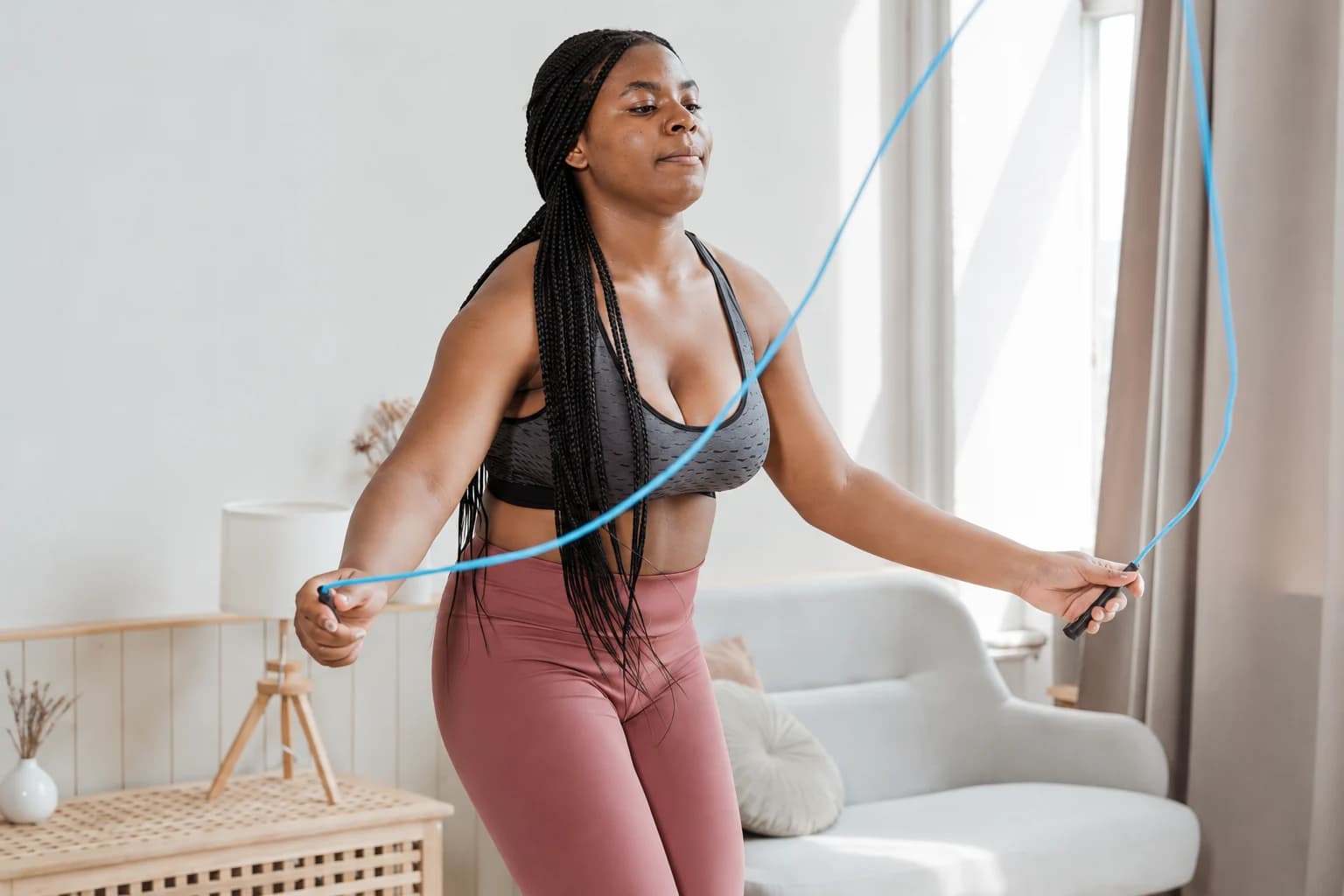
Jump Rope Intervals and HIIT: Choose Work, Recovery and Effort
Set rope work, recovery and effort separately. Use clear time totals, a first-two-round check and practical decisions for trips, harder sessions and progression.

A jump rope interval workout alternates work and recovery. A jump rope HIIT workout uses repeated high-intensity efforts within that structure. The difference is the effort you actually produce and can repeat, not a special timer ratio or a fast soundtrack.
Use intervals to organize familiar jumping first. Consider harder work only when a recent routine gives you a useful baseline and your basic jump remains controlled. If you are still learning turns or returning after a break, the beginner workout guide offers a simpler starting point.
Copy an interval setup card
| Setting | Your intended session | Completed record |
|---|---|---|
| Purpose and familiar jump | ____ | ____ |
| Work / recovery | ____ sec / ____ sec | Actual work ____; extra recovery ____ |
| Maximum rounds | ____ | Completed ____; interrupted rounds ____ |
| Planned jumping | Rounds × work seconds ÷ 60 = ____ min | Actual jumping ____ min / unknown |
| Main-block clock | Rounds × (work + recovery) ÷ 60 = ____ min | Elapsed ____ min |
| Preparation / finish | ____ / ____ | ____ / ____ |
| First two rounds | Use the control-and-recovery check | Continue / shorten / extend recovery / finish: ____ |
For six 20/80 rounds, planned jumping is 2 minutes inside a 10-minute main block. The 15/45 and 30/30 examples below are alternative settings, not extra blocks to append. The purpose, actual effort and repeatability still decide whether the session is demanding interval work.
Work, recovery and effort are three separate settings
| Setting | What it controls | What it does not establish |
|---|---|---|
| Work duration | How long you plan to jump before stopping | Whether those seconds are easy or hard |
| Recovery duration | Time available to settle and reset | Whether you will be ready when the signal sounds |
| Effort | How demanding the jumping is for you | A guaranteed speed or heart-rate zone for everyone |
Fifteen seconds of work and 45 seconds of recovery is a 1:3 ratio. Twenty and 40 is 1:2. Both can organize ordinary practice. The same ratio can feel very different at another pace, with unfamiliar equipment or late in a tiring session. Short intervals are not automatically easy, and equal work and rest is not automatically HIIT.
Choose the purpose before setting the clock: repeatable technique practice, manageable conditioning or a deliberately demanding session. Keep a familiar basic jump. Adding difficult footwork to prove that the workout is hard makes it harder to tell whether the limiting factor is effort or skill.
What makes high-intensity jump rope different?
A Sports Medicine perspective notes that HIIT definitions vary and distinguishes all-out sprint intervals from other hard interval work. HIIT pairs demanding efforts with recovery. Hard does not have to mean an all-out sprint, maximum jump height or the fastest turns you can force through. For rope work, the pace still needs to leave you able to control the cord and stop deliberately.
The CDC intensity guidance describes moderate effort as generally allowing conversation but not singing; at vigorous effort only a few words may be possible before pausing for breath. Use that alongside how the movement feels and whether you can repeat it. It is a rough effort check, not a target to chase regardless of control or symptoms.
A watch may add information, but its zone label does not certify the session or your readiness. Nor does completing a short hard effort show that the next one is appropriate. If ordinary jumping is already very demanding, take more recovery or choose an easier activity rather than forcing a faster pace to earn the HIIT label.
Before choosing harder intervals, consider today's fatigue and other training. Strength in a different exercise does not establish familiarity with repeated rope contacts. If symptoms, a health condition or uncertainty make vigorous exercise a concern, obtain individual guidance; a timer and an effort score cannot screen that risk.
One adjustable interval session, with honest time totals
For an experienced jumper considering a short demanding set, one example is up to six rounds of 20 seconds of challenging, controlled jumping and 80 seconds of recovery. Six 100-second rounds make a ten-minute main block: two minutes of planned jumping and eight minutes of recovery. Fewer rounds or shorter efforts are valid choices.
| Part of the visit | Example allowance | Purpose |
|---|---|---|
| Gradual preparation | 5–10 minutes, longer if needed | Easy movement and brief familiar rope rehearsal |
| Main block | Up to 6 × (20 + 80 seconds) = 10 minutes | A clear end to each work period, followed by recovery |
| Gradual finish | 5–10 minutes | Easy movement with a decreasing pace |
| Total example window | 20–30 minutes before any extra recovery | Only 2 minutes are planned hard jumping |
An ordinary interval session can use comfortable effort instead. For comparison, eight rounds of 15/45 take eight minutes and contain two planned jumping minutes; eight rounds of 30/30 take the same eight minutes but contain four. A familiar-looking clock can conceal a large change in work. These are alternatives, not successive sets to complete together.
The American Heart Association recommends entering and leaving exercise gradually, with a general five-to-ten-minute framework. Begin with easy walking or marching, comfortable movement and short familiar rope attempts. Reserve the finish in your calendar too; a brief main block is not a reason to skip preparation.
Use the first two rounds to check the plan
Inspect the rope and handles, follow their instructions, and clear the whole moving-rope area. Put the timer where you can hear it without looking down mid-turn. Decide the maximum number of rounds before starting, while leaving yourself permission to do fewer.
- After the first effort, notice whether you stopped deliberately or lost control as the signal approached.
- Before the second, check whether recovery is sufficient to repeat the intended movement. Extend it if necessary.
- After the second, compare rhythm, breathing and control. Continue only if the planned setting still makes sense; otherwise shorten work, recover longer or finish the set.
Do not use a good first round as a commitment to finish the entire block. Likewise, an easy first round is not an instruction to increase speed immediately. Let the session show whether the selected setting is repeatable before changing its purpose halfway through.
Make recovery part of the workout
Set the rope safely out of your path. Walk gently or rest as appropriate while noticing how you feel. Filling every break with squats, push-ups or more jumping changes the recovery period into another exercise task. That may belong in a different plan, but it should not happen accidentally.

The next beep is an invitation to reassess, not an obligation to move. If you need extra time, take it and record the longer session. If the intended quality does not return, end the hard work and move into an easier finish. Repeatedly borrowing recovery from the next round defeats the purpose of planning it.
When the rope catches, let the round end
Stop, untangle and reset your stance before another turn. If the work signal ends while you are resetting, let it end. Restarting the whole interval after each trip quietly adds work and turns a fixed plan into an open-ended test.
Choose how to handle longer resets before the session. In a fixed-time workout, keep the clock running and note that actual jumping was below plan. In a skill-practice session, you may pause and resume the remaining planned time, while also recording the longer elapsed time. Neither method requires a full replacement round.
Occasional catches and repeated deterioration are different observations. If late rounds become mostly missed turns, stop adding attempts. Shorten the next session or return to a familiar easier rhythm. Pain, dizziness, chest discomfort, unusual breathlessness or feeling unwell are reasons to stop and seek appropriate help, not problems to solve by changing the ratio.
Fit demanding intervals into the whole week
The CDC adult activity guidance considers activity across the week, not a separate quota for each exercise. Hard rope work shares recovery capacity with running, sport and lower-body strength training. Avoid treating it as a free extra simply because the active jumping adds up to only two minutes. Consider what comes before and after the session, including how ordinary movement feels the following day.
The ACE recovery discussion makes the wider program and individual readiness relevant to scheduling. Leave easier days between demanding sessions and review your response before adding another. A general recovery recommendation is not a precise countdown to readiness: sleep, recent workload, unfamiliar activity and individual response matter. You do not need to schedule multiple HIIT sessions just because a calendar has space.
If coordination, ordinary movement or your next planned workout is noticeably worse, reduce the rope demand rather than squeeze in another hard day. Missing a set creates no debt to repay. Keeping a planned day easy is compatible with progressing over time.
Progress one setting, then observe the result
Keep the work duration, recovery, round count and effort in your log. Add completed jumping when trips changed it, whether the last round resembled the first, and how you felt afterward. Those notes are more useful than recording only HIIT completed.
Once the current setting is manageable across repeated sessions, change one feature for a reason: a short extra round, slightly longer work or a different effort target. Keep the others familiar. Do not increase pace, round count, work duration and rope weight together; you would lose a clear explanation for any change in response.
Shorter recovery is not the only sign of progress. More recovery may preserve the intended hard effort, while an easier pace may better serve another day. If you change from 15/45 to 30/30, remember that planned work doubles at the same round count. Repeat a useful setting instead of advancing automatically each week.
Keep equipment familiar
Use a rope whose adjustment and handling you already understand. A heavier rope does not automatically make intervals more suitable. The PBGGAME oval mat is one optional practice-surface choice. Check that its usable area covers the cord contact, that the edges lie flat and that it suits your floor. It does not determine recovery or guarantee quiet, slip-free jumping.
For the next visit, start with the settings you actually completed, not the ones you hoped to complete. A repeatable interval session can stay useful without becoming harder every time.