A Home Strength Assessment You Can Repeat Without Maximal Lifts
Choose one familiar strength task, fix its conditions and compare a later non-exhaustive check. Understand what changes mean without maximal lifts or invented scores.
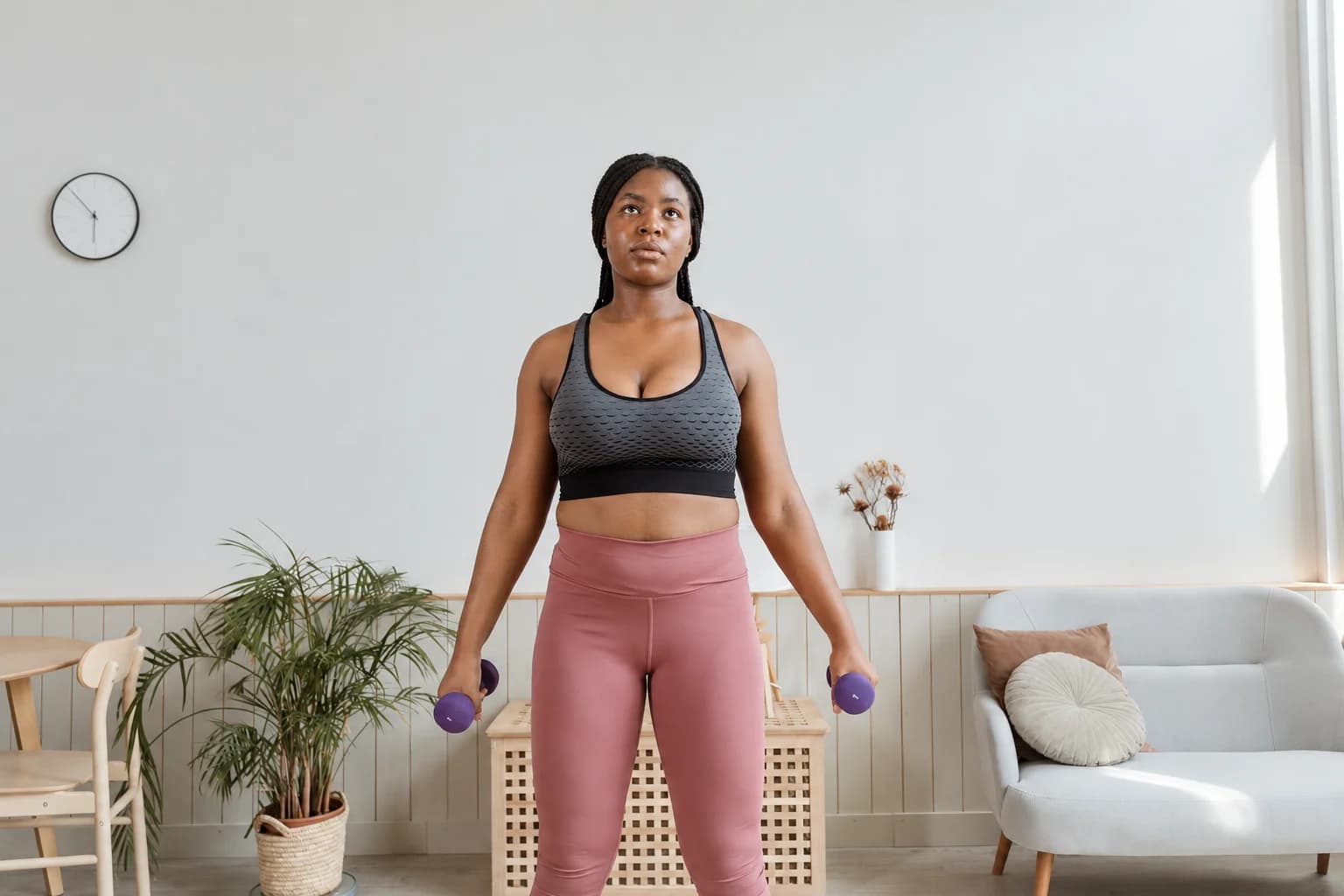
A useful home strength check begins with a task you can already do comfortably. Choose its conditions, complete a predetermined amount of controlled work and return later to the same task. The purpose is to compare your own performance, without searching for the heaviest load or the largest possible repetition count.
Keep the question narrow: can you complete this familiar task under the same conditions, and how manageable does it feel? That gives you practical information to retain when choosing the next step in your training.
Build an at-home strength assessment around one familiar task
The NHS strength-exercise guide offers familiar movement choices, including a slow sit-to-stand with a controlled return and light curls. Its chair guidance calls for a stable, non-wheeled chair that will not slip. Use its exercise instructions to choose a movement you understand.
| Possible personal check | Keep these features the same | What you observe |
|---|---|---|
| A familiar controlled sit-to-stand | The same stable chair, foot placement, hand use and support, range and chosen count. | Completion of the planned work and control of standing and sitting. |
| A familiar seated curl | The same implement and chosen hand, seat, starting position, range, pace and chosen count. | Completion, controlled lifting and return, and how manageable the task feels. |
Choose one task initially. If you later keep a second check, treat it separately instead of adding the results into a total score. For the curl's existing movement guidance, see the controlled lift-and-lower example. Choose a load you already manage; a product label or photograph cannot select it for you.
Fix the conditions before recording a baseline
Copy a baseline-and-retest record
Keep a copy of the first column. Write “unknown” when a condition was not recorded, rather than fill it in afterwards. This record compares one familiar task; it supplies no normal, excellent or clinical score.
| Condition | Baseline: date ____ | Retest: date ____ |
|---|---|---|
| Exact exercise and same side | ____ | ____ |
| Physical chair or implement / adjustment | ____ | ____ |
| Hand use, assistance and foot position | ____ | ____ |
| Starting and finishing points / range | ____ | ____ |
| Predetermined repetitions / deliberate pace | ____ | ____ |
| Preparation and recent training | ____ | ____ |
| Completed work, control and manageability | ____ | ____ |
| Changed or unknown condition | ____ | ____ |
Example: if the second attempt uses a taller chair, mark “chair changed: new baseline.” Do not turn easier standing from a higher seat into a strength-improvement score. Keep the original record alongside the new setup.
The NSCA guidance on assessing speed and agility stresses consistent procedures and equipment. It also recognises that preparation, recovery, environment and familiarity can affect results. Its subject is sport speed and agility testing.
The home checklist below is a practical adaptation of those consistency principles, not a validated strength protocol. It supplies no population grade, maximum-lift estimate or fixed retest interval. Decide what stays fixed before the baseline, then keep that description for the retest. “Same exercise” is too vague if the chair changes, one arm receives extra support or the later attempt uses a shorter range.
Rehearse the selected task before calling an attempt your baseline. Use the same familiar preparation and enough rest to approach the comparison in a similar state. Record relevant differences, such as having just completed a demanding workout, rather than assume every day begins with identical conditions.
Choose the repetition count beforehand from work you already know is comfortable and non-exhaustive. Keep that count for the later check. There is no need to continue until failure or find a personal record. The benchmark is the preselected task, including its planned finish.
- Task: the exact exercise version, chosen hand or side, and seated or standing position.
- Equipment and support: the same physical implement or chair, load, adjustment and assistance.
- Movement: the intended starting position, range, deliberate pace and controlled return.
- Amount: the same predetermined, comfortable repetition count.
- Preparation: the same familiar rehearsal and a note of relevant recovery or recent-work differences.
Keep a submaximal strength check non-exhaustive
Here, “submaximal” describes deliberately staying below a maximal attempt. A validated submaximal strength test has its own protocol and interpretation. You are comparing a familiar fixed task with itself. Because the count is chosen beforehand, reaching it completes the check without searching for the largest possible performance.
Complete only the planned work while its standard remains manageable. If the intended movement changes or the return is no longer controlled, end the task and record that you did not complete it as planned. Do not add compensating movements to finish the count. The set-stopping guide explains that distinction.
An example baseline entry could say: “Same chair and hand use; planned count completed; controlled sitting; felt comfortably manageable.” A curl entry could identify the exact weight and hand and record the same observations. These are example descriptions, not a prescribed count, effort target or assessment grade.
Track strength improvements with comparable retests
Arrange a later check when you can reproduce the conditions, rather than repeat attempts until one looks best. No universal retest interval is supplied here. Keep ordinary training separate from the benchmark so a changed workout does not quietly become the comparison procedure.
- Same conditions, planned work completed more comfortably: note the improvement in this task. Familiarity, recovery and training may all contribute; one attempt does not isolate the cause.
- Same conditions, but control or completion is worse: record what happened and review relevant differences before drawing a broad conclusion.
- Different load, chair, support, range or device: label the result as a different setup. Establish a new baseline rather than combine the two as a clean improvement.
- The task no longer serves your goal: choose a more appropriate manageable check and document its conditions. There is no need to convert the old result into a maximum-strength score.
Look for a useful pattern in comparable observations. For example, repeatedly completing the same task with a more controlled return gives you information worth retaining. Use that pattern when deciding whether to keep practising the task or establish a different manageable check for your next goal.
An optional gripper is a practice tool, not a force gauge
The PBGGAME adjustable spring-gripper pair with mechanical counters supplies two grippers with adjustment knobs and counter windows. It can serve an already familiar, manageable grip task. Use the same physical unit, hand and setup for a personal comparison; do not assume the pair are calibrated equals.
Use the counters to record repetitions and the adjustment markings to repeat your chosen setting. Keep those references separate from a dynamometer reading or clinical grip-strength score, and assess movement quality through the exercise instructions. The grip-training guide explains the broader task choices and helps you keep conditions consistent between sessions.