Grip Training Routine: Crushing, Pinching and Holding
Build a manageable grip routine with separate crushing, plate-pinching and handle-holding tasks, controlled release and simple progress notes.
A useful grip training routine includes more than squeezing a gripper. Closing the fingers, pinching an object between thumb and fingers, and keeping a handle from slipping ask different things of your hands. Practise those tasks separately so you can see which one needs attention.
Start with equipment you can control and put down easily. This short routine offers one task from each group, with room to reduce the work or leave a task out. It develops a training habit rather than testing how long you can endure an opening hand.
Three complementary hand strength exercises
The National Strength and Conditioning Association's grip-training guidance distinguishes crushing, pinching and supporting tasks, including grippers, plate pinches and loaded carries. They overlap, but doing well at one does not establish equal ability at the others.
| Task | What you practise | A useful observation |
|---|---|---|
| Crush | Close a suitable gripper and reopen it under control. | Clean closes without swinging or a sudden release. |
| Pinch | Hold a suitable plate between the thumb and fingers. | A steady hold without slipping or changing the grip. |
| Support | Keep a dumbbell handle securely in the hand. | A quiet hold and controlled set-down before the fingers open. |
These task labels overlap: a support hold also involves squeezing. IronMind's discussion of grip classifications explains why no single classification captures every demand. A dumbbell held by its handle is support work; it does not become a plate pinch because the weight is small.
Prepare the space and practise putting the load down
Check the handles, spring, plates and any fastenings before use. Keep the floor dry and clear, with no children, pets or loose objects in the set-down area. Remove jewellery that catches or presses into the hand. Choose a comfortable wrist position rather than deliberately bending it to finish a repetition.
Begin with a few comfortable hand openings and closes, then try an easier version of each planned task. Keep this rehearsal easy rather than adding another tiring set. For a plate pinch or dumbbell hold, establish where you will put the object down and rehearse that action. Keep the object low and clear of your toes; do not hold it over another person or try to catch a falling weight.
A short grip training routine you can adjust
Try one round of the three tasks below, resting until you feel ready to handle the next object reliably. If the first round stays comfortable and controlled, a second is optional. Four to six closes or a five-to-ten-second hold are starting examples for organising practice, not required targets or a clinical prescription.
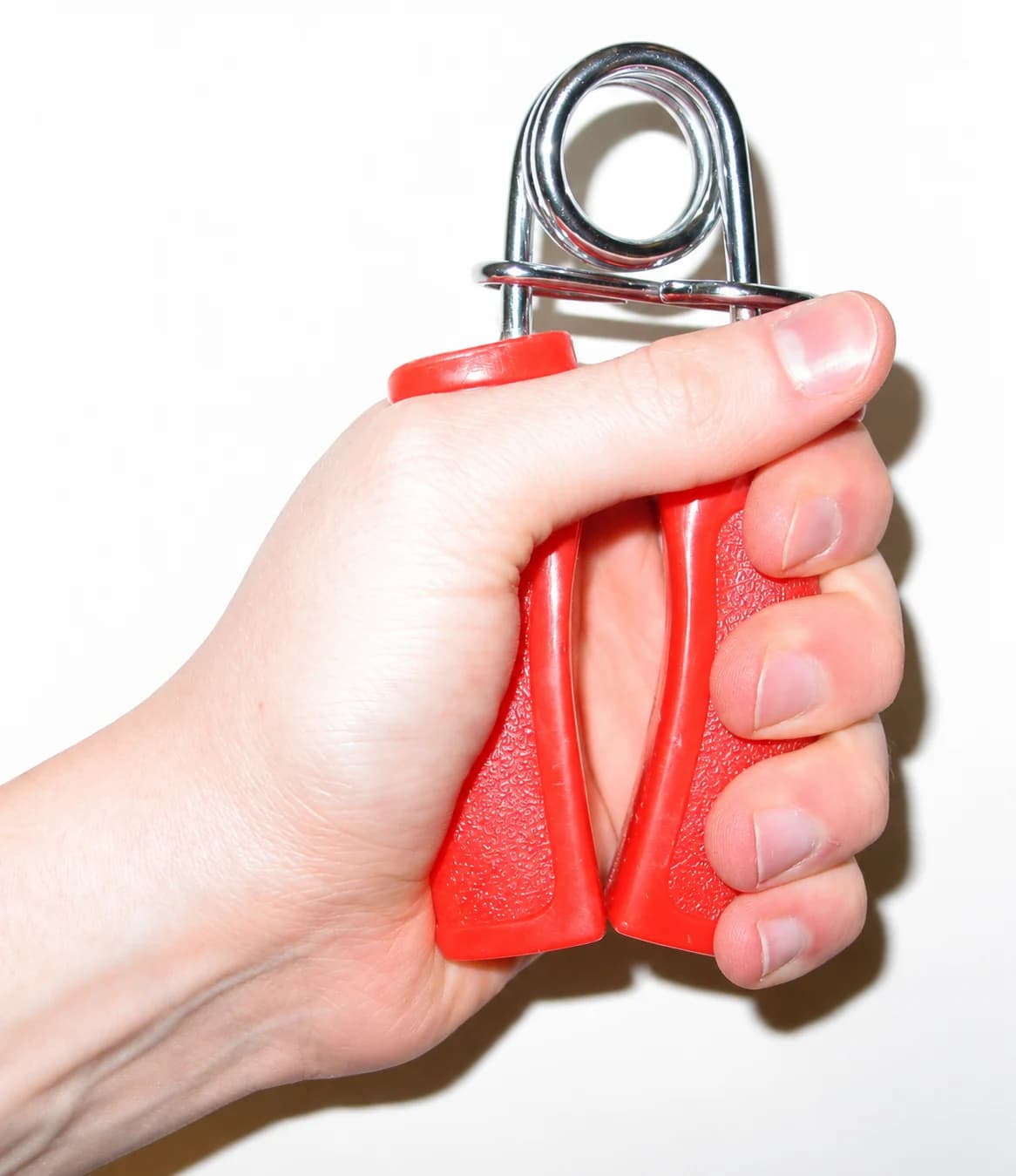
- Crush: follow the maker's intended hand position. Seat a suitable gripper securely, with the fingers around one handle and the opposite handle supported by the palm. Close smoothly without swinging the arm, leaning into the tool or adding the other hand to force the close. Reopen slowly. Stop if you can no longer control both directions, then repeat with the other hand if appropriate.
- Pinch: use a plate whose shape, thickness and load you can manage. Place the thumb on one face and the fingers on the opposite face, keeping clear of a sharp or damaged edge. Establish the grip before making a small lift, hold briefly at your side, then lower it to the prepared clear area. Do not stack loose plates to make the task harder while learning.
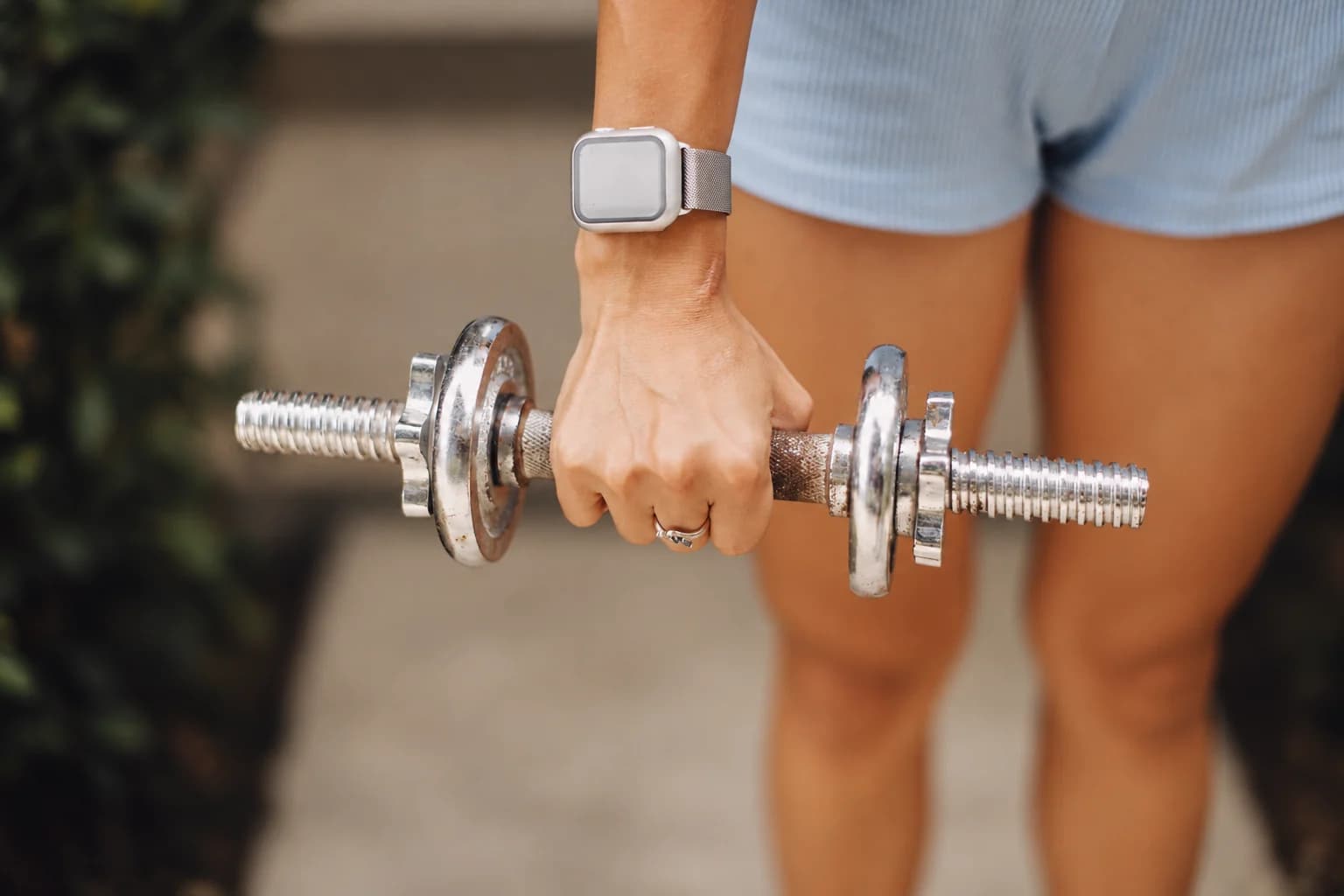
- Support: use a dumbbell with a handle you can enclose securely, with the thumb around it. Stand steadily, let the arm hang comfortably and keep the load quiet at your side. End the hold while you can still lower it deliberately. Practise the other side separately; walking, shrugging and testing maximum hold time can wait.
The ACE plate-pinch exercise provides the thumb-on-one-face, fingers-on-the-other arrangement. The stationary dumbbell hold here simplifies the NSCA carry format by removing the walking task. Neither setup calls for waiting until the weight slips.
Allow normal recovery between brief sessions, and account for pulling exercises, climbing, carrying and other work that already tires your hands. For an initial schedule, choose two separated opportunities in the week and see how they fit. Avoid fatiguing the grip immediately before another exercise where a secure hold matters.
Equipment options: match the task before the label
| Copy a separate record for each grip task | Exact tool / hand | Clean work | Controlled release / next change |
|---|---|---|---|
| Crush | ____ | ____ closes; label setting ____ | ____ |
| Pinch | ____ | ____; plate shape/thickness ____ | ____ |
| Support | ____ | ____; handle/mass ____ | ____ |
For the featured fixed-resistance grippers, choose only an ordinary closing-and-controlled-opening task you can manage. A rehabilitation phrase in retail copy is not evidence that this model treats a hand condition. The movement record and the product presentation should retain that same ordinary-practice boundary.
The PBGGAME four-piece fixed-resistance gripper set offers separate spring grippers. Treat the printed resistance levels as product labels rather than calibrated measurements. The lowest label is not automatically suitable for a beginner: if a clean close and controlled reopening are unavailable, choose an easier tool instead of forcing it.
The PBGGAME light-green dumbbell pair, 1 kg each can provide a manageable handle for learning the support-hold setup. That load may be only handling practice for someone with a stronger grip. You do not need either product, or a new purchase for every task, if suitable equipment is already available.
How to improve grip strength without chasing failure
Keep a small record: task, exact tool or plate, hand, clean repetitions or hold time, and whether release stayed controlled. For example: “Support hold, same dumbbell, right and left, two short holds each, no slipping.” Counts from different grippers or differently shaped handles are not interchangeable strength scores.
When the same work feels repeatably manageable, change one thing: add a clean repetition, extend a hold a little, or use a suitably small resistance increase. Keep the other details similar so you can understand the change. If technique deteriorates, return to the previous version; a longer struggle is not necessarily better practice.
Stop for pain, tingling, numbness or an unexpected loss of control. New symptoms or a hand, wrist or medical restriction need individual guidance rather than a harder gripper. Normal grip training should remain distinct from rehabilitation and from a maximum-strength test.
For lifting aids, see the lifting accessories guide. Straps and wraps have separate jobs; choosing them does not replace practising the grip task you want to improve. Judge progress within that task, without promising a stronger deadlift, a sport result or a fixed improvement deadline.