When to Change Exercises and When to Keep Practicing
Decide whether to keep practising or change an exercise by its purpose, available equipment and fit, with concrete examples and a reason-first checklist.
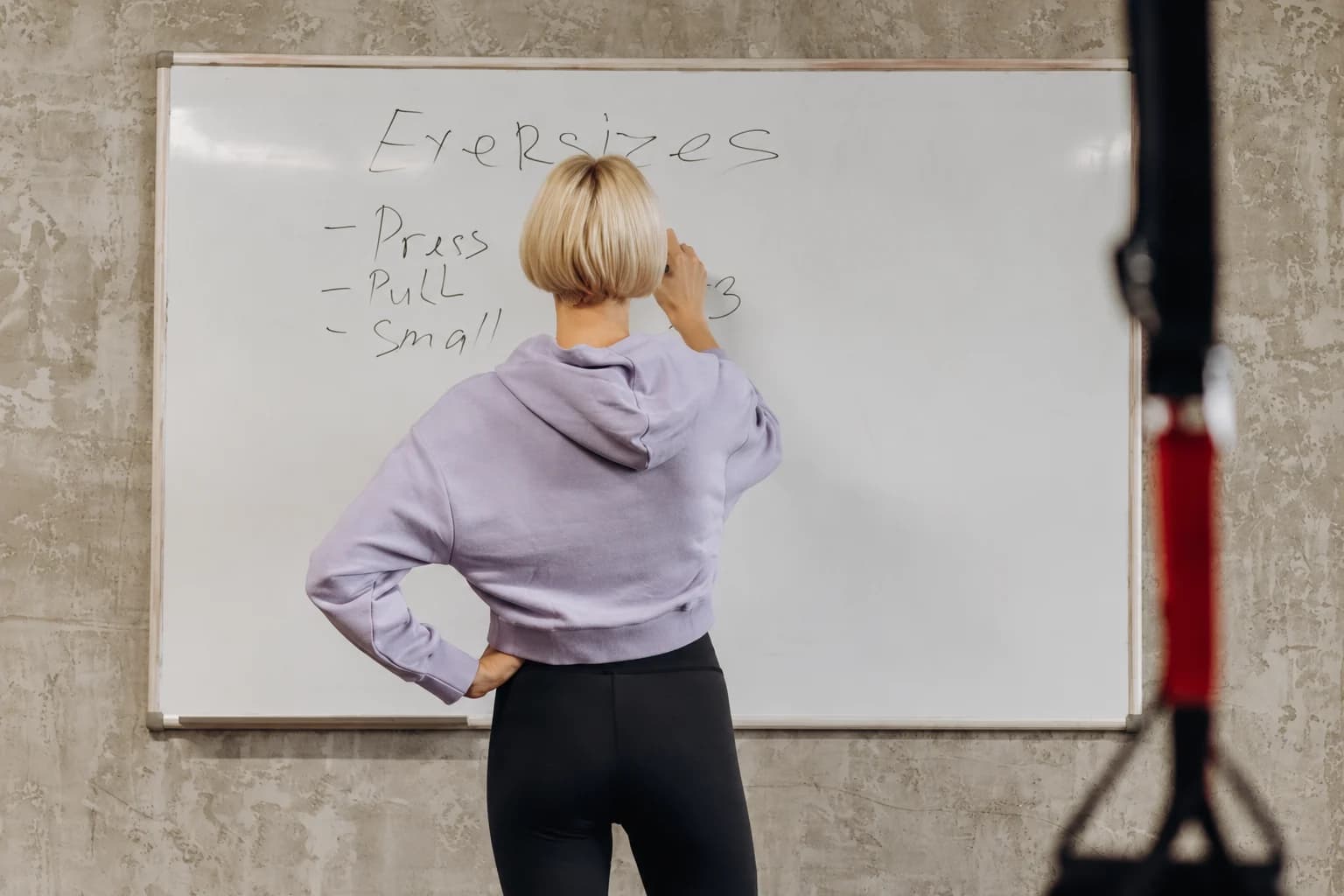
Keep an exercise when it still fits your goal, equipment and ability, and you are learning to perform it consistently. Consider changing it when you can name a useful reason: the equipment is unavailable, the goal has changed, the setup no longer suits you or some variety would help you stay interested.
A familiar movement does not need replacing simply because you recognise it. Equally, keeping the same exercise forever is not a goal in itself. The useful decision is whether repetition or a particular change will make the next sessions more workable.
How often should you change exercises?
There is no single replacement deadline for every person and exercise. ACE coach Jonathan Ross's discussion of program hopping argues for giving a purposeful plan a chance rather than repeatedly replacing it. Use that as a reason to review what your exercise is doing for you, rather than assigning every movement an expiry date.
If you are following a plan with a coach, its planned changes may have a specific purpose. Ask what each change is meant to accomplish and what should stay consistent. Do not abandon the plan after one awkward session, or add new movements simply to keep the muscles confused. That phrase does not tell you which exercise to choose or why.
Choose a change for a named reason
| Reason to review | Variable to keep | One variable to change or clarify | What to observe later |
|---|---|---|---|
| Fictional example: the current setup is no longer available | The intended task and written movement standard | Ask the plan author for a documented replacement | Whether the replacement fits its instructions |
| Your reason: _____ | _____ | _____ | _____ |
Decide what the proposed change would solve
| What is happening? | A useful first decision |
|---|---|
| The movement is still unfamiliar. | Keep a manageable version and practise the setup before seeking another variation. |
| You had one disappointing session. | Check whether the same task and conditions were actually repeated before replacing it. |
| The required equipment is no longer available. | Select an appropriate alternative you know, or learn one with suitable instruction. |
| Your goal has changed. | Review whether the exercise still serves that goal; change the choice if needed. |
| The plan has become unappealing. | Consider one purposeful change while retaining familiar parts you can compare. |
| A movement causes pain or a new restriction appears. | Stop that task and obtain appropriate guidance rather than cycling through random alternatives. |
A busy station, a shorter session and a different training goal are different problems. They do not all require a new exercise. You might wait, use an already-planned alternative or do fewer planned tasks. Decide which problem exists before rebuilding the whole session.
Exercise variation for progress needs a purpose
ACE's Erin Nitschke discusses refreshing a fitness routine through goals, preferences and purposeful variety. Enjoyment is a reasonable consideration. A small change can be useful if it makes a plan more practical to follow, without requiring every exercise to be different every time.
A small eight-week study in trained men compared fixed training with app-randomised exercises and repetition ranges. It found no statistically significant between-group differences in tested strength and quadriceps thickness; self-reported motivation improved more with variation. Of 21 participants, 19 finished training and 15 completed motivation questionnaires. It does not establish equivalence, long-term adherence or a rotation schedule for beginners.
Keep the reason specific. Learning a particular movement calls for repeated opportunities to practise it. Exploring another suitable movement may answer a different question about access, preference or a changed goal. Neither choice needs a promise that novelty itself will create faster results.
Three decisions that do not require a complete rewrite
- Still learning a familiar movement: if arranging the start position and following the intended path take attention, keep that manageable version. Choose a more complex variation only when it serves a clear purpose and you have learned it.
- Different equipment today: if your usual station is unavailable, use a familiar, appropriately taught alternative when it fits the session. Treat its setup and effort as its own task rather than assuming two exercises are identical because both involve pulling or pushing.
- Bored with one part of the plan: retain the exercises that remain useful and choose one optional replacement you actually want to practise. Replacing a single part is different from randomising the entire session.
Changing how you practise an exercise does not always mean changing the exercise itself. For example, paying more attention to a familiar curl's return keeps the same basic movement; the guide to eccentric training explains that distinction. A new name or a more complicated combination is not required.
Before changing workout exercises, write the reason
- Name the problem: equipment access, a changed goal, an unsuitable setup or interest in a specific alternative.
- Choose the smallest useful change and identify what will remain consistent.
- Learn the replacement and its setup separately before treating it as a familiar training task.
- After repeated manageable practice, review whether it solved the original problem. Keep it, adjust it or return to a suitable previous choice.
You do not need an exact number of weeks to ask those questions. Some practical changes happen immediately, such as losing access to a machine. Learning whether you like and can repeat a new movement takes more than a quick first impression. Give yourself useful observations rather than a compulsory rotation date.
Keep familiar equipment while you practise
The PBGGAME light-green fixed dumbbell pair provides two fixed weights labelled 1 kg each, nominally 2 kg for the pair. A consistent equipment format can help you track changes to an exercise you already know. Choose the pair when its per-hand load suits that movement, and record the movement version and equipment alongside your practice notes.
Keep a few useful comparisons
A short note can be enough: what you kept, what you changed, why and whether the replacement was workable. Also notice whether you can establish the position, follow the intended movement and finish deliberately. You do not need to rebuild a full tracking system just to decide whether an exercise remains useful.