Water Resistance vs Elastic Bands: Why the Same Movement Feels Different
Separate fluid drag, upward buoyancy and elastic pull. Read aquatic and band-equipment descriptions by their mechanisms instead of assuming matching loads.
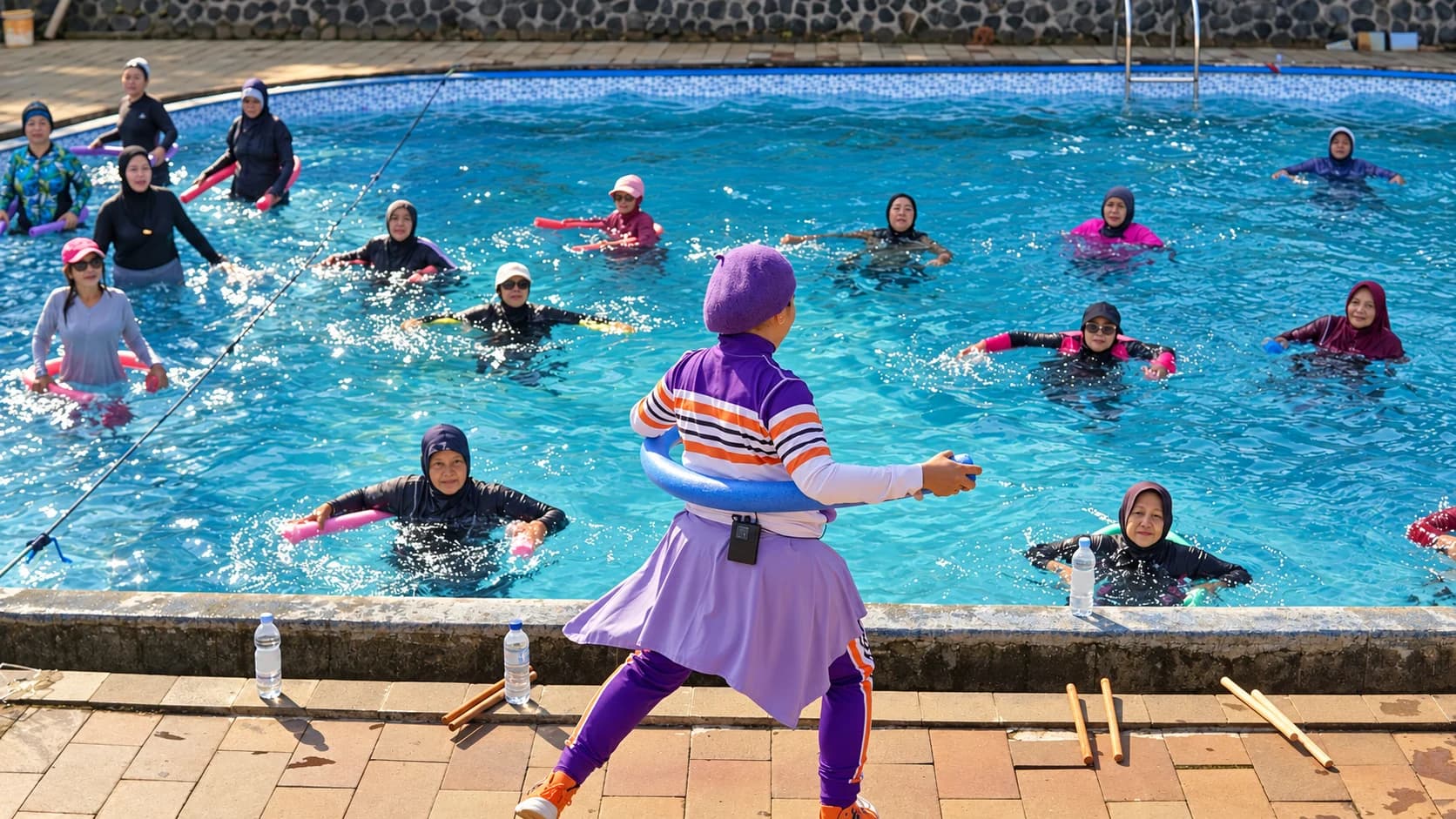
Aquatic resistance can come from movement through the water or from working against buoyancy. A stretched band supplies tension along its line of pull. To compare water resistance with resistance bands, identify those forces before trying to match exercises.
Aquatic vs elastic resistance: separate the mechanisms
OpenStax explains fluid drag and buoyancy as different forces. Elastic equipment introduces another resistance mechanism, as our band-force guide explains.
| Mechanism | Direction to consider | Relevant variables |
|---|---|---|
| Fluid drag | Opposes movement relative to the water. | Relative speed, shape and the area presented to the flow. |
| Buoyancy | Acts upward. | The water displaced by the immersed object. |
| Elastic pull | Follows the stretched band's line of pull. | The particular band and its extension. |
The practical distinction is the source of the force. An aquatic tool and a band can look equally simple while involving different relationships between movement, direction and resistance.

Drag depends on movement relative to the water
For the same object under comparable conditions, relative speed matters to drag. Its shape and the area facing the flow matter too. A broad surface and an edge-on surface are therefore different descriptions of the equipment's interaction with water.
This is a qualitative explanation, rather than an instruction to move at a particular speed. A pool is also not necessarily still: movement relative to the surrounding water is the relevant distinction. A water-resistance product needs more explanation than its dry weight or the fact that it has a handle.
Drag and buoyancy in exercise are different forces
Buoyancy does not require an object to keep moving through the water. It is an upward resultant associated with displaced water. An object that is floating, held in place or sinking can still experience buoyancy; its visible motion does not identify that force by itself.
Consider the distinction as a thought experiment, rather than a drill. If relative movement through otherwise still water stops, the drag generated by that movement can fade. Buoyancy can remain.
Direction also matters to the interpretation. Moving through the water and working against an upward force are different descriptions, even when they involve the same piece of foam equipment. A product's light weight in air is not a direct reading of either its upward force in water or the demand of a particular exercise.
Read three separate force arrows
| Schematic situation | Force arrow described | What is not shown |
|---|---|---|
| An immersed object, stationary | Buoyancy ↑ upward | Not the net force or proof that the object will rise |
| Object moving → relative to water | Drag ← opposite that relative motion | Not a complete force balance; the water may also be moving |
| A stretched band between contacts | Tension along the band toward its other contact | Not a constant kilogram load through a whole exercise |
Use the water-exercise equipment guide for each tool’s intended role and teaching needs.
Read the equipment description with the mechanism in mind
An Aquatic Exercise Association handout compiled by June M. Chewning identifies variables including surface area, buoyancy, equipment type and movement velocity. It also discusses equipment position and lever arms. It is a professional educational handout, rather than a test of the products below.
These distinctions make a product description more useful. Look for whether the item presents an area to the water, is buoyant or supplies elastic tension. A shape described as a dumbbell does not tell you that it behaves like a dense weight in air. A label such as “water resistance” also leaves the particular mechanism unexplained.
When someone describes a movement as more demanding, ask what changed: the tool, its orientation, its interaction with the water or another aspect of the task. Naming that change is more informative than trying to assign a band-equivalent kilogram value to the whole experience.
A water-exercise pair and a separate loop-band set
The PBGGAME square-grooved foam aquatic dumbbell pair contains two blue water-exercise implements with broad foam ends and central grips. The selected Blue pair was listed at $15.99 when this article was prepared. Its foam shape and intended water-exercise context are the useful details here, rather than treating its light dry package as a training-load measurement.
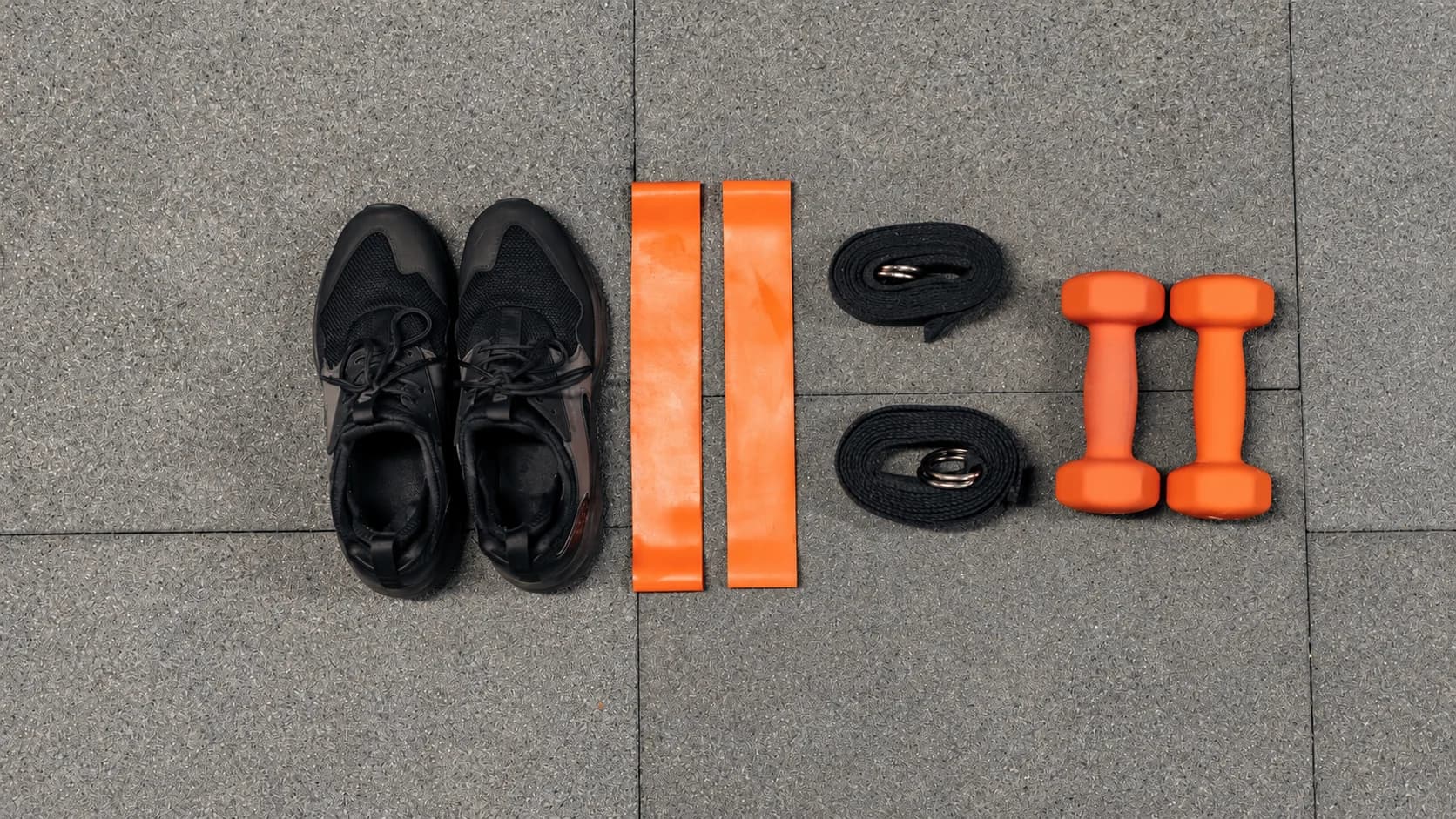
The PBGGAME five-piece mini-loop band set contains five short, flat closed loops. The selected set was listed at $10.99. It is an elastic equipment format for an appropriately selected band task, rather than a buoyant water-exercise tool.
Read each listing and its supplied instructions for the intended use. These are separate equipment choices, not a matched pair of loads for the same exercise. To compare two tasks meaningfully, identify the force source and the way the equipment is being used before comparing how they feel.