Under-Desk Pedal Exercisers: Fit Short Sessions Around Seated Work
Check chair stability, pedal reach and knee clearance before adding light seated movement to desk work. Start with an easy fit trial and choose a clear session purpose.
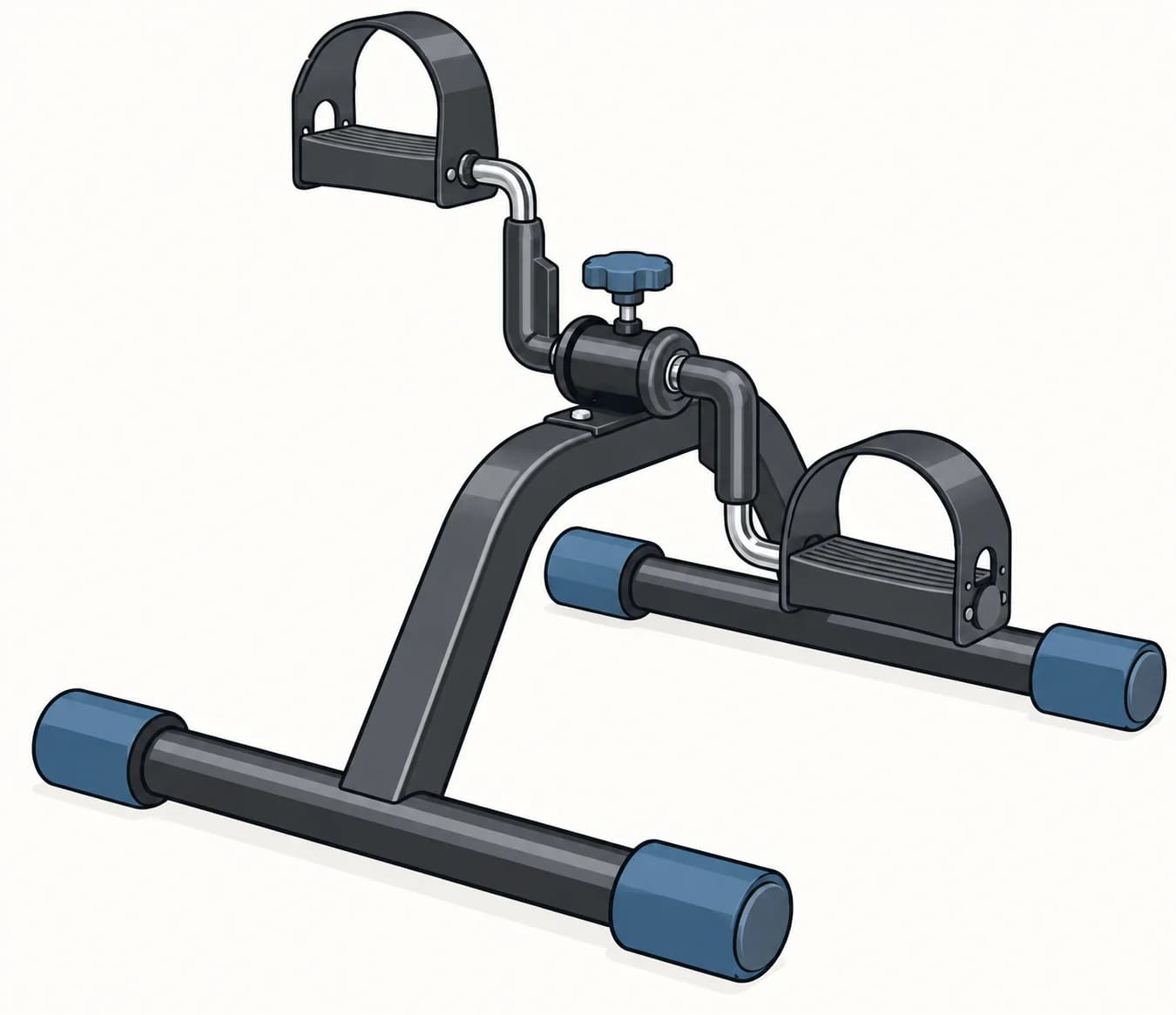
Under-desk pedaling can add light movement to a period of seated work. First make the chair, desk and pedal device work together. A smooth pedal turn, comfortable reach and space for the knees matter more than how long you can keep a timer running.
Begin by learning the equipment without a work task. Once the setup stays in place and you can pedal gently, decide whether it fits a simple part of your working day or belongs in a separate activity break.
Choose a pedal device for the intended use
The fixed-frame manual pedal exerciser supplies a compact iron frame, two strapped pedals and a tension knob. This model is for light seated movement. Choose it for that role and follow its own assembly and use instructions.
A pedal-only device works with your existing seat, so the complete setup includes the chair and its position relative to the desk. A small frame can still put a knee close to the underside of a table during a full rotation. Check the actual arrangement before adding a work task.
Fit comes first for an under-desk pedal-exerciser workout
The official DeskCycle guide offers useful model-specific fitting examples: the chair and device stay put, the upper body remains quiet, and chair height or cycle distance can be adjusted when the knees meet the desk. Apply the same fit questions using your actual device's instructions.
- Choose a chair that stays in place while you pedal. Use any applicable wheel brakes or approved chair arrangement described for the equipment.
- Put the pedal unit on its permitted surface in front of the chair, with both feet able to reach the pedals comfortably.
- Arrange the foot straps according to the device instructions, then make a gentle full turn before starting work.
- Check the knees, thighs and shoes through that full turn. They need space beneath and around the desk.
- Adjust the approved chair height or device distance while keeping the feet within comfortable reach and the upper body upright.
- Recheck that the chair and unit stay in place and that you can use the desk without hunching or stretching forward.
If the knees still meet the desk or the chair moves, change the setup before continuing. You can use the device away from the desk when that provides a suitable seated arrangement. Make the fit decision before trying to pedal while typing or reading.
Check the complete pedal circle in your actual space
| Part of the arrangement | What to observe with the exact model | Your record |
|---|---|---|
| Chair and feet | Seat and chair feet stay in their intended position | _____ |
| Pedals | The full rotation clears the floor and surrounding objects | _____ |
| Knee path and desk underside | Check the whole circle, not one still pedal position | _____ |
| Upper-body reach | The chosen easy work task does not change the arrangement | _____ |
Start a simple seated pedaling routine
DeskCycle begins familiarisation at its own lowest resistance. For your equipment, use an easy starting adjustment permitted by its instructions; a numbered setting on another model is not a conversion for this tension knob.
Begin gently, keeping the upper body quiet as the pedals turn. The DeskCycle coaching cue is to press down rather than push the cycle away from you. Observe the actual chair and frame while learning the motion, and pause to correct movement of either part.
For a practical finish, slow the pedaling under control until the pedals are at rest, then remove the feet according to the device's instructions. Stay seated while using this pedal exerciser.
A possible first fit trial is about one to three easy minutes without working, shortened whenever needed. Stop and check the chair, device position and knee clearance. This is a learning example, so finishing sooner can still complete the purpose.
If that trial is comfortable and controlled, try a short period alongside a simple familiar work task. Notice whether you can keep the same easy movement and use the desk normally. Stop to reassess if the task makes you alter your posture, lose pedal control or let the chair drift.
Give a desk-cycle exercise session a clear purpose
Light movement during seated work and a dedicated cardio session have different purposes. For light desk movement, choose an easy pedal action that fits the work and the equipment's intended use. You can stop, change tasks or take an ordinary break without trying to complete a workout quota.
For context, the CDC intensity guide describes moderate activity as about 5 or 6 out of 10, generally allowing conversation but not singing. Gentle pedaling during work may be below that level. The light-use device featured here should stay within its intended role rather than be adjusted upward to chase that reference.
If you want a dedicated session at a chosen training intensity, plan that separately with an activity and equipment suited to it. Keep your usual changes of posture and standing or walking breaks in the workday too. Seated pedal movement is one option within that day.
Keep the arrangement easy to repeat
- Choose a familiar work task for the initial trial, with room to pause and check the setup.
- Keep the same comfortable fit when adding another short period of light movement.
- Change one feature at a time, such as how long the trial lasts, instead of changing the seat, tension and work task together.
- Finish and clear the floor area before moving the chair or changing to another activity.
Your useful observation is whether the complete arrangement works: chair position, pedal reach, knee clearance, quiet upper-body movement and the task at the desk. Retain a shorter period when that is easier to organise consistently. If a different activity fits the day, the mini-stepper versus walking comparison considers access and session purpose.