Pilates Ring Exercises for Beginners: Controlled Pressure and Practical Setup
Learn comfortable ring-pad placement, small pressure changes and deliberate release, then choose a short hand- or leg-contact practice.
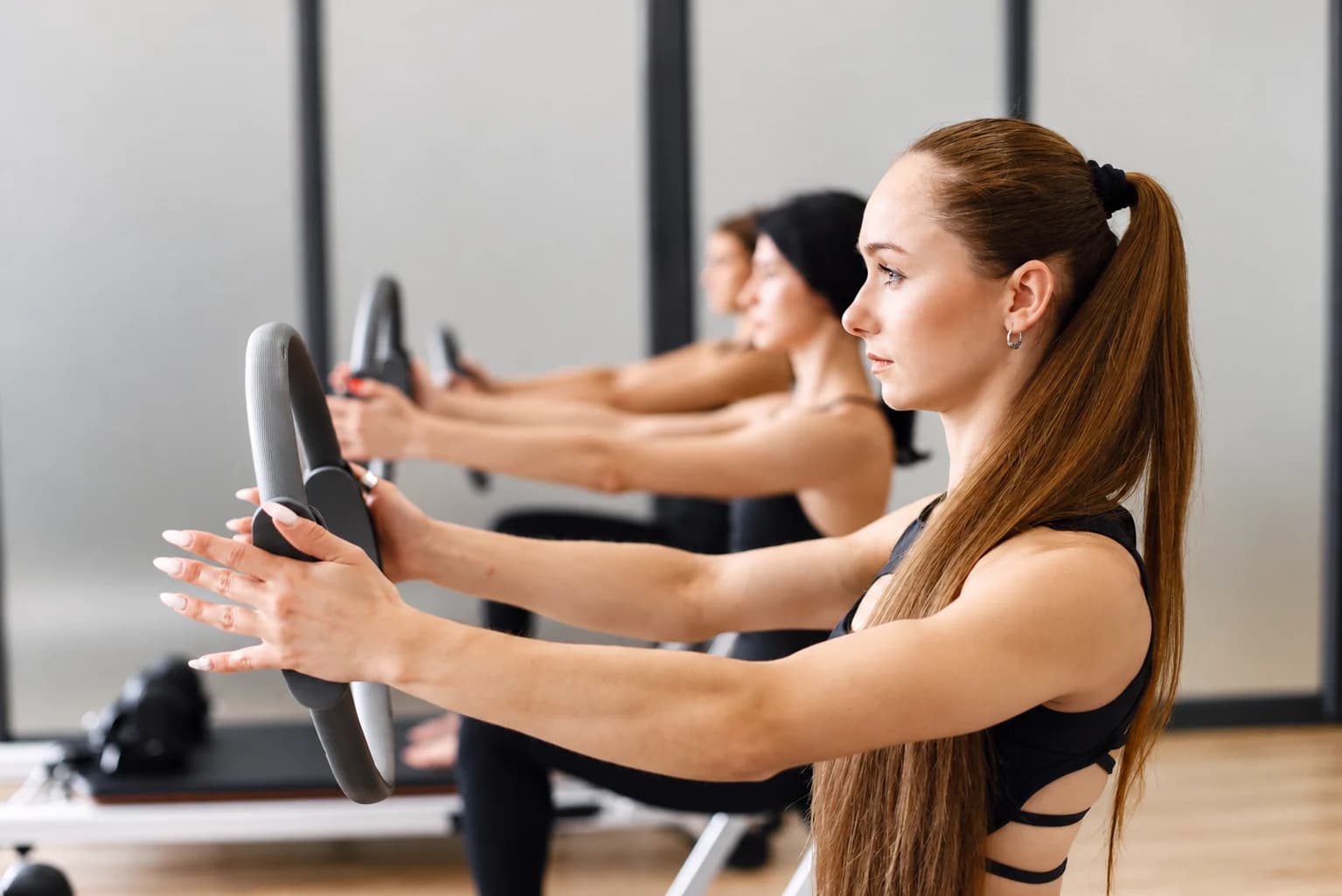
Use Pilates ring exercises for beginners to practise small, controlled changes in pressure. Place the pads first, make a gentle press, then ease off while keeping contact. Learning that release is more useful than trying to flatten the circle as far as possible.
A Pilates ring, also called a circle or magic circle, provides resistance between its contact pads. Size, construction and the position of the pads affect the setup. Begin with a placement that lets you sit or stand comfortably rather than forcing your body to match a photograph.
Identify both contacts and the release
| Merrithew version below | Contact path | Reduce pressure and return |
|---|---|---|
| Spine Stretch Forward | Lower pad on the mat; both hands on the upper pad, ring upright between the legs | Return toward sitting tall while easing the downward press; keep the ring settled |
| Standing Lat Press | One pad at the outside of the working thigh; that hand on the opposite pad | Return to centre and release before repositioning or changing sides |
Neither row places the ring between the knees. This is a text contact map for the cited exercise guide, not a product-pressure measurement. Three or four press-and-release cycles later in the article are an adjustable editorial practice example, not a requirement to flatten the ring.
Check the ring and the intended contact
Read the maker's instructions and inspect the whole hoop, pad surfaces and attachments. Leave a ring out of use if a pad is loose, the frame is damaged or its shape has changed unexpectedly. A covering can hide the underlying construction, so appearance alone is not a material or resistance rating.
| Check | What to look for |
|---|---|
| Pad position | The intended contact surfaces meet comfortably without an awkward reach. |
| Body position | You can remain supported without shrugging, twisting or forcing a joint angle. |
| Pressure | A small deliberate change is available without losing the placement. |
| Release | You can reduce the effort smoothly and keep the ring from springing away. |
A ring that works well between the hands may not fit another placement equally well. Diameter is only part of the choice: pad shape, usable opening and resistance also matter. Skip a placement that crowds the body or requires a stronger squeeze just to keep the circle in place.
For example, Merrithew's Fitness Circle Flex model details describe that model's own size, construction and padded contacts. Use the details for the ring you own rather than treating one model's specifications as a universal fit chart.
Practise the press and release before adding movement
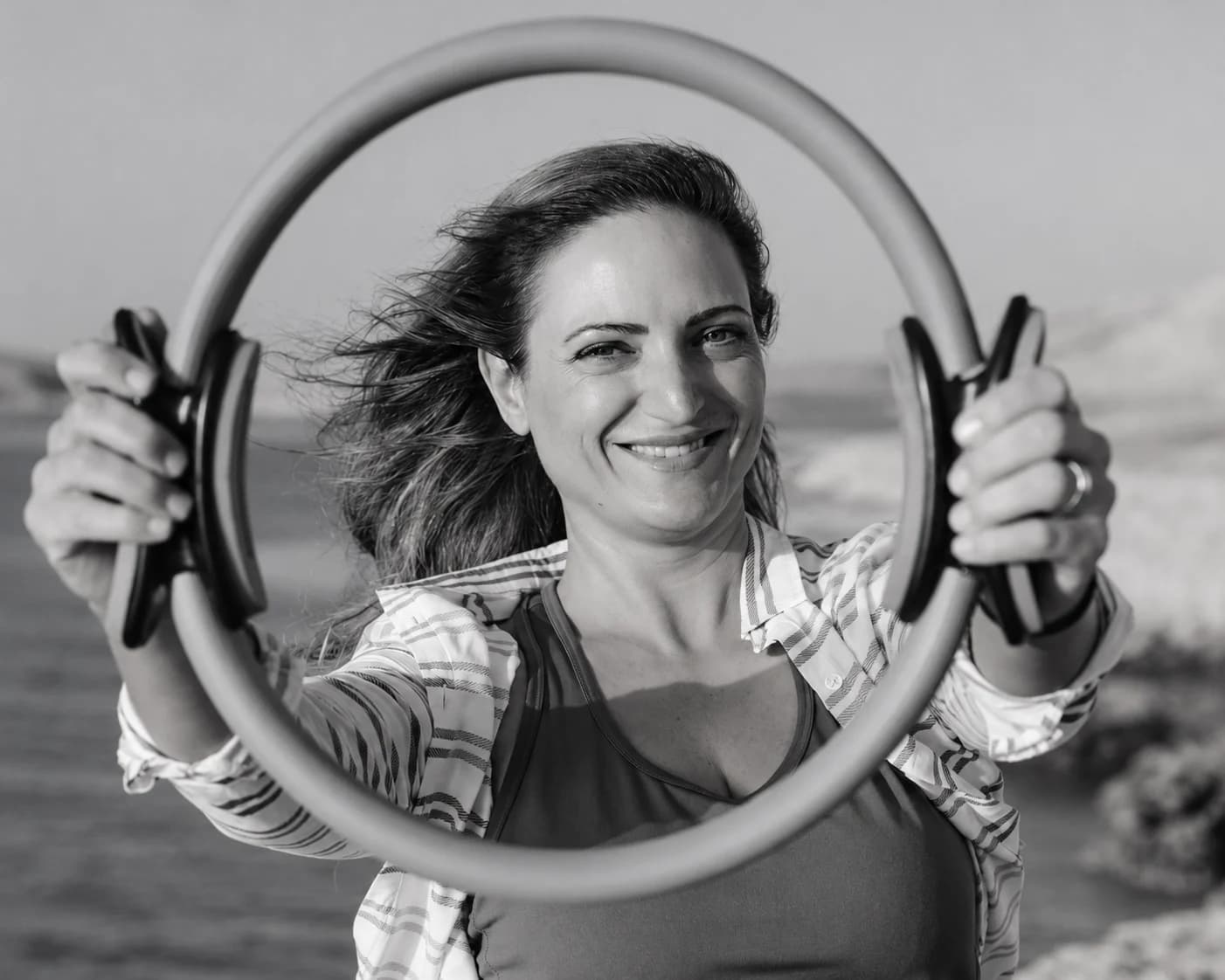
Begin with the ring unloaded and position the pads as the exercise instructions specify. Make the first press small enough that you can notice whether the circle stays centred and both contacts remain comfortable. Keep breathing rather than tightening the whole body to produce a larger visible bend.
Ease the pressure back gradually while maintaining contact. Let the ring return toward its unloaded shape before changing placement or putting it down. If you have to catch it, chase a sliding pad or suddenly clamp harder, stop and reset the position with the pressure removed.
The amount of visible deformation is not a calibrated strength score. Two rings can feel different, and changing elbow position or the distance between the contacts changes the task. Compare practice on the same ring in the same setup rather than treating a more oval shape as automatic progress.
Keep the ring away from the face and neck as you learn its response. Use the intended pads rather than balancing a bare rim against an uncomfortable area. Reduce pressure before moving the limbs; combining a placement change with a strong squeeze makes it harder to see why the ring shifted.
For the first trial, pay attention to three observations: the pads stayed where you put them, breathing remained easy and the release was deliberate. You do not need a long hold or rapid pulses to learn those details. A comfortable repeat of the same small press is a useful next attempt.
Magic circle exercises: start with simple placements
The Merrithew Fitness Circle exercise guide describes the two patterns below. They use different contacts and body positions. Practise one at a time, with small pressure changes and a controlled release rather than adding pulses or trying to close the ring fully.
Spine Stretch Forward: hands on the upper pad
- Sit on a suitable mat with the legs ahead and the ring upright between them. Arrange the lower pad on the mat and both hands on the upper pad.
- Sit tall; the knees may bend to make that starting position comfortable. Keep the shoulders away from the ears.
- Exhale as you curl forward through a comfortable range and gently press down on the upper pad. Keep the ring placed on the mat.
- Inhale as you return to sitting tall, bringing the head up last and easing off the pressure under control.
The press accompanies the forward curl; it is not a target to reach the toes or force the spine into a deeper bend. Shorten or omit the movement if you cannot keep the ring settled or return comfortably.
Standing Lat Press: one pad against the outside thigh
- Stand with the feet about hip-width apart. Place one pad against the outside of the working-side thigh and the hand of that side on the opposite pad.
- Keep the working arm long and the shoulders relaxed. Establish the contact before applying pressure.
- Exhale with a gentle press toward the thigh and a small upper-trunk turn toward the same side.
- Inhale to return to centre and release smoothly. Reposition only after removing pressure, then practise the other side if suitable.
This is outside-thigh contact, not a ring placed between the knees. Keep the attempt modest enough that you can remain steady. If the pads cannot meet comfortably in this setup, choose another suitable position rather than twisting or pressing harder to make the ring fit.
A Pilates circle beginner routine you can shorten
After some comfortable easy movement, choose one suitable placement and try a few slow press-and-release cycles, such as three or four. Remove pressure fully, pause and check the contact before deciding whether to repeat or try the second placement. These are practice examples, not a quota or a required hold time.
Use normal breathing and stop before the position changes or the release becomes abrupt. You can finish after one placement. Adding a bridge, curl-up or another whole-body movement is unnecessary while you are learning to keep the ring steady.
Record the ring, placement and controlled repetitions. Repeat a manageable setup before changing one feature, such as adding a repetition or trying another permitted position. Do not increase pressure, hold time and movement complexity together, or assume more compression means more useful work.
Reset the contact instead of squeezing harder
- If a pad slides, unload the ring and check its position, clothing contact and intended placement.
- If the body twists or the shoulders rise, reduce pressure and return to a more comfortable setup.
- If the ring recoils abruptly, shorten the attempt and practise a smoother release before repeating.
- If contact feels sharp, pinching or uncomfortable, stop and choose another suitable placement or omit the exercise.
Stop for pain, tingling, numbness, dizziness or an unexpected loss of control. Persistent symptoms or movement restrictions need individual guidance. A stronger sensation does not show that a particular muscle was isolated or that you have found the right pressure for everyone.
A ring-containing kit: check the actual offer
The PBGGAME Blue Pilates ring and accessory kit includes a ring with a source-listed diameter of about 11.8 inches, plus a mini ball, sliders, bands, straps and other accessories. It is a kit rather than a standalone-ring offer, and it does not include a mat. The ring is the tool used for the practice here; the other props are not required or interchangeable substitutes.
Check whether that ring's actual size, pads and resistance suit your intended placement. The photographs show other rings, and a nominal diameter does not establish personal fit. Use its own directions for care and storage, keeping the hoop and pads protected from damage.
Complete the seated setup with the PBGGAME Blue folding exercise mat. This separate floor accessory folds for storage and gives you a defined practice area. Unfold it flat and check that body and ring contacts remain controlled on your surface.