Parallettes for Beginners: Supports, Holds and Entry-Level Skills
Start floor-level parallette practice with feet-assisted support, controlled plank work and a learned return. Choose manageable tasks before unsupported skills.
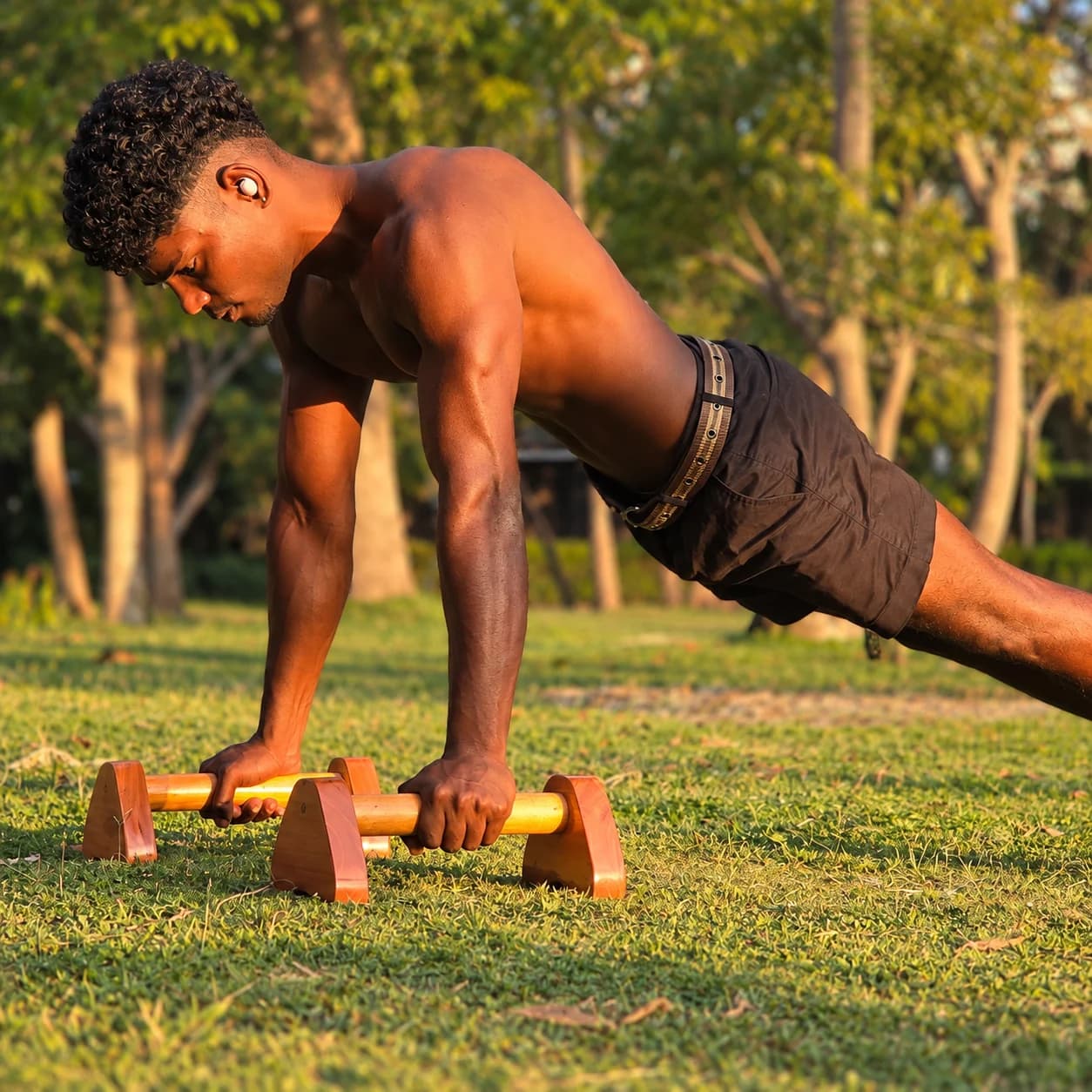
Parallettes exercises for beginners can keep the feet involved. You do not have to lift both legs, balance upside down or hold an L-sit to begin learning how to support yourself on a pair of floor bars. Start with deliberate hand contact, active support through the arms and a known way to finish.
This guide concerns independent floor-level parallettes. Full-height parallel bars and dip stations are different apparatus. Grip height, bar length, spacing and base design affect the position you can use; a small push-up handle is not automatically interchangeable with every longer or taller parallette.
Check permission and the return for each task
| Practice option | Before choosing it | If that information is missing |
|---|---|---|
| Feet-assisted support | Exact pair / height setting / permitted surface; a known return onto both feet | Get the model’s instructions and appropriate teaching before loading |
| Bar plank | The same equipment checks plus an already-learned entry and exit | Keep a suitable already-learned feet-supported task or obtain coaching; do not infer readiness from a hold |
| Small weight shift | A stable known plank and permitted bases for that movement | Keep the steady task; omit the new shift |
For PBG-459979, request the actual model instructions for your selected height configuration. Check the load limits, permitted surface and entry-and-exit arrangement, then choose a height that suits the activity you have learned.
Arrange the bars and the finish first
The Gymatics beginner parallette guide describes a flat, clear practice area for its ParaBars. Use your own model's permitted surface and assembly instructions rather than infer compatibility from a photograph of bars on grass, a mat or gym flooring.
- Identify the exact pair and check the intended height setting, assembly and fixings before loading it. Do not adjust a bar while supporting yourself on it.
- Check that both bases have their intended contact and remain steady. Resolve rocking, damaged parts or an uncertain floor arrangement before practice.
- Arrange enough clear room for your body and the return to grounded support. Keep loose equipment, children and pets outside that area.
- Choose a position and finish you understand. If you have not learned the transition for a task, keep the feet-assisted option or get suitable coaching first.
A grip can be portable without being suitable for every surface or movement. Choose a hand position you can maintain without pain, and confirm that the apparatus is intended for the activity. A product photograph of an advanced hold does not establish your starting task.
Feet-assisted parallette support hold
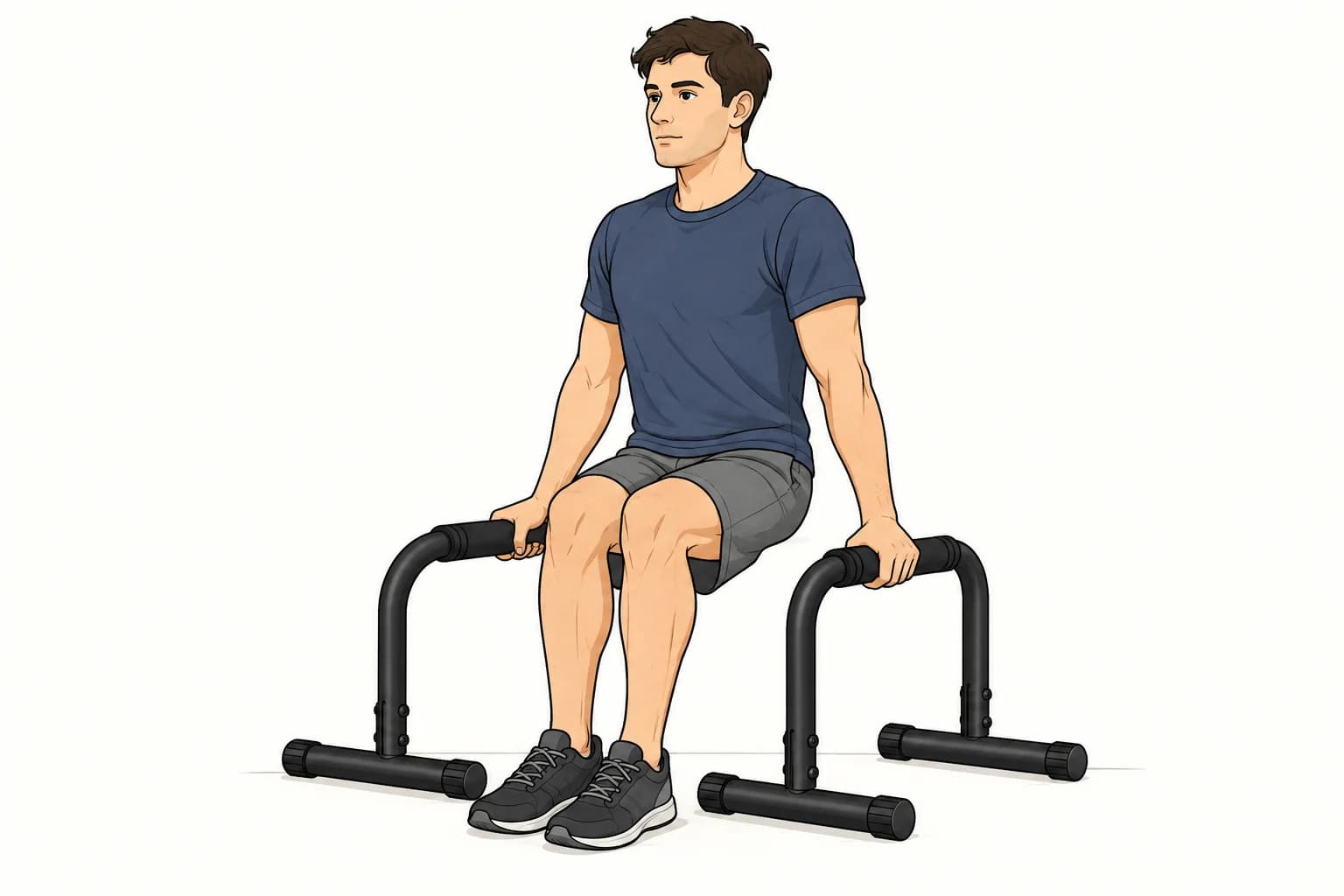
Gymatics describes a straight-arm support between the bars with the feet lightly supported and the shoulders active, without collapsing through them. This gives you a specific first task: press through the grips while retaining foot contact, instead of making a feet-off balance the goal.
- Use the learned setup between the bars, with both feet still supported on the floor. Take a secure grip before gradually placing more support through the hands.
- Keep the arms straight and press into the bars with active shoulders. Keep the effort manageable enough to maintain the position without sinking between the shoulders.
- For this practice version, keep the feet grounded throughout. Let them take the weight again and settle before ending the grip. Do not turn the finish into an unexpected drop from a feet-off hold.
Keeping the feet grounded through the finish is the practice adaptation used here. Keep the attempt brief enough to finish deliberately. There is no required hold time and no need to make the foot contact lighter before the setup feels repeatable.
A controlled plank on parallettes
Gymatics also describes taking the hands onto the bars and walking the feet back into a plank, with the trunk organised and no sagging. This is a different support direction from the upright feet-assisted hold. Use it only with a return to grounded support that you have already learned.
Establish both grips, then use the taught entry to move the feet back into the manageable plank position. Keep the shoulders active and the trunk steady instead of letting the hips drop. Hold only while the contact and position remain controlled, then use the learned return before relaxing the grip.
The source includes small weight shifts in plank work. Treat a small shift as an optional variation after the steady position is familiar, keeping the feet involved and the bars stationary. Stop adding movement if you start chasing the position, rocking a base or bending the arms unintentionally.
Do not invent a finishing sequence under fatigue. If the entry is clear but the return is not, learn that return before attempting the plank. Continuing with the feet-assisted support is a useful choice while you resolve the transition.
Beginner parallel-bar skills on low parallettes
Think of the first skills as organising support, keeping a position and returning deliberately. They are not miniature versions of every exercise performed on full-height parallel bars. A longer hold or a more dramatic leg position is not automatically the next useful step.
GMB's parallette preparation sequence includes a transition from its modified prayer position into upward dog and a return to prayer. That named sequence illustrates the value of a deliberate return as well as reaching a position. It is optional here: learn its positions and contacts before using that separate preparation sequence.
| Practice task | Notice this | Keep the next choice simple |
|---|---|---|
| Feet-assisted support | Secure grip, straight arms and active shoulders. | Repeat with the same foot support rather than lift the legs. |
| Bar plank | Steady trunk and bases, plus a manageable learned return. | Keep the steady hold before adding a small shift. |
| Optional small shift | Contact and position remain controlled throughout. | Reduce the movement or return to a steady position when quality changes. |
Plan a short parallette practice
Choose the feet-assisted support first, then the plank only if its entry and return are already clear. Make a brief attempt, settle and rest before deciding whether another would be useful. These are adjustable practice choices, without a mandatory time, repetition quota or readiness score.
Record the exact bars, setting, surface, task and whether the finish stayed deliberate. For example: “Same pair, feet-supported hold, no shoulder collapse, settled onto feet before release.” A comparable note helps you decide whether to repeat the task or seek help with the setup.
Stop for pain, tingling, numbness or unexpected loss of control, and seek appropriate individual guidance. Do not add a handstand, swing, dip or unsupported leg lift to test whether the session was successful.
One adjustable floor-bar pair
The PBGGAME height-adjustable metal parallettes supply two independent bars with foam-covered grips and foot sleeves. They are a parallette-type pair, rather than the small molded handles discussed in the push-up handle comparison.
Confirm the exact setting, assembly, permitted activity and surface with the maker. The source-listed heights and grip materials do not establish personal clearance, friction or a load rating. Choose the setting for a learned manageable task, without assuming a higher option is a progression or buying an extra mat as an automatic solution.