Loaded Carries in Small Spaces: Grip, Posture and Practical Routes
Choose a short carry route, distinguish one-hand and two-hand formats, and finish under control before resetting. Includes practical options when walking space is limited.
Loaded carries at home need a route and a finish as well as something to hold. Choose a load you can pick up, carry and return under control, then arrange the space around the actual shape of the implement. A short clear pass can be more practical than trying to keep walking through a tight turn.
Start with a familiar handling task and an endpoint chosen before you lift. The plan here is to complete deliberate carries in the space you have, rather than chase the longest distance or wait for your grip to give out.
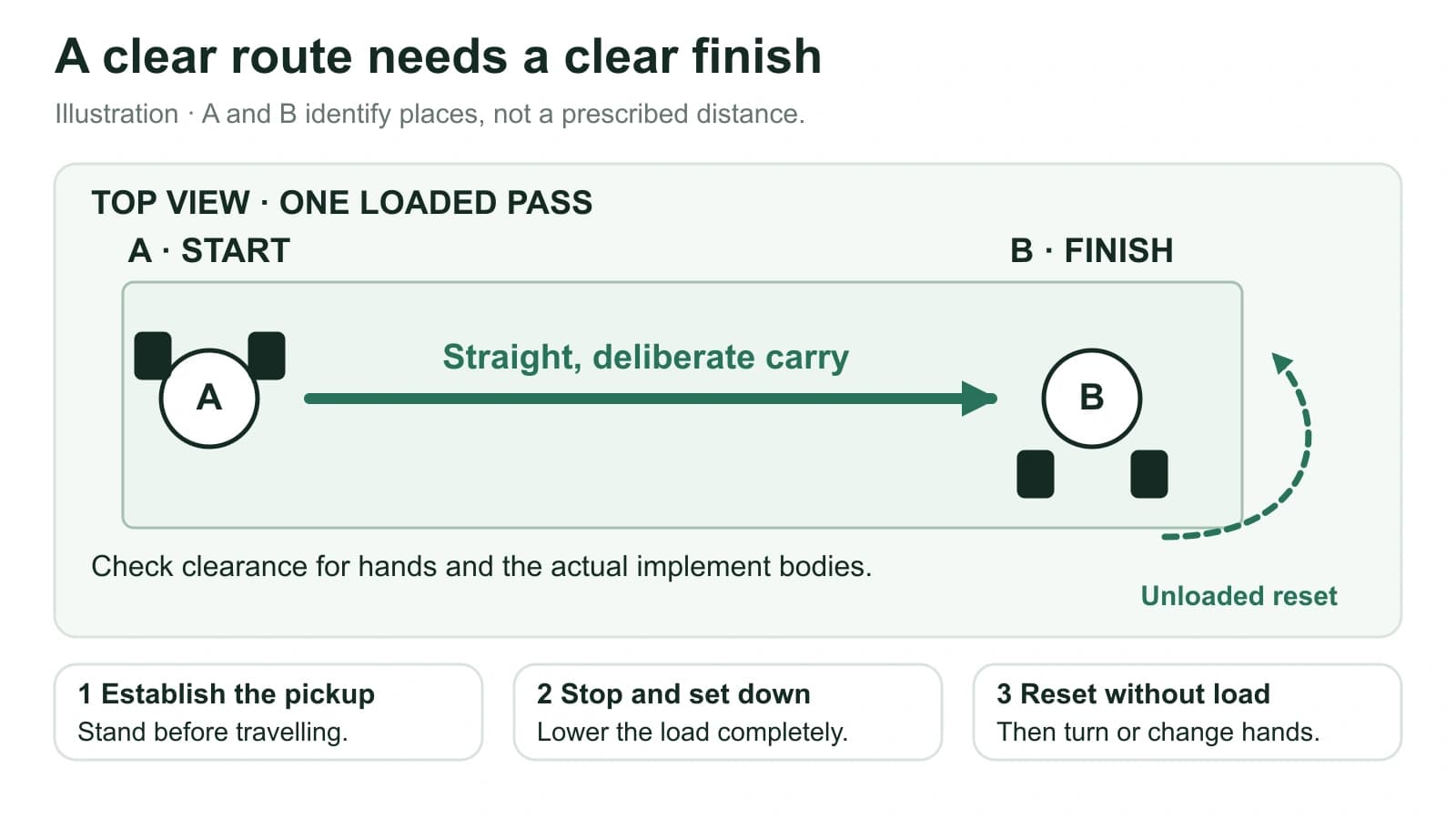
Map one straight pass and an unloaded reset
| Route point | Space to check | Action |
|---|---|---|
| A: start and pickup | Feet plus both hands and the actual implement bodies | Establish the familiar pickup and stand before travelling |
| A → B: straight lane | Hand and weight clearance beside the full route | Walk deliberately; no furniture contact or carried hand transfer |
| B: finish and set-down | Room for the learned controlled return | Stop and lower the load completely |
| Beyond the loaded pass | Unloaded room to reorient and arrange the other side | Turn or change hands only after setting down; treat the next pass as a new pickup |
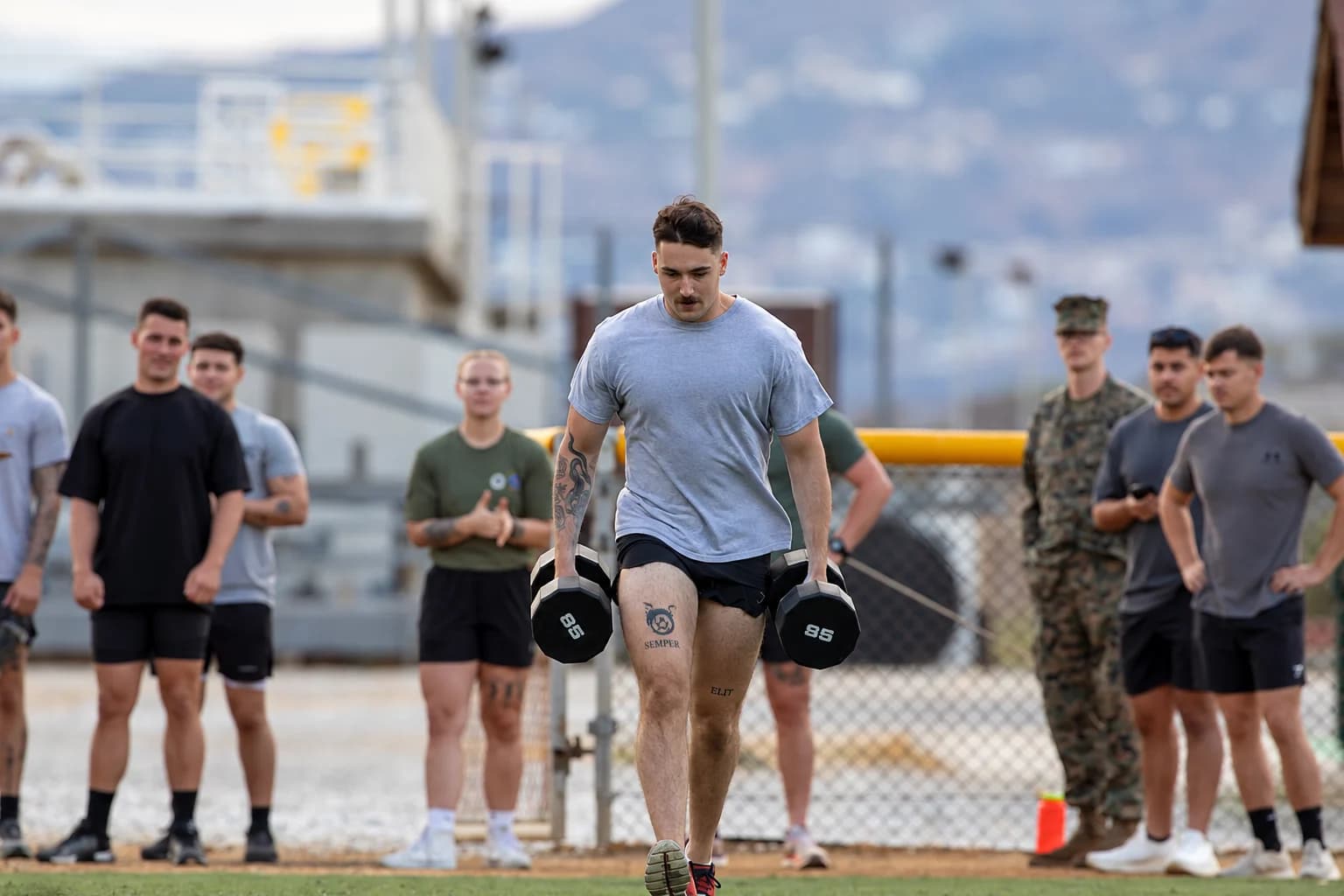
A and B label this layout rather than prescribe a distance. Check the actual tools; the 20 kg marking in the context photograph is not an introductory load recommendation.
Plan a farmer's walk at home
A farmer's carry uses an implement in each hand. The Peloton farmer's-carry guide starts between the two implements, with palms facing inward and arms long. Establish the standing position before beginning to walk; handling and walking are separate parts of the complete repetition.
During the carry, use a natural, steady gait and keep breathing. Maintain a tall position and keep the weights from resting against your body. The goal is a controlled walk with the selected implements, not a hurried attempt to reach the end before the grip changes.
The suitcase carry exercise uses one side
A suitcase carry holds one implement on one side. Shaun Kober's guide establishes a stable upright position, limits torso deviation and implement swing, and allows the free arm to help with balance. Choose this format when one-sided carrying is the intended task; it is a different arrangement from carrying two weights.
Kober also lowers the weight with good technique before turning around and repeating on the other side. That order is particularly useful when planning a small home route. Put the implement down and reset before changing direction or hands, rather than improvise a hand transfer while carrying.
Choose the lane, start spot and finish spot
The routes below are practical home adaptations of those coaching cues. The guides do not prescribe a minimum room length or turning radius. Assess the usable space with the actual implement, including its body and your hand clearance, and rehearse the route without a load first.
| Available space | A practical choice | How the attempt finishes |
|---|---|---|
| A short, clear straight lane | Walk one deliberate pass between known start and end spots. | Stop at the planned end and lower under control before resetting. |
| A lane that would require a tight turnaround | End the pass before the turn; change direction after setting down. | Reorient unloaded, then establish the next pickup and pass separately. |
| No walking lane, but an appropriate clear standing area | Consider the guide's marching-in-place option with familiar manageable implements. | Finish in the planned spot and lower under control. |
| No room for implement clearance or a controlled finish | Change the location or practise handling without a loaded walk. | Arrange usable space before adding the carry. |
Check the whole route, including doorways, furniture edges and the place where you will lower the load. A clear path for your feet is only part of the decision. If a weight would clip your leg, a wall or furniture, change the setup before beginning. Leave enough room to finish without an extra backward step into an obstacle.
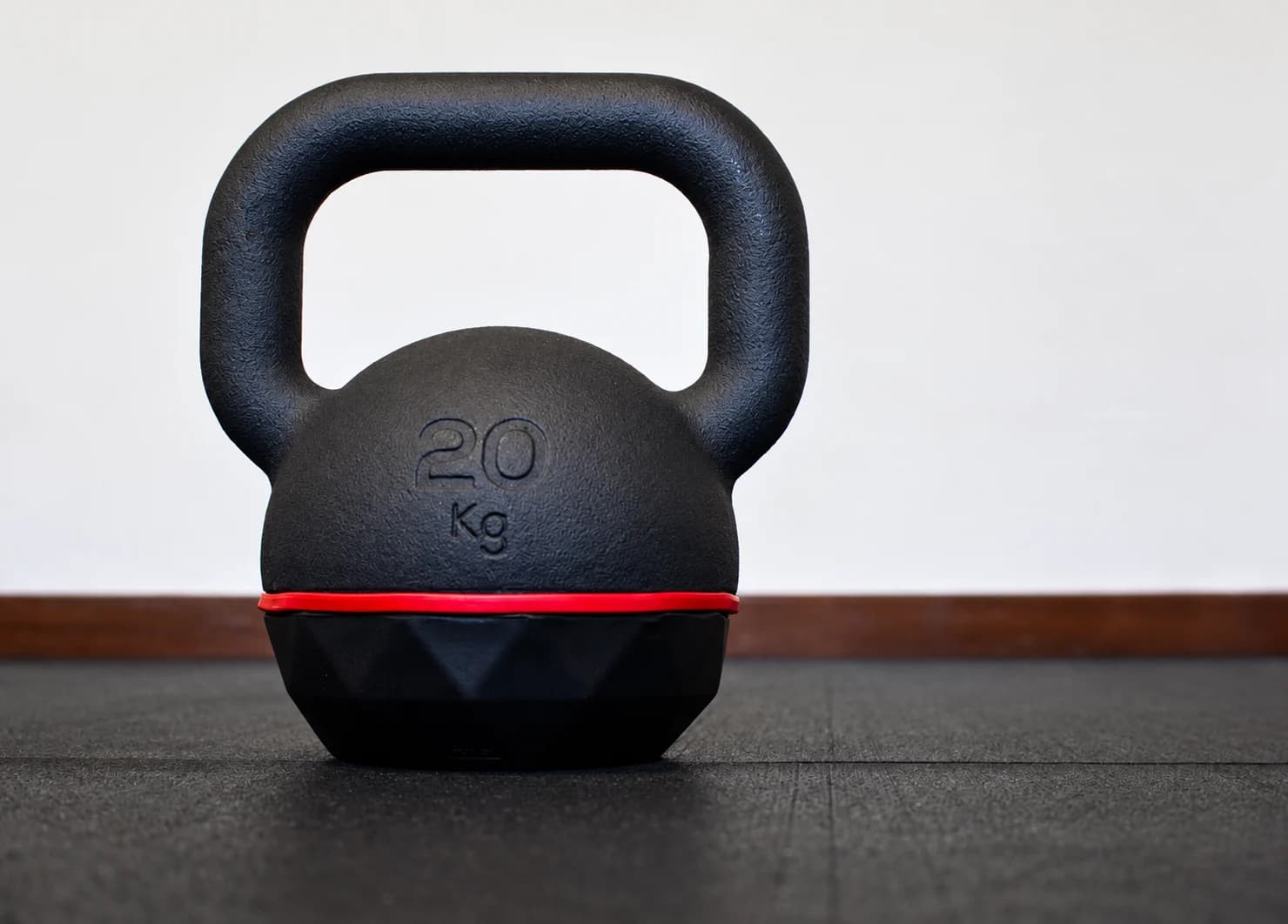
Complete one controlled carry from pickup to return
- Choose the one-hand or two-hand format and implements you can already handle. Use a pickup and set-down method you have learned; establish that handling before adding a walking route.
- Confirm the start spot, straight route and end spot. Rehearse the walk unloaded and remove anything that would interrupt the finish.
- Take the intended grip and stand fully before walking. For the two-hand version, begin between the implements with palms inward and arms long.
- Walk at a steady natural pace while breathing. Keep the selected position and avoid letting the implements swing or rest against your body.
- End at the planned spot while the steps and grip remain controlled. Lower using the learned reverse of the pickup; return both implements under control in the two-hand version.
- Once the weights are down, reset your direction and position. For another suitcase pass on the other side, arrange that hand and pickup as a new start.
This sequence combines the guides' carrying cues with the practical short-pass route. It supplies no emergency unloading method or tight loaded-turn technique. If the basic pickup, walking position or return is not yet manageable, simplify the handling task before extending the route.
A farmer carry in a small space needs a clear finish
Several short passes include several pickups and set-downs. Count that handling as part of the work instead of treating the unloaded resets as wasted time. There is no need to shorten the finish or rush the next pickup to make the session feel continuous.
If grip or walking control is becoming difficult, finish before it becomes an uncontrolled attempt. A planned endpoint should remain compatible with putting the implement down deliberately. Choose a more manageable load or shorter next pass when appropriate, rather than make the route longer simply because the previous pass ended.
For one-sided work, keep the side identifiable when planning and describing the attempt. The choice to repeat on the other side does not require a loaded turnaround or a transfer between hands. The source's lower-before-turn order keeps the finish and the new start separate.
When marching in place is the better space choice
Peloton explicitly offers marching in place when walking space is unavailable. This can remove the need for a travelling route, provided there is still room for your feet, the implements and a controlled return. Use the option as its own task, rather than assign it an equivalent number of walking metres.
You still need a manageable load and an established start and finish. Marching does not solve an obstructed standing area, an implement that hits your legs or a return you have not learned. Choose the space option that lets you carry deliberately, without adding a distance or duration target from this article.
A light pair can serve handling practice
The PBGGAME 1 kg dumbbell pair supplies two fixed implements at 1 kg each, or 2 kg together. You can choose one for a familiar one-sided task or both for a familiar two-hand task. For many people this will primarily be handling practice; it is not a universal strength-training load.
Select the implement by what you can control through the complete carry. If grip is the separate training priority, the grip-strength guide explains that broader task. Keep the chosen route and controlled finish appropriate to the implement you actually use.