Heart Rate vs the Talk Test: Interpret Exercise Intensity
Use the talk test to check aerobic effort, then interpret heart rate in context. Learn practical next steps when speech cues and a reading seem to disagree.

The talk test uses speech and breathing to help you judge effort during aerobic activity. Begin with familiar movement, say an ordinary sentence and notice how easily you can keep talking. A heart-rate reading can add information when you know how its target was set.
If a number and your breathing seem to disagree, ease towards the effort you intended and check the context before making the session harder. Start with familiar steady movement, such as walking or cycling, so you can notice effort without also learning a new exercise.
Try a short speech check while you move
To try the test, ask how much speech fits comfortably between breaths. Try this sequence during a familiar aerobic activity.
- Begin at an easy pace and let the movement settle into a rhythm you can maintain.
- Say an ordinary sentence aloud. Notice whether you can keep talking or need to interrupt it for breaths.
- Use the CDC’s rule of thumb: moderate effort allows talking but not singing; vigorous effort allows only a few words before taking a breath.
- Choose your next action from the session purpose. If you intended moderate work but can manage only a few words, reduce the pace or take a break before continuing.
The CDC’s intensity guide describes effort relative to your fitness. An activity that feels moderate to one person may demand more from another. Use the speech check to interpret the effort you are experiencing now.
Heart rate vs talk test: give the number a context
| Same check-in record | Observation |
|---|---|
| Activity / intended effort | ____ |
| Speech cue during that activity | ____ |
| Heart rate and method | ____ bpm; device ____ or paused wrist count ____ |
| When the reading was taken | During movement / after stopping; delay ____ |
| Target model or individual instruction | ____ |
| Adjustment and later review question | ____ |
| When the two observations disagree | Immediate planning path | Review later |
|---|---|---|
| Speech broken while display is below the target | Ease the work or pause → regain the intended manageable effort | Record timing/method and recheck target context |
| Conversation comfortable while a number looks high | Ease the pace → identify what the target refers to | Check the model/settings and individual guidance |
The talk test describes effort; it is not a symptom assessment or an exercise-clearance test. Concerning symptoms and individual restrictions need appropriate care and guidance regardless of the displayed zone.
The talk test gives a practical description of speech and breathing during activity. A heart-rate reading gives a number in beats per minute. To use that number as a target, you need to know how the target was set and whether it is appropriate for you.
The American Heart Association’s target-heart-rate guide describes its age-based figures as averages and general guides. An average is a starting reference, rather than an individual measurement of your exercise limits. Read the explanation behind a plan or device’s target band before using it to control pace.
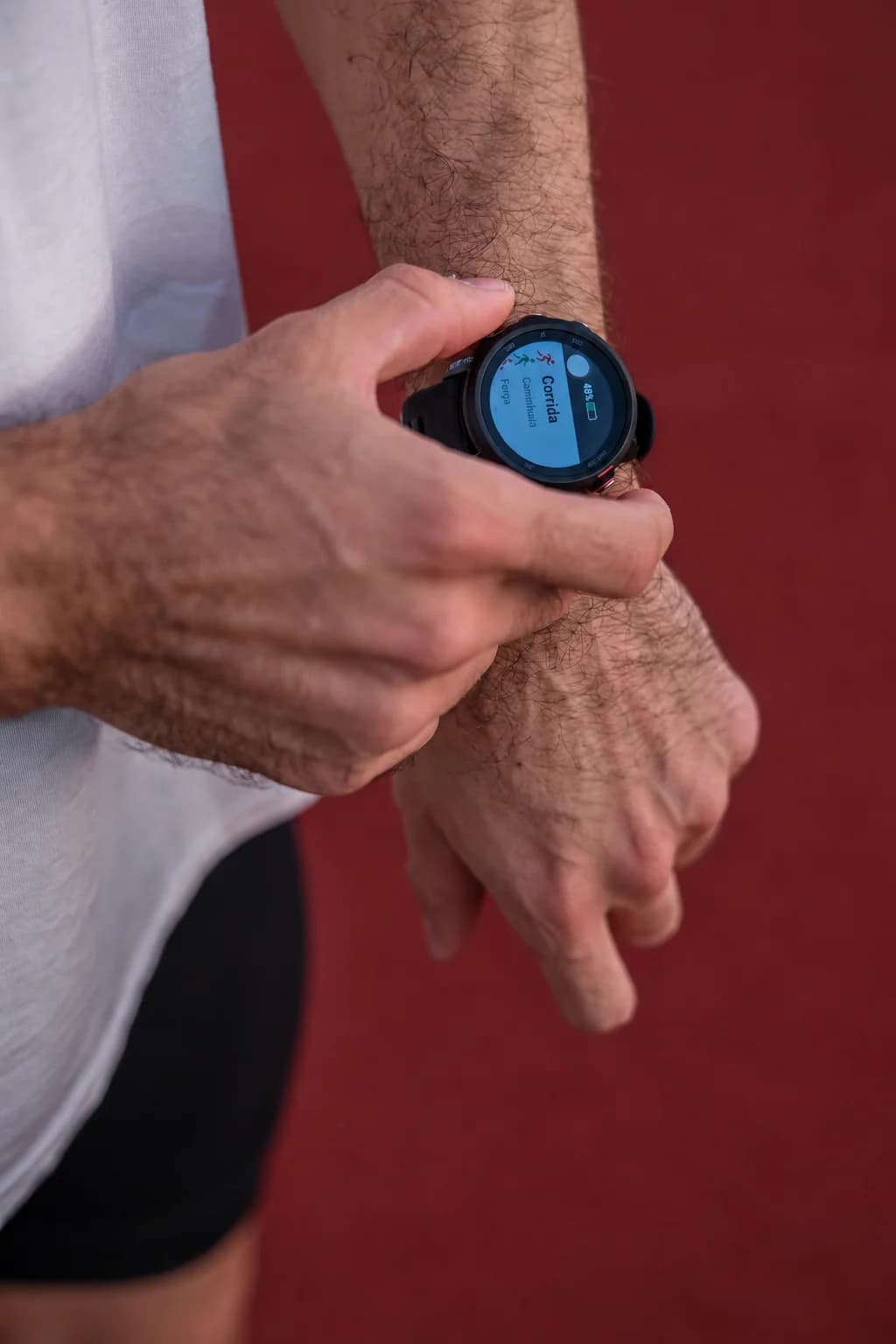
Heart rate training limitations to check before using a target
Medication is one relevant part of that context. The AHA notes that some medications can affect maximum heart rate and target zones. If that applies to you, ask your treating professional which heart-rate guidance to use for exercise. A generic target chart cannot supply that individual instruction.
Also keep track of how you obtained the reading. A device display during movement and a manual count after stopping are different check conditions. Note the activity and when you took the reading so the next observation is easier to compare with it.
For a simple personal record, write down the activity, your speech cue and the optional heart-rate reading from the same check-in. Add the target model you used if you were following a band. That gives the number a setting and makes it easier to explain what happened.
If speech is broken before the display reaches your target
Imagine you planned a moderate walk, but you can speak only a few words at a time while the display still looks below the target band. The CDC speech cue describes vigorous effort. Bring the pace down or pause to recover, then revisit the target and check method. Let your intended effort guide that immediate choice.
Once the movement feels manageable again, decide whether to continue more easily or finish. You can review the target information afterwards with a note of what you observed. There is no need to make that review while trying to hold a demanding pace.
If conversation is comfortable but the number looks high
Ease the pace while you check what “high” refers to: a band in a particular app, an average chart or guidance set specifically for you. Read the relevant target explanation and confirm the check conditions. Keep the session within the effort you planned while you sort out those details.
A mismatch is useful information to record. Note the actual speech cue and reading without deciding from that pair alone why they differ. If you have individual exercise instructions, use those when resolving a target question.
For a manual pulse check, stop somewhere safe first
The AHA also explains how to count your pulse at the wrist. Use a safe pause away from moving equipment or traffic, then follow its method:
- Find the pulse on the inside of your wrist, on the thumb side.
- Use the fingertips of your first two fingers, excluding the thumb, and press lightly.
- Count for 30 seconds, then multiply by two to express the reading in beats per minute.
Record that this was a paused wrist count. Keep that method and timing clear if you compare it with a later check. It is another way to gather a heart-rate observation, without assigning a personal target from the number alone.
Choose an activity you already know
Walking or marching on a clear floor is enough for practising the speech check. If skipping is already familiar, the optional black PVC rope with contoured handles is another aerobic activity choice. This listed 10-foot version is one rope with two attached molded handles; check that its length and your exercise space suit you before use.
Keep attention on comfortable movement and your chosen effort cues. For a first attempt at using the talk test, choose the familiar activity that lets you speak and notice breathing without losing the movement pattern.
Make the next check easy to repeat
On your next aerobic session, choose a point after you have settled into the activity, check speech and record an optional heart-rate reading with its context. If you change pace, allow yourself to settle before checking again. A few clear observations are easier to use than a stream of numbers without an activity or effort attached.
Once you have chosen the intended effort, Zone 2 vs HIIT: Match Intensity to the Session Purpose explains how a steadier session and a hard work-and-recovery format can serve different plans. Keep the effort cue and the session structure clear as you choose what to do next.