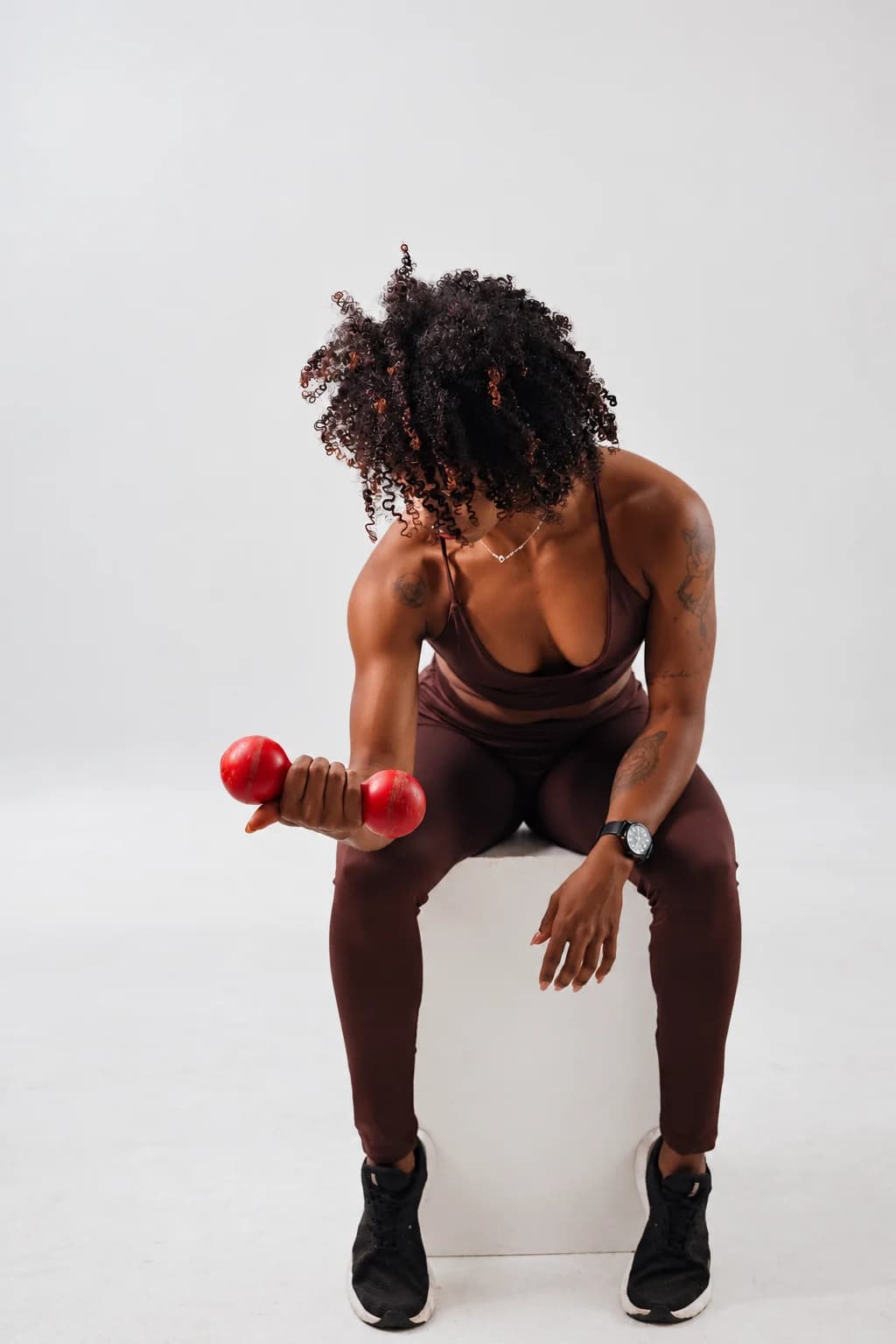
Forearm Exercises at Home: Flexion, Extension and Rotation
Practise supported wrist flexion, wrist extension and unloaded forearm rotation, then adjust the load and amount of work for each action.

Forearm exercises at home can be simple: support the arm, practise a small wrist bend in each direction, then turn the forearm without moving the whole shoulder. These actions give you something different from repeatedly squeezing a gripper.
Begin without a weight so you can identify the movement. Add resistance only when you can hold it securely and move comfortably. A weight described as light can still be too much for a wrist exercise, even if it feels easy during a larger arm movement.
Flexion, extension and rotation: what should move?
| Action and starting orientation | Controlled path | What stays identifiable |
|---|---|---|
| Flexion: supported palm-up forearm | Hand roughly in line → palm-side bend → return | Forearm remains supported; hand clears the edge |
| Extension: supported palm-down forearm | Comfortable start → lift back of hand → controlled return | Forearm does not lift to substitute for the wrist |
| Rotation: thumb-up, elbow beside body | Palm-up turn → through start → palm-down turn → thumb-up | Wrist relatively straight; shoulder/trunk do not turn the whole arm |
| Source / example boundary | How to use it |
|---|---|
| AAOS therapeutic handout and Bath NHS leaflet | Movement illustrations and clinical context; their treatment stages and schedules remain with the source |
| This article’s 4–6 repetitions and optional round | An adjustable editorial practice example, not the clinical source dose |
| The nominal 1 kg pair | Only an optional manageable load for an appropriate action; not required for rotation or everyone |
Flexion and extension bend the hand at the wrist. Forearm rotation turns the palm while the wrist stays relatively straight. Keeping those actions distinct makes it easier to notice when an elbow lift or shoulder turn is taking over.
| Action | Starting orientation | Movement to practise |
|---|---|---|
| Wrist flexion | Supported forearm, palm facing up. | Bend the hand toward the palm side; return slowly. |
| Wrist extension | Supported forearm, palm facing down. | Lift the back of the hand; return slowly. |
| Forearm rotation | Elbow bent, upper arm quiet. | Turn the palm up and down without swinging the arm. |
The AAOS wrist-and-elbow exercise handout illustrates supported wrist bending, forearm rotation and deliberate lowering. It is a clinical program: the movement cues help explain the actions here, while its treatment stages, daily schedule and weight ladder are not a general home-training prescription.
Set up a supported position first
Sit comfortably beside a stable table or other suitable support, with the elbow bent about a right angle. Rest the working forearm so you do not have to hold the whole arm up. For wrist bends, let the hand extend just beyond the edge while the forearm stays supported. Avoid a sharp edge pressing into the arm; adjust the position before starting.
Open and close the unloaded hand comfortably, then rehearse each planned action. Use a smaller range if the movement becomes jerky or the forearm lifts. With a weight, keep a secure closed grip rather than letting the handle roll toward the fingertips. Put it down on a stable surface before turning the palm or changing your support, using the free hand if needed.
Wrist flexion: a palm-up bend
- Place the forearm palm-up on the support, with the hand free to move beyond the edge.
- Begin with the hand roughly in line with the forearm. Slowly bend the palm toward the forearm through a comfortable range.
- Return deliberately toward the starting position without dropping the hand or bouncing at the bottom.
- Pause and check that the forearm has stayed on its support before the next repetition.
Once that motion is clear, you can try a suitable small dumbbell if it remains easy to control. You do not need to lower into the deepest possible wrist position. If you curl the elbow, lean the trunk or tighten the shoulder to move the weight, reduce the load or return to unloaded practice.
Wrist extension exercises: keep the palm facing down
- Turn the supported forearm palm-down and let the hand move freely just beyond the edge.
- From a comfortable starting position, slowly lift the back of the hand while keeping the forearm down.
- Lower the hand under control and stop before you lose the smooth path.
- Repeat only while the hand stays aligned with the forearm rather than drifting sideways.
Use a separate load decision for this action. Being able to perform a palm-up curl does not establish the right weight for palm-down work. If the hand cannot rise without the whole forearm lifting, remove the weight and check the movement again. More range is not useful when it comes from another body part.
Forearm rotation exercises: turn the palm, not the shoulder
- Keep the elbow bent comfortably beside the body and the forearm supported, with clearance for the hand to turn. Begin unloaded, with the thumb pointing upward.
- Turn the forearm so the palm faces upward as far as feels comfortable.
- Return through the starting position, turn toward palm-down without forcing the endpoint, then return to thumb-up again.
- Keep the wrist relatively straight. Reset if the elbow swings away or the torso turns with the hand.
The Bath NHS wrist-exercise handout describes gentle unweighted rotation with the elbow beside the body and the wrist straight. A short smooth turn is enough to learn the distinction. Bending the wrist sideways is another action, and sweeping a large circle with the whole arm does not reproduce forearm rotation. Compare the two sides without forcing them to look identical.
Keep this first rotation drill unloaded. A hammer or a dumbbell held near one end changes leverage; a small object can then become a demanding turning load. Do not improvise that progression just because a general forearm workout shows a weighted implement.
Build a brief session around movement quality
Try one easy round: a few unloaded rehearsals, then four to six controlled repetitions of each action on each side. Rest between actions until you can repeat the setup comfortably. A second round is optional if the same control remains. Use these as practice examples, not a rehabilitation dose or a target to finish through discomfort.
Begin with one or two separated opportunities in the week and account for other demanding hand work. Rows, carries, gripping tools and sport practice may already contribute considerable forearm work. You do not need to add a set every time you pass the dumbbell.
Give each action its own decision. You might use a small weight for flexion, remain unloaded for extension and practise rotation without an implement. That is a workable session; matching all three actions to one load is unnecessary. Finish a set when the path or return becomes difficult to control.
Choose a load you can position and return
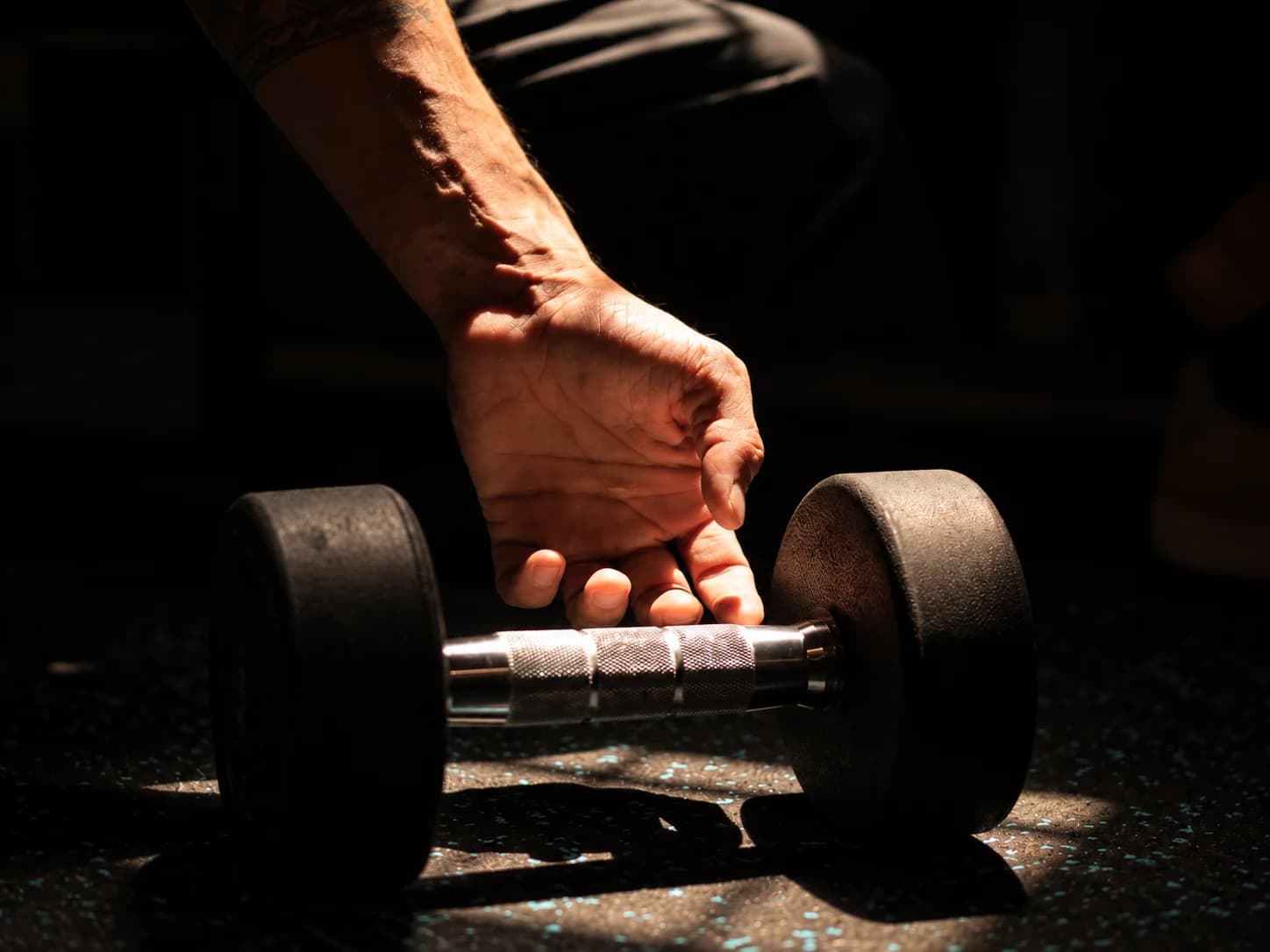
The PBGGAME light-green dumbbell pair, 1 kg each is an optional handle-held load for supported flexion or extension when manageable. One kilogram may be too demanding for either action. If so, remain unloaded or choose a genuinely lighter suitable weight; rotation does not need this pair. Check that the dumbbell can move without striking the table edge, and adjust the setup rather than forcing a wider wrist bend.
Keep progress specific to the action
Record the action, side, exact implement, repetitions and whether the forearm stayed supported. Repeat a manageable version before changing one feature, such as adding a repetition or trying an appropriate small load increase. Keep the movement smooth; do not add range, weight and extra rounds together.
Stop for pain, tingling, numbness, swelling or an unexpected change in control. Existing hand, wrist or elbow symptoms and medical restrictions need individual guidance. This general session is not a treatment plan for an elbow or wrist condition.
For separate squeezing, pinching and handle-holding tasks, use the grip training routine. Keep the goal clear: practise the action you want to develop, with a load and amount of work you can manage.