Foam Rolling Before or After a Workout: What Question Are You Answering?
Choose foam-rolling timing by the question: immediate range or performance, post-exercise soreness or measured recovery. Keep short-term effects distinct from lasting change.
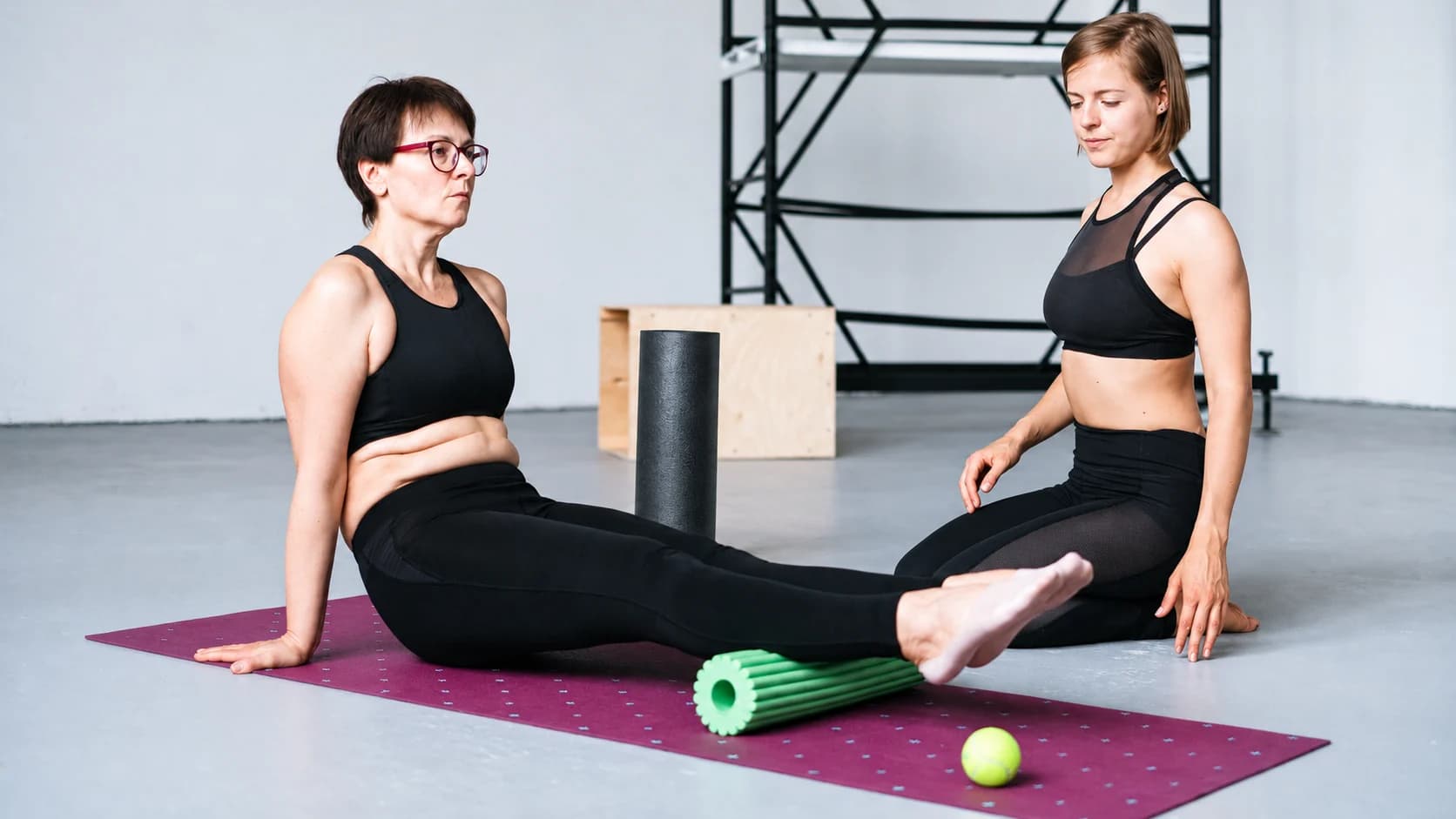
Foam rolling before or after a workout answers different questions. Before exercise, the question may be whether it changes immediate range of motion or performance. Afterwards, it may be whether perceived soreness or measured performance recovery changes. Those outcomes should not be treated as one promise that rolling makes every workout better.
Choose the outcome first, then consider the timing. A short-lived change in how movement feels is different from lasting adaptation or tissue repair.
Foam rolling timing: separate the outcomes
| Locate the 2019 review’s result | Population / comparison | What remains uncertain |
|---|---|---|
| Pre-rolling flexibility and performance | Healthy physically active participants; pre-rolling versus the included comparison conditions | A small acute range result is not a lasting flexibility programme |
| Post-rolling sensation | Reported soreness in the included studies | Perceived soreness is not tissue-repair evidence |
| Post-rolling performance | Sprint, strength and jump recovery are separate outcomes | Pooled non-significance is not proof of no effect or strict equivalence |
| Device, pressure and duration | Small heterogeneous studies, including cylinders and sticks | No universal optimum pressure, time or cadence follows |
Read the original 2019 meta-analysis with its pre-rolling and post-rolling analyses. The separate 2021 rolling-versus-stretching review has a different comparison; “no overall difference” between those methods is not the same as either beating no intervention.
A 2019 meta-analysis by Wiewelhove and colleagues examined studies in healthy, physically active people. Its findings distinguish preparation from recovery:
| Timing and question | What the pooled evidence showed |
|---|---|
| Before exercise: immediate flexibility | A small acute gain. |
| Before exercise: performance | A small sprint effect; strength and jump effects were negligible. |
| After exercise: perceived soreness | Lower reported muscle soreness. |
| After exercise: performance recovery | Pooled sprint and strength recovery effects were not statistically significant; jump effects were negligible. |
Perceived soreness, measured performance and tissue repair are different outcomes. A change in the first does not establish the other two.
Pre-workout foam rolling: the immediate question
Chris Kolba, a physical therapist at Ohio State Wexner Medical Center, describes rolling before exercise as preparation and emphasises that its effects are temporary. That supports a short-term question about the coming session, rather than a claim that one rolling session creates a lasting movement change.
Keep the planned activity in view and name the result you are interested in. That is more specific than adding rolling because an entire workout is expected to feel better afterwards.
Foam rolling and a complete warm-up are separate planning questions. The warm-up versus stretching guide addresses gradual preparation for the activity itself. Do not use a favourable result for one component as evidence that the whole opening of a workout has been covered.
After a workout: distinguish soreness from performance recovery
Kolba also describes post-exercise rolling as an optional approach to soreness or stiffness. That is a different purpose from preparing for an immediate effort. His emphasis on temporary effects keeps the claim separate from longer-term movement or strength work.
Be precise about what “worked” means in your own description. “I felt less sore afterwards” describes a sensation. “My tested performance had returned” describes another outcome. A study that measured the first cannot automatically answer the second, and neither statement establishes a treatment for an injury.
The timing decision therefore does not need a universal before-or-after winner. Match the question to the outcome the evidence actually addresses. There is no requirement to add both a pre-workout and post-workout session simply to complete a routine.
What the research does not settle
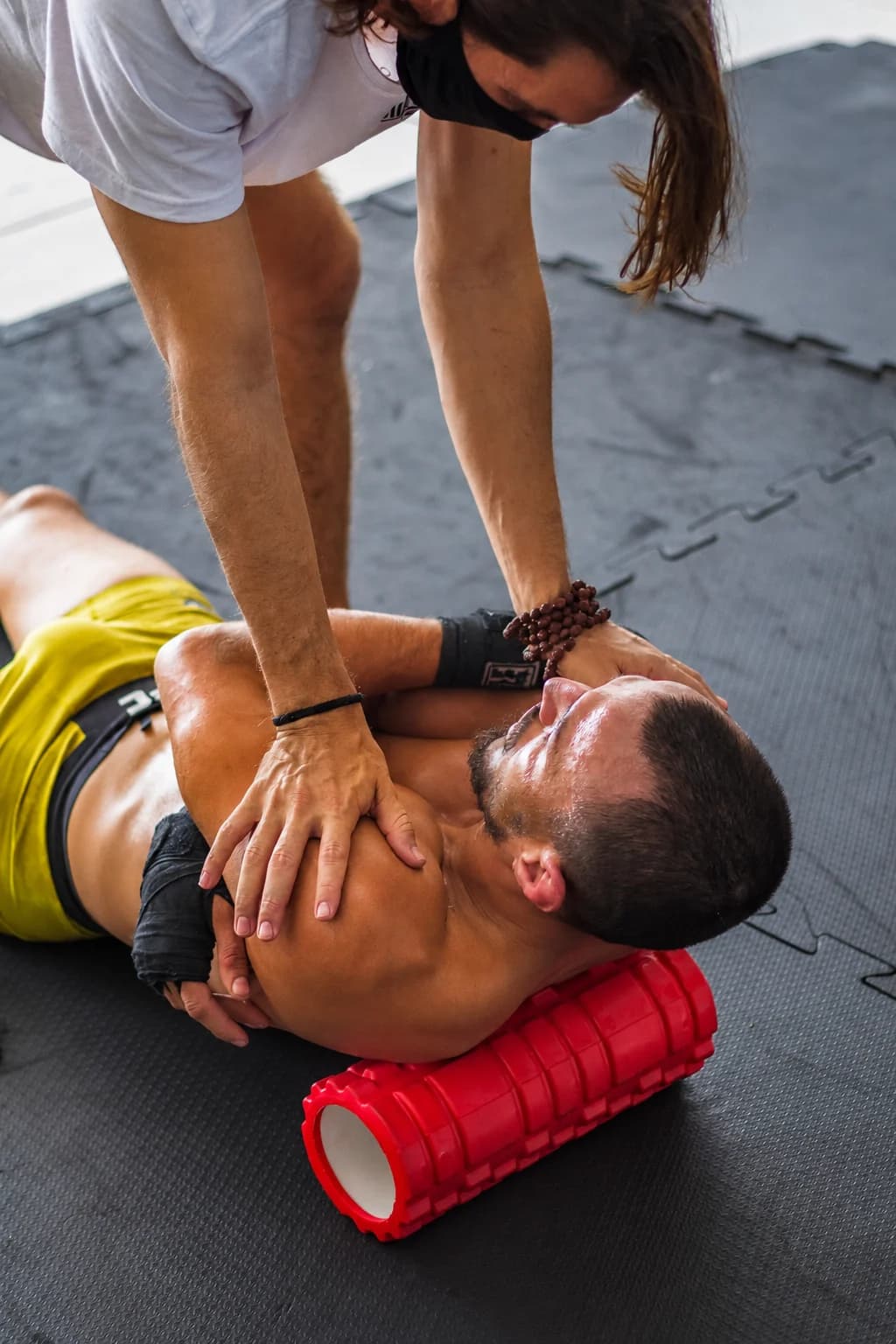
The studies were small and used different devices, pressures and durations. Participants were not blinded, leaving expectations unresolved. No agreed optimum duration, pressure or cadence was established. These results do not supply one universal rolling dose.
A separate 2021 review comparing rolling with stretching found no significant overall performance difference between those methods. That comparison does not establish that either method always improves performance compared with doing nothing.
These are reasons to keep the conclusion specific, not to turn a small average effect into a certainty or dismiss every reported sensation. Notice the population, the comparison and the outcome. Acute exercise studies do not by themselves answer questions about lasting adaptation, clinical treatment or which exact retail product to buy.
Choose the device by its format
The PBGGAME Black smooth full-round foam roller, nominal 36-inch option is one manual foam cylinder with a smooth surface and fine foam texture. It is an option for a rolling setup you already know.
The PBGGAME Small handheld spindle massage stick, nominal 14-inch option is a different format. The selected Small option has two handles and six rolling spindles. It is a handheld rolling device; the link selects the Small option even though the parent listing also covers other lengths.
Choose between a cylinder and a handheld device according to the familiar practice and handling format you need. The review included both cylinders and rolling sticks without establishing a universal superior format. Keep the selected tool within its own instructions and the practice you have learned.
Answer the timing question in one sentence
Before adding rolling, name the question: immediate range, immediate performance, post-exercise sensation or measured performance recovery. That makes it easier to choose where it belongs and to describe the result without expanding it into a larger claim.
If your goal is an ongoing movement capability, the mobility versus flexibility guide helps define that separate goal. A temporary rolling effect does not replace the work selected for it.
For the different buying question, compare a powered gun with a manual roller. Keep this page focused on timing and measured outcomes, rather than treating it as a powered-device purchasing comparison.