Wearable Recovery Scores: Useful Clues, Incomplete Conclusions
Read wearable recovery scores by the claim actually tested: an input measurement, a combined estimate and a training decision each need different evidence.

A recovery score summarises information chosen by a particular device and app. Before trusting the number, ask what it claims to tell you.
A useful dashboard can help you notice something worth exploring. The number still needs an explanation: what was measured, how the app transformed it and which conclusion has actually been tested. That is a better starting point than treating a colour or percentage as a complete assessment of your body.
First, find out what your app calls recovery
In its 2022 explanation of WHOOP Recovery, WHOOP describes combining measures including heart rate variability, resting heart rate, sleep and respiratory rate. This is the manufacturer's explanation of its own feature. It is useful for understanding the intended inputs, while remaining different from an independent accuracy study.
Keep the device and explanation together when reading an article about a score. A definition from one brand does not establish what another brand calculates. An older feature description also does not reveal the exact formula, weighting or current behaviour of every later model and software version.
How accurate are recovery scores? Separate the questions
The 2026 perspective by Schaffarczyk and Sperlich discusses HRV-guided training and commercial recovery estimates. It highlights differences in collection windows and scoring methods, limited algorithm disclosure and gaps in external validation. HRV can also respond to context outside exercise.
| Question | Evidence you would want to see |
|---|---|
| Is an input measured accurately? | A comparison with an appropriate reference measurement. |
| Does the combined score predict an outcome? | Research testing that score against the stated outcome. |
| Does following its advice improve training? | Research evaluating the advice and the relevant training result. |
These questions require different evidence. Accurate input measurement does not by itself validate the combined score or prove that its training instruction is effective. The cited article is a perspective, rather than a new trial comparing the watches on a shop shelf.
An evidence-reading example needs an exact feature
| Field | Example from the cited material | What remains unknown |
|---|---|---|
| Feature | WHOOP Recovery, as described in the manufacturer’s 2022 explainer | The exact current formula and weighting |
| Device and software | The explainer is a feature description, not a device/version trial | Record the model, firmware and app version for a claimed validation |
| Evidence type | Manufacturer explanation; the 2026 article is a perspective | Neither alone tests a current device’s training advice |
| Outcome | Input measurement, combined score and advice effectiveness are different questions | Do not promote a heart-rate accuracy result into validation of recovery advice |
Wearable exercise readiness needs more than a familiar label
The American Academy of Sleep Medicine's 2021 technology update distinguishes validated sensors from the integrated algorithms and outputs built around them. It also describes consumer sleep-stage estimates derived from signals such as pulse measurements, which differ from laboratory brain-wave scoring.
When sleep information contributes to a wider dashboard, check what each label means and how it was tested. Population, measurement conditions and software version affect how a validation result applies. Look at the exact feature you intend to use.
For the separate practical question of making room for sleep, our sleep and exercise recovery guide discusses the schedule itself, without treating an app score as a measure of every recovery need.
Recovery score limitations become clearer when numbers disagree
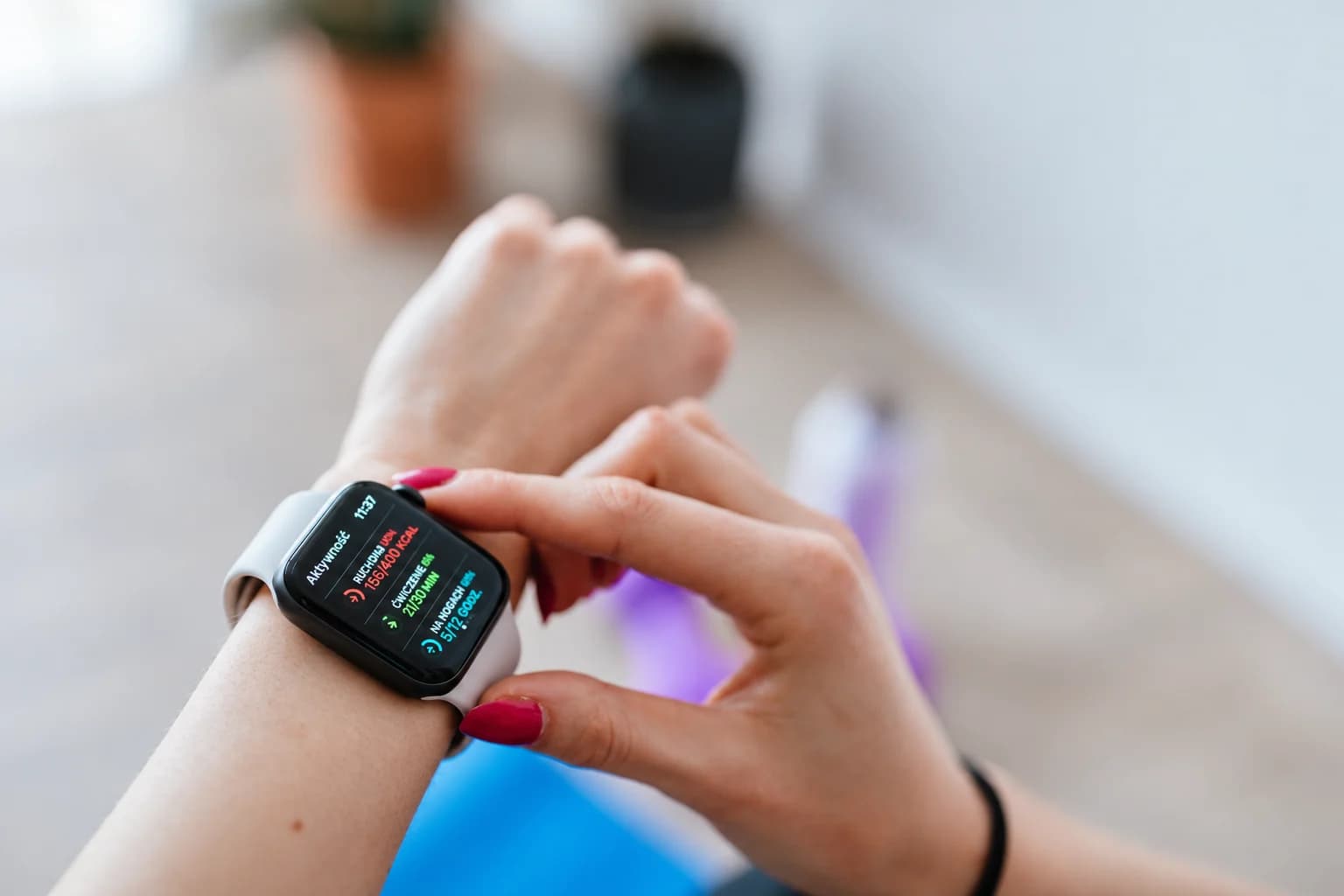
Imagine that an app shows a lower score than you expected, while you feel much as you did the day before. That disagreement gives you a question to investigate. It does not tell you which observation to discard, and the display alone cannot explain the difference.
Start with the meaning of the screen you are viewing. Is it a recovery estimate, an activity summary or a sleep measure? A photograph of an activity screen, for example, does not show that a recovery algorithm has been tested. Check that an article, screenshot or review is discussing the same feature you want to understand.
Next, look for the outcome behind any accuracy claim. A study about overnight heart-rate measurement is answering a different question from a study about next-day performance. If a review simply says a watch is “accurate,” ask which measurement it means and whether the article links to the actual test.
Finally, consider what you need to decide. Understanding a dashboard, choosing a device and discussing a training concern with a qualified professional are different tasks. A single number cannot settle all three. For symptoms or a possible health problem, seek appropriate professional advice rather than using a favourable score to rule the concern out.
Keep the training bag simple
For carrying a drink, the PBGGAME glass bottle with two interchangeable lids is a separate ordinary kit option: one bottle, not two. Its capacity and lids do not measure or improve a recovery score.
For wearables, choose a feature whose definition, evidence and practical use fit your question. A clear display helps you read a score; the research behind its claims helps you interpret it.