Jump Rope vs Rowing: Compare Skill, Space and Conditioning
Compare rope timing and working space with an indoor rower's stroke and equipment access. Keep relative effort separate from fixed calorie or equal-time claims.
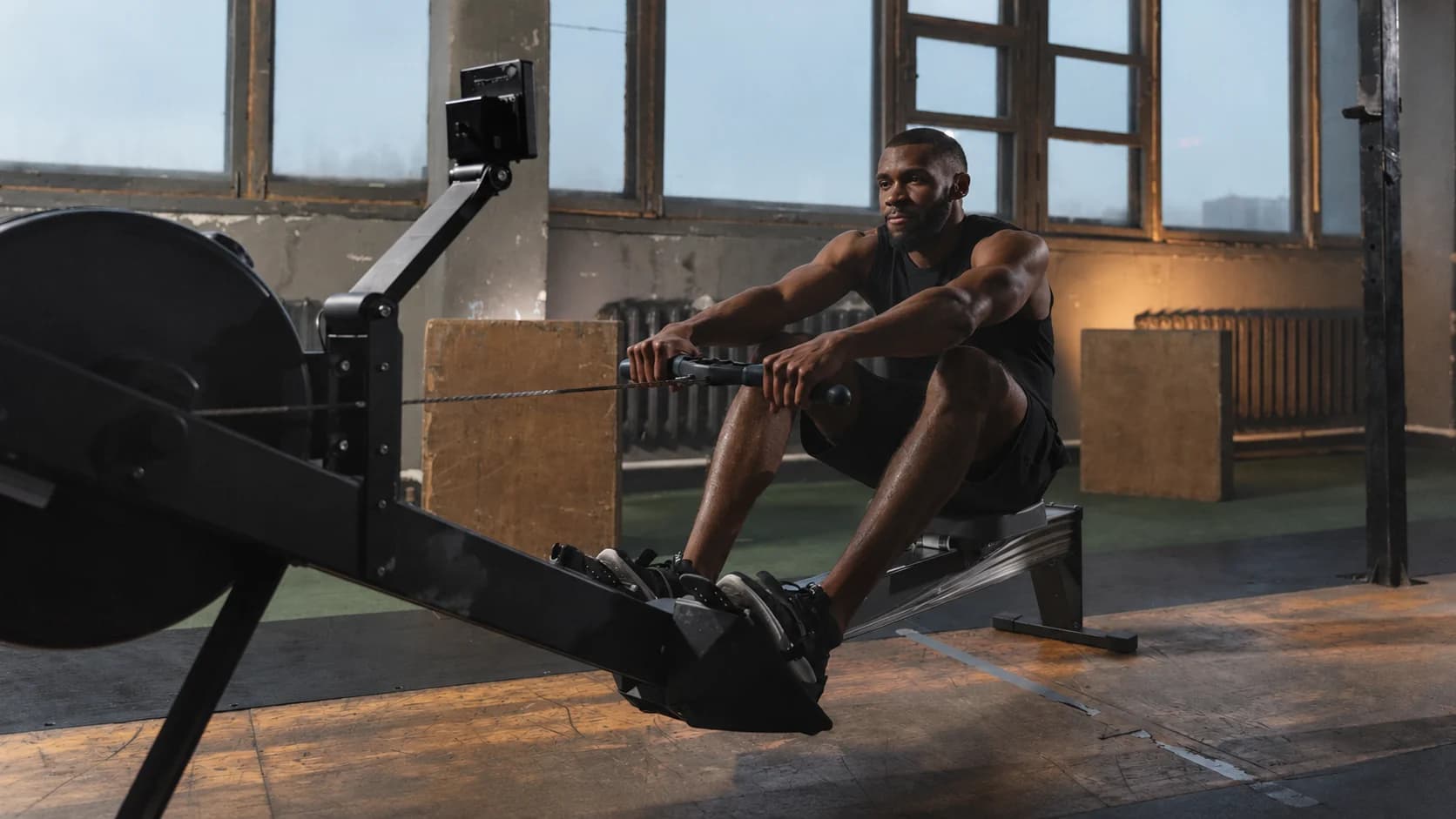
A jump rope vs rowing comparison starts with different skills: timing a rope's passage around your body, or coordinating the stroke on a seated rowing machine. The practical choice also depends on the space and equipment you can actually use.
Here, rowing means using an indoor rowing ergometer. A portable resistance band advertised for rowing-style movements is a different item, rather than a substitute for the machine in this comparison.
Quick choice: access and skill first
| Situation | Conditional choice | Read the detail |
|---|---|---|
| You know the rowing stroke, can use the ergometer, and lack a clear rope arc | The accessible indoor rower fits those facts | Machine and stroke |
| You have clear space for a familiar rope task, with no convenient rower | Keep the already-workable rope session; a machine purchase creates a new commitment | Working rope space |
| Either skill or setup remains unfamiliar | Resolve that uncertainty before calling it a continuous conditioning session | Repeatable-session comparison |
Here rowing means an indoor ergometer, not elastic rowing equipment. This quick choice does not establish equal energy expenditure for equal clock time.
A rope needs a working arc, not just storage space
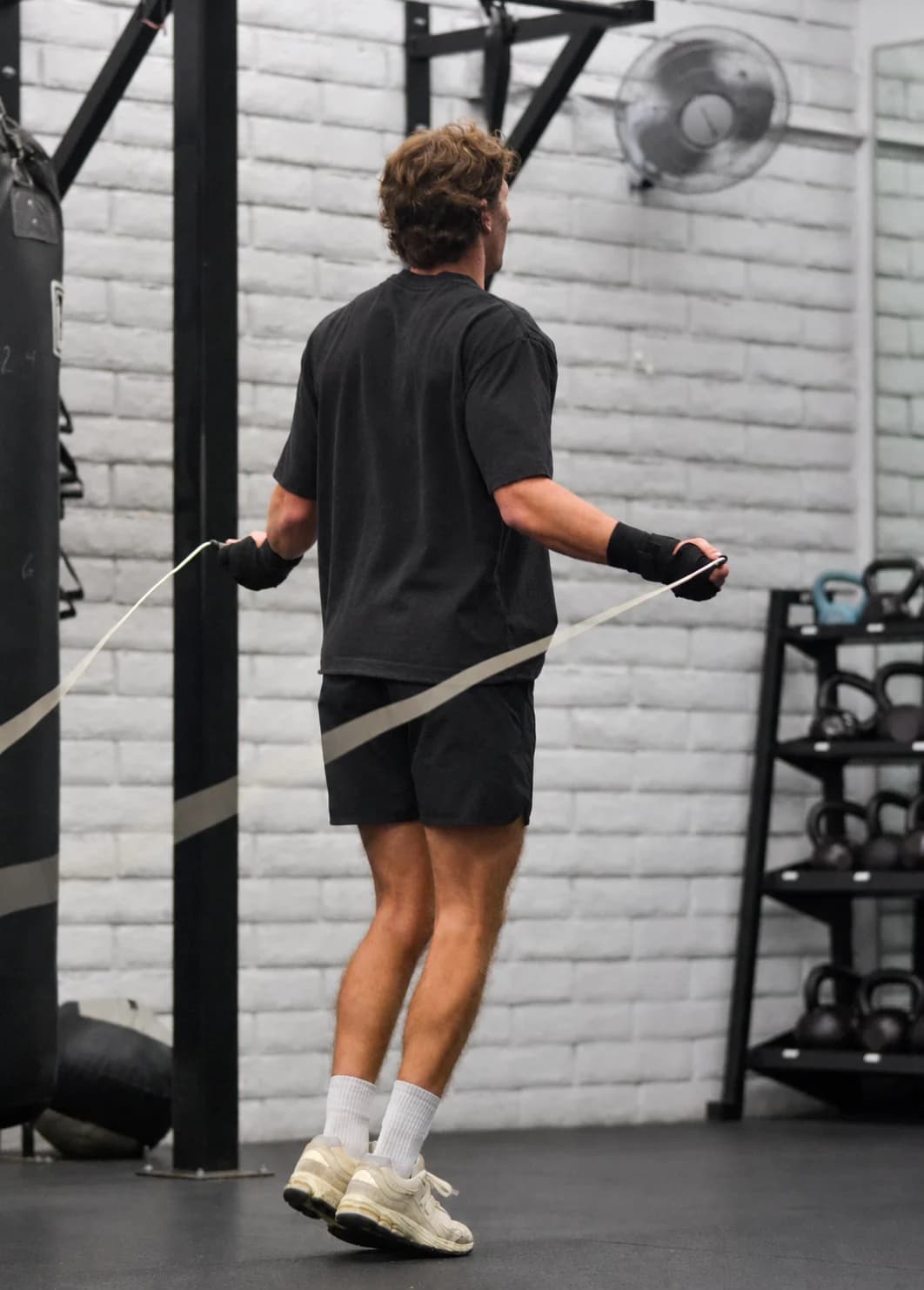
In Jump Rope Basics, Buddy Lee describes timing, coordination and preparation before adding speed. The equipment may be easy to put away, but using it involves a rope path around you.
Check the intended training area as a working space: the route of the rope, clearance beside you and overhead, and the presence of other people. A spot where the handles fit is not necessarily a spot where you can perform the movement you have learned.
The skill question matters too. If you are learning to coordinate the rope, attempts may be interrupted while you practise. That is a different experience from an already-familiar movement you can repeat smoothly. A comparison should acknowledge that learning stage rather than treating the equipment name as a complete description of the session.
Indoor rowing has a stroke and a machine to accommodate
Concept2's indoor-rowing guidance describes a coordinated stroke involving the legs, trunk and arms, followed by recovery. The seat moves along a rail. It is more than repeatedly pulling a handle with the arms, and the manufacturer's guidance prioritises the fundamentals before adding power.
Think about access to that actual machine. Is it available when you intend to train? Can you approach and use it in the intended space? If considering a purchase, check the specific model's use and storage dimensions rather than assuming every indoor rower has the same footprint.
A machine in a gym and a machine at home also create different access arrangements. The relevant comparison is the one you would use, with its actual setup and instructions, rather than a generic image of rowing.
Rowing or skipping for cardio: compare relative effort
The CDC's physical-activity intensity guidance explains that relative intensity depends on fitness. An activity that feels demanding to one person may represent a different effort for another.
Its talk-test description offers a general reference: at moderate intensity you can usually talk but not sing; at vigorous intensity, only a few words are possible before pausing for breath. That describes relative effort, rather than a calorie calculation or a rule that every rope or rowing session has the same intensity.
Keep that distinction when comparing sessions. Equal time on a clock does not establish equal work, equal practice quality or equal energy expenditure. A named activity category is a starting point, not a personalised conversion between the two modes.
Compare the session you can actually repeat
Consider two illustrative situations. In the first, an adult already knows the rowing stroke and has reliable access to a machine, while their available home space does not accommodate a rope arc. A rope's compact storage would not resolve that space question. Access and familiarity help explain the choice without making rowing universally better.
In the second, someone has a suitable place for an already-familiar rope practice but no convenient indoor rower. Buying a machine would introduce a different space and access commitment. The useful question is what that purchase would change, rather than whether a rowing label sounds like a more complete workout.
Neither situation identifies an ideal exercise for every adult. They show how the actual location, learned movement and equipment access can matter more than comparing two activity names on a chart. Decide what makes the session workable in your circumstances, then keep the relative-effort question attached to the session you actually perform.
A rope option for a familiar practice
The PBGGAME socket-joint speed rope with grip panels is one equipment option for a rope task you already understand. It contains one cord connected to two red handles with black grip panels and socket-style end joints. It was listed at $18.99 when this article was prepared.
Check the selected item's adjustment guidance and intended use when deciding whether its format suits your practice. A handle or joint feature does not decide your intensity, technique or calorie expenditure. The choice still includes the working space and movement skill described above.