Cordless Skipping vs a Regular Jump Rope: Feedback, Space and Limits
Compare the full rope path with short-tail cordless movement. Check working space, actual configurations and counters without assuming equal skills or calories.
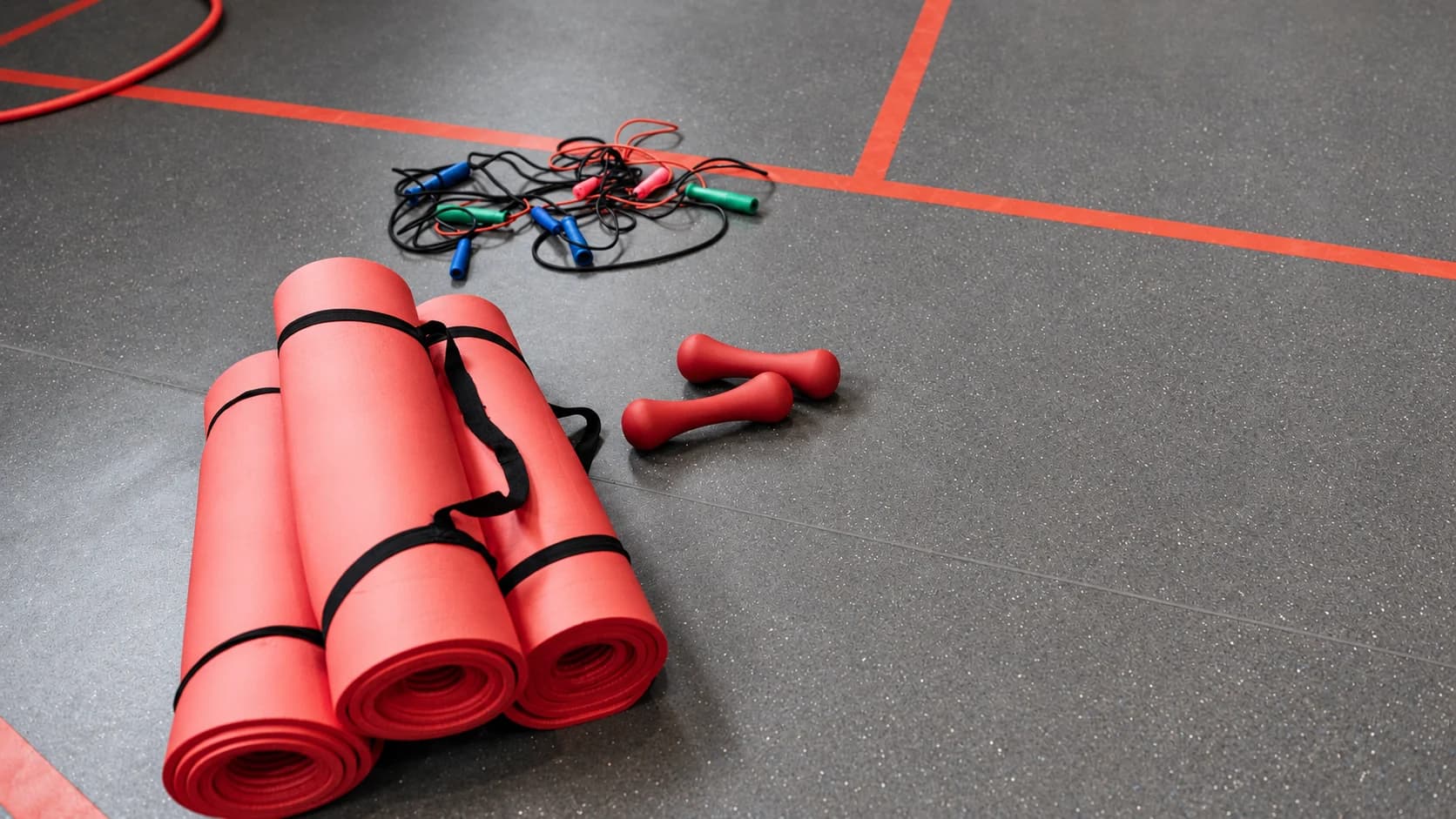
Cordless skipping handles let you move short tails or balls without sending a long rope under your feet. That creates a different task and different feedback from a regular rope. Whether a cordless jump rope works for your goal depends on which of those features you want.
A cordless skipping comparison starts with what moves
Some sets provide both configurations. For example, the RENPHO Smart Jump Rope Pro listing describes handles, cordless balls and a long rope. Those contents describe that particular model, rather than every product in the category.
Look at the selected item's actual contents. Does it have a complete cord between the handles, separate short tails, removable inserts or an electronic display? Those details are more useful than deciding from a label such as “smart,” “weighted” or “rope free” alone.
The long rope supplies a particular kind of feedback
In Buddy Lee's preparation guide, regular rope practice involves timing, coordination and the path of the full rope. It travels around the body and under the feet; that path makes clearance part of the task.
Short separate tails do not pass from one handle to the other beneath your feet. Moving them can resemble part of the handle action, but it does not provide the same underfoot-clearance feedback. The difference is visible in the equipment's geometry, without needing to assume a calorie or training-effect equivalence.
| Feature to compare | Regular corded rope | Short-tail cordless pair |
|---|---|---|
| Moving path | A complete cord travels around the body. | Each handle has its own local moving tail or ball. |
| Underfoot feedback | The full cord must clear the feet for that passage. | No full cord travels beneath the feet. |
| Working space | Consider the whole rope arc. | Consider the tails, balls, handles and the person's movement. |
Rope-free skipping still has a moving area
The absence of a long cord changes the space question; it does not remove it. Inspect the length and movement of the particular short tails and balls. Include the room needed by your own movement and other people or objects nearby.
For a corded rope, the working arc includes space beside and above you, as Lee's guide explains. For a short-tail pair, the moving parts remain close to the handles, but they still occupy an area. An item fitting in a small drawer is different from its movement fitting in the intended practice space.
Choose the location after considering the selected format. A room that cannot accommodate a full rope might suit a different task, but “cordless” alone does not establish that every possible location is appropriate.
A counter is a separate feature to check
The RENPHO listing also describes electronic functions including a display, timer/count modes and app connectivity. These are manufacturer-specific feature descriptions, rather than independent evidence of accuracy or exercise equivalence.
When an item has a counter, find out what its instructions say the displayed number represents. A reading shown during a cordless configuration cannot, by itself, certify that a full rope cleared the feet: there is no full rope making that passage. Keep a device output separate from the physical feedback you want to practise.
| Separate model checks | PBGGAME manual short-tail pair | RENPHO example |
|---|---|---|
| Contents | Two handles, two short cords/balls, two removable metal inserts and a bag | Read that exact manufacturer listing and version |
| Display / electronic count | No electronic display on the selected manual pair | Model-specific display/app features; not transferred |
| Tail length and moving-part mass | Ask PBGGAME for the tail length and moving-part weights for PBG-979532. | Check the corresponding RENPHO model separately |
| Insert mass / each-versus-pair basis | Confirm whether the stated insert weight is per insert or per pair. | Check the corresponding RENPHO model separately |
| Assembly and retention instructions | Follow the PBG-979532 assembly and retention instructions | Apply only to the matching RENPHO system |
Ask PBGGAME contact about PBG-979532's relaxed tail length, ball and tail weights, and insert-retention instructions. Choose the manual short-tail format for its handle-and-ball arrangement, and compare component weights separately. This selected pair uses manual handles rather than an electronic counter.
Two actual formats to consider
The PBGGAME cordless skipping pair with removable handle inserts contains two blue-and-black handles, each with a short black cord and a black ball. It also includes two removable metal inserts and a bag. The selected Blue pair was listed at $13.98 when this article was prepared. It is a manual pair with no electronic display.
The PBGGAME socket-joint corded rope has one full black cord and two red handles with black grip panels. It was listed at $18.99. That complete cord is the relevant structural difference if you want feedback from the rope travelling around you and beneath your feet.
Choose by the task and features you actually want. A regular rope supplies the full cord path. A short-tail pair supplies a different handheld movement. Read the selected configuration and its instructions instead of treating either product name as proof of the same skill practice or energy expenditure.