Fatigue or Low Motivation? Check the Session Before Pushing Through
Describe the obstacle to today’s session, consider a practical change to an existing plan, and keep unexplained fatigue separate from a motivation judgement.

When considering working out when tired, begin with the session you planned and the obstacle you can actually describe. If you are wondering whether you are too tired to work out or unmotivated, a long journey to the gym, an activity you do not enjoy and unexplained fatigue are different problems. Calling them all a motivation issue makes it harder to choose a useful response.
You do not have to prove that you are lazy or disciplined before changing a plan. Equally, a planning exercise cannot identify the cause of fatigue or establish that pushing through symptoms is appropriate.
Describe the obstacle before judging yourself
ACE's behavior-first discussion of exercise adherence, drawing on exercise professional Chris Gagliardi, looks at how the session and circumstances shape participation. Scheduling, session demands and personal choice belong in that discussion, rather than pressure to demonstrate motivation first.
Give the obstacle a concrete description. “The return journey leaves no usable time” offers a different problem to solve from “I do not know the exercises” or “I feel unusually exhausted.” You may identify more than one issue. That does not require assigning yourself a personality label or choosing a medical explanation.
Keep the description specific enough that a practical change can be discussed. A vague verdict such as “I never feel motivated” can hide a repeated problem with the time, place or size of the planned appointment.
Adjust a workout when tired: identify the change you are making
| Non-medical obstacle | Existing practical option to discuss | Record the actual change |
|---|---|---|
| Travel makes the appointment longer than the time available | Move it or choose a suitable familiar option already in the plan | Time / location changed: ____ |
| Repeatedly avoiding a disliked class | A familiar activity that better fits preference | Activity choice changed: ____ |
| The session is too complicated to organise today | Ask for a simpler option within the existing plan | Preparation / session structure changed: ____ |
Copy one line: intended session ____; specific obstacle ____; available familiar option ____; decision ____; next planning question ____. Keep unexplained or concerning fatigue in the separate health discussion below.
These examples concern organising an existing plan. They are not a programme prescribed for fatigue:
- A gym visit takes ninety minutes including travel, but you have thirty-five minutes available. Moving the appointment or using an already-planned, familiar alternative addresses the time conflict. Trying to squeeze every part of the original session into the gap creates a different workload.
- You repeatedly avoid a class you dislike. Choosing a familiar activity you actually want to do addresses preference. It does not require an argument about whether you have enough willpower.
- The full session feels too complicated to organise today. Discuss a shorter or simpler option within your existing plan rather than inventing a new routine from a collection of unfamiliar exercises.
Name the adjustment: moving the session, using a familiar alternative or leaving out an extra session. That makes the decision clearer than saying you are “taking it easy,” which can mean very different things to different people.
Give unexplained fatigue a separate conversation
The NHS tiredness and fatigue guidance explains that tiredness has many possible causes and advises against self-diagnosis. It recommends speaking to a GP when tiredness has continued for a few weeks without a clear reason, affects daily life or comes with other symptoms.
Those situations call for a health discussion rather than a more forceful motivation strategy. A difficult week and a scheduling problem do not establish the cause of persistent exhaustion. Describing what you are experiencing accurately is more useful than trying to select a diagnosis from an exercise article.
ACE also separates concerning or worsening symptoms from adherence coaching. Do not use a warm-up trial or an easier-looking exercise as proof that continuing is appropriate. Pause that decision and seek suitable professional advice when symptoms raise concern.
Exercise readiness decisions: use questions for planning, not clearance
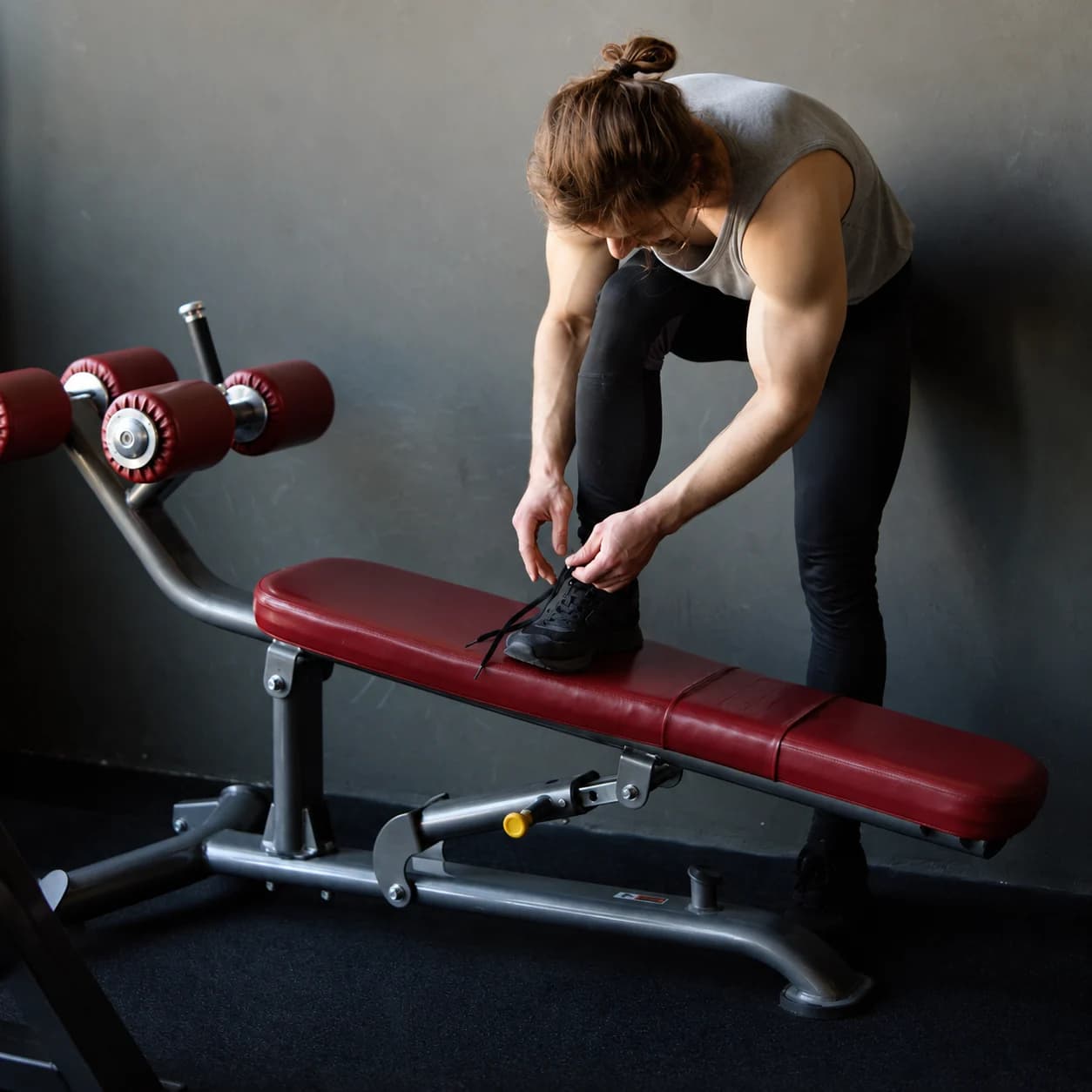
Write down the session you intended to do, then describe what makes it difficult today. Is the obstacle the appointment's total time, its location, the material you need to prepare or the demands of the session itself? These questions help organise a conversation about the plan. They do not produce a readiness score.
Next, identify which options are already available to you. You might have another suitable time or a familiar alternative in an existing programme. If you are unsure how to change a session's demands, discuss that with the person who helps you plan it rather than interpreting a general article as a personalised prescription.
Record the choice in plain language, such as “I moved the appointment because travel did not fit.” Review that practical change when planning the next week.
A familiar equipment option when location is the obstacle
For an already-learned band practice, the PBGGAME Pink, Green and Purple long-loop band set is one portable format to consider. The selected pack contains three separate sewn closed loops, a mesh bag and a workout guide. The knitted cotton bands contain natural-rubber latex threads and carry Light, Medium and Heavy labels.
Choose the set when those bands fit the practice you already know. The Light label does not certify an appropriate workload when you feel tired, and the included guide does not assess symptoms or select a personalised session. Keeping equipment nearby can address a location problem; it cannot explain exhaustion or decide how hard you should train.
For the separate issue of protecting time for sleep, the sleep and exercise recovery guide compares real calendar options. If you are choosing an easier day rather than adjusting one appointment, the active recovery versus complete rest guide addresses that weekly decision.