Cooling Down After Exercise: What Easy Movement Can and Cannot Do
Plan a gradually easier ending to exercise, then separate that practical transition from claims about soreness, lactate, injury and later performance.

The benefits of cooling down are easier to judge when you name the outcome. A gradually easier finish to a workout is one question; preventing tomorrow's soreness or improving the next performance test is another. You can plan a manageable transition without making all of those claims at once.
Keep the end of the current session in view. This is the period after exercise, rather than a separate active-recovery workout scheduled for the following day.
A simple cool down after a workout
The American Heart Association's warm-up and cool-down guidance recommends a gradual transition as activity ends. Its ordinary walking example is to walk more slowly for five to ten minutes. That is a concrete way to ease out of the activity, rather than finish at the hardest pace and immediately call the session over.
Use the example for the question it answers: how to make the ending progressively easier. It does not establish a universal recipe for every sport or prove that a particular sequence prevents soreness.
If your class or training plan already includes a finish, understand its purpose before adding another one. A clear ending is more useful than collecting several activities under a recovery label.
Leave room for the ending in your plan
Before you start, decide where the demanding part ends and what follows. With a walking session, that might mean leaving part of the route for the slower finish described above. With an instructor-led class, find out whether the final segment already provides that transition.
These are scheduling examples, rather than a new exercise programme. They help keep the ending visible when you arrange your time. If you book the whole available period for the hardest part, the finish can become an afterthought or another task squeezed in before you leave.
An ending does not have to acquire a new distance, speed or achievement target. Decide whether the activity you are adding is serving the transition you intended or extending the workout. Those are different planning choices, even when the equipment and location stay the same.
Benefits of cooling down: distinguish the evidence
| Before interpreting the review | Keep attached to the result |
|---|---|
| Review type | A 2018 narrative review; not one uniform protocol or a trial of this walking card |
| Comparisons | Active cool-down soon after exercise versus passive recovery, across varied tasks and participants |
| Outcome | Blood lactate, delayed soreness, later performance and clinical events are different endpoints |
| Uncertainty | A faster marker change is not proof of faster functional recovery; non-significance is not strict equivalence |
Read the review’s active cool-down discussion and outcome sections before moving a finding to another activity.
| Walking-finish reservation card | My plan |
|---|---|
| Where the main work ends | ____ |
| Suitable progressively easier finish already chosen | ____ |
| Time allowed for the AHA walking example | ____ within the described 5–10 minute context, if appropriate |
| Route or class finish already included | ____ |
| What actually happened | ____ |
The 2018 narrative review by Bas Van Hooren and Jonathan Peake examined active cool-downs soon after exercise, compared with passive recovery. Its findings do not support treating every proposed benefit as established:
| Outcome | What the review supports |
|---|---|
| Blood lactate | It may fall faster with active recovery; this is not the same as muscle lactate clearance or functional recovery. |
| Delayed soreness | Most studies found no significant reduction from an active cool-down. |
| Later performance | Most findings for later that day or the next day were trivial or non-significant, although some benefits were reported. |
| Injury prevention | A reliable preventive effect was not established. |
The review also describes potentially faster cardiovascular and respiratory recovery, while noting uncertainty about whether this reduces fainting or cardiovascular complications. An immediate physiological change and a meaningful outcome for the next session should remain separate claims.
Post-exercise easy movement has a defined job
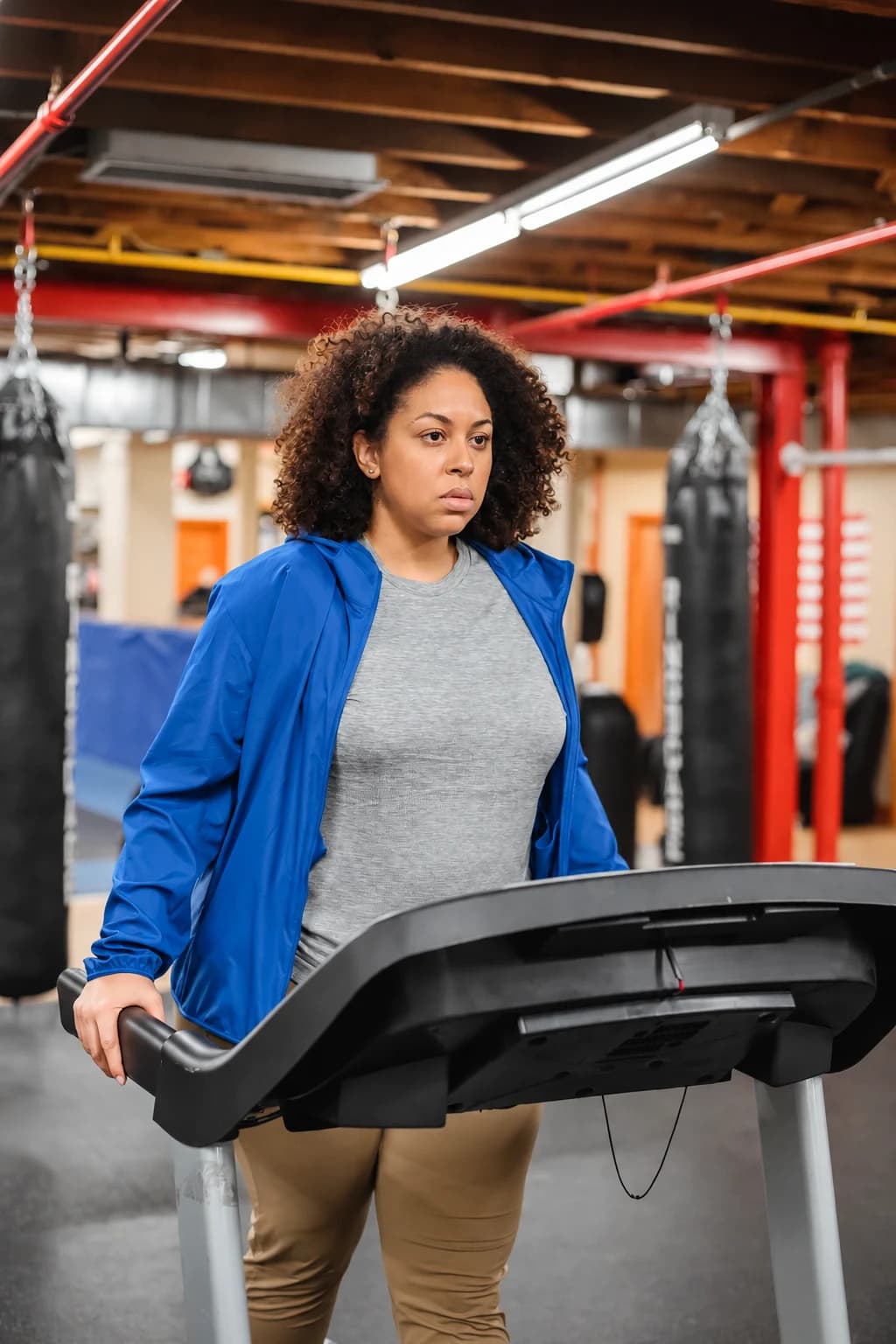
Describe the job in ordinary language: “I am easing out of this session” is clearer than “I am fixing recovery.” The first statement identifies what you are doing now. The second leaves the outcome unspecified and can quietly become a promise about soreness, repair or future performance.
Keep that distinction when discussing what you notice afterwards. Finding the finish pleasant or feeling ready to leave the gym is an experience you can describe. It is not the same observation as a measured change in tomorrow's strength, speed or soreness. You do not need to upgrade a comfortable ending into a larger scientific claim to give it a place in the plan.
It also helps to keep different decisions in their own time frame. A cool-down ends this workout; a decision about tomorrow's training concerns the next day. The active recovery versus complete rest guide addresses that separate weekly-planning question.
A small carrying option at the end of a session
If you want water within reach while you finish and head home, the PBGGAME two-bottle push-pull running set is a compact carrying option. The selected pack contains two contoured plastic squeeze bottles with push-pull caps. Each has a nominal ten-ounce capacity; a belt or vest is not included.
Choose the pack for the bottle format, rather than a promise about cooling down. Capacity is a container measurement, not an instruction to drink that amount or finish both bottles. The bottles do not determine a fluid requirement or replace an individual hydration plan. Also check the intended carrying setup instead of assuming they fit every belt.
Keep the ending useful and the claims specific
Make the finish manageable within the session you planned. Know which part becomes easier, allow room for it and avoid turning it into an extra performance challenge simply because it is labelled recovery.
If your main concern is a new symptom rather than how to end a routine, use the soreness-after-a-new-workout guide to understand the distinction between a common delayed pattern and signs that call for advice. A cool-down cannot identify the cause of pain.