Ab Wheel Rollouts: Prerequisites, Range and a Controlled Return
Start a handheld ab-wheel rollout from the knees, choose a short reach and keep the return controlled. Check the setup and adjust the range to what you can repeat.
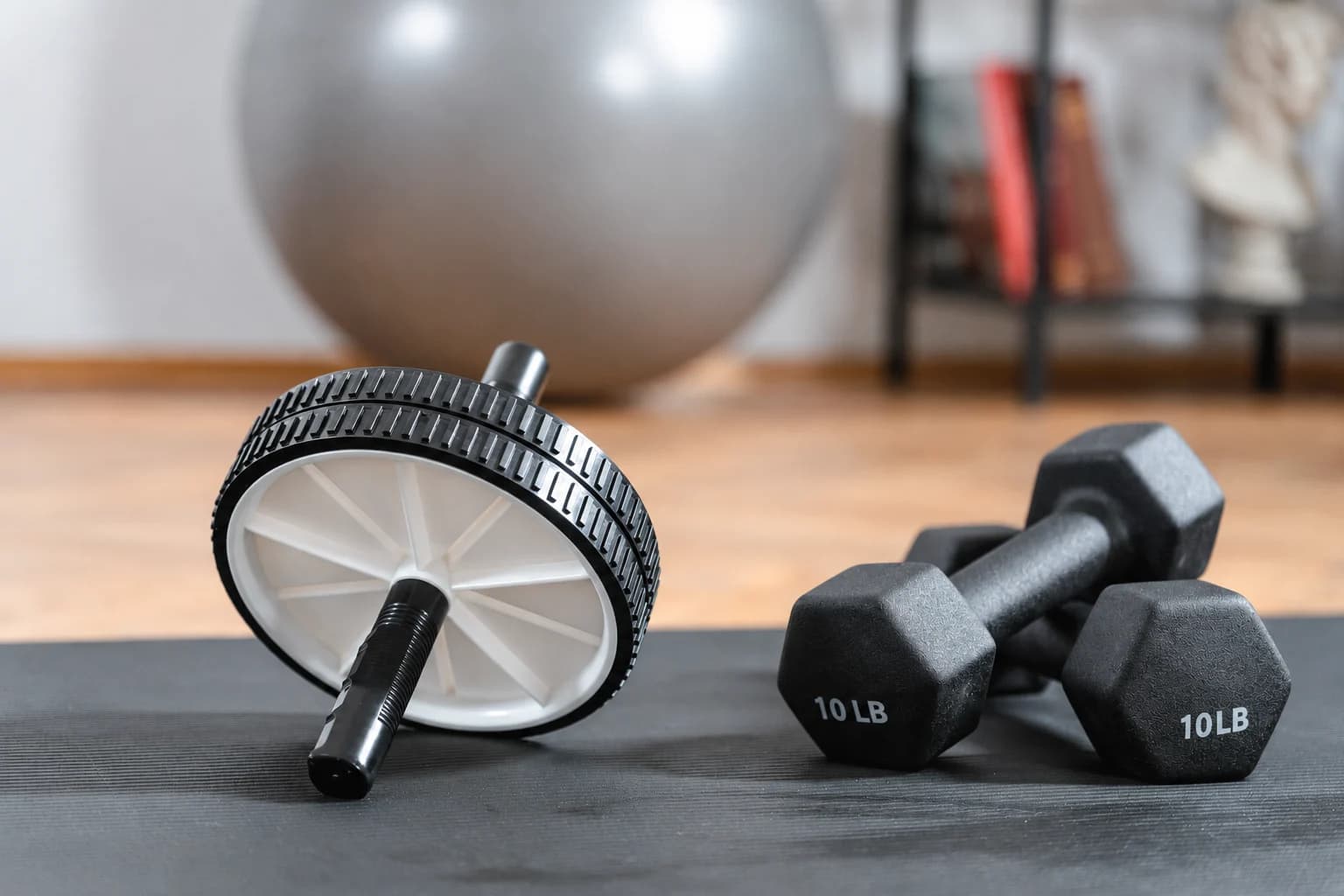
An ab wheel rollout for beginners starts with a reach you can reverse. Rolling farther is not useful if the back drops, the wheel runs ahead or the return turns into a hurried pull. Begin kneeling, keep the first movement short and finish in the same controlled starting position.
This guide covers a handheld wheel with a handle on each side. Forearm-cradle machines and other rolling devices have different contact points and operating instructions. Even among handheld models, springs, directional markings and handle assembly can differ; learn the exact equipment before copying a movement.
Check the starting position before testing the reach
There is no universal plank time or distance test that gives everyone permission to roll out. The practical question is whether you can establish the kneeling position, support yourself through both handles and move a small distance without losing the position you intend to keep. You also need a deliberate way to return.
The PureGym ab-wheel rollout guide starts with knees under the hips and hands, elbows and shoulders stacked. It recommends a smaller rollout when the back begins to extend. Use that as a range decision, not a reason to push through an increasingly arched position.
- Confirm the wheel and handles are assembled and secured according to their own instructions, including any left/right or rolling-direction markings.
- Choose a clear, suitable rolling surface and kneeling contact for your model. Check that the wheel can track without catching, sliding or reaching a loose mat edge.
- Establish a comfortable two-hand grip and kneeling position before moving. Resolve pain or difficulty bearing through the hands or knees rather than adding more reach.
- Leave room to return and settle. Keep children, pets, loose weights and other equipment outside the rolling path.
If you cannot hold the start comfortably or make a small controlled movement, postpone the rollout and get individual instruction. A wider wheel, extra padding or a spring label does not establish that this particular task is suitable for you.
A short kneeling ab rollout, out and back
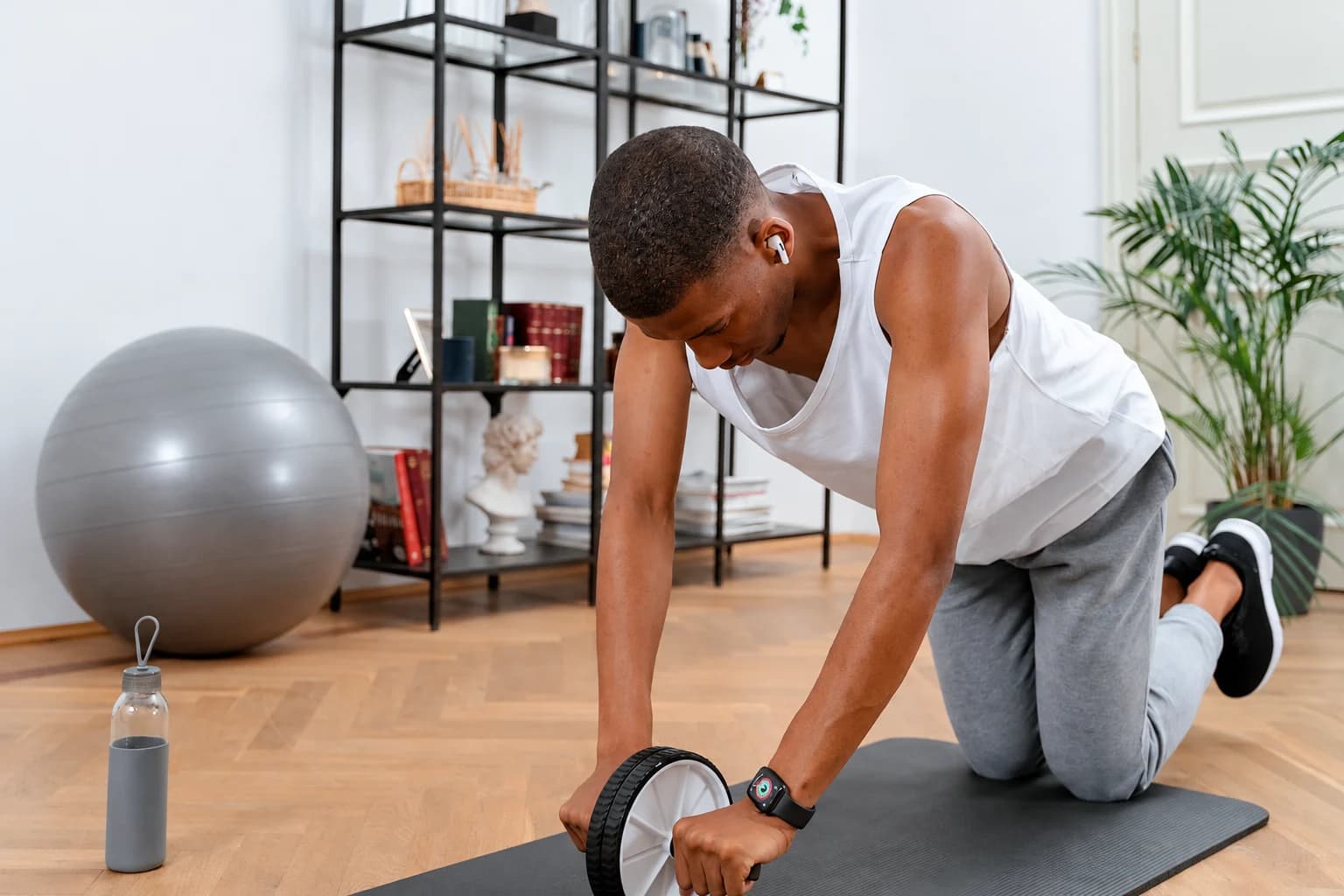
The ProsourceFit Ab Wheel Roller manual describes kneeling with both hands on the handles, bracing the core and glutes, and keeping the back flat. Its forward-roll instructions explicitly allow beginners a shorter range, followed by a return to the starting position.
- Settle at the start. Kneel with the wheel in front, grip both handles and establish the stacked arm position. Brace the trunk and glutes so you begin with a steady back rather than a sag.
- Roll forward slowly. Keep the arms straight and let the wheel move only a short, manageable distance while maintaining the trunk position. Stop the outward movement before you need to drop through the lower back or reach farther than you can control.
- Return deliberately. Keep the core engaged and draw the wheel back slowly to the same starting position. Finish the return and settle before deciding whether to repeat; do not rush into the next reach.
ProsourceFit cues an inhale on the slow forward roll and an exhale while drawing back. Keep breathing rather than turning a short reach into a breath-holding contest. PureGym also stresses maintaining core engagement during the return; getting the wheel forward is only half the repetition.
Choose the turnaround point by the return
A useful first reach may look small. Choose a point from which you can bring the wheel back while keeping the back position and grip under control. Do not make the next attempt longer simply because the wheel reached that point once. The return must remain part of the choice.
| What you notice | What to change |
|---|---|
| The back begins to sag as the wheel moves away. | Shorten the reach; PureGym identifies a smaller rollout as the adjustment when the back extends. |
| The outward roll is slow but the return becomes a scramble. | Use a smaller range and finish each return before repeating. |
| The wheel catches, veers or a handle shifts. | End the attempt and check the surface, assembly and equipment before continuing. |
| The hands or knees hurt in the starting position. | Stop and resolve the contact or suitability question; a longer reach will not solve it. |
These are observations for choosing manageable practice, not diagnoses. Pain, numbness, dizziness or unexpected loss of control calls for stopping and appropriate individual advice. You do not need to complete a set after the movement has stopped being controlled.
Ab roller progression: repeat the same useful range
Try one short rehearsal, settle and decide whether another would remain controlled. Rest before repeating if you need it. This is a practice choice, without a compulsory repetition count, round length or progression deadline. Avoid using exhaustion as the test of whether you did enough.
Keep a simple note of the exact wheel, surface, starting position and approximate reach. For example: “Same floor and wheel, short kneeling roll, steady return on each attempt.” If that setup becomes repeatably manageable, consider a slightly greater reach while keeping the other details similar. Return to the shorter version when control changes.
You can continue practising from the knees. Moving to standing, adding load or seeking a chest-to-floor finish is not required for progress here. The useful change is a repeatable reach and return you can explain and control, rather than a longer distance copied from a photograph.
Model instructions to obtain before using the featured wheel
| Model question | Before you start | Model-specific guidance |
|---|---|---|
| Handle assembly and orientation | Check the assembly and handle markings for PBG-235663 before use. | Instructions naming this exact curved-handle model and its markings |
| Spring action and permitted rolling direction | Check the model's permitted outward and return travel. | Maker documentation for outward and return travel |
| Surface, knee-pad use and controlled finish | Check the permitted surface, knee-pad arrangement and controlled finish | Matching operating limits and a complete demonstration |
Get help with PBG-235663 through PBGGAME contact, including the product URL in your message. Follow the instructions for this curved-handle model's assembly, handle markings and spring direction. Use the ProsourceFit reference above for conventional handheld-wheel movement context, alongside the operating guidance for your own equipment.
One handheld-wheel option with its own operating requirements
The PBGGAME ultra-wide handheld ab wheel includes the wide wheel, two curved removable handles and a knee pad. It is a handheld format, without forearm cradles. The included pad means a separate mat purchase is not automatically part of choosing this offer.
This model is sold as spring-return equipment and carries direction or handle-orientation markings. Confirm its exact assembly and permitted use with the maker before starting. The general movement cues above do not verify how its spring behaves. Do not rely on a return-assistance claim as braking or as a guarantee that an overreach can be recovered; choose a manageable range yourself.