Repetition Tempo: Read the Numbers and Choose a Useful Pace
Read a four-part repetition-tempo entry, check the notation key and separate a timing description from claims that one speed is always better.
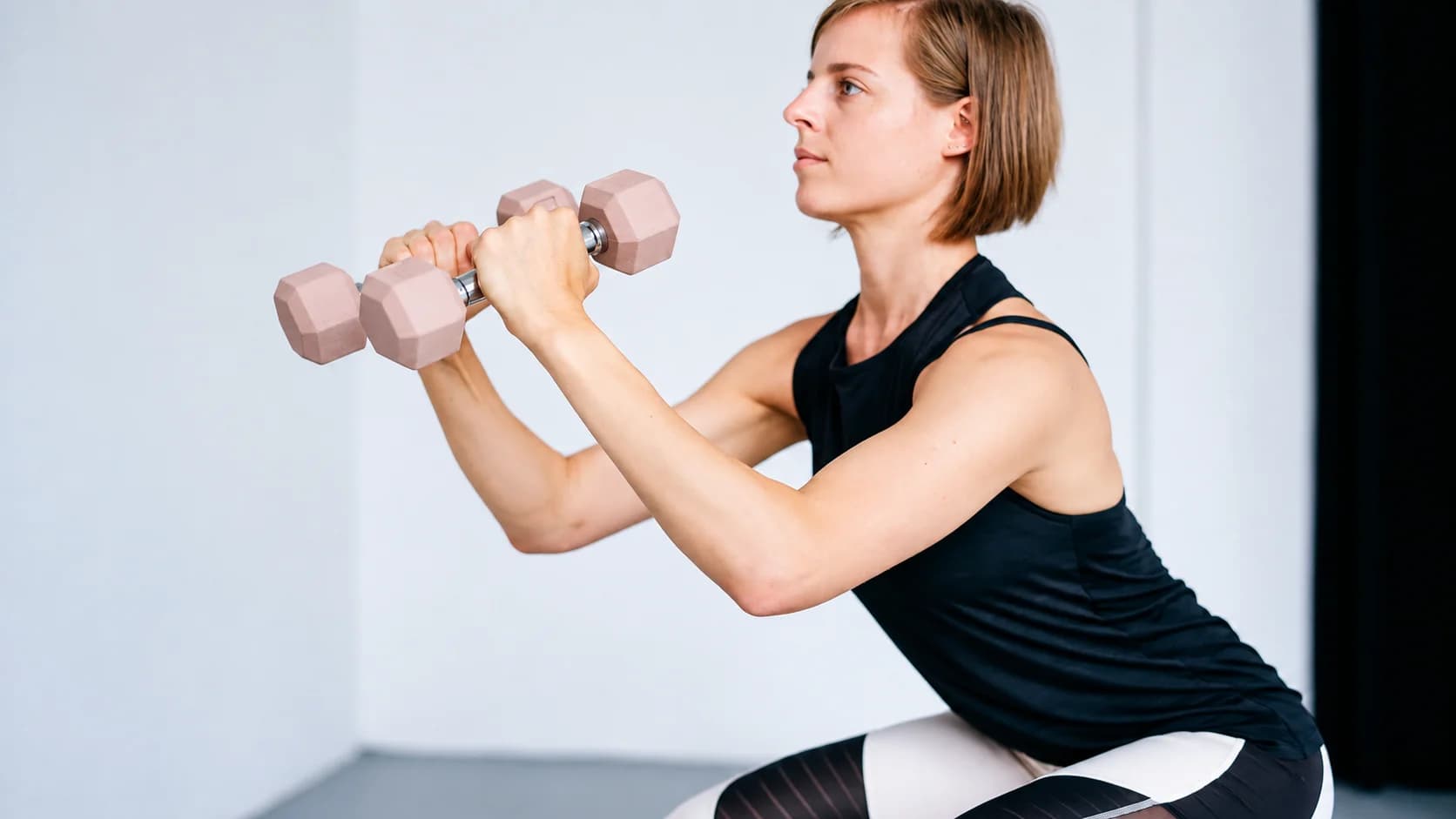
Exercise tempo describes the timing of the phases within a repetition. A tempo entry can tell you how long a phase or pause is intended to last, but it still needs the exercise instructions and the plan’s notation key.
Read repetition tempo as a description to interpret, not a promise that one speed is best for every movement or goal.
Read the four-part convention
NASM’s explanation of lifting tempo describes a convention with four positions: eccentric phase, pause after that phase, concentric phase and pause after that phase.
The eccentric and concentric terms describe lengthening and shortening muscle actions. The plan and demonstration need to show what those phases mean for the particular exercise.
Here is an editorial reading example for 3–1–1–0 using that convention:
| Position | Example entry | Meaning within this convention |
|---|---|---|
| First | 3 | Three seconds for the eccentric phase |
| Second | 1 | A one-second pause after that phase |
| Third | 1 | One second for the concentric phase |
| Fourth | 0 | No prescribed pause after that phase |
The first written position names the eccentric phase in this convention, not necessarily the first physical action of the exercise. X is an intended quick action rather than a fixed number of seconds, so a notation containing X cannot give an exact total repetition time.
These exercise tempo numbers illustrate the notation. They are not a recommended tempo or a complete workout.
Check the key before starting the movement

A tempo entry in a workout plan needs a legend. Confirm the order the writer uses and how the exercise instructions identify the phases. A notation’s first position does not automatically tell you the first physical action of every exercise.
If the plan uses three positions rather than four, do not silently invent the missing pause. Ask what that writer means. Also keep a tempo entry separate from the number of sets, repetitions and the rest between sets.
NASM’s convention uses X for an intention to perform the concentric phase quickly, rather than a fixed duration. It does not mean zero seconds or permission to abandon the instructed movement control.
For an entry containing X, the symbol alone cannot give you a precise total repetition duration. A movement demonstration and a suitable plan still matter.
Slower is not automatically better
A 2025 systematic-review abstract by Enes and colleagues reports 14 studies in healthy adults comparing repetition tempos. The authors describe generally small and uncertain differences in muscle-hypertrophy outcomes, with possible differences under particular conditions.
That does not support a universal claim that slower repetitions always produce more muscle growth. It also does not prove that every tempo is identical or that faster is always preferable.
The abstract is not a personalised instruction for a beginner, and it does not settle the best timing for every exercise. Use the evidence to question blanket speed promises rather than turning a study’s comparison into an individual prescription.
Equipment does not set the tempo
The PBGGAME manual dual-wheel roller is one roller assembly with two wheels on a shared shaft, handles and a small knee pad. Two wheels do not mean two separate rollers. It is not an electronic speed controller or a tempo-measuring device.
The PBGGAME five long-loop band set contains five flat closed-loop bands and a door-anchor accessory. TPE is the listed band material. The model’s nominal resistance labels do not specify the speed of an exercise or provide a measured force curve.
Choose equipment for the activity in an appropriate plan. These product configurations do not establish a suitable tempo, an installation method or a particular training outcome.
Keep timing and counting separate
Our sets-and-repetitions guide explains how to read repetition groups, side instructions and units. A tempo adds information within a repetition; it does not replace those counting instructions.
Before following an unfamiliar entry, identify the exercise, the notation convention and the movement instructions. Clarify missing information with the plan’s author or an appropriately qualified instructor.